Tubal ligation (female sterilisation): an OR 101 guide
Reviewed by Rodnie Oro, cath lab charge nurse · Last reviewed: October 2026 · Education only, not medical advice
Tubal ligation in one minute
What it is: keyhole surgery to block (with clips) or remove the fallopian tubes for permanent contraception.
Who it is for: people who are sure they do not want any (more) children.
Main risks: failure and pregnancy (uncommon), ectopic pregnancy if it fails, bleeding, injury to bowel or blood vessels (rare).
Usually: under general anaesthetic, about 30 minutes, home the same day.
On this page: What is tubal ligation? · Who is it for? · When is it done? · Step by step · Recovery · Risks · Kit list · First time in theatre? · FAQ
What is tubal ligation?
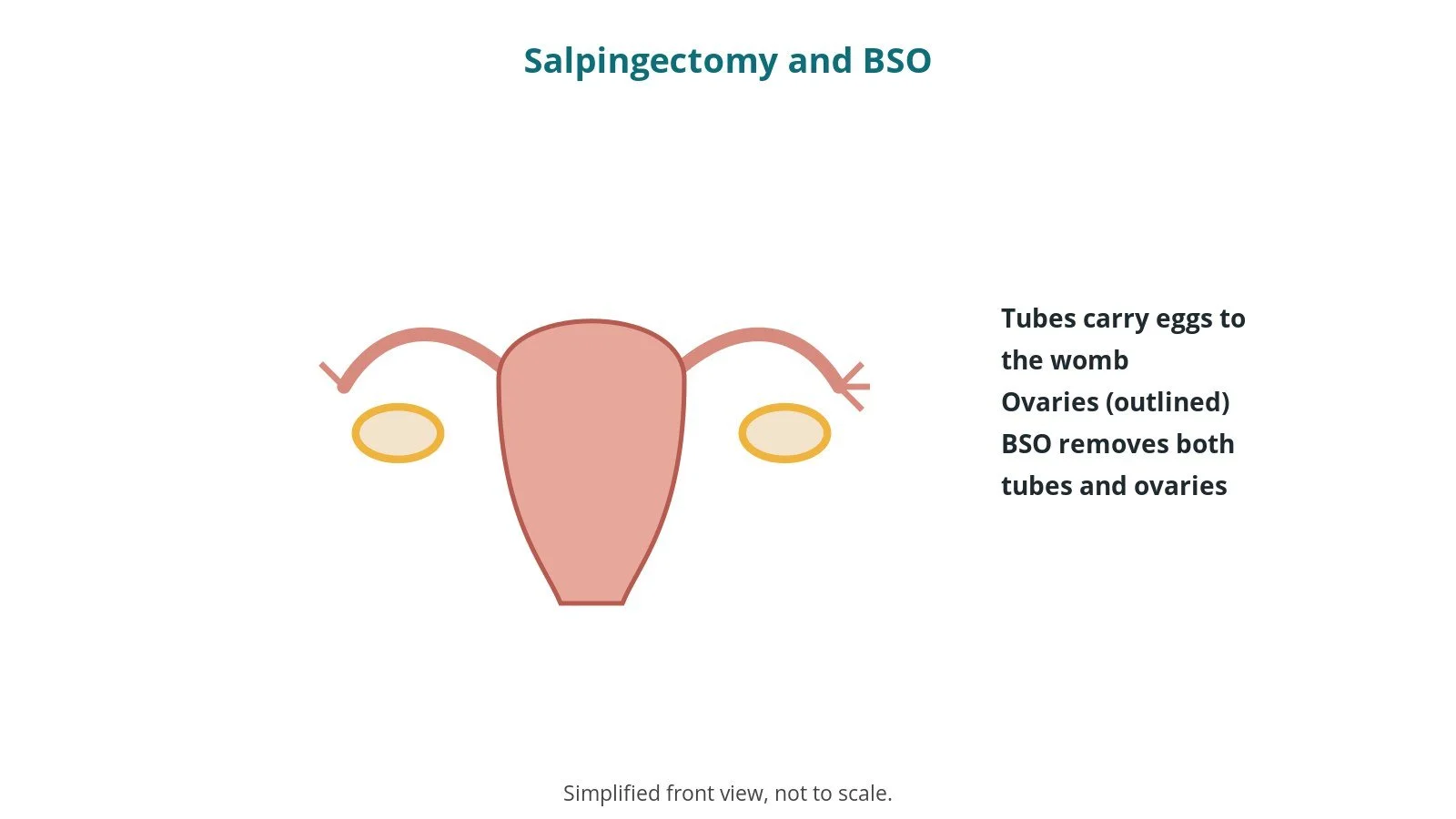
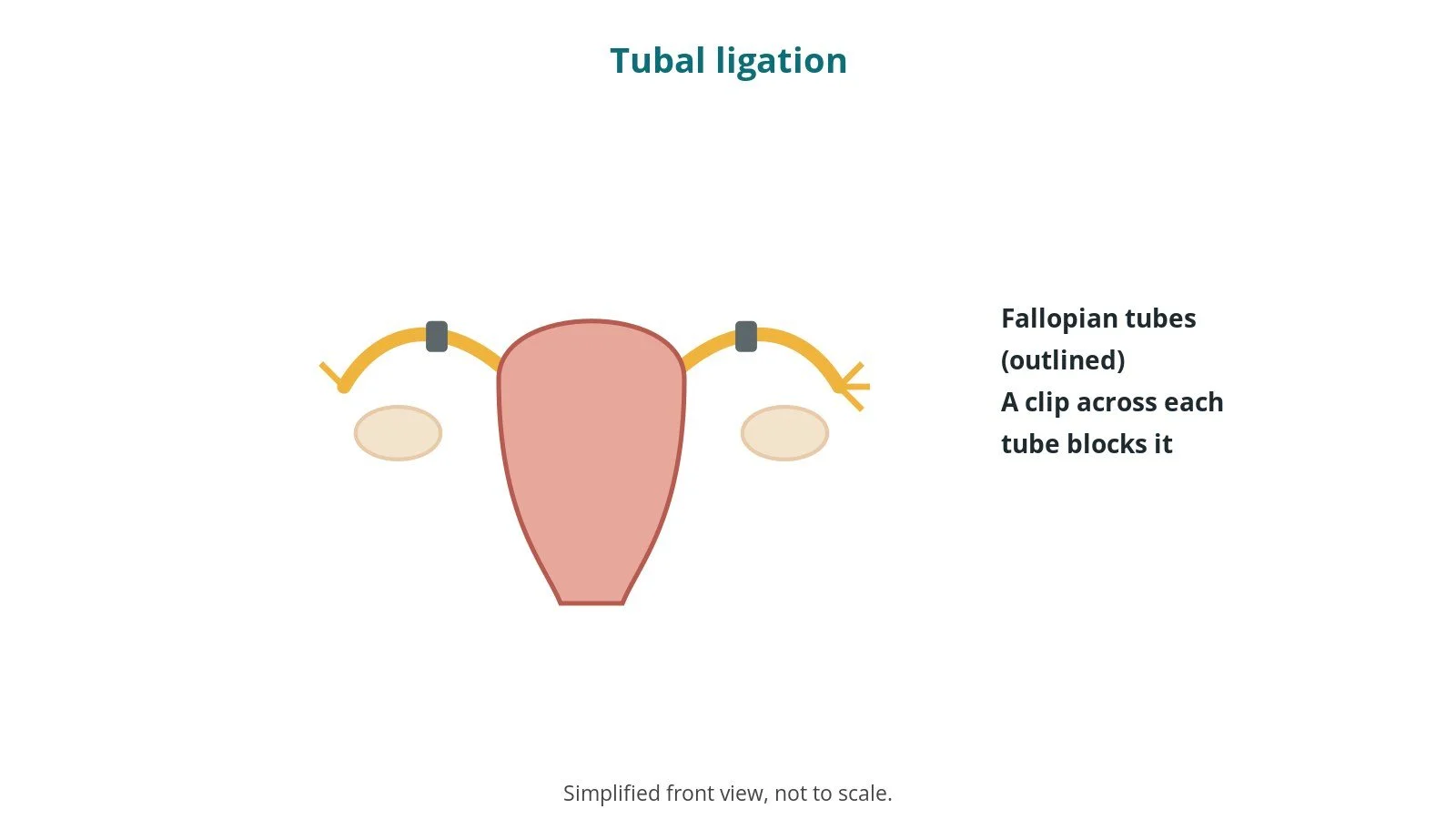
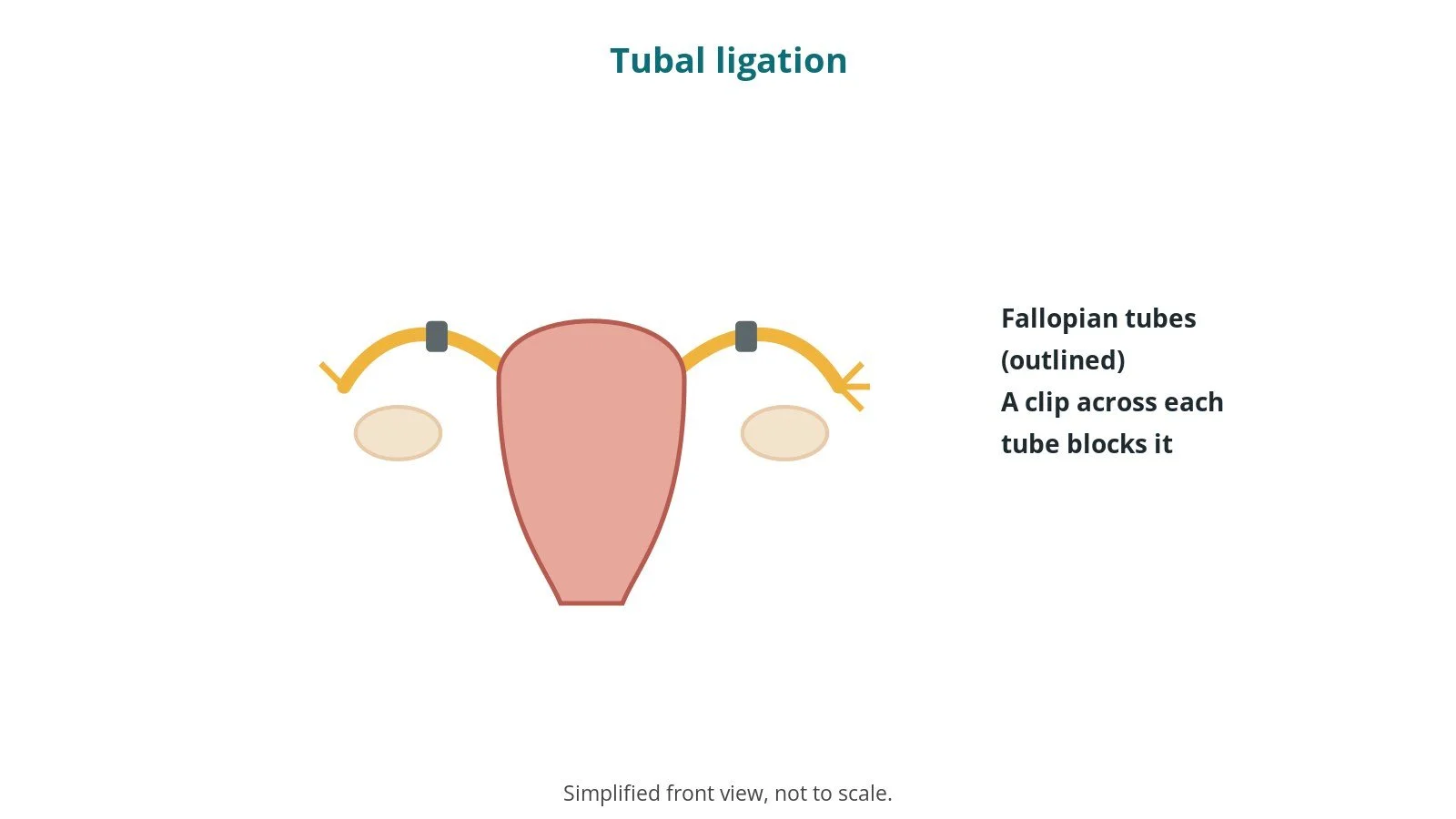
Tubal ligation stops eggs and sperm meeting by blocking or removing the fallopian tubes:
- clips are placed across each tube, or
- the tubes are removed (salpingectomy), per surgeon and centre
It is intended to be permanent. Reversal is difficult and not usually funded. Counselling covers long-acting reversible contraception and vasectomy as alternatives. It can also be done during a caesarean section.
New to the acronyms? See the Cath Lab Abbreviations A–Z.
Who is it for?
It may be considered for people with:
- people who are certain they want permanent contraception, after counselling
The decision is made by your surgical team, who will talk through the reasons, the alternatives and the risks with you.
When is it done?
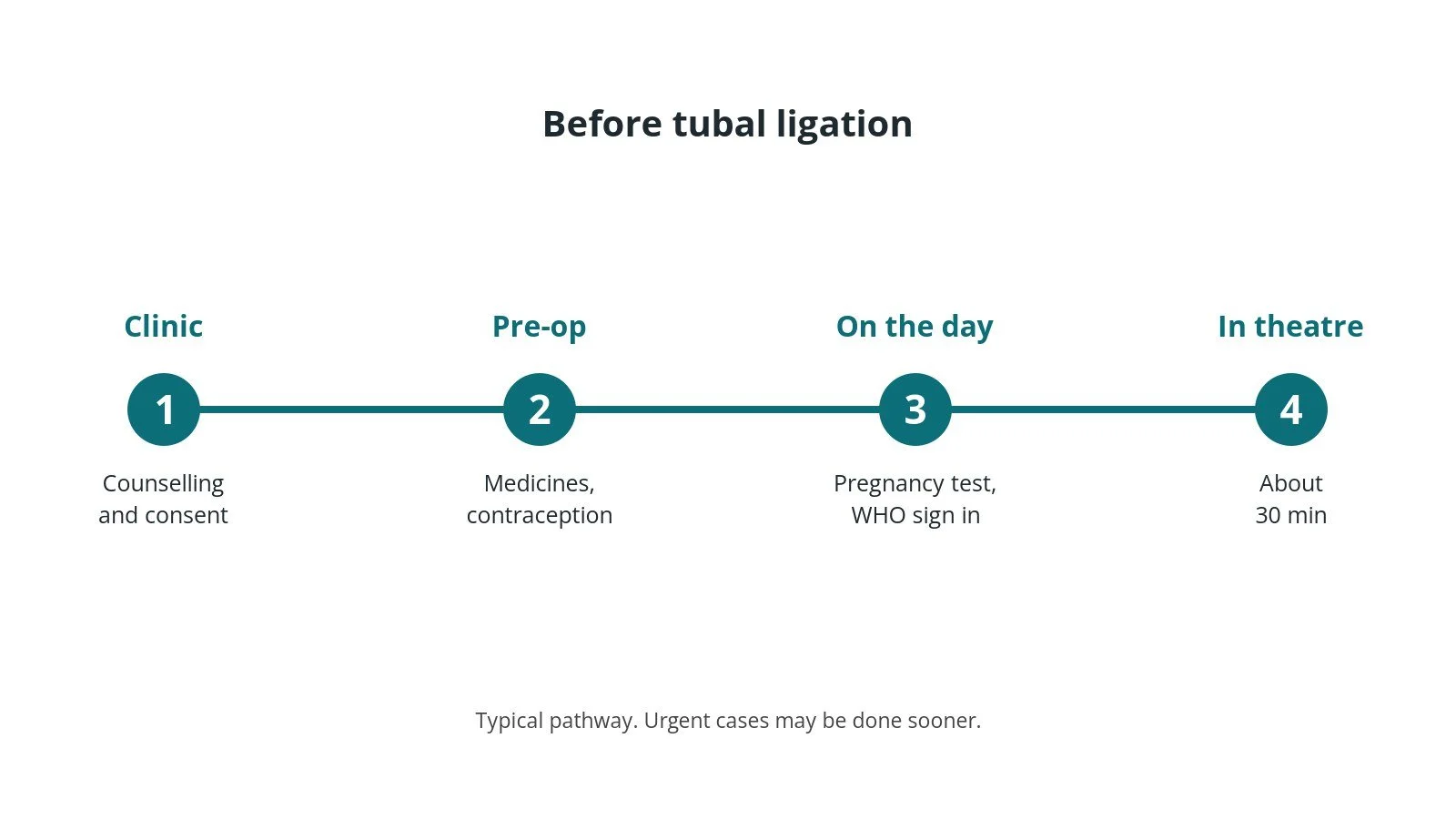
Most operations are planned; some are urgent. Before it, you usually have:
- counselling and information on alternatives
- a pregnancy test on the day
- a review of your medicines, as per centre protocol
- a chance to ask questions and give consent
Step by step
1. Getting ready
Team brief and WHO checklist first. The anaesthetic team and ODP give a general anaesthetic and insert a breathing tube; antibiotics and blood-clot prevention are given as per centre protocol. The circulating practitioner checks positioning, pressure areas, the diathermy plate, warming, and that the camera stack and gas insufflator work. The scrub practitioner sets up the laparoscopic trolley and an open set in case of conversion, and does the first count.
2. Access
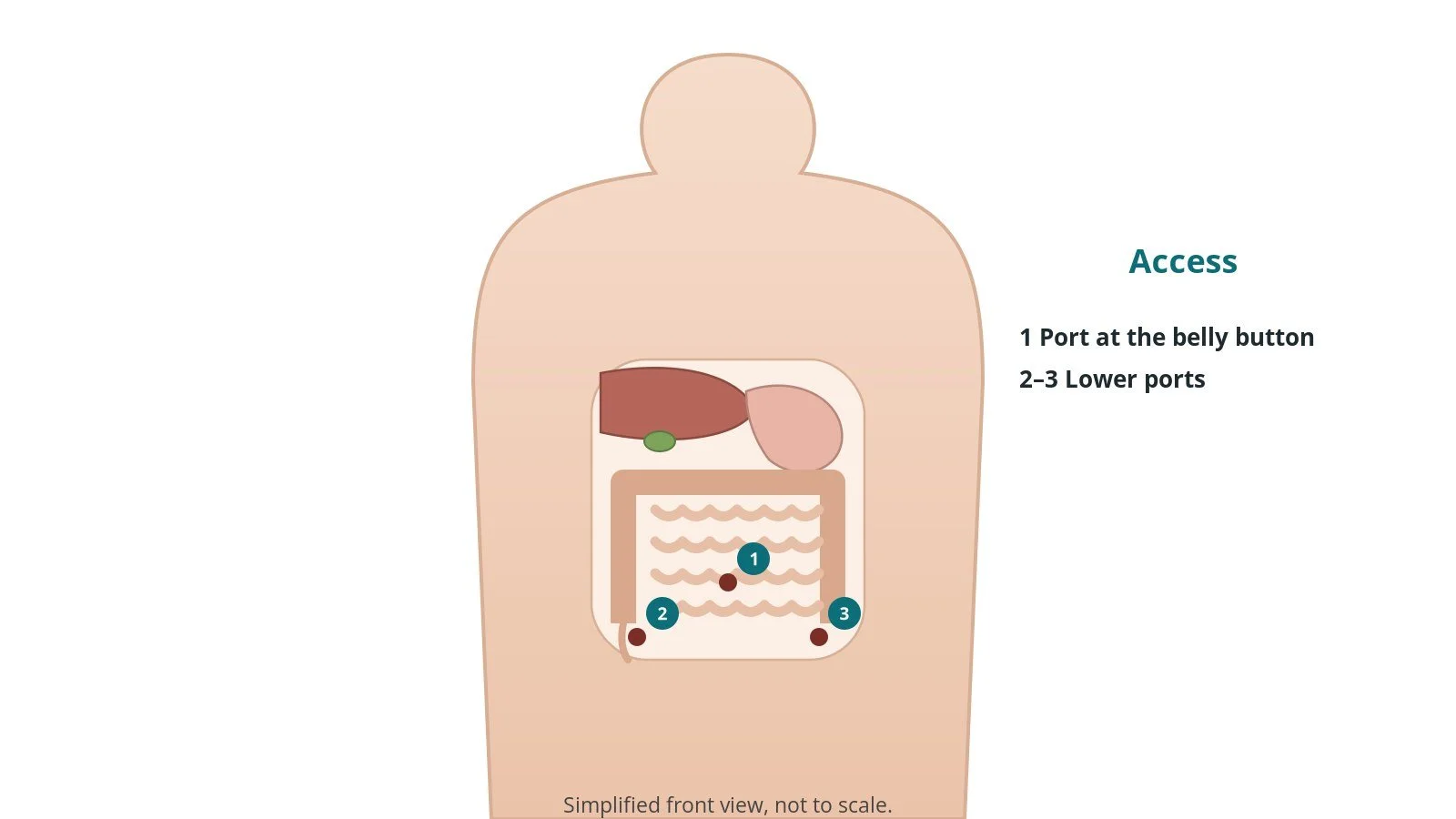
Laparoscopic: a port at the belly button and one or two lower ports.
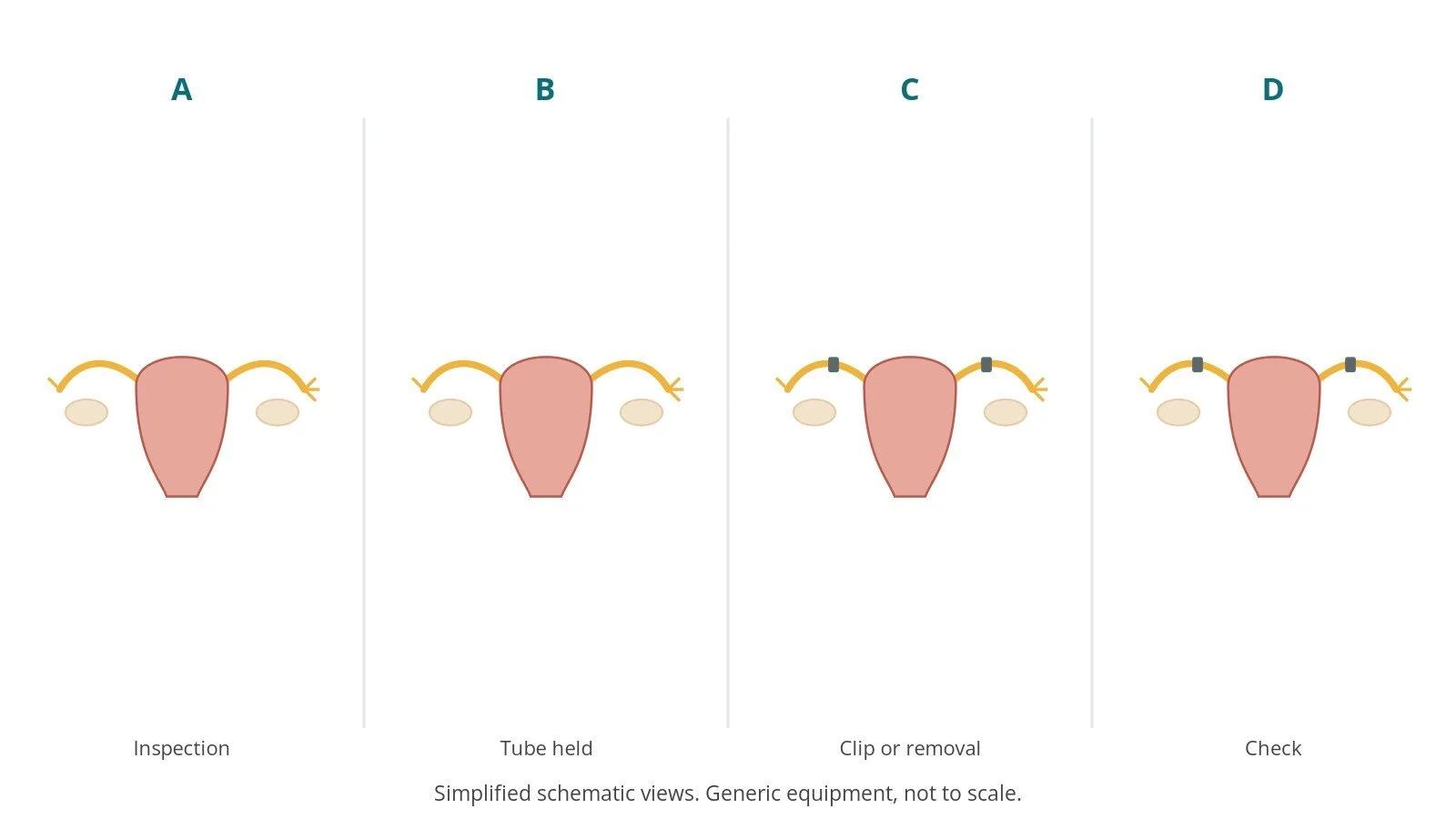
3. Blocking the tubes
- A. Inspection. The tubes are identified with the camera and followed to their ends.
- B. Tube held. Each tube is held a short distance from the womb.
- C. Clip or removal. A clip is applied across each tube, or the tube is removed.
- D. Check. The team confirms both tubes are treated.
4. Finishing
The gas is let out, ports removed and the larger cuts closed (deep layer, per surgeon), then the skin with sutures or glue. Local anaesthetic is often injected into the wounds. Final counts are confirmed, specimens labelled and checked, and the patient goes to recovery with a full handover.
Recovery and aftercare
- First hours: in recovery, then a ward or day unit; pain relief and anti-sickness medicine.
- Going home: the same day.
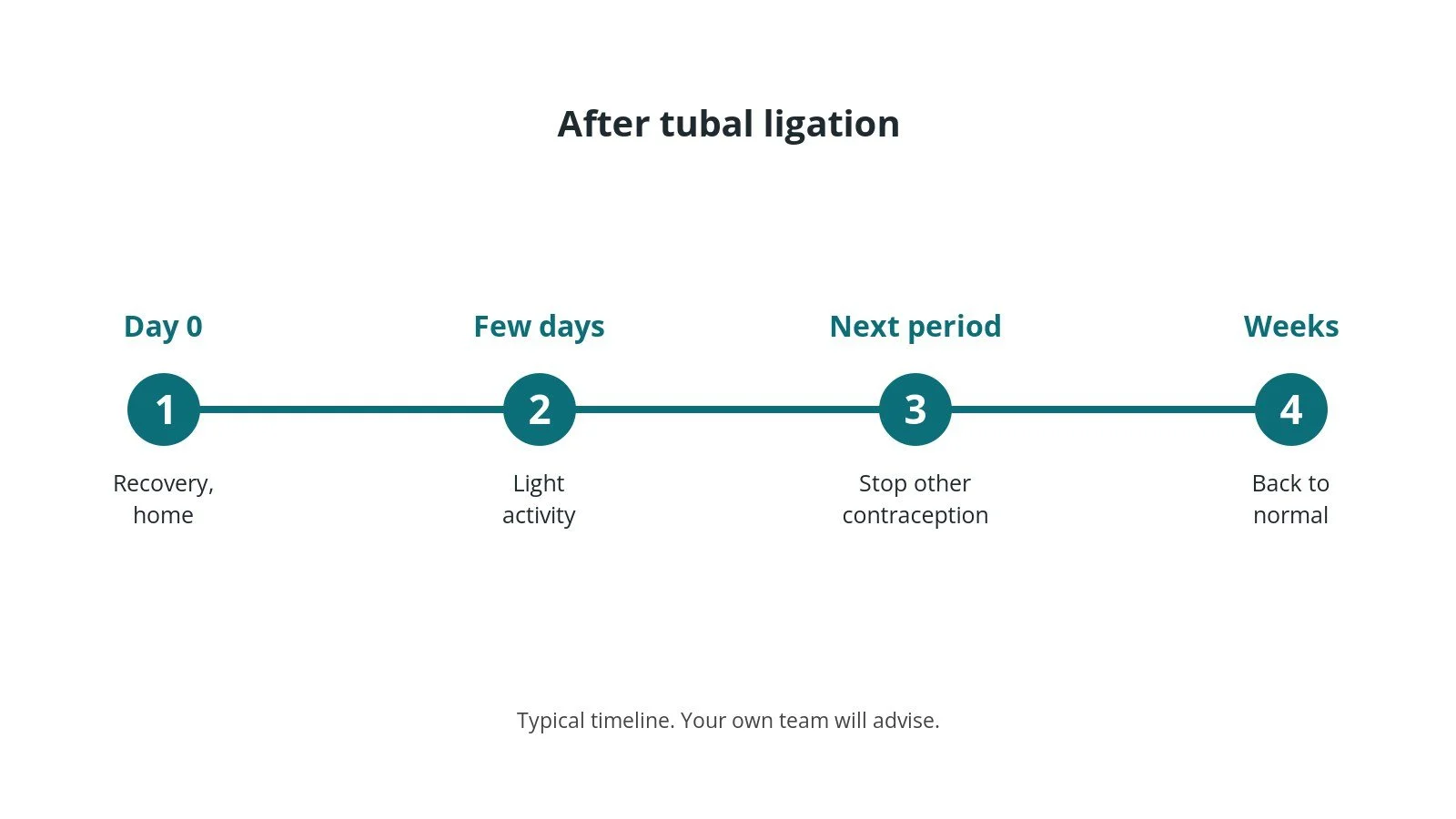
- Activity: walking early; light activity for a few days; ask your team.
- Bleeding: some vaginal bleeding or discharge is common for a short time.
- Sex and driving: ask your team when it is safe.
- Follow-up: results and review, as per centre protocol.
Call 999 if you have heavy bleeding, severe pain, breathlessness, chest pain or collapse. Contact your team or GP if you have a fever, smelly discharge, pain or swelling in a leg, or a wound that becomes red, hot or leaky.
Risks and complications
Your team will explain the risks that apply to you. Possible problems include:
- failure and pregnancy (uncommon)
- ectopic pregnancy if it fails
- bleeding or infection
- injury to the bowel, bladder or blood vessels (rare)
- regret, especially at a younger age
Theatre kit list (printable)
Example kit list
Every theatre has its own protocol, and sizes and doses vary.
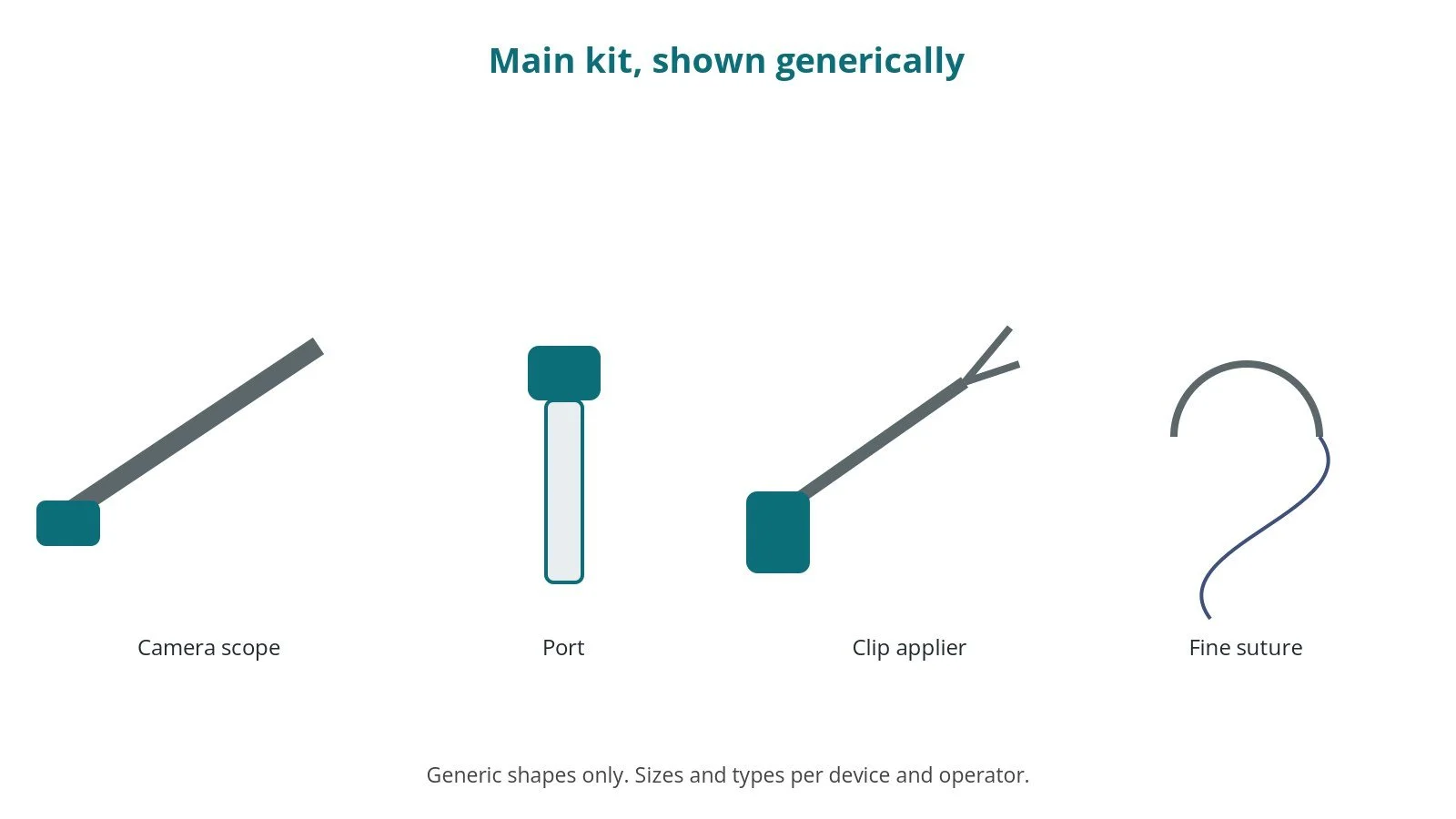
- laparoscopic stack: camera, scope, light source, gas insufflator and warmer
- ports, sizes per device and operator, and an entry needle or open-entry kit, per surgeon
- laparoscopic graspers, scissors, dissectors and suction-irrigation
- clip applicator and clips, sizes per device and operator, or energy device for salpingectomy
- uterine manipulator, per surgeon
- closure sutures and dressings
Procedural steps
- Team brief, WHO sign in; pregnancy test confirmed; anaesthesia
- Positioning; empty bladder; prep and drape; count
- Ports; inspection
- Both tubes identified and followed
- Clips applied or tubes removed; both confirmed
- Gas out; closure; counts; sign out and handover
First time in theatre?
💡 First-time tip
- Know your role. Scrub, circulating, anaesthetic and ODP each have their own checks; ask at the team brief.
- Counts matter. Swabs, needles and instruments are counted before, during and at closure; speak up if one is missing.
- Pregnancy test. Confirm the result is recorded at sign in.
- Both sides. The team confirms both tubes are treated; it may be documented.
- Camera ready. White-balance and warm the scope before the start.
FAQ
Is it reversible?
It should be considered permanent.
Does it affect my periods or hormones?
No, the ovaries keep working.
When does it work?
Use contraception until your next period, as advised.
Related guides
Sources
All checked on 14 October 2026. Each page's own date is shown where it gives one.
- NHS. Female sterilisation. nhs.uk/contraception/methods-of-contraception/female-sterilisation
- StatPearls (NCBI Bookshelf), search: tubal ligation. ncbi.nlm.nih.gov/books
- Faculty of Sexual and Reproductive Healthcare. Male and female sterilisation guideline. fsrh.org
- World Health Organization. Surgical Safety Checklist. who.int
Disclaimer
Education only. This page is for general education for healthcare students, theatre staff and curious readers. It isn't medical advice and doesn't replace advice from your own doctor, surgical team or local unit protocols. Equipment and medicines are described generically. No product or manufacturer is recommended. If you think someone is having a medical emergency, call 999.
Disclosure: I work in the medical device industry. This page is independent education and isn't sponsored or reviewed by any company.
All diagrams on this page are original illustrations created for rodnieoro.com.