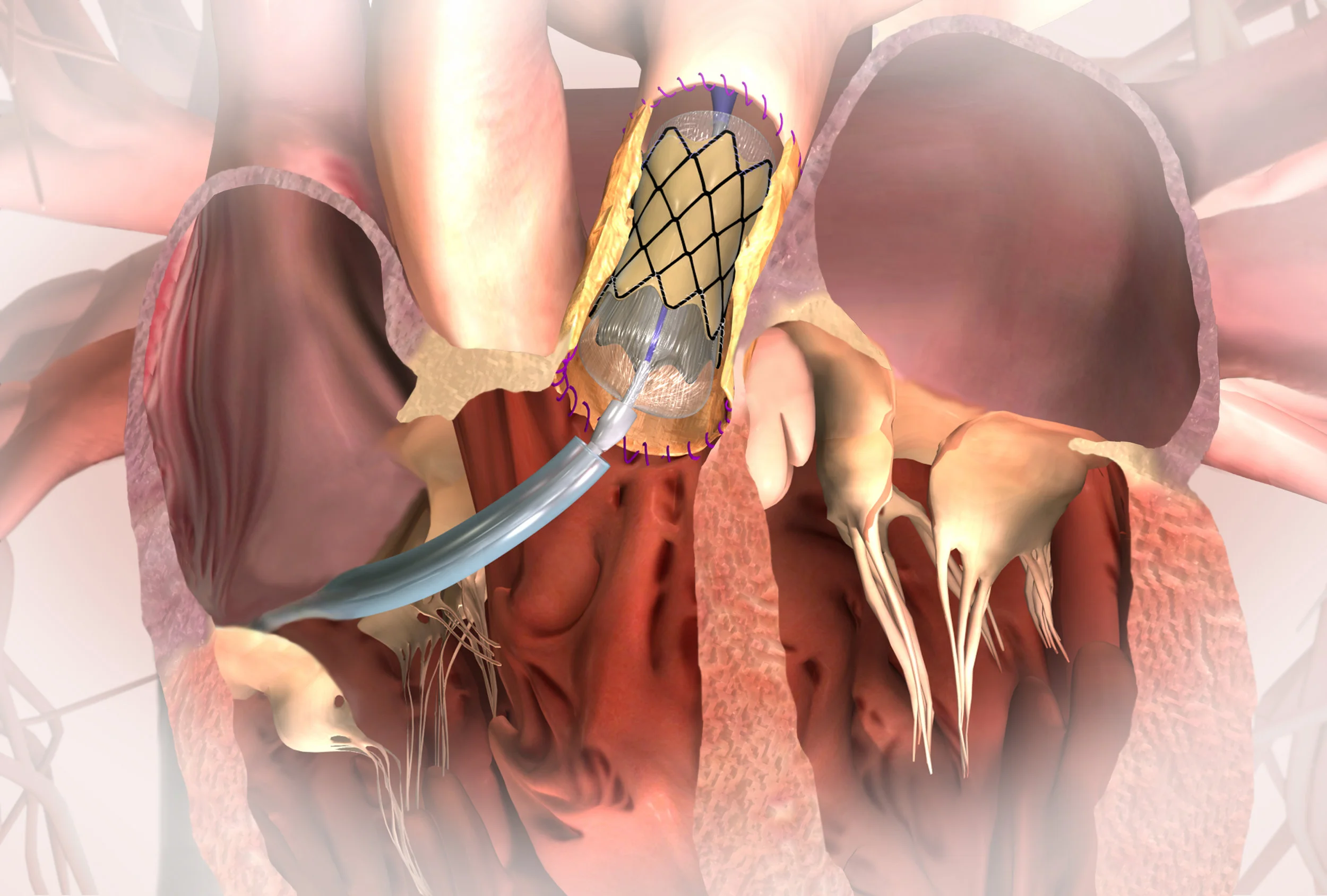

New to the cath lab? It can feel like everyone speaks in code: "PPCI on the way, RCA, consider IVUS, check the ACT". This Cath Lab 101 glossary explains the most common abbreviations you will hear in the cardiac catheter lab, the cardiology ward and in reports. Each one has a plain-English definition. Where the site has a full guide, the term links straight to it.
Tip: abbreviations vary between hospitals and countries (for example UK "TAVI" and US "TAVR"). If you are unsure what someone means, always ask. Your local policy on approved abbreviations comes first.
Jump to: A · B · C · D · E · F · G · H · I · J · L · M · N · O · P · R · S · T · V · W
A
AAA: Abdominal aortic aneurysm: a bulge in the main artery of the abdomen.
ACS: Acute coronary syndrome: an umbrella term for sudden reduced blood flow to the heart (unstable angina, NSTEMI, STEMI).
ACT: Activated clotting time: a quick bedside blood test used to check heparin levels during procedures.
AF: Atrial fibrillation: an irregular, often fast heart rhythm coming from the upper chambers. → AF cryoablation
AL / AR: Amplatz left / Amplatz right: catheter shapes used for coronary angiography.
AMI: Acute myocardial infarction: a heart attack. → AMI pathway
AO: Aorta: the body's main artery, leaving the left ventricle.
AS / AR: Aortic stenosis (narrowed aortic valve) / aortic regurgitation (leaking aortic valve).
ASA: Alcohol septal ablation, a treatment for obstructive hypertrophic cardiomyopathy. In other settings it can also mean aspirin. → ASA
ASD: Atrial septal defect: a hole in the wall between the two upper chambers.
AV: Atrioventricular (as in AV node, AV block) or aortic valve, depending on context.
AVR: Aortic valve replacement (usually surgical).
B
BIB: Balloon-in-balloon catheter, used to expand large stents (e.g. coarctation, RVOT). → Coarctation stenting
BMS: Bare-metal stent: a stent without a drug coating.
BMV: Balloon mitral valvuloplasty: stretching a narrowed mitral valve with a balloon. → BMV
BP: Blood pressure.
BT shunt: Blalock–Taussig shunt: a surgical connection carrying blood to the lungs in some congenital conditions. → BT shunt closure
C
CABG: Coronary artery bypass graft ("cabbage"): heart bypass surgery.
CHD: Congenital heart disease (or coronary heart disease, depending on context).
CO: Cardiac output: how much blood the heart pumps per minute.
CoA: Coarctation of the aorta: a narrowing of the aorta. → Coarctation stenting
CRT: Cardiac resynchronisation therapy: a pacemaker (CRT-P) or defibrillator (CRT-D) that paces both ventricles to coordinate them. → PPM, ICD & CRT
CS: Coronary sinus (vein draining the heart muscle) or cardiogenic shock, depending on context.
CT / CTCA: Computed tomography / CT coronary angiography.
CTO: Chronic total occlusion: a coronary artery that has been completely blocked for a long time (usually ≥3 months). → CTO guide
Cx / LCx: Circumflex artery (see LCx).
D
DAPT: Dual antiplatelet therapy: two blood-thinning tablets (e.g. aspirin plus another) after stenting.
DCB: Drug-coated balloon: a balloon that delivers a drug to the artery wall without leaving a stent.
DES: Drug-eluting stent: a stent coated with a drug that slowly releases to reduce re-narrowing.
E
EBU: Extra back-up: a guide catheter shape for the left coronary artery.
ECG: Electrocardiogram: a recording of the heart's electrical activity.
ECMO: Extracorporeal membrane oxygenation: a heart–lung support machine.
EF / LVEF: Ejection fraction / left ventricular ejection fraction: the percentage of blood pumped out with each beat.
EP: Electrophysiology: the study and treatment of heart rhythm problems (EP study, EP lab).
F
FFR: Fractional flow reserve: a pressure-wire measurement showing whether a narrowing is limiting blood flow.
Fr / F: French: the size of catheters and sheaths (1 Fr = ⅓ mm outer diameter).
G
GA: General anaesthetic.
GC: Guide catheter: the catheter used to deliver wires, balloons and stents into a coronary artery.
GTN: Glyceryl trinitrate: a nitrate that widens blood vessels (spray, tablet or intracoronary).
H
HOCM: Hypertrophic obstructive cardiomyopathy: thickened heart muscle that blocks outflow.
HR: Heart rate.
I
IABP: Intra-aortic balloon pump: a temporary balloon in the aorta that supports the heart.
ICD: Implantable cardioverter-defibrillator: a device that detects dangerous rhythms and can shock the heart. → PPM, ICD & CRT
ICE: Intracardiac echocardiography: an ultrasound catheter used inside the heart.
iFR: Instantaneous wave-free ratio: a pressure-wire test similar to FFR, done without adenosine.
IVC / SVC: Inferior / superior vena cava: the large veins returning blood to the heart.
IVL: Intravascular lithotripsy: sonic pressure waves used to crack calcium in arteries. → IVL
IVUS: Intravascular ultrasound: an ultrasound catheter that images the artery from inside.
J
JL / JR: Judkins left / Judkins right: the classic catheter shapes for coronary angiography (e.g. JL4, JR4).
L
LA / RA: Left atrium / right atrium: the upper chambers.
LAA: Left atrial appendage: a small pouch of the left atrium where clots can form in AF.
LAAO: Left atrial appendage occlusion: closing the LAA with a device. → LAAO
LAD: Left anterior descending artery: the coronary artery running down the front of the heart.
LBBB / RBBB: Left / right bundle branch block: patterns of delayed conduction on the ECG.
LCA: Left coronary artery.
LCx: Left circumflex artery: the coronary branch wrapping around the left side of the heart.
LMS: Left main stem: the short trunk that splits into the LAD and LCx.
LV / RV: Left ventricle / right ventricle: the main pumping chambers.
LVEDP: Left ventricular end-diastolic pressure: the pressure in the LV just before it contracts. It gives a clue to filling pressures.
LVOT / RVOT: Left / right ventricular outflow tract: the exit routes from the ventricles to the aorta / pulmonary artery.
M
MI: Myocardial infarction: a heart attack.
MR / MS: Mitral regurgitation (leaking) / mitral stenosis (narrowing).
MPA: Main pulmonary artery, or the multipurpose (MPA) catheter shape.
MV: Mitral valve.
N
NC balloon: Non-compliant balloon: a high-pressure balloon that keeps its size, used to expand stents fully.
NSTEMI: Non-ST-elevation myocardial infarction: a heart attack without ST elevation on the ECG.
O
OCT: Optical coherence tomography: light-based, very high-resolution imaging from inside the artery.
OM: Obtuse marginal: a branch of the circumflex artery.
P
PA: Pulmonary artery (or the posteroanterior X-ray view, depending on context).
PCI: Percutaneous coronary intervention: treating narrowed coronary arteries through a catheter with balloons and stents (coronary angioplasty). → PCI guide
PCWP: Pulmonary capillary wedge pressure: an indirect measure of left atrial pressure.
PDA: Patent ductus arteriosus (an open fetal blood vessel), or posterior descending artery (a coronary branch). Context matters. → PDA closure
PFO: Patent foramen ovale: a small flap-like opening between the atria that did not seal after birth. → PFO closure
POBA: Plain old balloon angioplasty: balloon dilatation without a stent.
PPCI: Primary percutaneous coronary intervention: emergency PCI for a STEMI heart attack. → AMI pathway
PPM: In cardiology, permanent pacemaker: an implanted device that stops the heart beating too slowly. In other contexts PPM can mean parts per million (chemistry and lab measurements), and some notes use it for posterior papillary muscle of the mitral valve. → PPM guide
PPVI: Percutaneous pulmonary valve implantation: placing a new pulmonary valve by catheter. → PPVI guide
PVL / PVLO: Paravalvular leak / paravalvular leak occlusion: a leak around the edge of a valve and closing it with a device. → PVLO
PVR: Pulmonary valve replacement (often surgical), or pulmonary vascular resistance, depending on context.
R
RCA: Right coronary artery.
RDN: Renal denervation: a catheter treatment targeting nerves around the kidney arteries to lower blood pressure. → Renal denervation
RFA: Radiofrequency ablation, or right femoral artery, depending on context.
RRA: Right radial artery: a common access site for angiograms.
S
S-ICD: Subcutaneous ICD: a defibrillator whose lead sits under the skin rather than inside the heart. → S-ICD
SAT / sats: Oxygen saturation.
STEMI: ST-elevation myocardial infarction: a heart attack with a fully blocked artery, usually treated with PPCI.
SVG: Saphenous vein graft: a leg vein used as a bypass graft in CABG.
T
TAVI / TAVR: Transcatheter aortic valve implantation (UK/Europe) / replacement (US): a new aortic valve placed by catheter. → TAVI procedure → TAVI News Weekly
TCPC: Total cavopulmonary connection: the Fontan circulation, where blood from the veins flows directly to the lungs, bypassing the heart. → TCPC stenting
TEER: Transcatheter edge-to-edge repair: clipping leaflets of the mitral or tricuspid valve together. → Mitral TEER → Tricuspid TEER
TIMI flow: A 0–3 grading of blood flow in a coronary artery on angiography (TIMI 3 = normal).
TMVI: Transcatheter mitral valve implantation. → TMVI
TOE / TEE: Transoesophageal echocardiography (UK) / transesophageal (US): ultrasound from a probe in the gullet.
ToF: Tetralogy of Fallot: a congenital heart condition with four linked features.
TPW / TPM: Temporary pacing wire / temporary pacemaker.
TR: Tricuspid regurgitation: a leaking tricuspid valve.
TR band: A radial compression band placed on the wrist after radial access.
TTE: Transthoracic echocardiography: a standard echo scan through the chest wall.
TTVI: Transcatheter tricuspid valve implantation. → TTVI
V
VF / VT: Ventricular fibrillation / ventricular tachycardia: dangerous fast rhythms from the ventricles.
ViV: Valve-in-valve: placing a transcatheter valve inside an existing worn valve.
VSD: Ventricular septal defect: a hole between the two ventricles. → VSD closure
W
WCT: Wide complex tachycardia: a fast rhythm with broad QRS complexes on the ECG.
FAQ
What does PPM mean in medical terms?
In cardiology and on the cath lab list, PPM almost always means permanent pacemaker: a small device implanted under the skin, with leads (or a leadless capsule) in the heart, that keeps the heart from going too slowly. Outside cardiology, PPM is also commonly used for parts per million, a unit of concentration. Occasionally it refers to the posterior papillary muscle in echo reports. Check the context. → Permanent pacemaker guide
What does PCI stand for?
PCI stands for percutaneous coronary intervention, also called coronary angioplasty. A thin catheter is passed from the wrist or groin to the heart. A balloon opens a narrowed coronary artery, and a stent is usually placed to keep it open. When PCI is done as an emergency for a STEMI heart attack, it is called primary PCI (PPCI). → PCI guide
What does PPVI stand for?
Percutaneous pulmonary valve implantation: a catheter-based pulmonary valve replacement. → PPVI guide
Further reading
Educational disclaimer: This glossary is for general education only and is not medical advice. Abbreviations and their meanings vary between hospitals. Always follow your local policy and ask if you are unsure. Patients should discuss their care with their own healthcare team.