Perineal repair: an OR 101 guide
Reviewed by Rodnie Oro, cath lab charge nurse · Last reviewed: October 2026 · Education only, not medical advice
Perineal repair in one minute
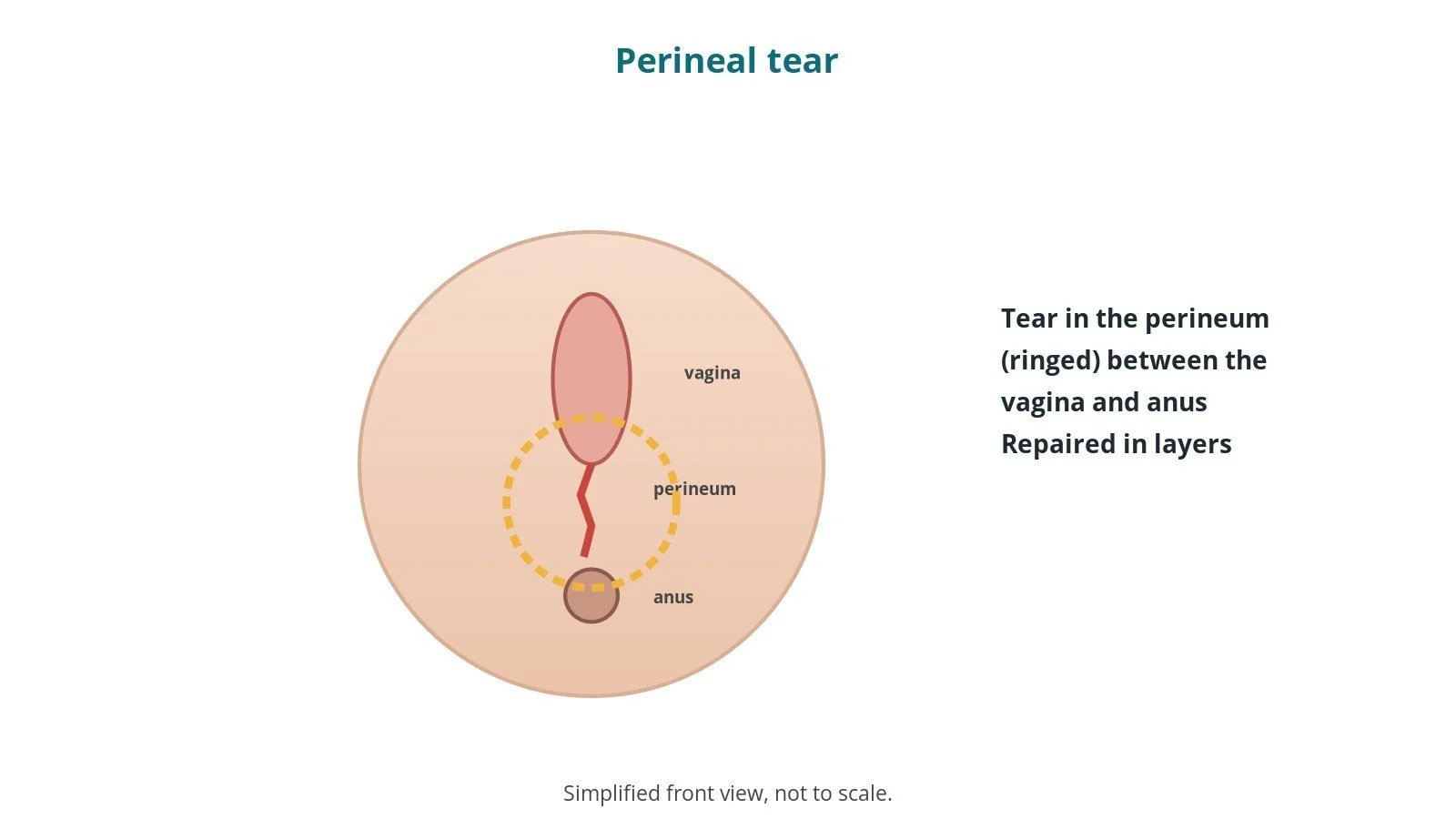
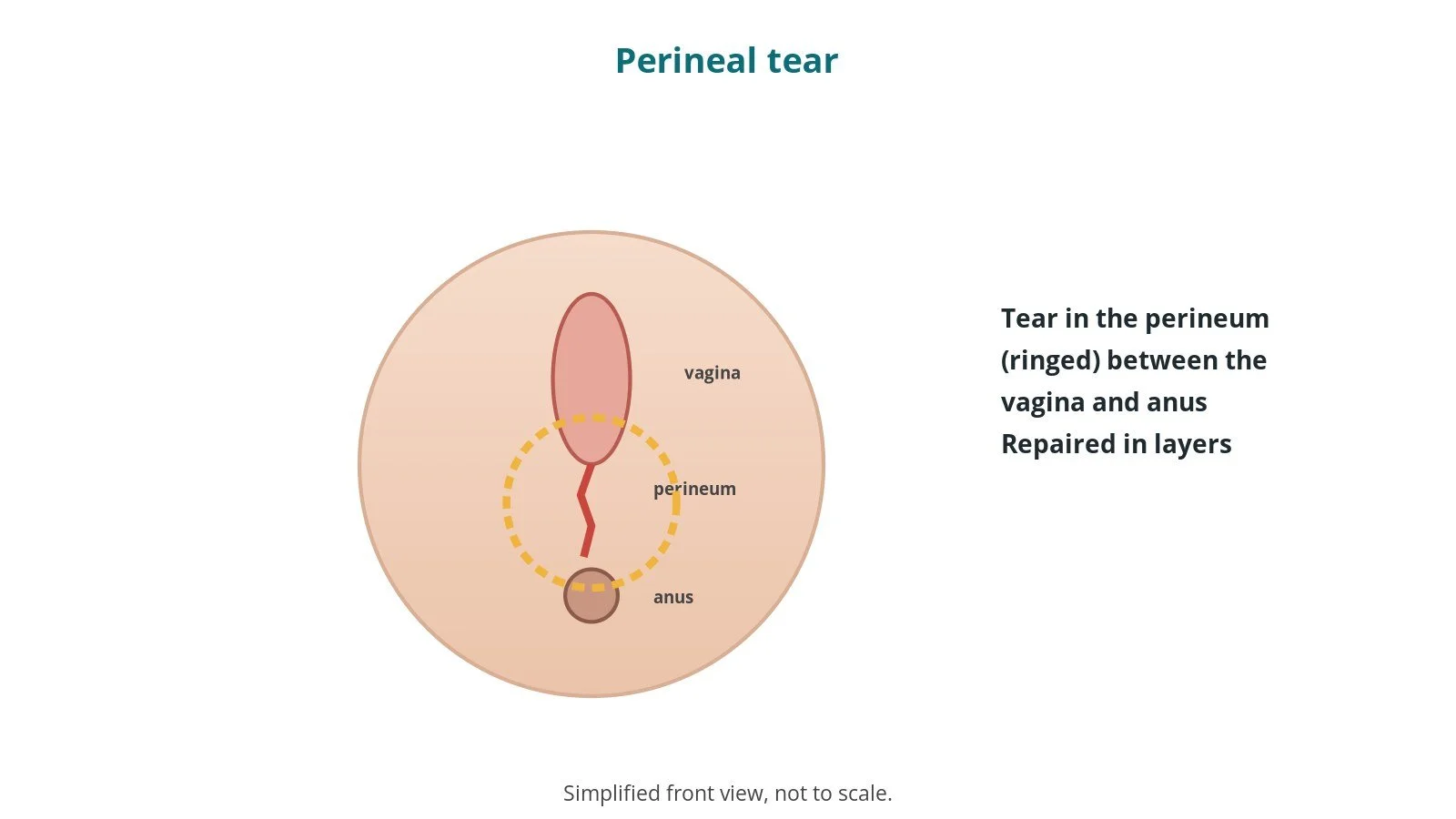
What it is: repair of a tear (or cut, episiotomy) to the perineum, the area between the vagina and anus, after childbirth.
Who it is for: people with tears after birth; deeper third- and fourth-degree tears (OASI) are usually repaired in theatre.
Main risks: pain, infection, wound breakdown, bowel control problems after severe tears.
Usually: under spinal or epidural anaesthetic (or local for minor tears), 30–60 minutes.
On this page: What is perineal repair? · Who is it for? · When is it done? · Step by step · Recovery · Risks · Kit list · First time in theatre? · FAQ
What is perineal repair?
Many people tear during vaginal birth. Tears are graded:
- first-degree: skin only
- second-degree: skin and muscle of the perineum
- third-degree: involving the anal sphincter muscle
- fourth-degree: extending into the lining of the back passage
Third- and fourth-degree tears are called obstetric anal sphincter injuries (OASI) and are repaired in theatre with good light, anaesthesia and the right instruments, by an experienced clinician. Minor tears are usually repaired in the birth room.
New to the acronyms? See the Cath Lab Abbreviations A–Z.
Who is it for?
It may be considered for people with:
- third- and fourth-degree tears (in theatre)
- complex second-degree tears or bleeding that needs theatre
- episiotomy repair
The decision is made by your surgical team, who will talk through the reasons, the alternatives and the risks with you.
When is it done?
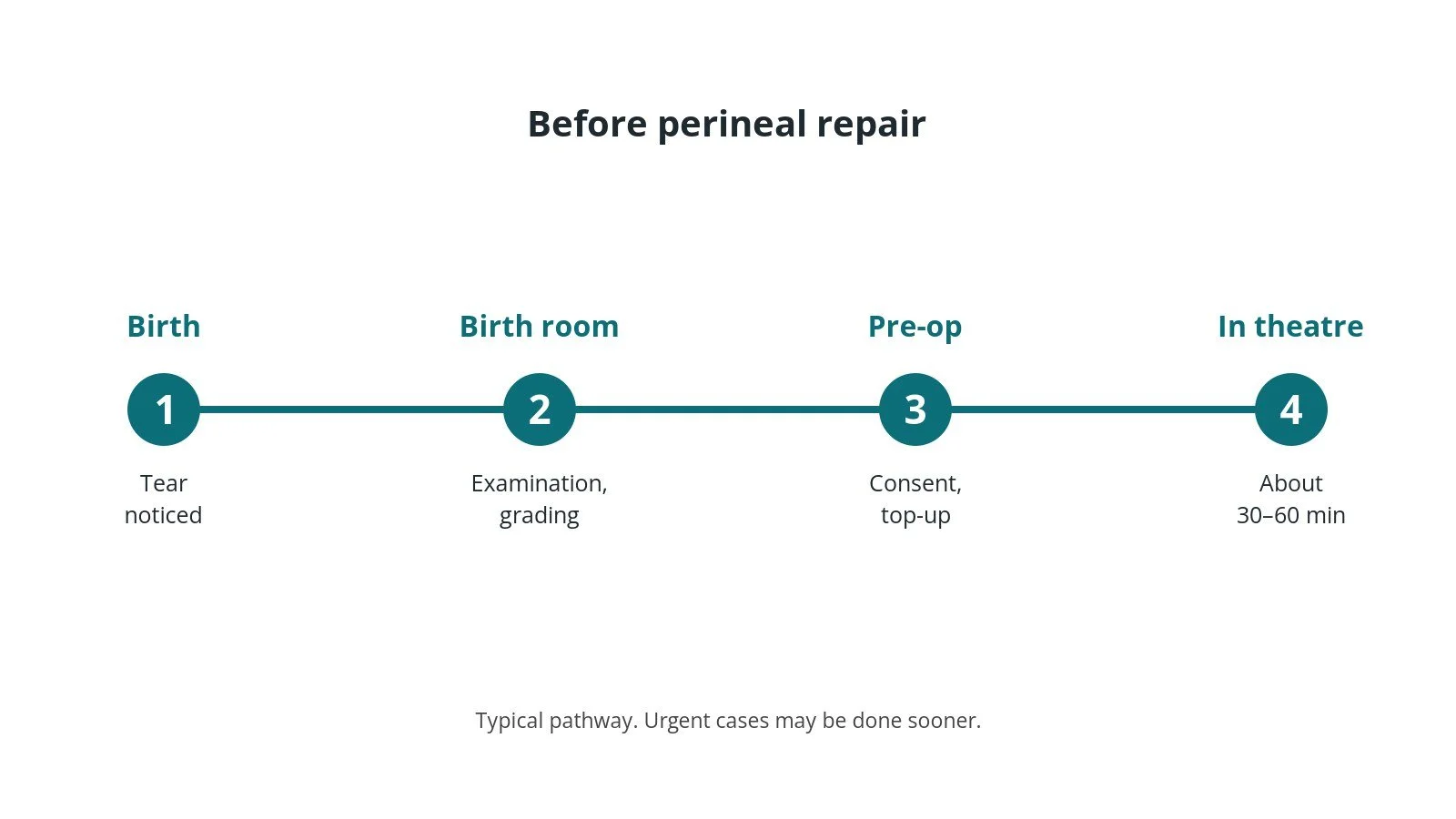
It is done soon after birth. Before it, you usually have:
- an examination, including a rectal examination, to grade the tear
- blood loss assessment and blood tests as needed
- pain relief, often topping up an epidural
- a chance to ask questions and give consent
Step by step
1. Getting ready
Team brief and WHO checklist first. The anaesthetic team and ODP top up the epidural or give a spinal; antibiotics are given as per centre protocol. The circulating practitioner positions the patient in lithotomy with careful padding, and checks lighting and warming. The scrub practitioner sets up the perineal repair set and does the first count, including swabs and tampons. The midwife cares for the baby and supports the mother.
2. Access
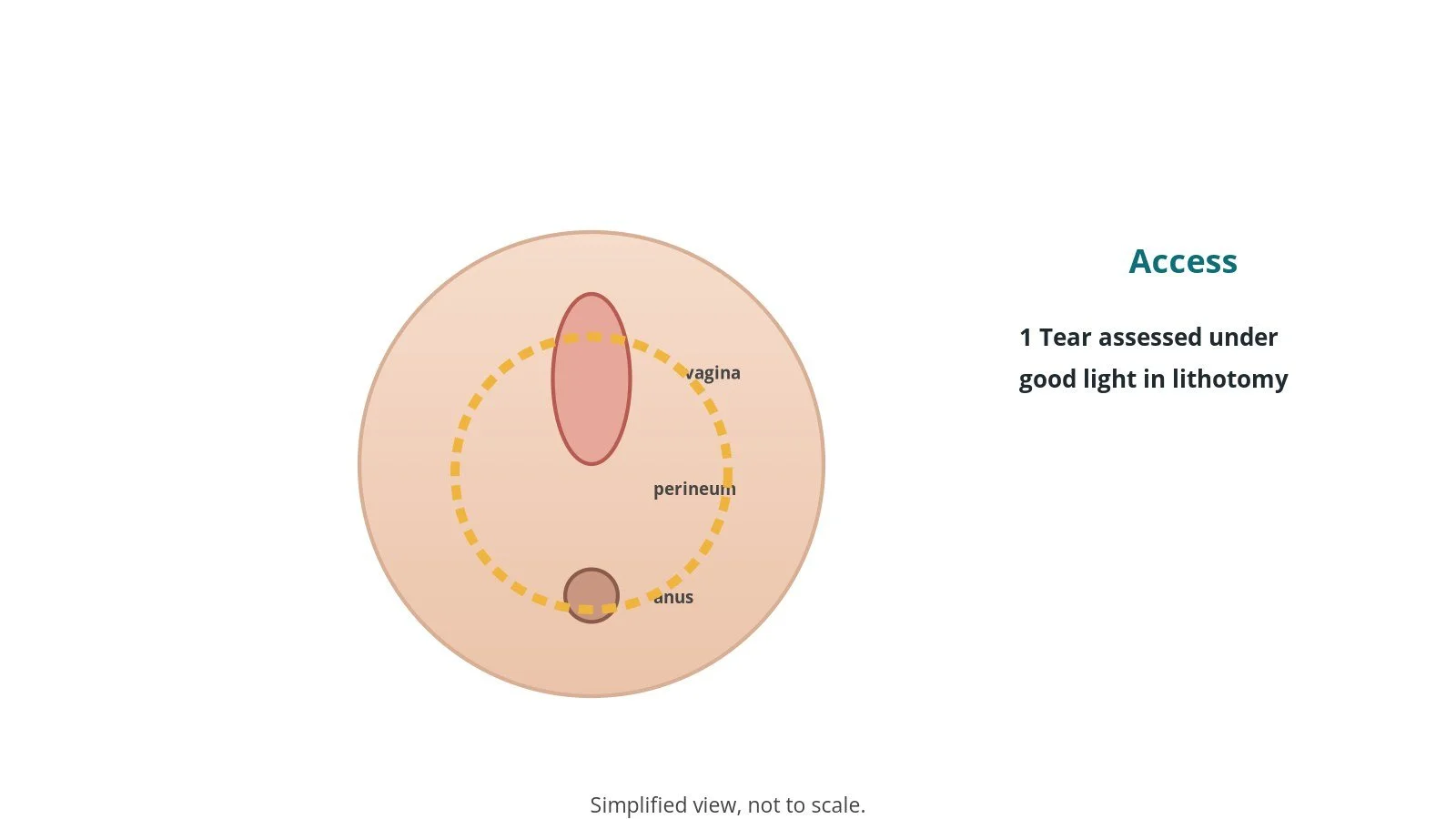
The tear is examined under good light with the legs in lithotomy. No extra cut is needed.
3. Repairing the tear
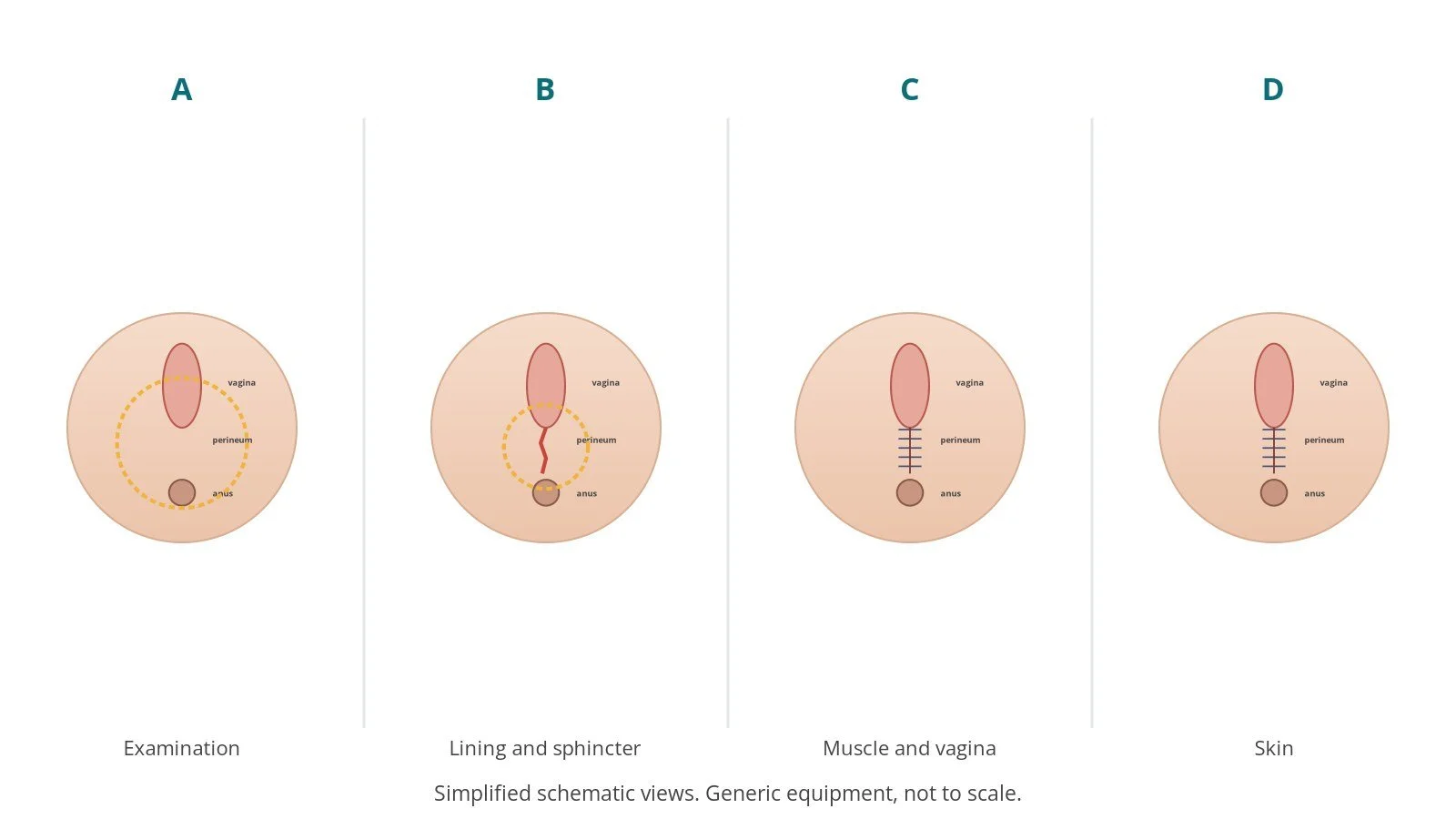
- A. Examination. The tear is examined carefully and graded.
- B. Lining and sphincter. For OASI, the back-passage lining and anal sphincter are repaired first.
- C. Muscle and vagina. The perineal muscle and vaginal wall are repaired.
- D. Skin. The skin is closed, usually with dissolving sutures.
4. Finishing
A rectal and vaginal check confirms the repair and that no swabs are left. Swab and needle counts are confirmed and documented, blood loss recorded, and the mother goes to recovery with a full handover.
Recovery and aftercare
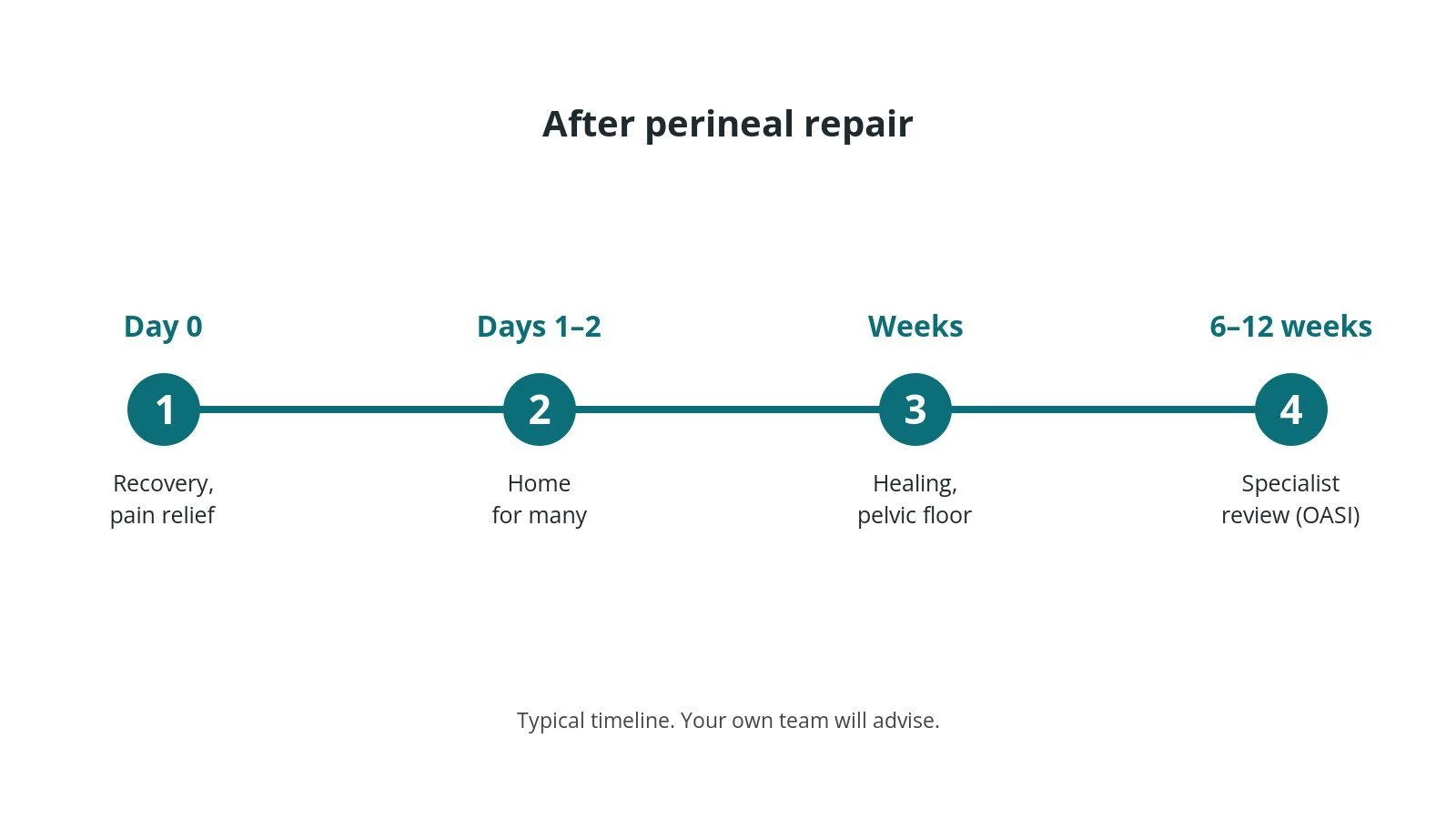
- First days: pain relief, laxatives and antibiotics, as per centre protocol.
- Hygiene: keep the area clean; change pads often.
- Pelvic floor: start pelvic floor exercises as advised.
- Going home: often within 1–2 days, depending on birth.
- Follow-up: after OASI, a specialist review is usually offered at about 6–12 weeks.
- Future births: your team will discuss options.
Call 999 if you have heavy bleeding, severe pain, breathlessness, chest pain or collapse. Contact your team or GP if you have a fever, smelly discharge, pain or swelling in a leg, or a wound that becomes red, hot or leaky.
Risks and complications
Your team will explain the risks that apply to you. Possible problems include:
- pain and discomfort
- infection or wound breakdown
- problems controlling wind or bowels after third- or fourth-degree tears
- pain during sex
- a fistula (rare)
Theatre kit list (printable)
Example kit list
Every theatre has its own protocol, and sizes and doses vary.
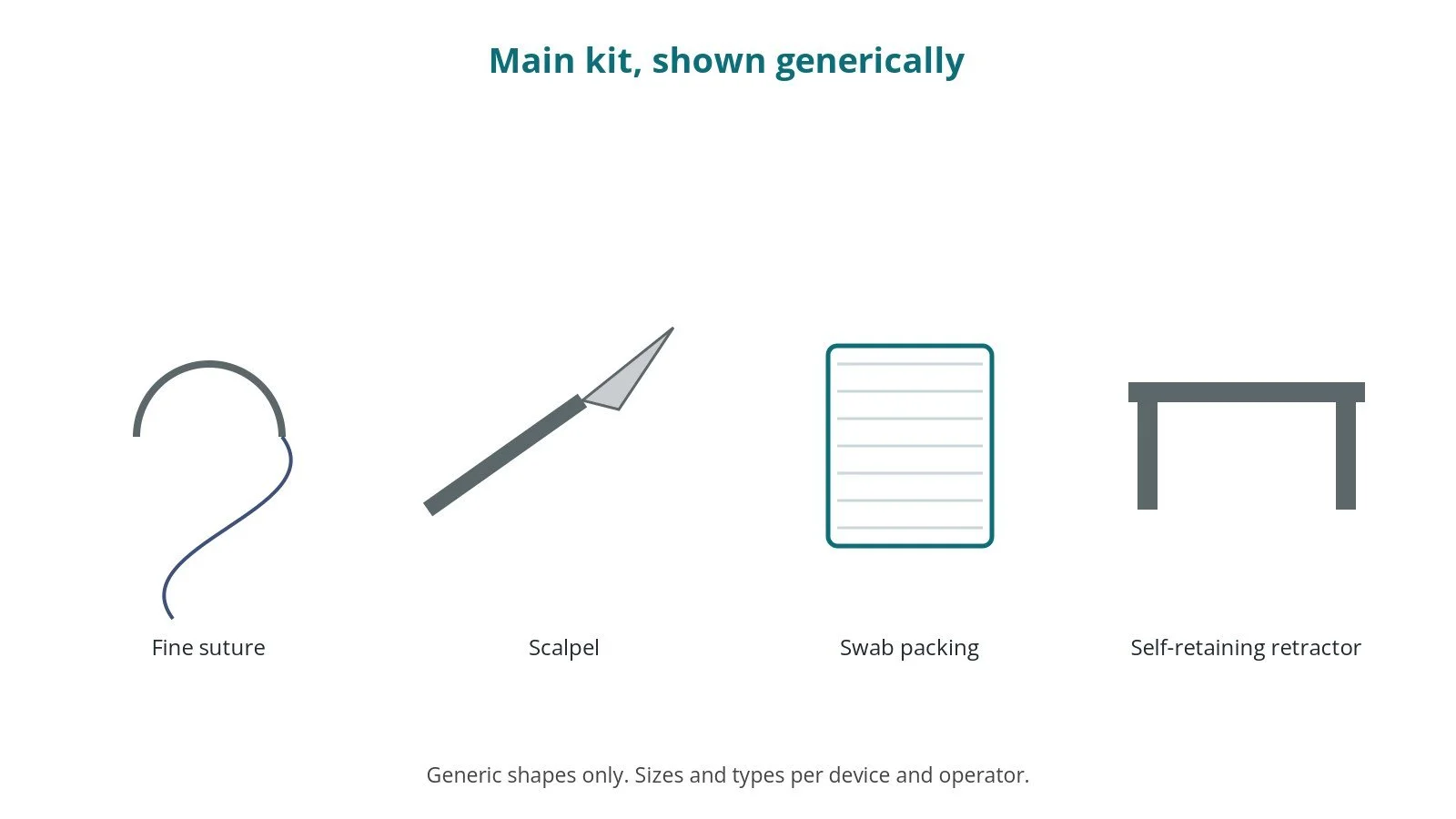
- perineal repair instrument set
- dissolving sutures, per surgeon
- good lighting and lithotomy supports
- swabs and vaginal tampon, counted
- antibiotics and laxatives, as per centre protocol
- local anaesthetic for minor tears, as per centre protocol
Procedural steps
- Team brief, WHO sign in; anaesthesia (top-up or spinal)
- Lithotomy; padding; lighting; prep and drape; count (including tampon)
- Examination and grading
- Repair of lining and sphincter if OASI
- Muscle, vagina and skin repaired
- Rectal and vaginal check; counts; documentation; sign out and handover
First time in theatre?
💡 First-time tip
- Know your role. Scrub, circulating, anaesthetic and ODP each have their own checks; ask at the team brief.
- Counts matter. Swabs, needles and instruments are counted before, during and at closure; speak up if one is missing.
- Tampon count. A vaginal tampon is often used; it must be counted in and out.
- Lithotomy safety. Raise and lower both legs together and check padding.
- Dignity. Keep the patient covered and the room quiet; she may be exhausted and anxious.
FAQ
Is a tear common?
Yes. Most are minor and heal well.
Will I have bowel problems?
Most people recover well after a good repair; ask about specialist follow-up.
Can I have another vaginal birth?
Often yes; your team will discuss it.
Related guides
Sources
All checked on 14 October 2026. Each page's own date is shown where it gives one.
- NHS. Episiotomy and perineal tears. nhs.uk/pregnancy/labour-and-birth/what-happens/episiotomy-and-perineal-tears
- RCOG. Third- and fourth-degree perineal tears (Green-top Guideline No. 29). rcog.org.uk
- StatPearls (NCBI Bookshelf), search: perineal laceration. ncbi.nlm.nih.gov/books
- World Health Organization. Surgical Safety Checklist. who.int
Disclaimer
Education only. This page is for general education for healthcare students, theatre staff and curious readers. It isn't medical advice and doesn't replace advice from your own doctor, surgical team or local unit protocols. Equipment and medicines are described generically. No product or manufacturer is recommended. If you think someone is having a medical emergency, call 999.
Disclosure: I work in the medical device industry. This page is independent education and isn't sponsored or reviewed by any company.
All diagrams on this page are original illustrations created for rodnieoro.com.