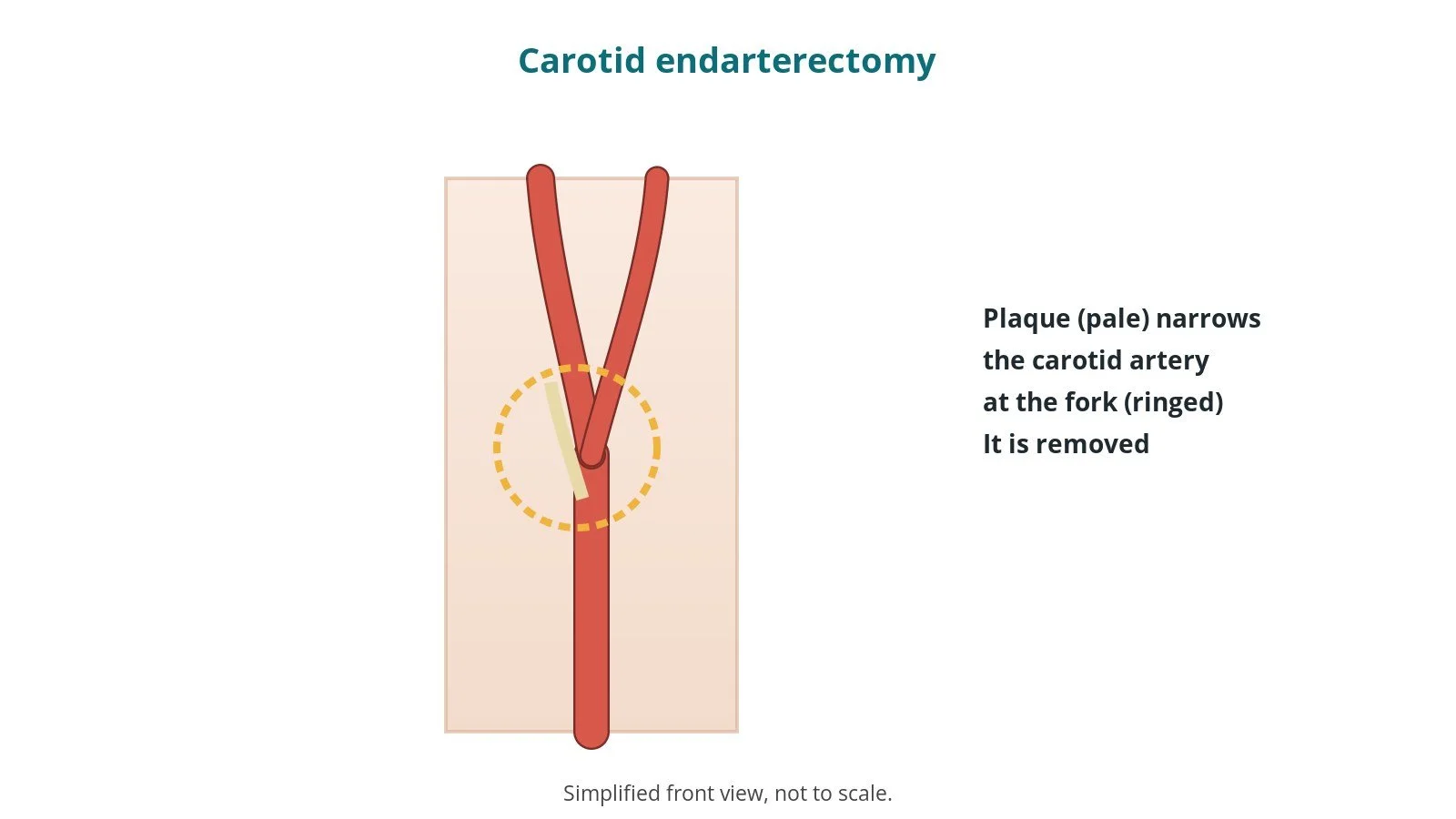
Carotid endarterectomy (CEA): an OR 101 guide
Reviewed by Rodnie Oro, cath lab charge nurse · Last reviewed: October 2026 · Education only, not medical advice
Carotid endarterectomy in one minute
What it is: surgery to remove fatty plaque from the carotid artery in the neck to lower the risk of stroke.
Who it is for: people with a significant carotid narrowing, especially after a recent stroke or TIA (mini-stroke).
Main risks: stroke, heart attack, nerve injury affecting the tongue or voice, bleeding in the neck.
Usually: under general or local anaesthetic, 1–2 hours, home in 1–3 days.
On this page: What is carotid endarterectomy? · Who is it for? · When is it done? · Step by step · Recovery · Risks · Kit list · First time in theatre? · FAQ
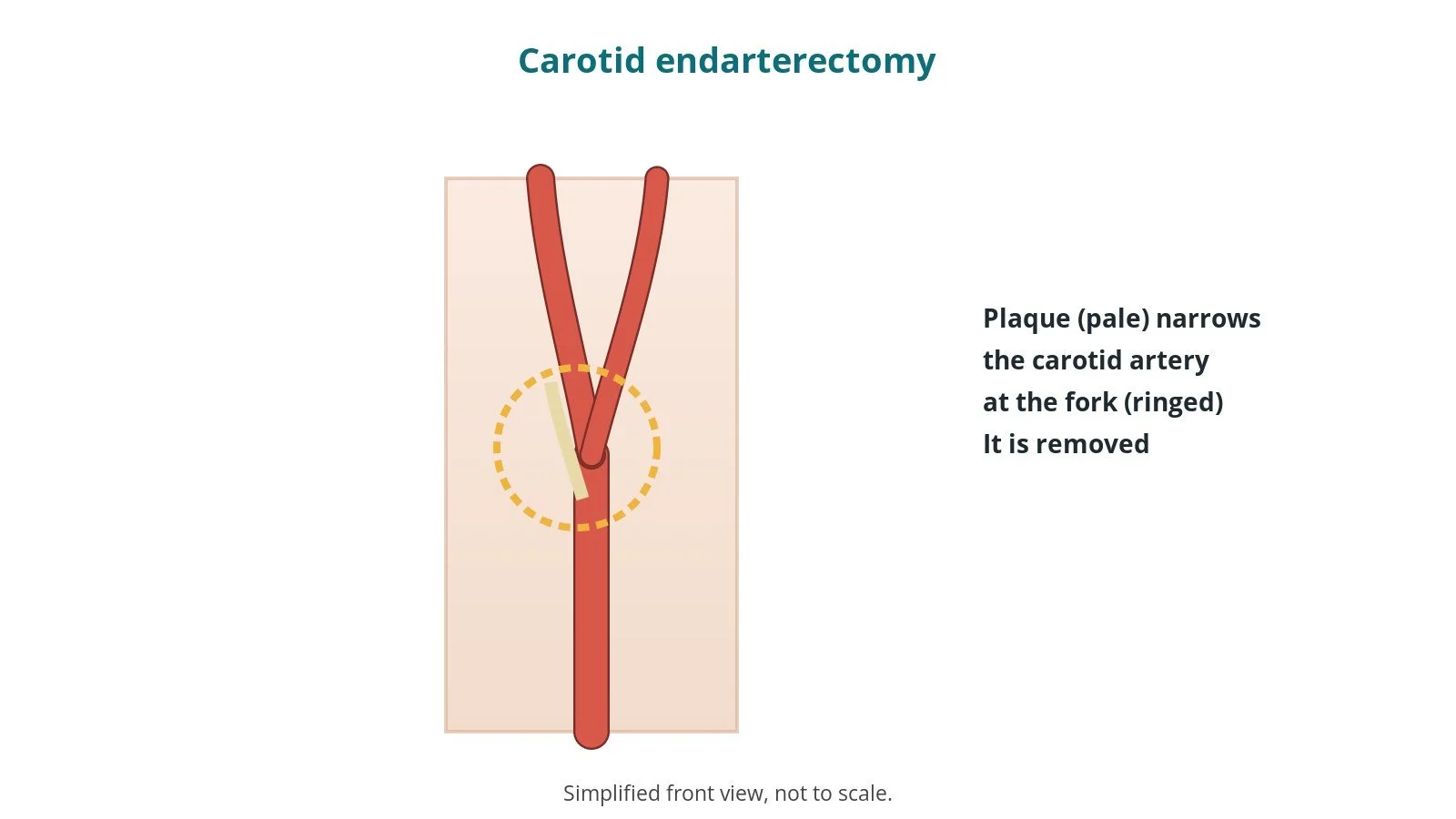
What is carotid endarterectomy?
The carotid arteries in the neck carry blood to the brain. Fatty plaque can narrow them, and pieces can break off and cause a stroke or TIA.
In a carotid endarterectomy (CEA) the surgeon:
- clamps the artery above and below the narrowing, after heparin is given
- opens the artery and removes the plaque
- may use a temporary shunt to keep blood flowing to the brain, per surgeon
- closes the artery, often with a patch to widen it
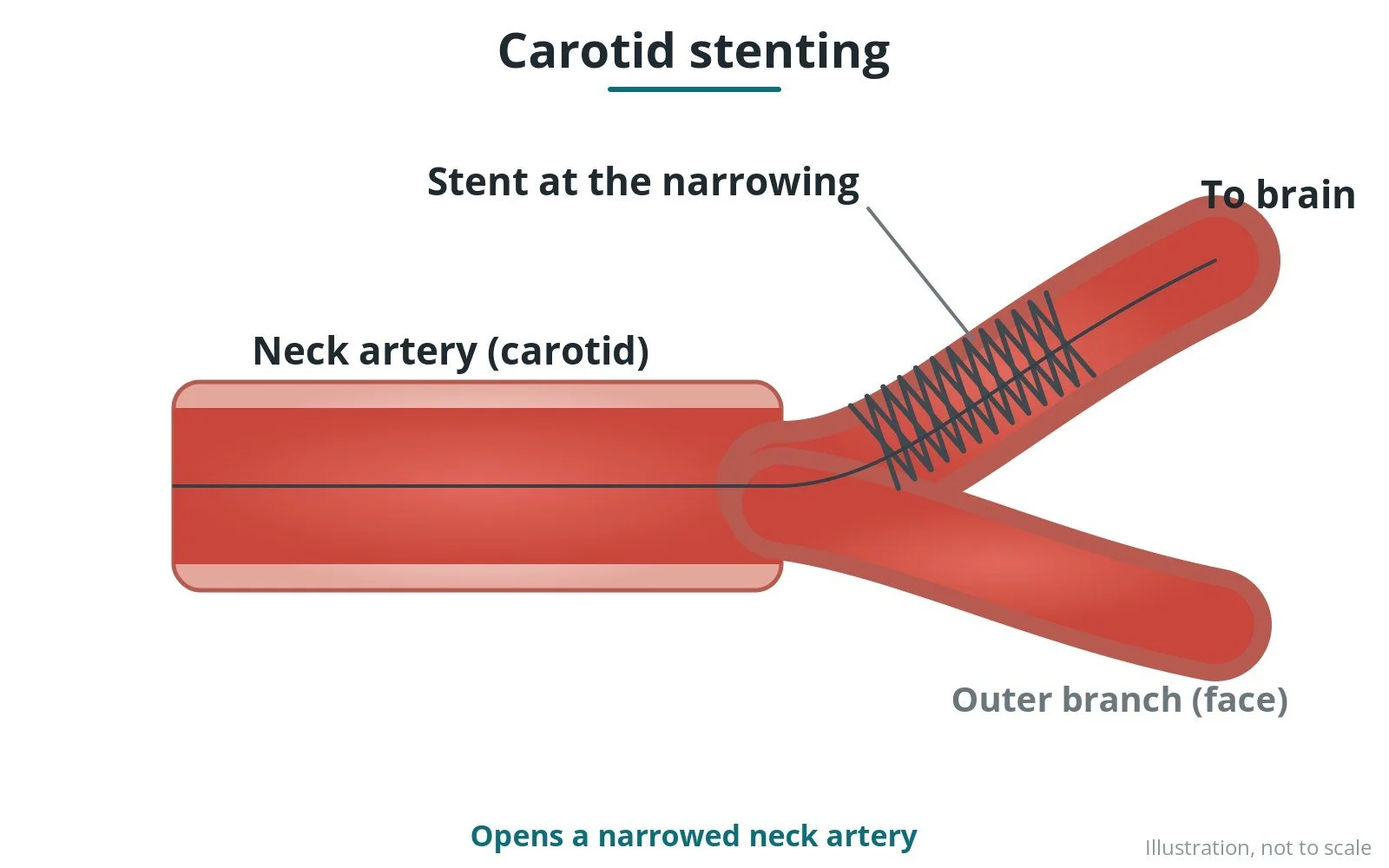
It is usually done soon after symptoms, as per national guidance. Carotid stenting is an alternative for some people.
New to the acronyms? See the Cath Lab Abbreviations A–Z.
Who is it for?
It may be considered for people with:
- a significant carotid narrowing after a recent stroke or TIA
- some people with a severe narrowing and no symptoms, after specialist discussion
The decision is made by your vascular and stroke team, who will talk through the reasons, the alternatives (including stenting or medicines alone) and the risks with you.
When is it done?
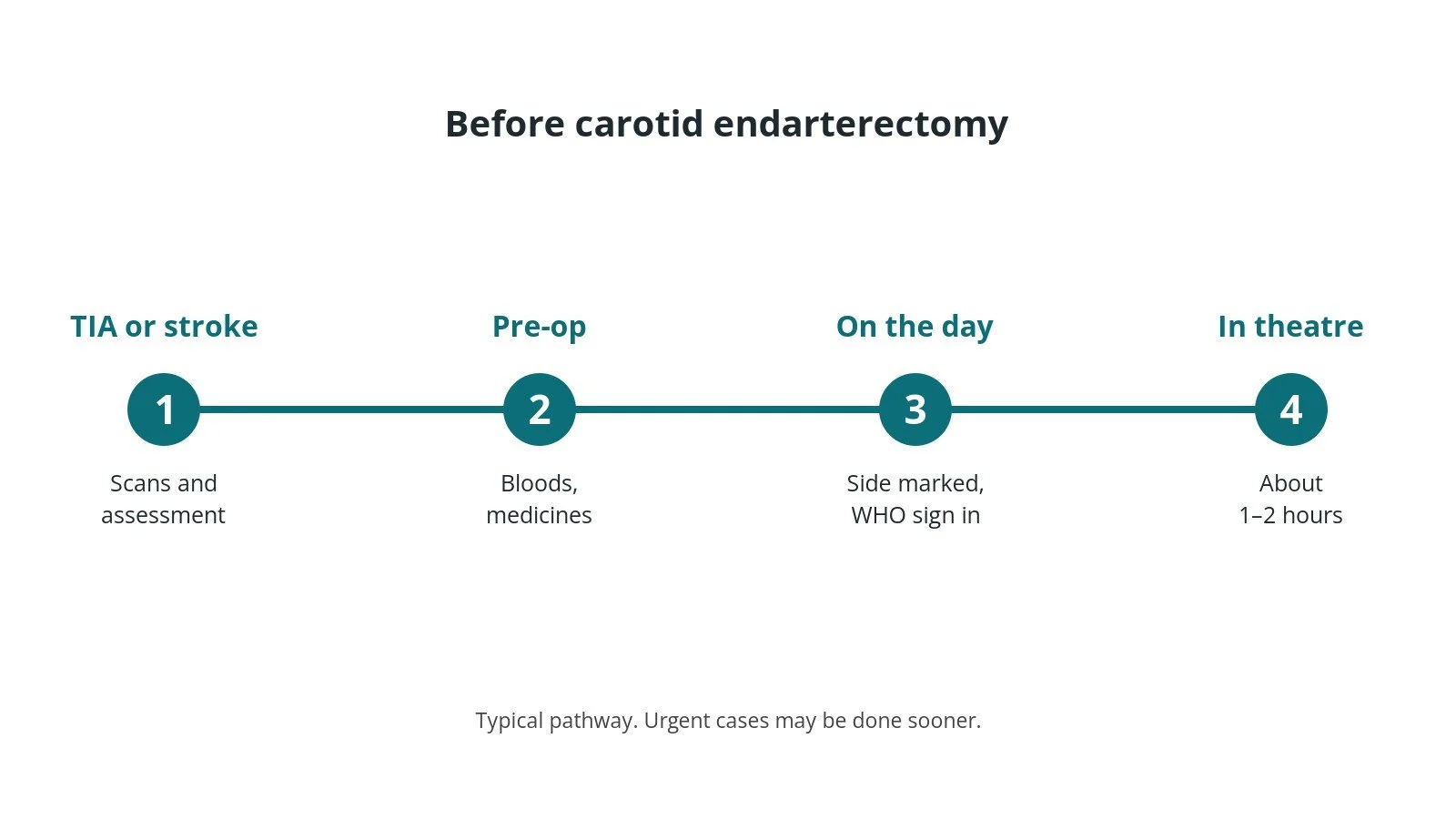
It is often done within days to two weeks of symptoms. Before it, you usually have:
- a duplex ultrasound and often CT or MR angiography
- blood tests and an ECG
- antiplatelet and statin medicines, as per centre protocol
- a chance to ask questions and give consent
Step by step
1. Getting ready
Team brief and WHO checklist first, including the side and site marking and the graft or patch check. The anaesthetic team and ODP give the anaesthetic (general, or local or regional so the patient is awake and the brain can be monitored, as per centre protocol) and place an arterial line and other lines as needed; antibiotics and clot prevention are given as per centre protocol. The circulating practitioner checks positioning, pressure areas, the diathermy plate and warming. The scrub practitioner sets up the vascular trolley with clamps, fine sutures and heparinised saline, and does the first count. Brain monitoring is set up as per centre protocol; the head is turned away with a shoulder roll.
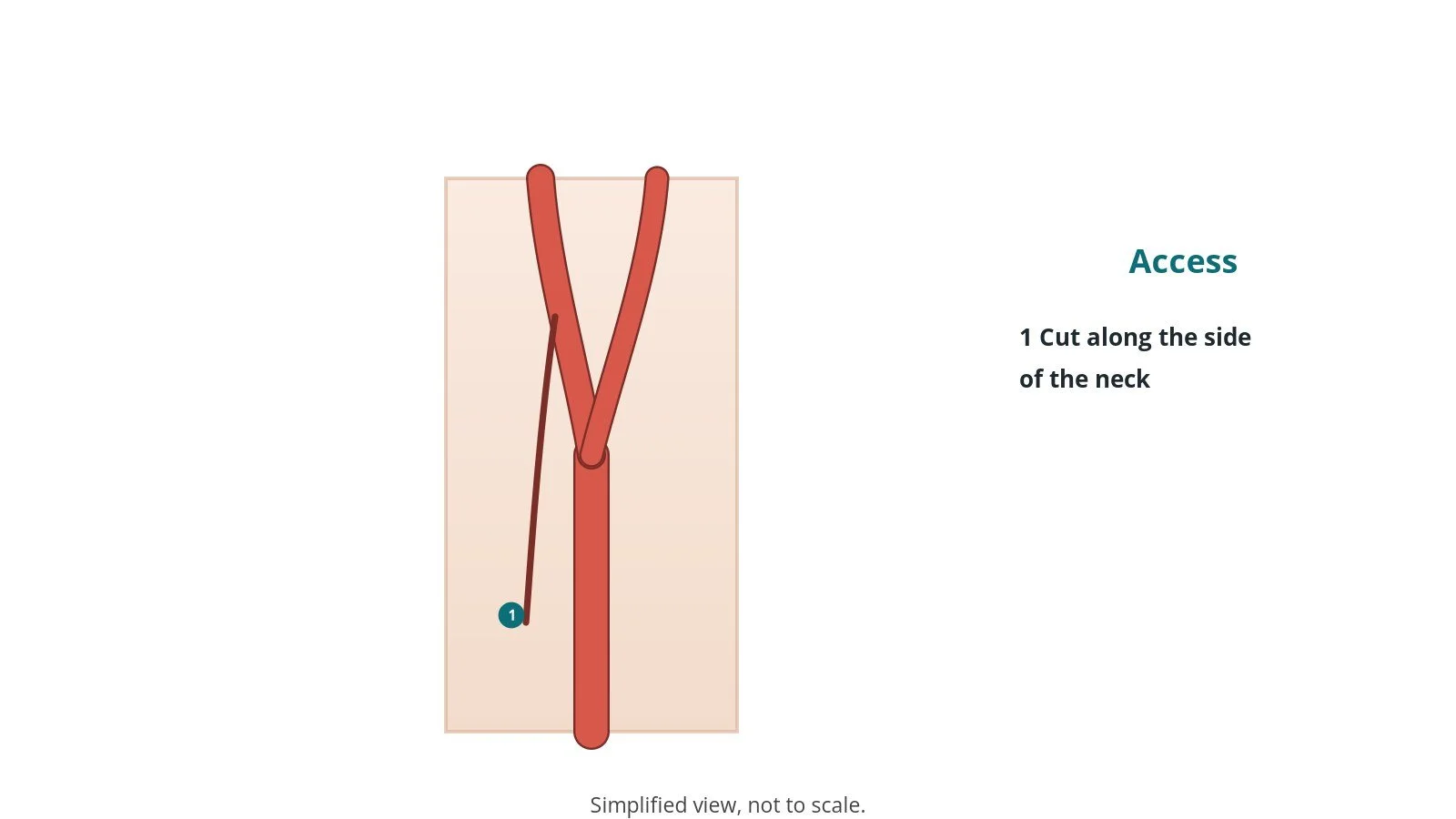
2. Access
A cut is made along the front edge of the neck muscle on the side of the narrowing, over the carotid artery.
3. Clearing the artery
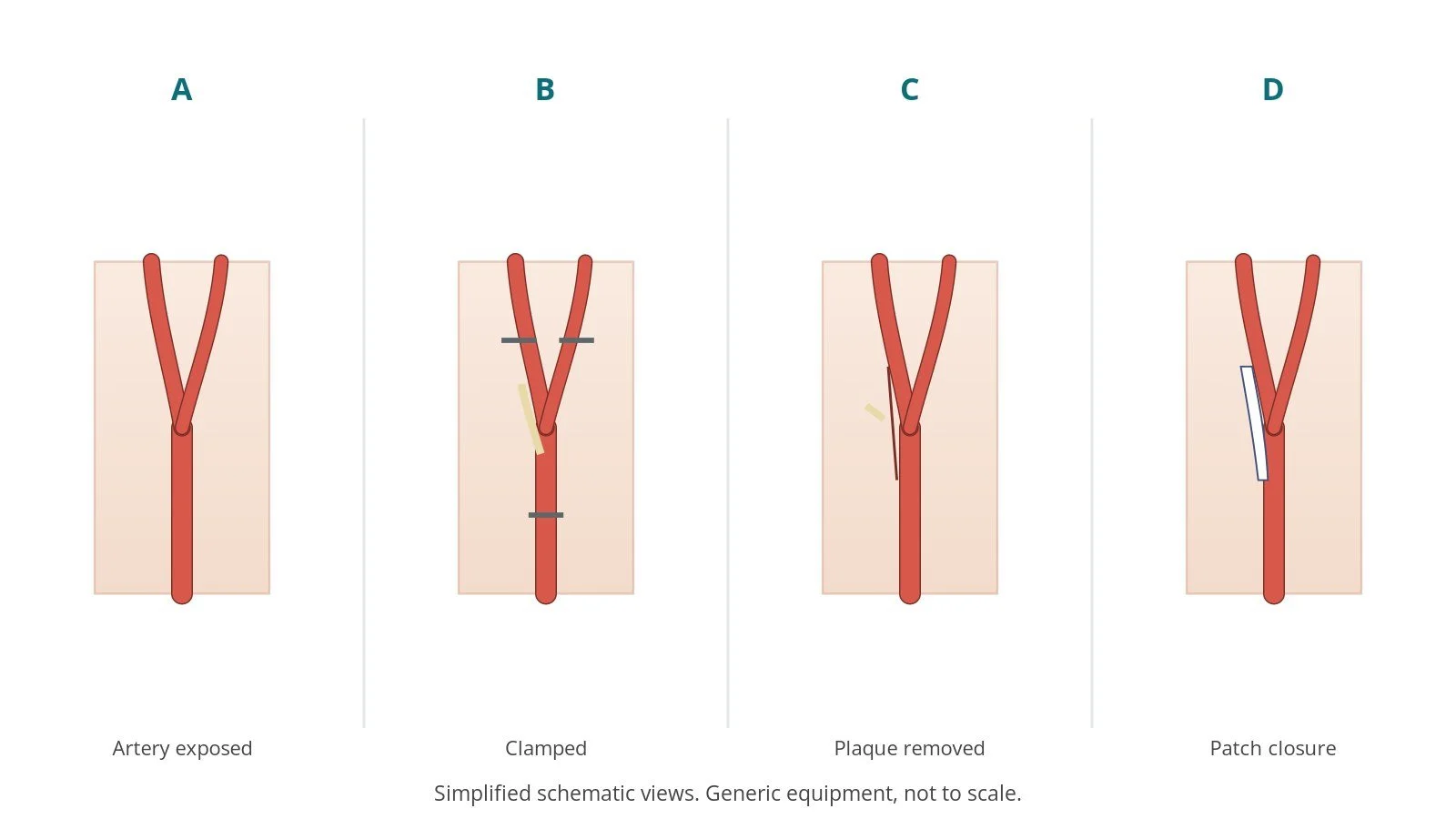
- A. Artery exposed. The carotid arteries are exposed and nerves protected.
- B. Clamped. Heparin is given (as per centre protocol) and clamps placed; a shunt may be inserted.
- C. Plaque removed. The artery is opened and the plaque carefully removed.
- D. Patch closure. The artery is closed, often with a patch, and the clamps removed in sequence.
If the patient is awake, the team checks speech and hand movement on the other side while the artery is clamped.
4. Finishing
Bleeding is controlled and a drain may be placed, per surgeon. The neck is closed in layers. Final counts are confirmed, the patch or graft logged, and the patient goes to recovery with neurological and blood pressure checks.
Recovery and aftercare
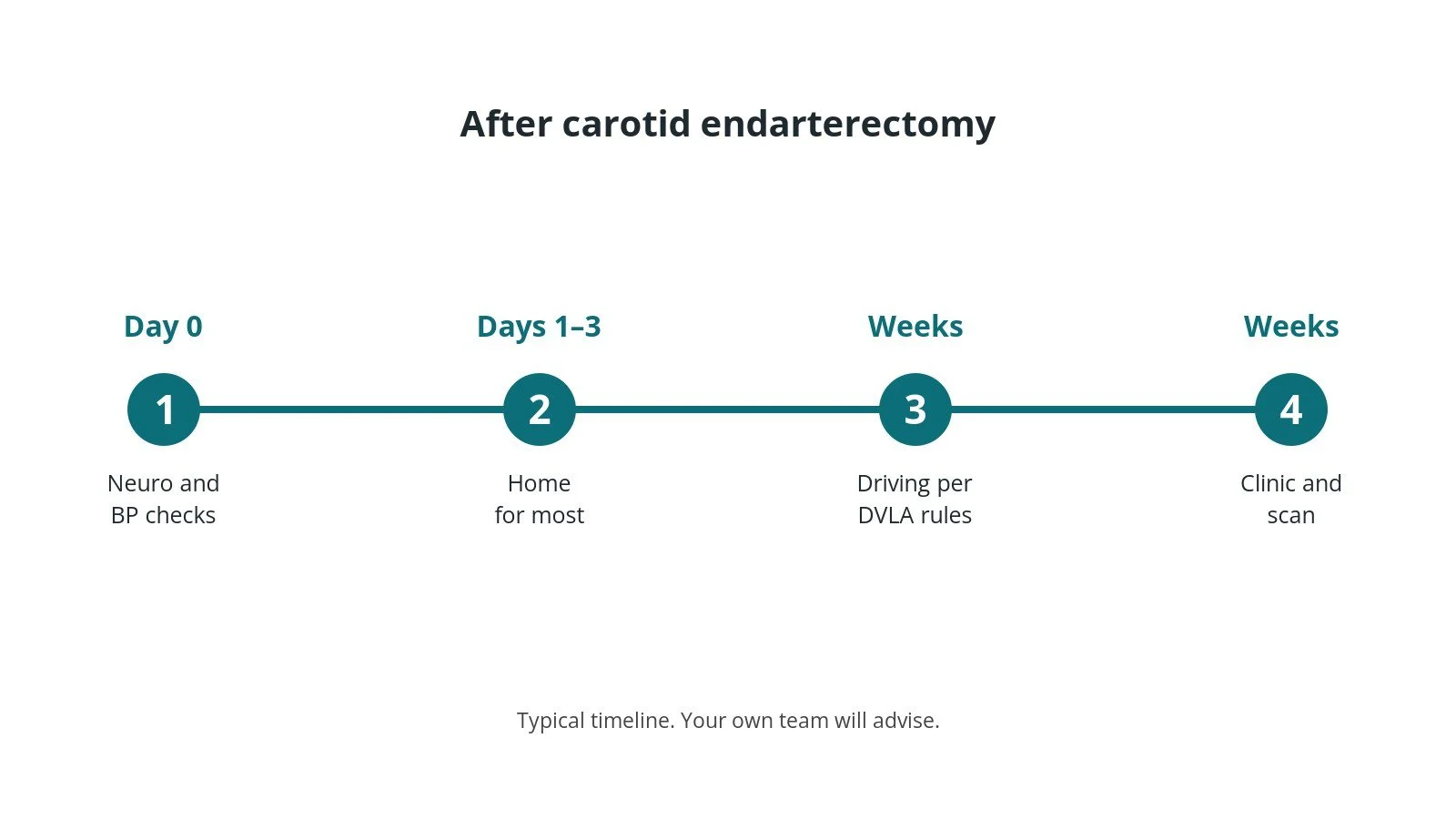
- First hours: close checks of speech, movement and blood pressure, and the neck wound.
- Going home: often 1–3 days.
- Neck: some numbness of the skin is common.
- Medicines: antiplatelet and statin medicines, as prescribed.
- Driving: usually not for a few weeks, and depends on your stroke or TIA; ask your team.
- Follow-up: clinic review and sometimes a scan.
Call 999 if you have chest pain, sudden breathlessness, signs of a stroke (face drooping, arm weakness, speech problems), sudden severe pain, or a cold, pale or numb leg. Contact your team if a wound becomes red, hot, leaky or swollen.
Risks and complications
Your team will explain the risks that apply to you. Possible problems include:
- stroke (uncommon but serious)
- heart attack
- nerve injury affecting the tongue, voice or swallowing, usually temporary
- bleeding or swelling in the neck, which can affect breathing (urgent)
- wound infection or patch infection (rare)
- high blood pressure after surgery
Theatre kit list (printable)
Example kit list
Every theatre has its own protocol, and sizes and doses vary.
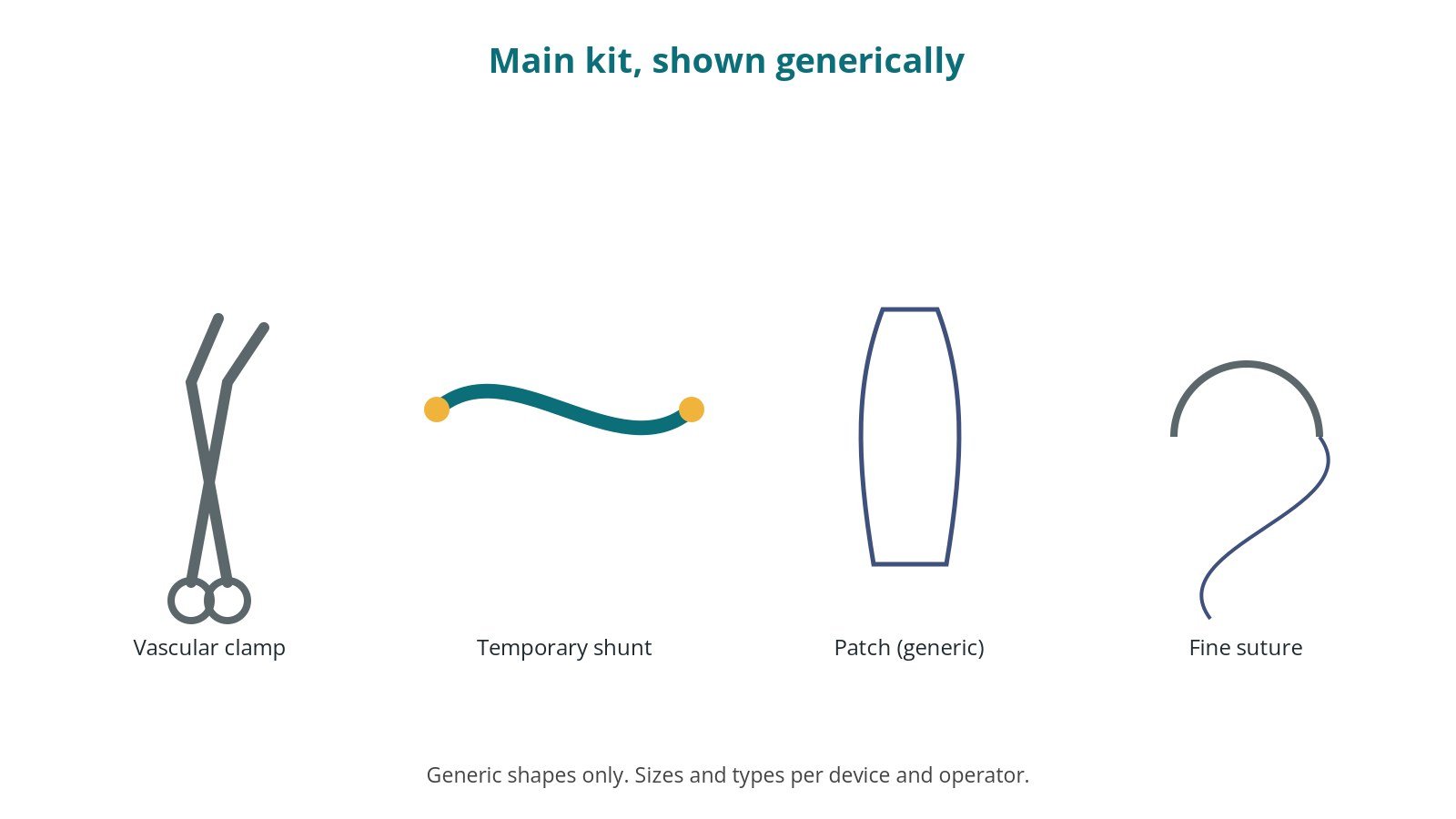
- vascular instrument set with fine clamps and loops
- temporary shunt, per surgeon
- patch, type and size per device and operator
- fine vascular sutures
- heparin and heparinised saline, as per centre protocol
- brain monitoring, per centre
- shoulder roll and head ring
- drain, closure sutures and dressings
Procedural steps
- Team brief, WHO sign in; side marked; patch check; anaesthesia; arterial line
- Head turned, shoulder roll; prep and drape; count
- Incision; arteries exposed; nerves protected
- Heparin; clamps; shunt if used; clamp time noted
- Plaque removed; patch closure; clamps off in sequence
- Haemostasis; drain; closure; counts; patch log; sign out and handover with neuro checks
First time in theatre?
💡 First-time tip
- Know your role. Scrub, circulating, anaesthetic and ODP each have their own checks; ask at the team brief.
- Counts matter. Swabs, needles and instruments are counted before, during and at closure; speak up if one is missing.
- Awake patient. If awake, keep theatre quiet and help the anaesthetist with speech and hand checks.
- Clamp times. Note when clamps go on and come off and call times out if asked.
- Heparin. Know when heparin is given and when its effect is checked, as per centre protocol.
- Graft check. Read back the graft or patch type and size before opening, and log it.
FAQ
Will I be awake?
Sometimes; some centres use local anaesthetic so the brain can be checked directly.
Why is it done so soon after a TIA?
The risk of stroke is highest in the first days and weeks.
Will I have a scar?
A neck scar that usually fades well.
Related guides
Sources
All checked on 14 October 2026. Each page's own date is shown where it gives one.
- NICE. Stroke and TIA in over 16s (NG128). nice.org.uk/guidance/ng128
- NHS. Carotid endarterectomy. nhs.uk/conditions/carotid-endarterectomy
- StatPearls (NCBI Bookshelf), search: carotid endarterectomy. ncbi.nlm.nih.gov/books
- Naylor R, et al. ESVS 2023 Clinical Practice Guidelines on the Management of Atherosclerotic Carotid and Vertebral Artery Disease. Eur J Vasc Endovasc Surg 2023;65(1):7–111. PubMed 35598721
- World Health Organization. Surgical Safety Checklist. who.int
Disclaimer
Education only. This page is for general education for healthcare students, theatre staff and curious readers. It isn't medical advice and doesn't replace advice from your own doctor, surgical team or local unit protocols. Equipment and medicines are described generically. No product or manufacturer is recommended. If you think someone is having a medical emergency, call 999.
Disclosure: I work for a company that makes a device used in this procedure. This page is independent education, isn't sponsored or reviewed by any company, and doesn't recommend any product.
All diagrams on this page are original illustrations created for rodnieoro.com.