Pulsed field ablation (PFA): a Cath Lab 101 guide
Reviewed by Rodnie Oro, cath lab charge nurse · Last reviewed: October 2026 · Education only, not medical advice
Pulsed field ablation in one minute
What it is: using very short electrical pulses to treat heart tissue causing an abnormal rhythm, most often atrial fibrillation, instead of heat or cold.
Who it is for: mainly people with AF having pulmonary vein isolation; uses are expanding.
Main risks: bruising in the groin, fluid around the heart, stroke (rare), and the rhythm returning.
Usually: under deep sedation or general anaesthetic, 1–3 hours, home the same or next day.
On this page: What is pulsed field ablation? · Who is it for? · When is it done? · Step by step · Recovery · Risks · Kit list · First time in the lab? · FAQ
What is pulsed field ablation?
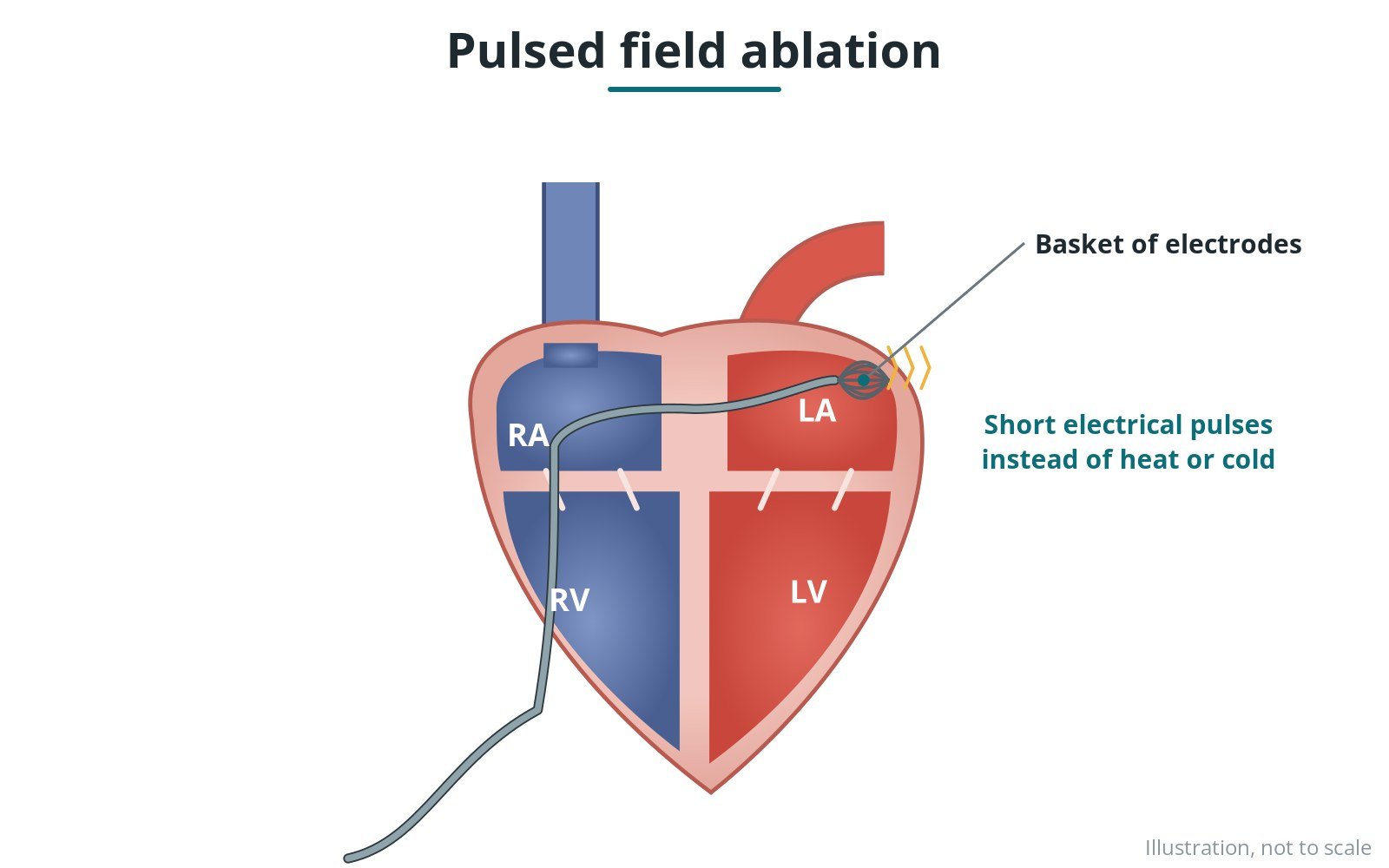
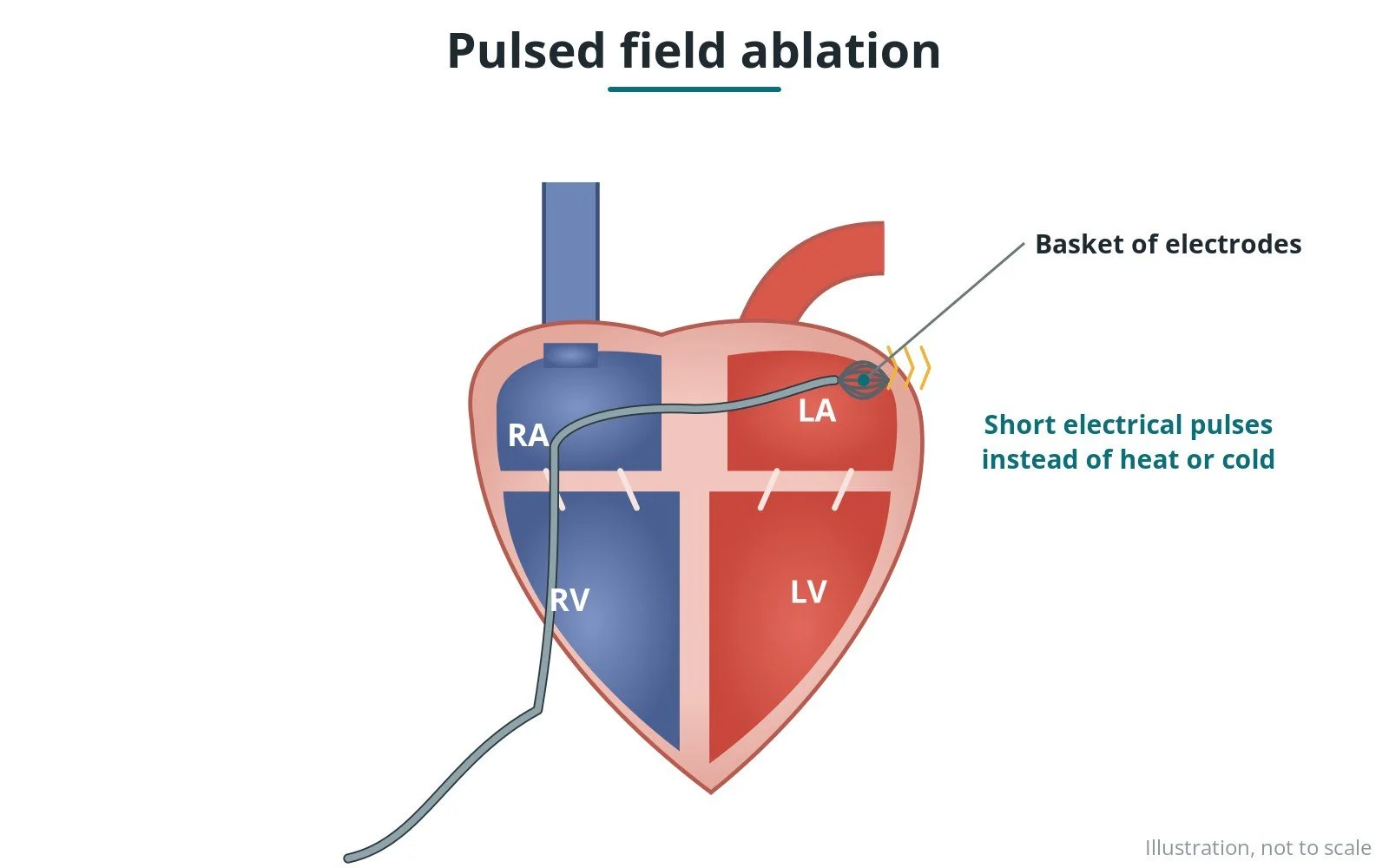
Pulsed field ablation (PFA) uses electroporation: rapid electrical pulses create tiny pores in heart muscle cells so they stop conducting.
- a PFA catheter is passed through the groin vein and across the septum into the left atrium
- it is placed at each pulmonary vein
- pulses are delivered in short bursts
Heart muscle is more sensitive to it than some nearby tissues. Long-term outcomes are still being studied.
New to the acronyms? See the Cath Lab Abbreviations A–Z.
Who is it for?
It may be considered for people with:
- paroxysmal or persistent atrial fibrillation
- selected other atrial rhythms
The decision is made by your heart team, who will talk through the reasons, the alternatives and the risks with you.
When is it done?
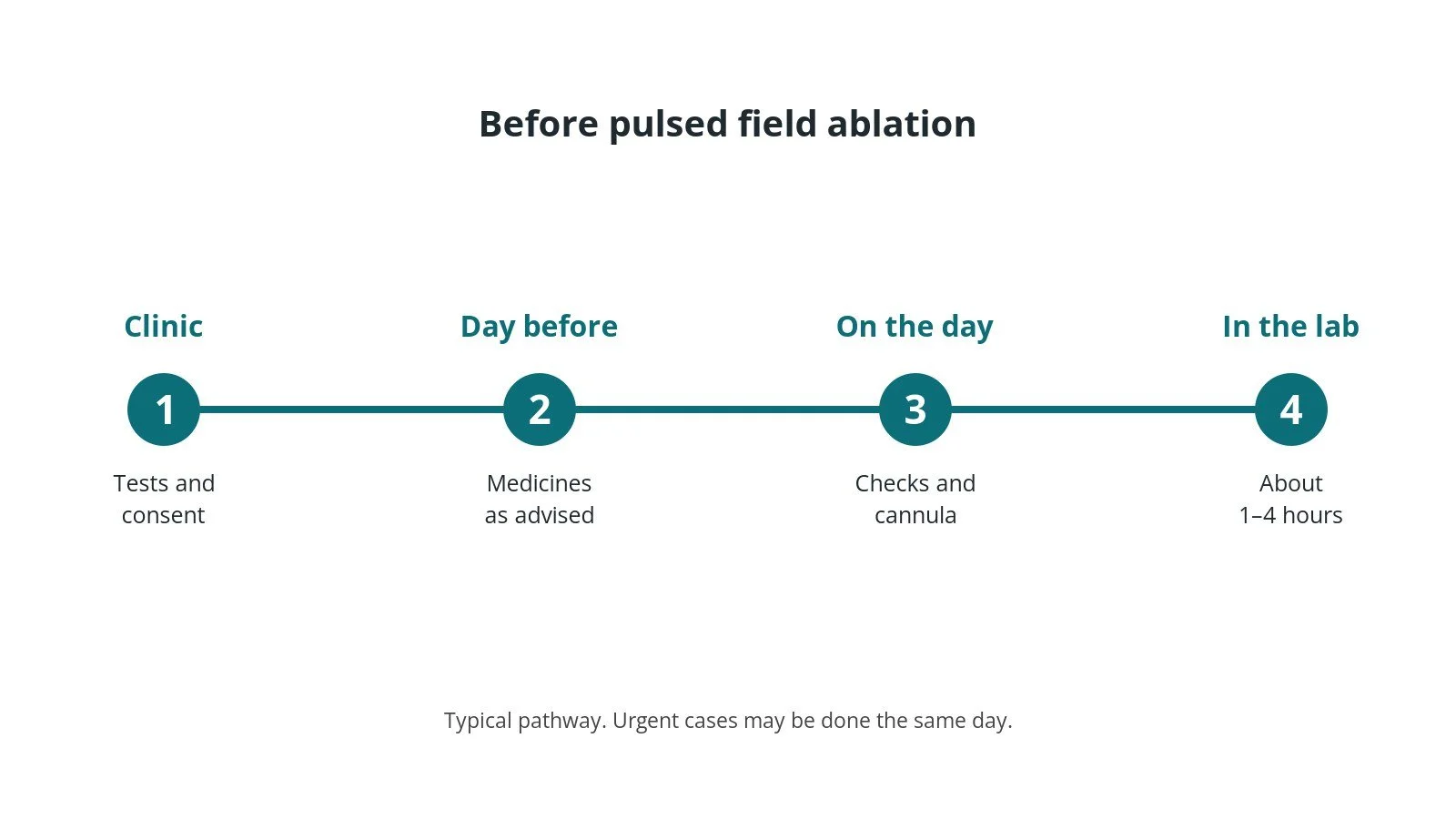
It can be planned in advance or done urgently. Before it, you usually have:
- blood tests, including kidney function and blood count
- an ECG, and often an echo or other scan
- a review of your medicines, especially blood thinners and diabetes medicines, as per centre protocol
- a chance to ask questions and give consent
Step by step
1. Getting ready
You lie on the table. Sticky pads go on your chest and back, and ECG, blood pressure and oxygen are monitored. You usually have sedation or a general anaesthetic, as per centre protocol. The groin is cleaned and numbed.
2. Access
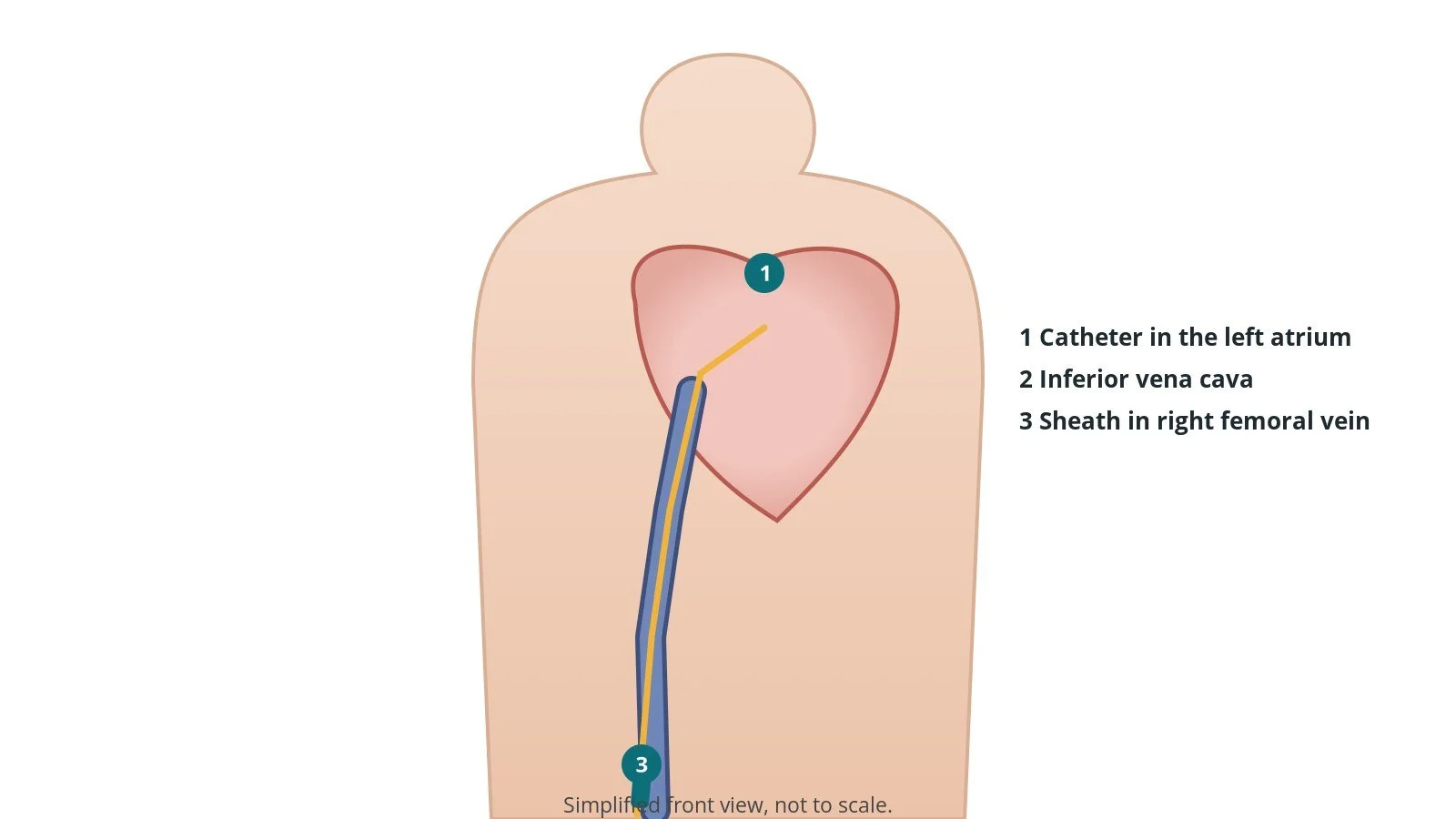
Using ultrasound, sheaths are placed in the femoral vein in the groin, sizes per device and operator. Catheters are passed up to the heart under X-ray and a 3D mapping system.
3. Pulmonary vein isolation
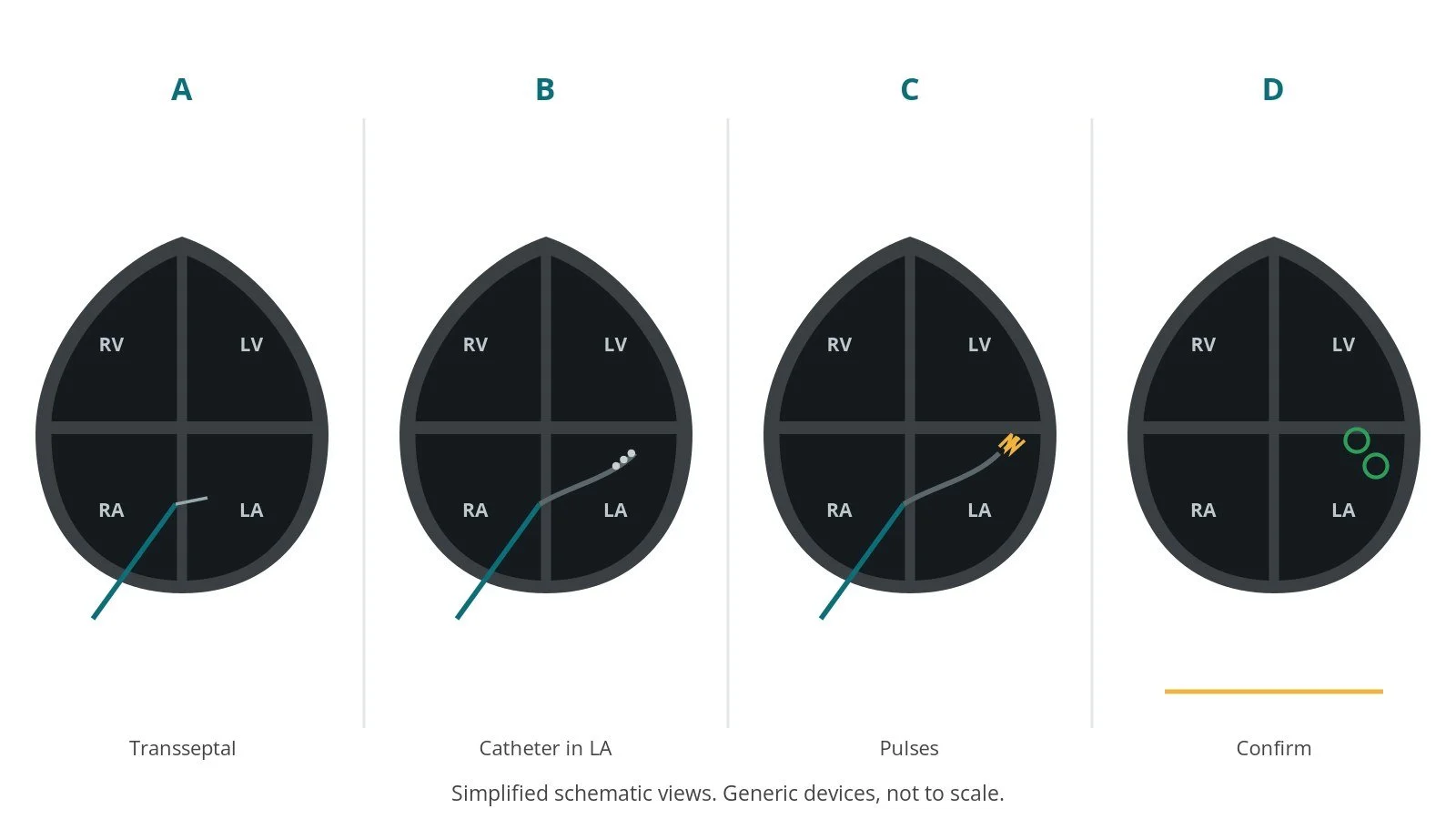
- A. Transseptal. A needle crosses the atrial septum.
- B. Catheter in LA. The PFA catheter is placed at a pulmonary vein.
- C. Pulses. Pulses are delivered in short bursts.
- D. Confirm. Each vein is checked for isolation.
Under sedation or anaesthetic you won't usually feel the pulses, which can cause muscle twitches.
4. Finishing
The catheters and sheaths are removed. The groin is closed with pressure or a stitch, per device and operator.
Recovery and aftercare
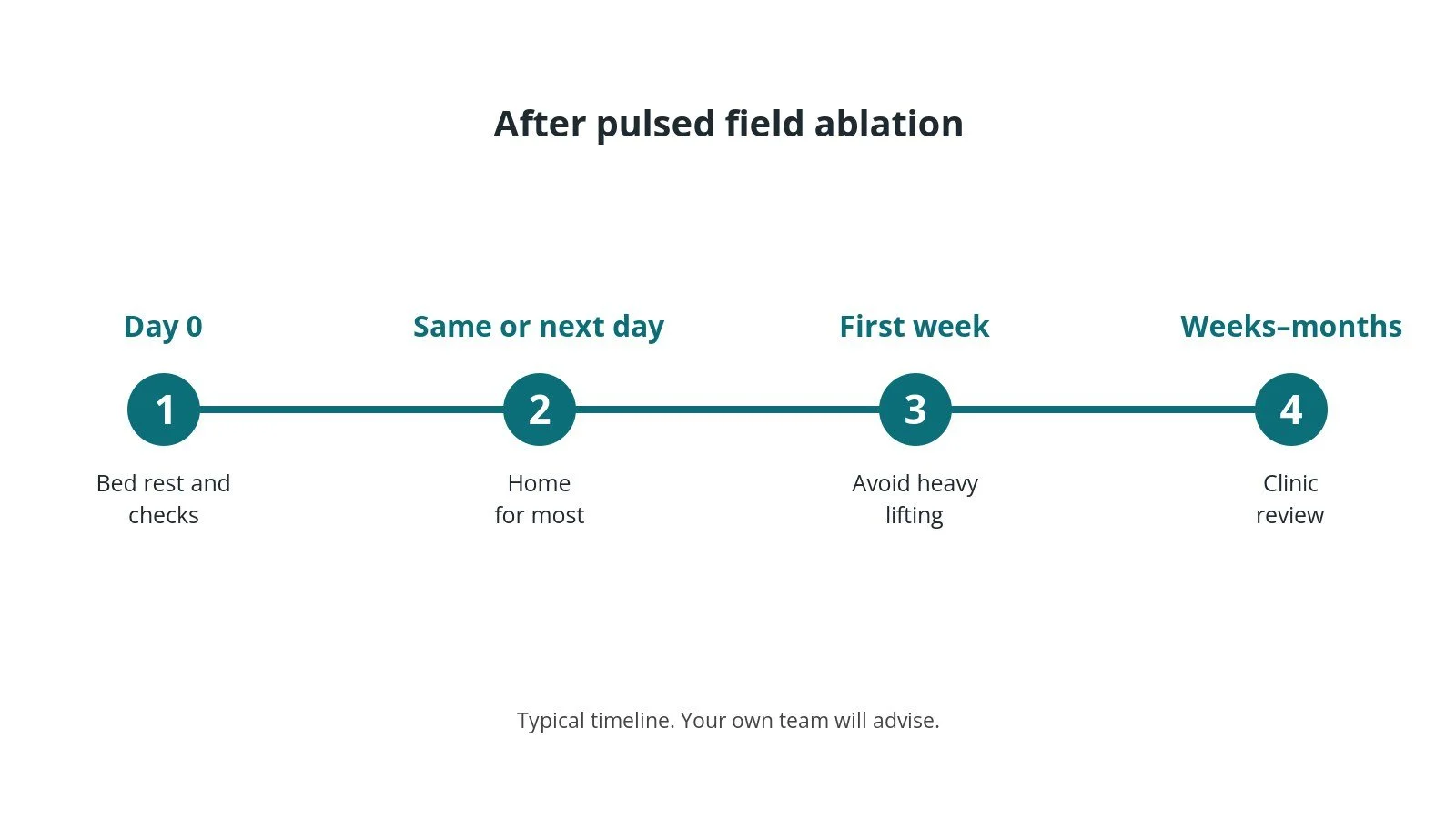
- First hours: bed rest while the groin settles; checks of the groin, rhythm and blood pressure, as per centre protocol.
- Going home: often the same day or the next morning.
- Groin: avoid heavy lifting and strenuous exercise for about a week.
- Medicines: take blood thinners and rhythm medicines exactly as advised.
- Driving: DVLA rules depend on the rhythm problem; ask your team.
- Follow-up: clinic review, sometimes with an ECG or heart monitor.
Call 999 if you have chest pain, breathlessness, fainting, signs of a stroke, or heavy bleeding or swelling at the access site.
Risks and complications
Your team will explain the risks that apply to you. Possible problems include:
- bruising or bleeding in the groin
- damage to a vein or artery in the groin
- new rhythm problems, sometimes needing a pacemaker (uncommon)
- fluid or bleeding around the heart (tamponade) (uncommon)
- stroke or blood clots (rare)
- the original rhythm problem coming back
Cath lab kit list (printable)
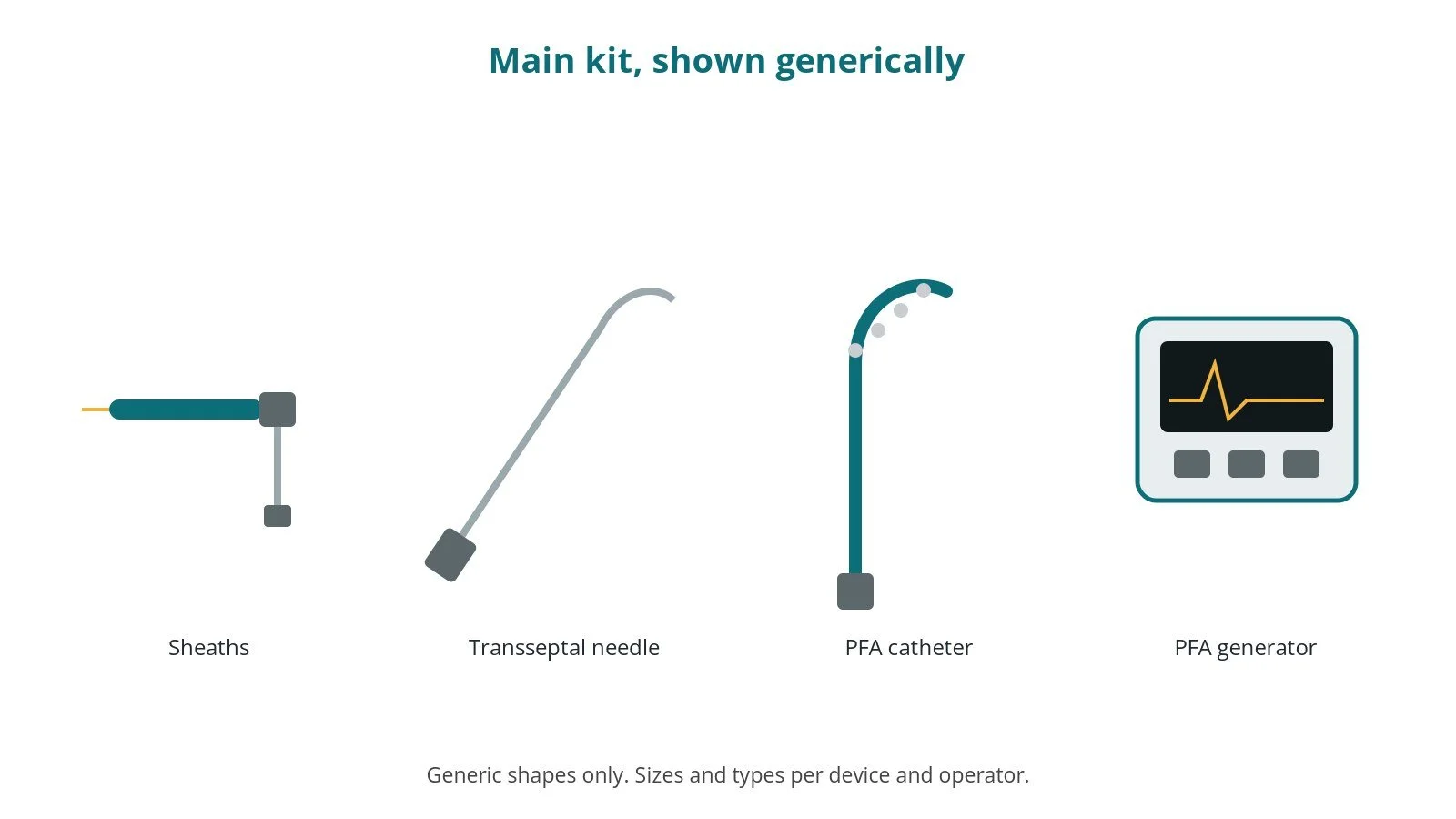
Barts example kit list
An example from one UK centre, written generically. Every lab has its own protocol, and sizes and doses vary.
- venous sheaths in the groin, sizes per device and operator
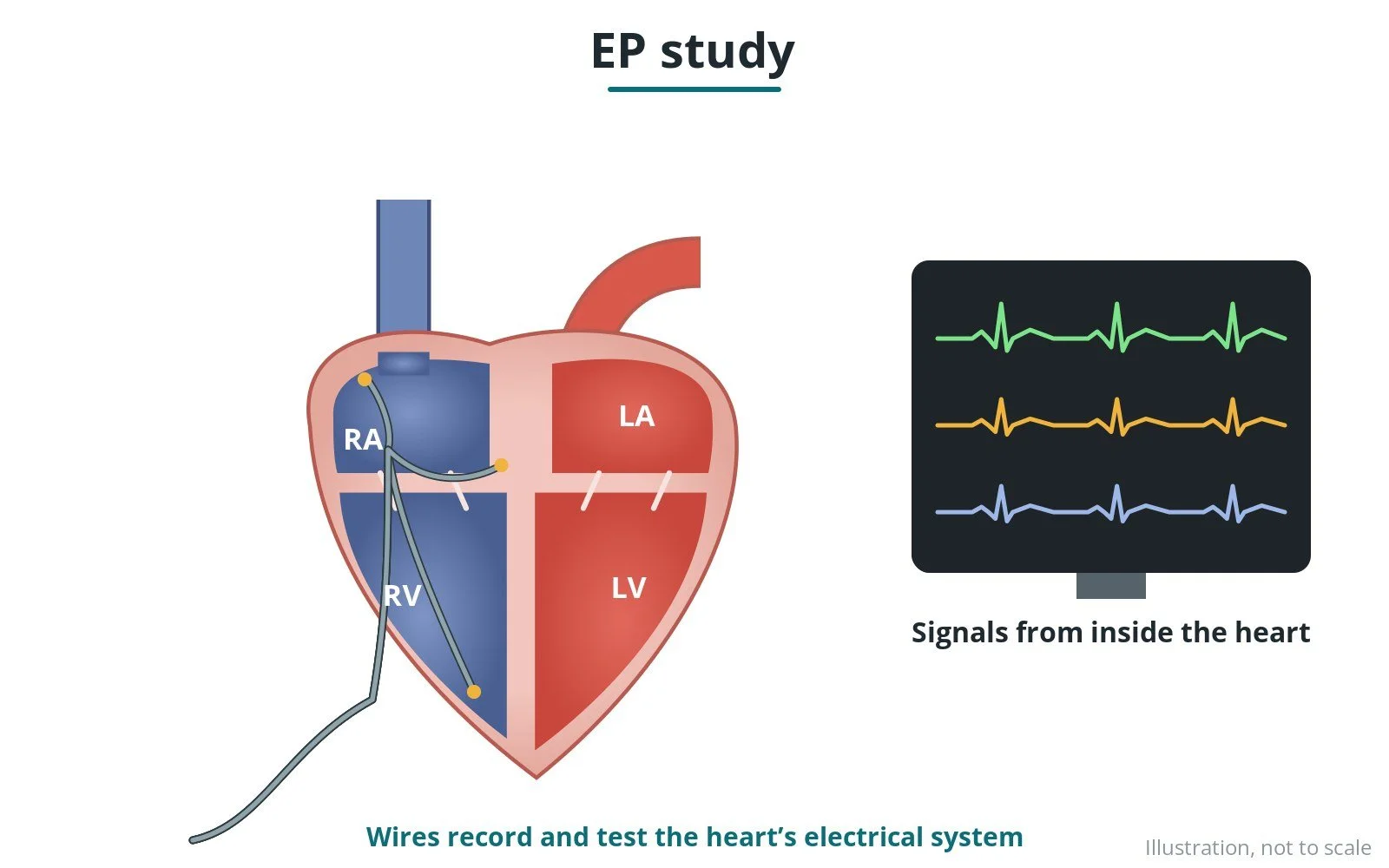
- diagnostic EP catheters, per operator
- recording system and stimulator
- ultrasound for vein access
- heparin, as per centre protocol
- sedation or anaesthetic, as per centre protocol
- transseptal kit, per operator
- steerable sheath, per device and operator
- PFA catheter and generator, per device and operator
- mapping system if used, per operator
Procedural steps (Barts example)
- Access; transseptal puncture
- Heparin, as per centre protocol
- PFA catheter at each vein
- Pulses delivered
- Isolation confirmed
- Catheters out; groin closure
First time in the cath lab?
💡 First-time tip
- Muscle twitches. Warn the team; they are expected.
- Anaesthesia ready. Deep sedation or GA is common.
- ACT checks. Clotting time checks as per centre protocol.
- Count the veins. Log each vein treated.
FAQ
Is it better than heat or cold?
It is a different energy; your team will advise.
Is it new?
It has been used more widely in recent years.
Will I be asleep?
Often deeply sedated or under GA.
Related Cath Lab 101 guides
Sources
All checked on 10 October 2026. Each page's own date is shown where it gives one.
- Van Gelder IC, et al. 2024 ESC Guidelines for the management of atrial fibrillation. Eur Heart J 2024;45(36):3314–3414. PubMed 39210723
- StatPearls (NCBI Bookshelf), search: pulsed field ablation. ncbi.nlm.nih.gov/books
Disclaimer
Education only. This page is for general education for healthcare students, cath lab staff and curious readers. It isn't medical advice and doesn't replace advice from your own doctor, heart team or local unit protocols. Equipment and medicines are described generically. No product or manufacturer is recommended. If you think someone is having a heart emergency, call 999.
Disclosure: I work for a company that makes a device used in this procedure. This page is independent education, isn't sponsored or reviewed by any company, and doesn't recommend any product.
All diagrams on this page are original illustrations created for rodnieoro.com.