Small bowel resection and adhesiolysis: an OR 101 guide
Reviewed by Rodnie Oro, cath lab charge nurse · Last reviewed: October 2026 · Education only, not medical advice
Small bowel resection in one minute
What it is: surgery to release scar bands (adhesiolysis) and, if needed, remove a damaged part of the small bowel and join the ends.
Who it is for: people with a small bowel blockage that has not settled, or bowel damaged by a lack of blood supply, Crohn's disease or a tumour.
Main risks: leak from the join, infection, bleeding, slow bowel recovery, further adhesions.
Usually: under general anaesthetic, 1–3 hours, often 5–10 days in hospital.
On this page: What are small bowel resection and adhesiolysis? · Who is it for? · When is it done? · Step by step · Recovery · Risks · Kit list · First time in theatre? · FAQ
What are small bowel resection and adhesiolysis?
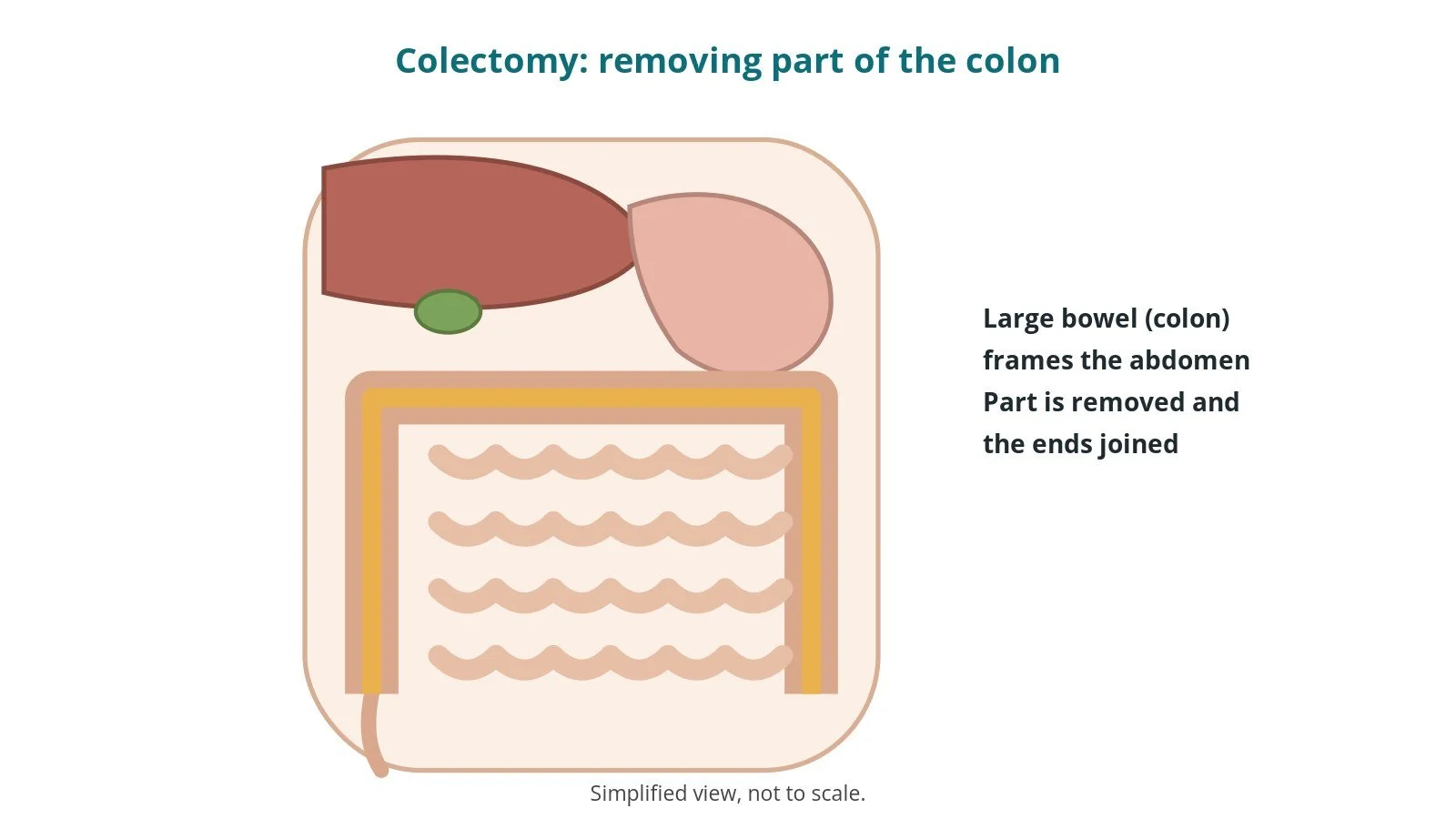
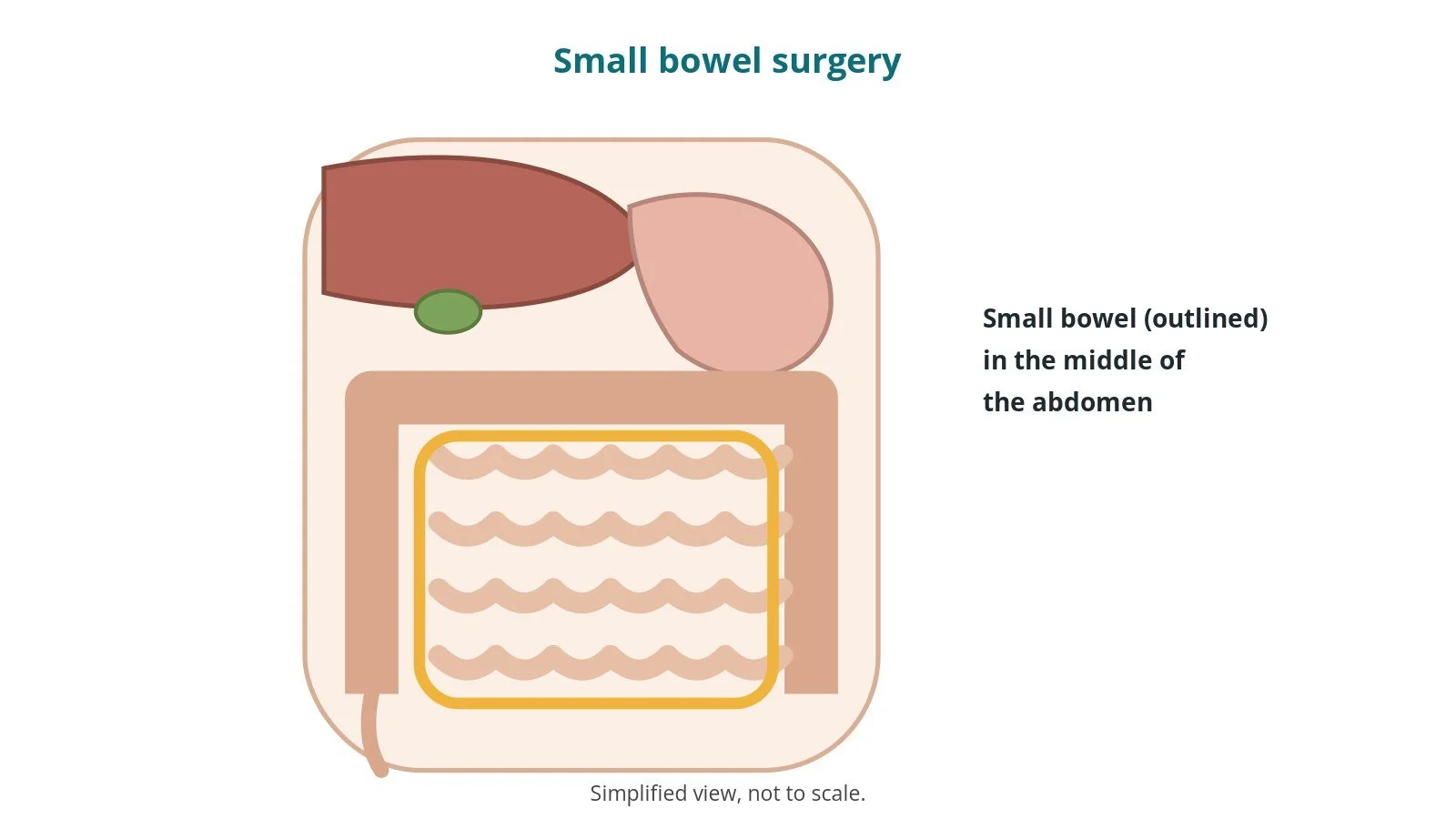
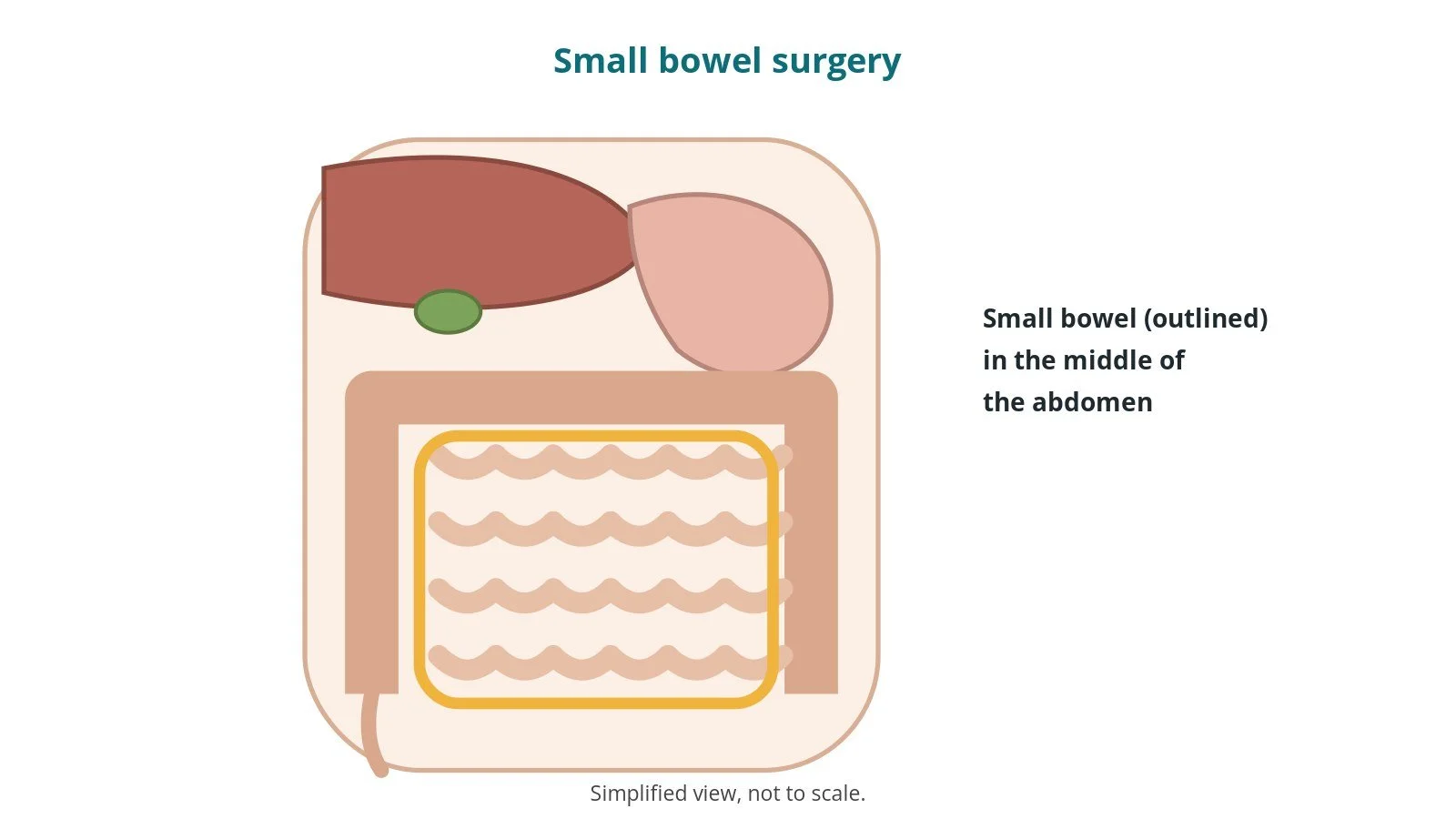
The small bowel is several metres long and absorbs most nutrients. Adhesions are bands of scar tissue, usually after previous surgery, that can kink and block it.
- Adhesiolysis: adhesions are carefully cut to free the bowel
- Small bowel resection: a damaged section is removed and the healthy ends joined with staples or stitches (anastomosis)
Many blockages settle with a drip and a tube in the stomach; surgery is needed if they do not, or if the bowel's blood supply is at risk. It can be open or keyhole, per surgeon.
New to the acronyms? See the Cath Lab Abbreviations A–Z.
Who is it for?
It may be considered for people with:
- a small bowel blockage that has not settled
- a strangulated or twisted bowel (emergency)
- Crohn's disease with narrowing
- small bowel tumours or injury
The decision is made by your surgical team, who will talk through the reasons, the alternatives and the risks with you.
When is it done?
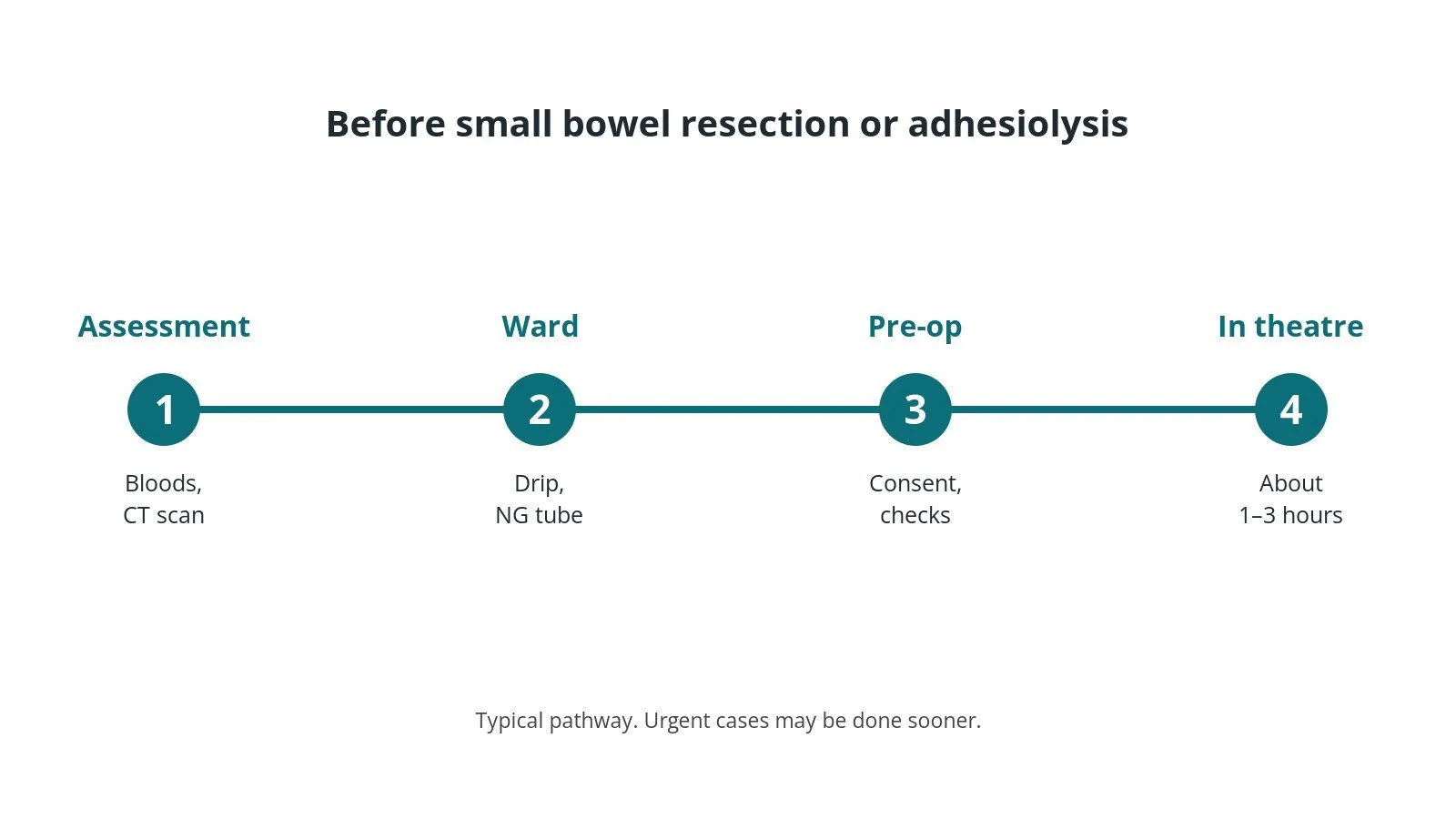
It may be planned or urgent. Before it, you usually have:
- blood tests and a CT scan
- a drip and a tube through the nose into the stomach (NG tube), as per centre protocol
- a review of your medicines, as per centre protocol
- a chance to ask questions and give consent
Step by step
1. Getting ready
Team brief and WHO checklist first. The anaesthetic team and ODP give the anaesthetic (general, often rapid-sequence); antibiotics and blood-clot prevention are given as per centre protocol. The circulating practitioner checks positioning, pressure areas, the diathermy plate and warming. The scrub practitioner sets up the instrument trolley and does the first count. A bowel set is opened.
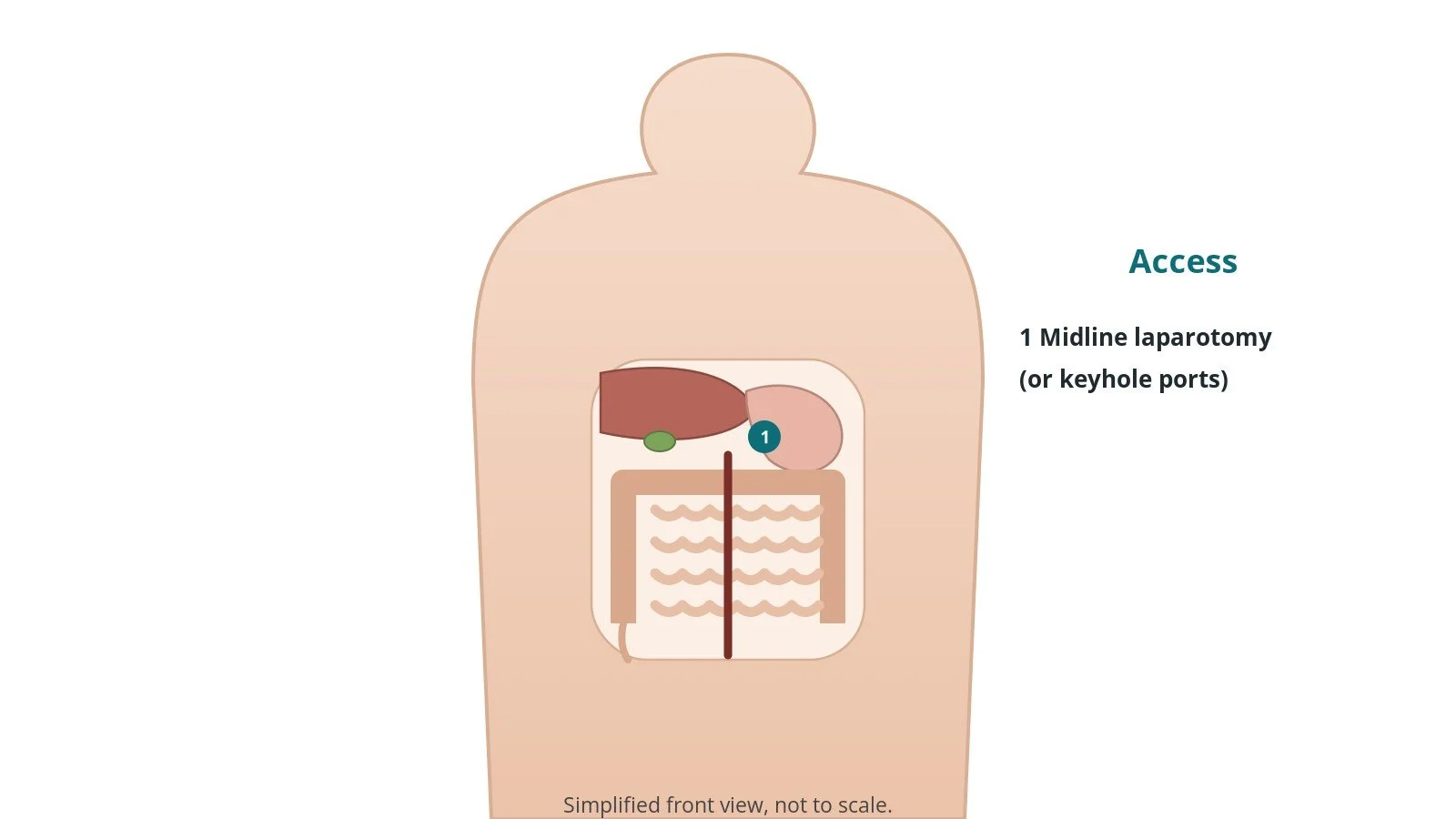
2. Access
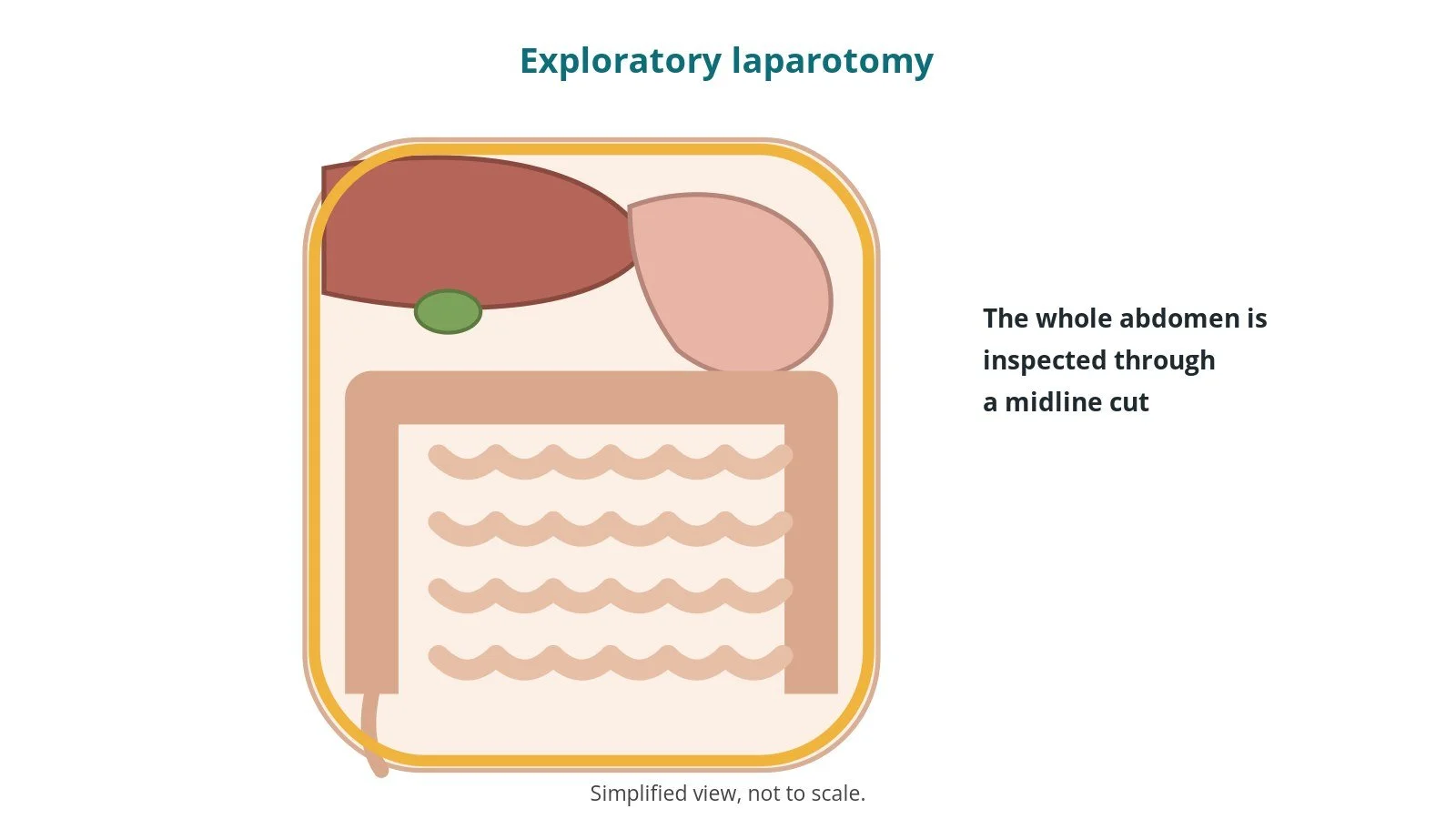
Usually a midline laparotomy; some cases are done by keyhole, sizes per device and operator.
3. Freeing and repairing the bowel
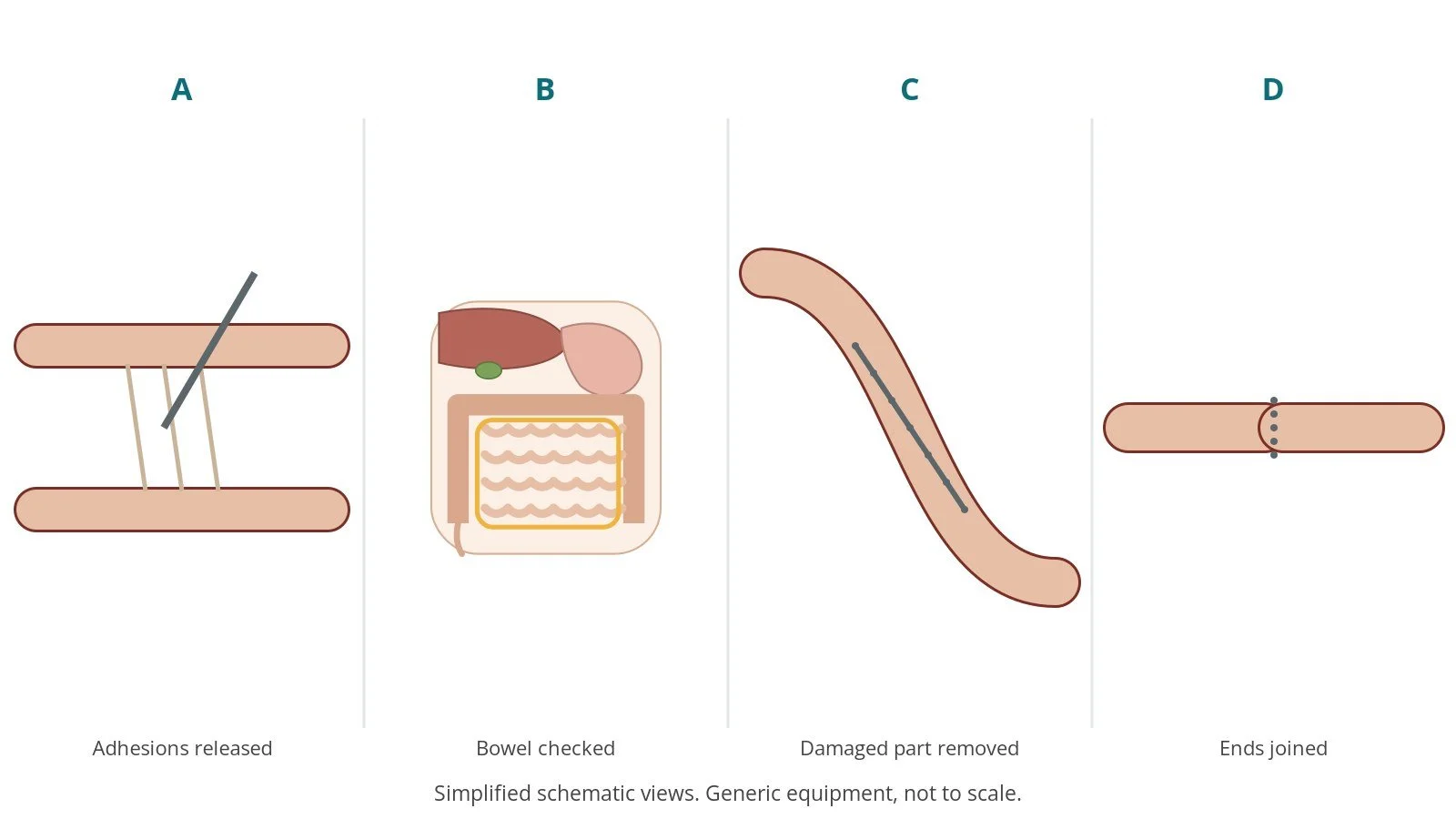
- A. Adhesions released. Scar bands are carefully divided to free the bowel.
- B. Bowel checked. The whole small bowel is run from end to end and its colour and blood supply assessed.
- C. Damaged part removed. Any non-viable section is removed with staplers or clamps.
- D. Ends joined. The healthy ends are joined with staples or stitches.
4. Finishing
The abdomen is washed out and closed in layers. Final counts are confirmed before closure, specimens labelled and checked, and the patient goes to recovery with a full handover.
Recovery and aftercare
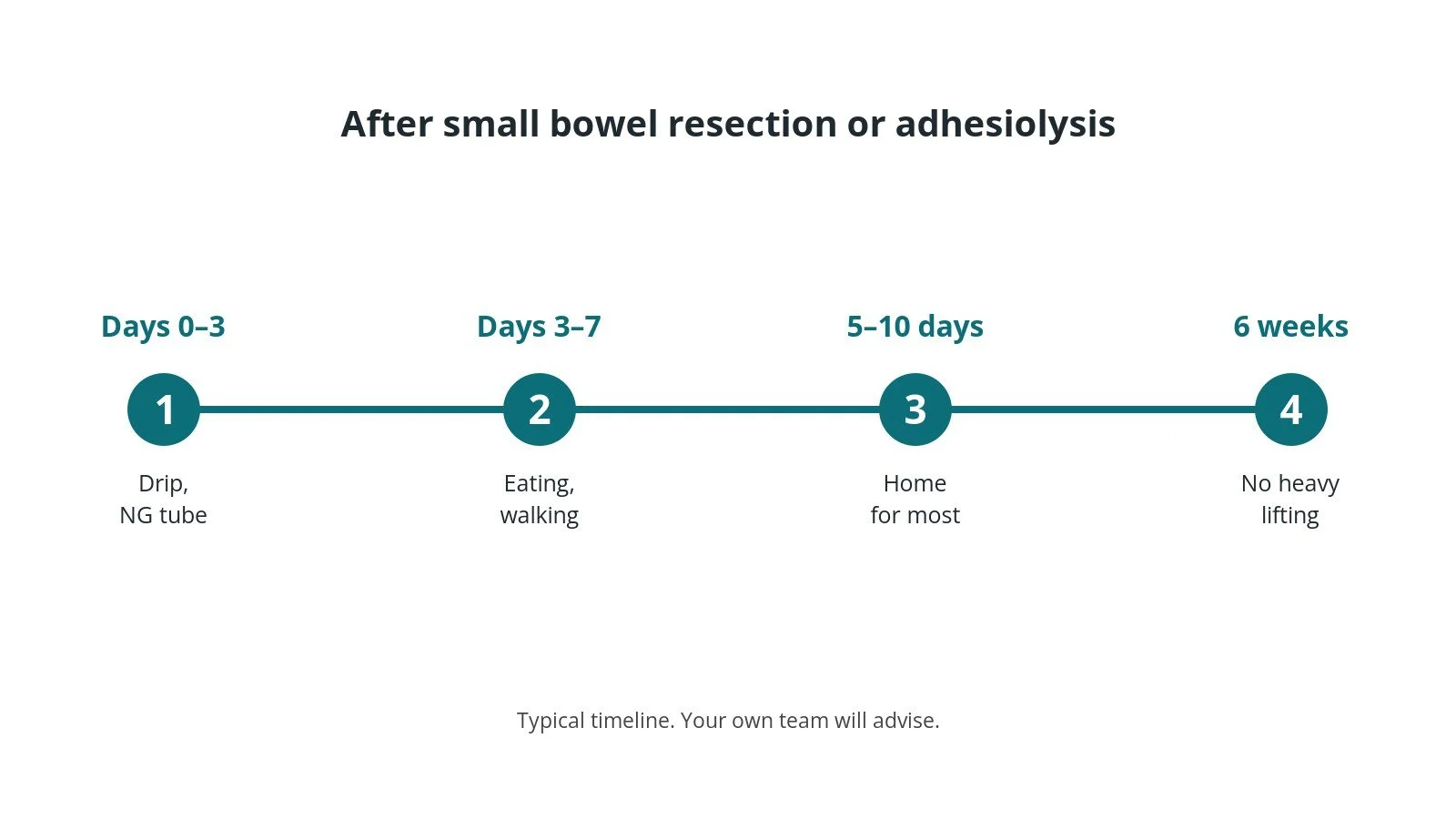
- First days: drip and sometimes an NG tube until the bowel starts working.
- Eating: fluids then food as the bowel recovers.
- Walking: early walking and physiotherapy.
- Going home: often 5–10 days.
- Activity: no heavy lifting for about 6 weeks after open surgery.
- Follow-up: clinic review as needed.
Call 999 if you have severe pain, heavy bleeding, breathlessness or collapse. Contact your team or GP if you have a fever, worsening tummy pain or swelling, vomiting, or a wound that becomes red, hot or leaky.
Risks and complications
Your team will explain the risks that apply to you. Possible problems include:
- a leak from the bowel join
- wound or internal infection
- bleeding
- slow return of bowel function (ileus)
- accidental injury to the bowel
- further adhesions and blockage in the future
- short bowel problems if a lot is removed (rare)
- blood clots in the legs or lungs
Theatre kit list (printable)
Example kit list
Every theatre has its own protocol, and sizes and doses vary.
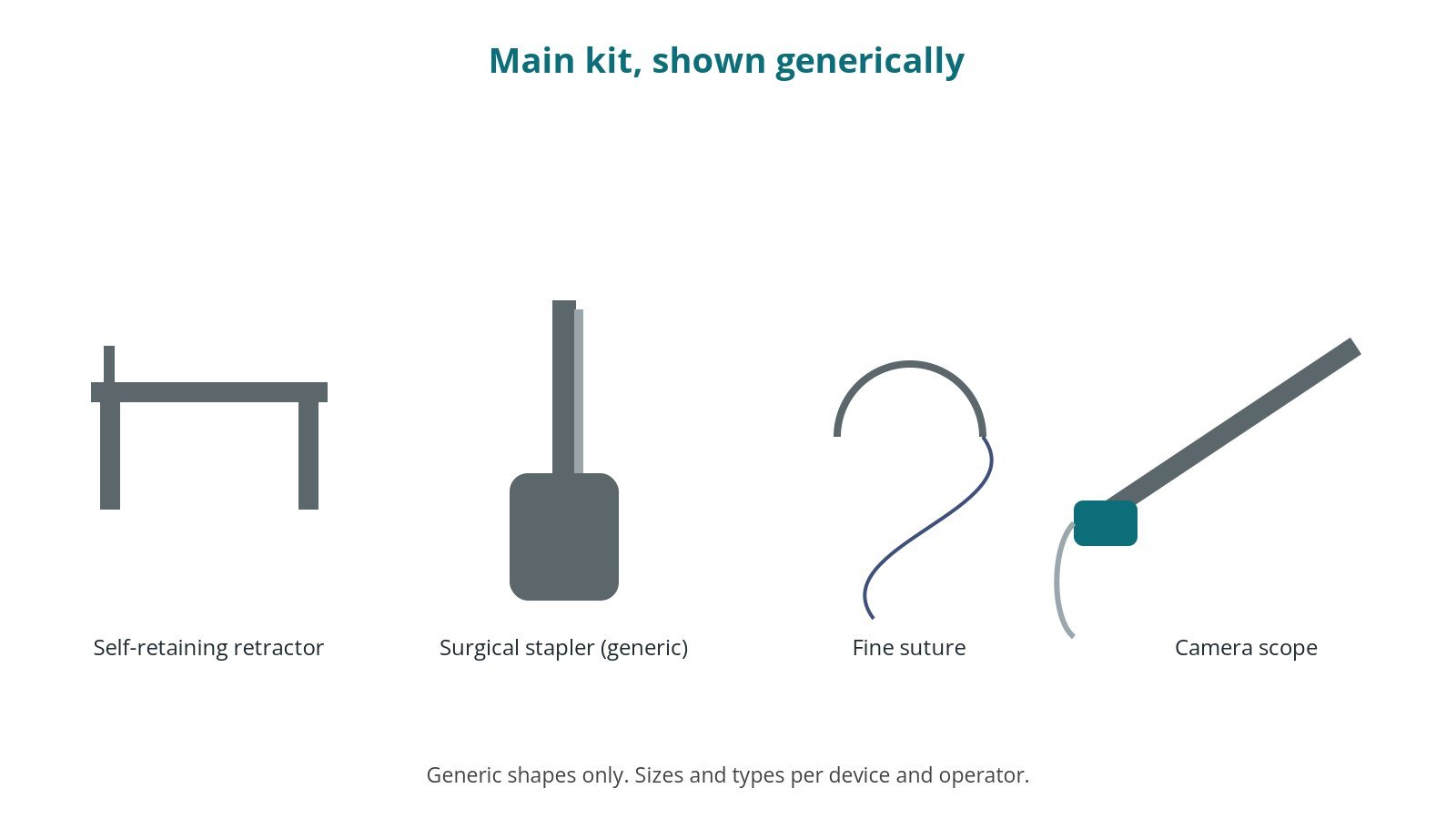
- laparotomy instrument set and bowel set
- self-retaining retractor
- bowel clamps
- linear staplers and reloads, sizes per device and operator
- fine sutures for hand-sewn joins
- warm washout fluid and suction
- laparoscopic stack and ports if keyhole
- strong closure sutures
Procedural steps
- Team brief, WHO sign in; anaesthesia; NG tube; catheter; antibiotics as per centre protocol
- Supine position; prep and drape; count
- Incision or ports; adhesions divided
- Bowel run end to end; viability assessed
- Resection and anastomosis if needed
- Washout; closure; counts; specimen check; sign out and handover
First time in theatre?
💡 First-time tip
- Know your role. Scrub, circulating, anaesthetic and ODP each have their own checks; ask at the team brief.
- Counts matter. Swabs, needles and instruments are counted before, during and at closure; speak up if one is missing.
- Specimens. Label every specimen with site and side, and check it with the scrub practitioner before it leaves theatre.
- Sterile field. Keep clear of the trolleys and drapes unless you are scrubbed.
- Warmth. Long open operations cool patients quickly; keep warming devices running.
FAQ
Can adhesions come back?
Yes, they can form again after any abdominal surgery.
How much bowel can be removed?
Most people manage well after losing a short section.
Will I need a stoma?
Rarely after small bowel surgery, but sometimes in very unwell patients.
Related guides
Sources
All checked on 14 October 2026. Each page's own date is shown where it gives one.
- StatPearls (NCBI Bookshelf), search: small bowel obstruction. ncbi.nlm.nih.gov/books
- Ten Broek RPG, et al. Bologna guidelines for diagnosis and management of adhesive small bowel obstruction: 2017 update. World J Emerg Surg 2018;13:24. PubMed 29946347
- StatPearls (NCBI Bookshelf), search: small bowel resection. ncbi.nlm.nih.gov/books
- World Health Organization. Surgical Safety Checklist. who.int
Disclaimer
Education only. This page is for general education for healthcare students, theatre staff and curious readers. It isn't medical advice and doesn't replace advice from your own doctor, surgical team or local unit protocols. Equipment and medicines are described generically. No product or manufacturer is recommended. If you think someone is having a medical emergency, call 999.
Disclosure: I work in the medical device industry. This page is independent education and isn't sponsored or reviewed by any company.
All diagrams on this page are original illustrations created for rodnieoro.com.