Total hip replacement (THA): an OR 101 guide
Reviewed by Rodnie Oro, cath lab charge nurse · Last reviewed: October 2026 · Education only, not medical advice
Total hip replacement in one minute
What it is: surgery to replace a worn hip joint with a new ball and socket.
Who it is for: people with severe hip arthritis causing pain and stiffness despite other treatments.
Main risks: infection, blood clots, dislocation, leg length difference, loosening or wear over time.
Usually: under spinal or general anaesthetic, 1–2 hours, home in 1–3 days.
On this page: What is a total hip replacement? · Who is it for? · When is it done? · Step by step · Recovery · Risks · Kit list · First time in theatre? · FAQ
What is a total hip replacement?
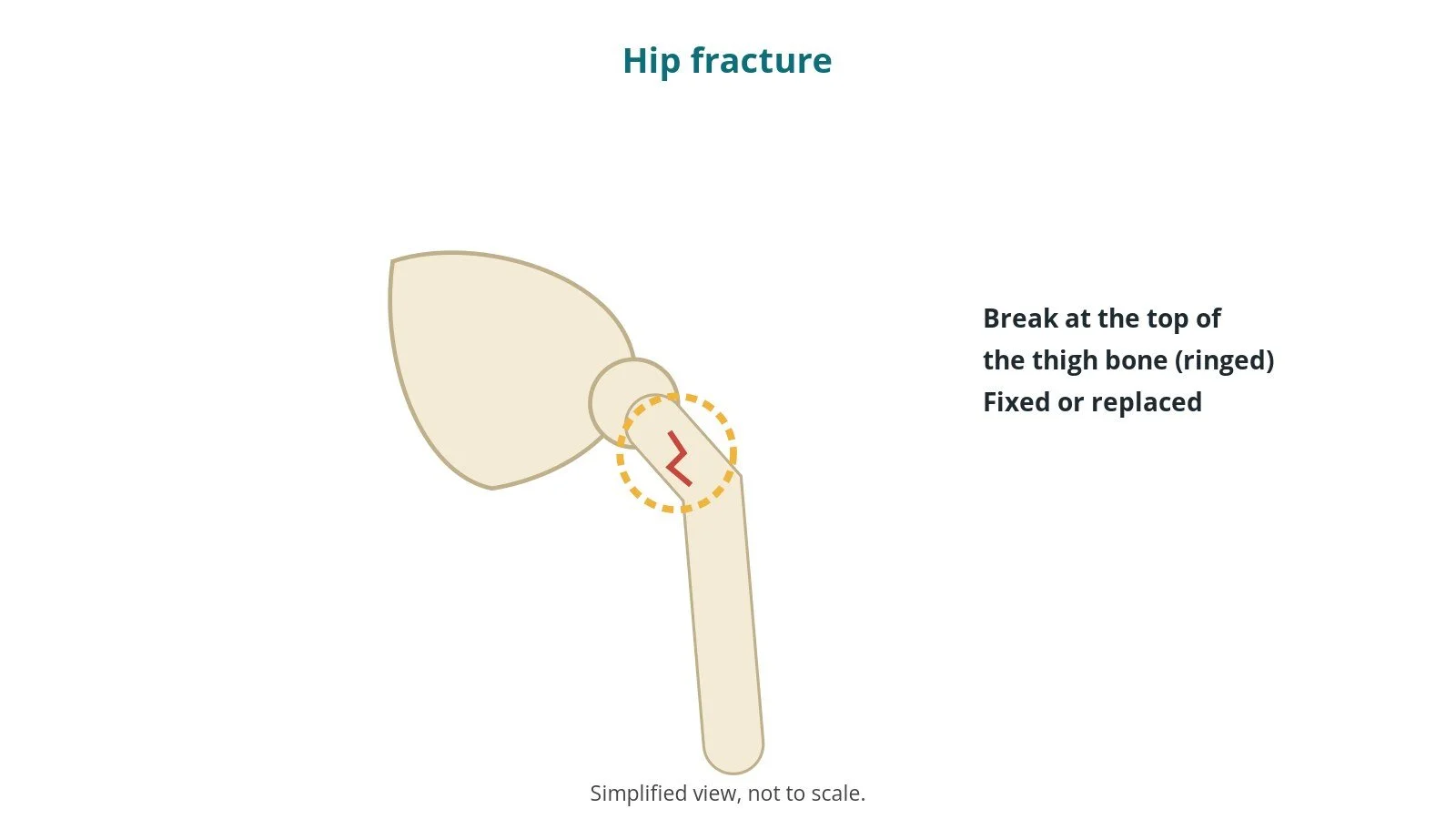
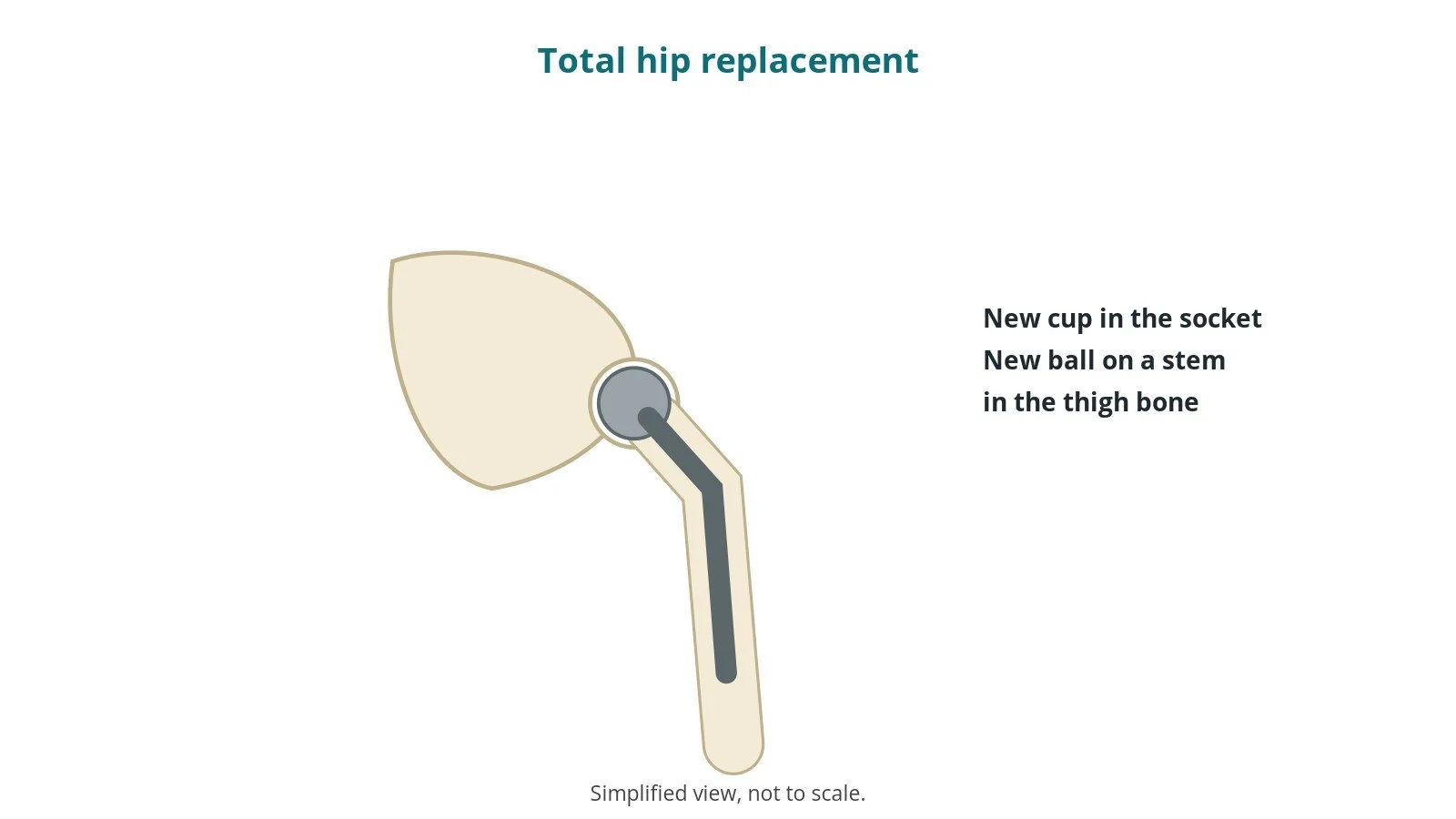
The hip is a ball-and-socket joint: the ball at the top of the thigh bone (femur) moves in a socket in the pelvis (acetabulum). Arthritis wears away the smooth cartilage.
In a total hip replacement (THA, also called THR) the surgeon:
- removes the worn ball and prepares the socket
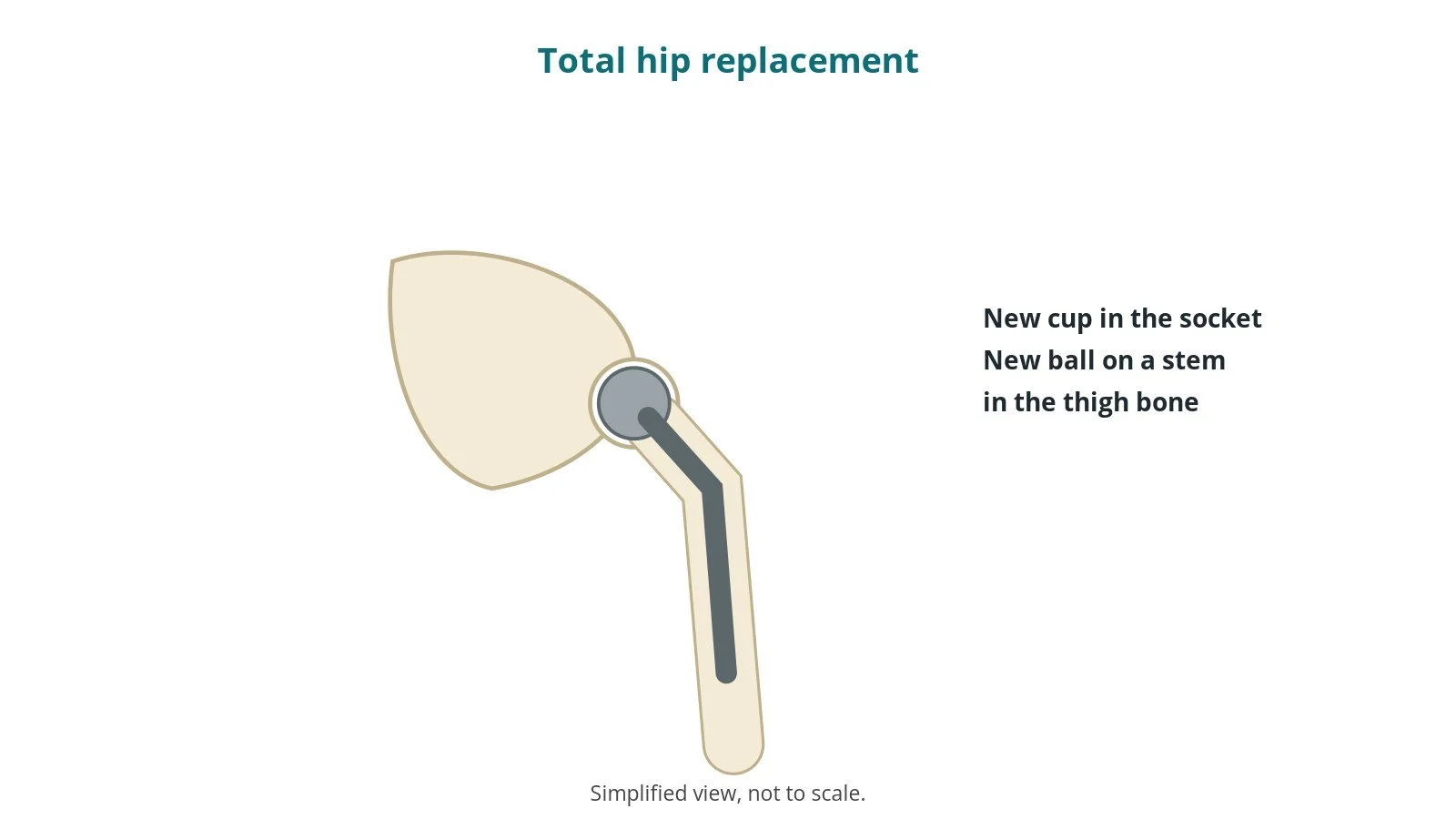
- fits a new cup into the socket, with a liner
- fits a stem into the thigh bone with a new ball on top
Parts are fixed with bone cement or press-fit, per device and operator. The approach (from the back, side or front) is per surgeon.
New to the acronyms? See the Cath Lab Abbreviations A–Z.
Who is it for?
It may be considered for people with:
- severe hip arthritis (osteoarthritis or inflammatory arthritis)
- pain affecting sleep, walking and daily life despite other treatments
- some hip conditions such as avascular necrosis
The decision is made by your surgical team, who will talk through the reasons, the alternatives and the risks with you.
When is it done?
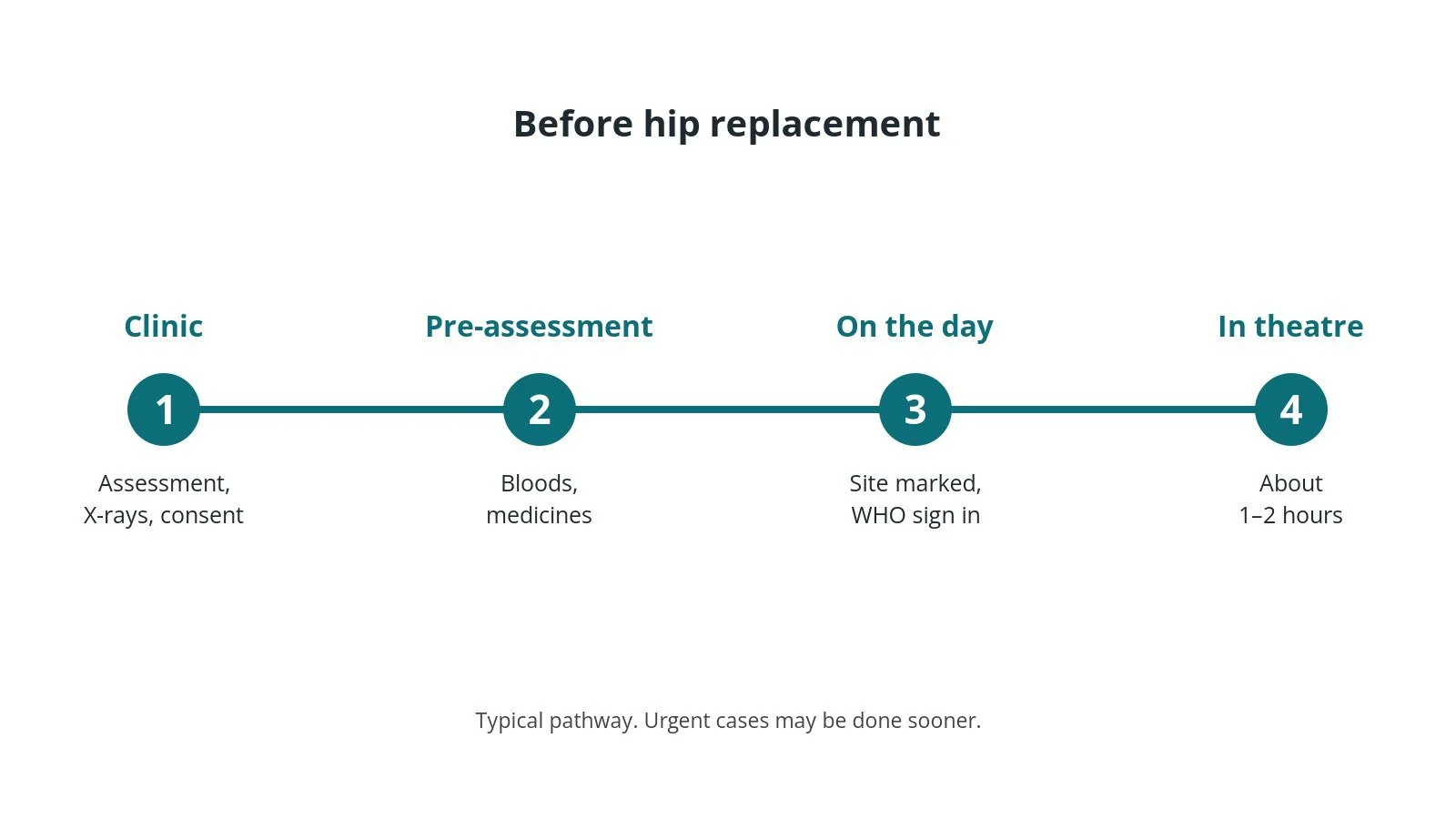
Most operations are planned; some are urgent. Before it, you usually have:
- an examination and X-rays, and sometimes a CT or MRI scan
- blood tests and, for bigger operations, an ECG
- a review of your medicines, especially blood thinners, as per centre protocol
- fasting instructions
- a chance to ask questions and give consent
Step by step
1. Getting ready
Team brief and WHO checklist first, including the implant check and confirming the site and side marking. The anaesthetic team and ODP give the anaesthetic (usually spinal with sedation, or general, as per centre protocol); antibiotics and blood-clot prevention are given as per centre protocol. The circulating practitioner checks positioning and pressure areas, the diathermy plate, warming, and radiation protection if X-ray is used. The scrub practitioner checks implant and instrument trays are complete and sterile, and does the first count. Theatre traffic is kept to a minimum, especially in laminar-flow theatres.
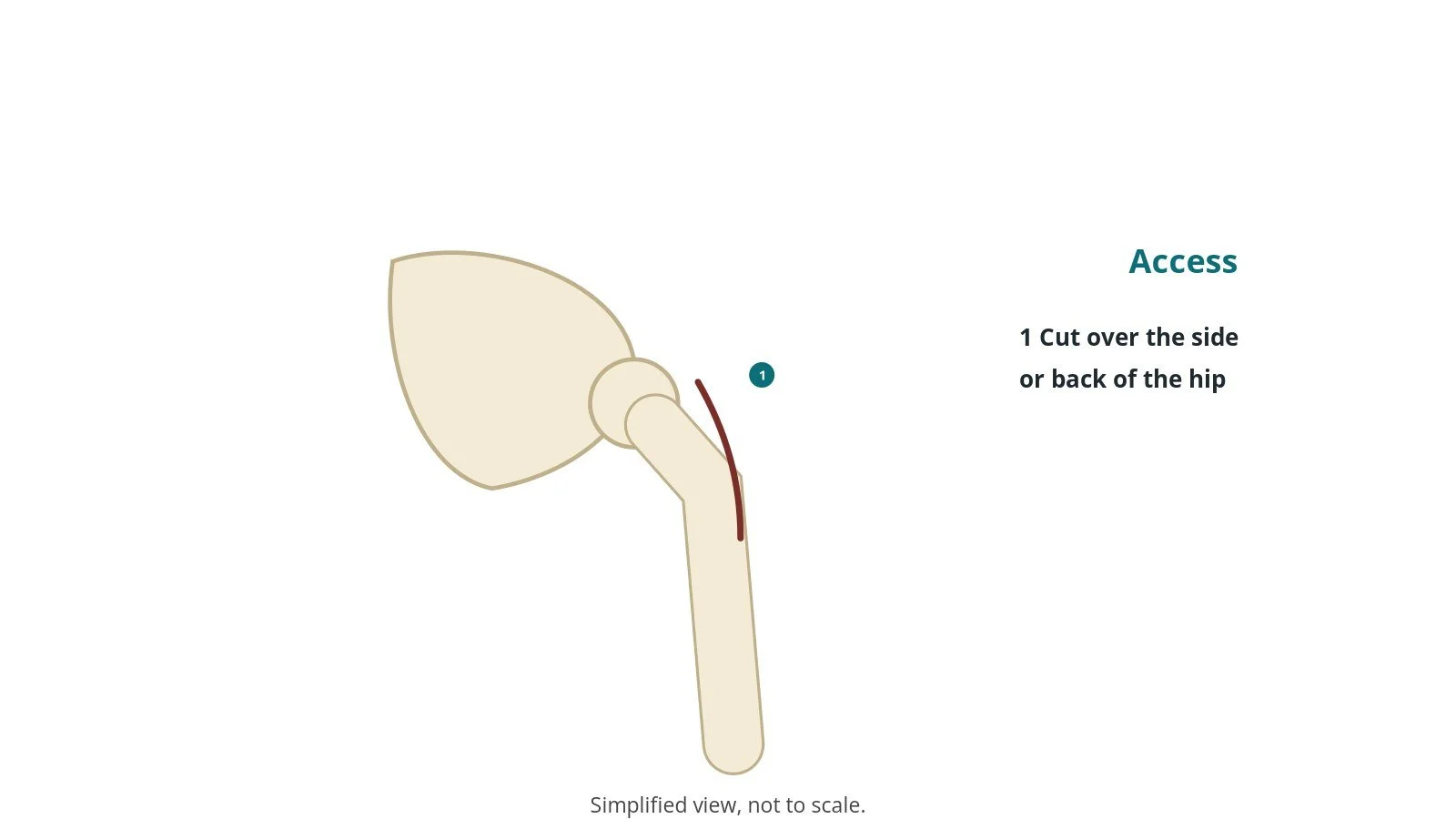
2. Access
The patient lies on their side (or back, for some approaches), held with supports. A cut is made over the side or back of the hip, per surgeon.
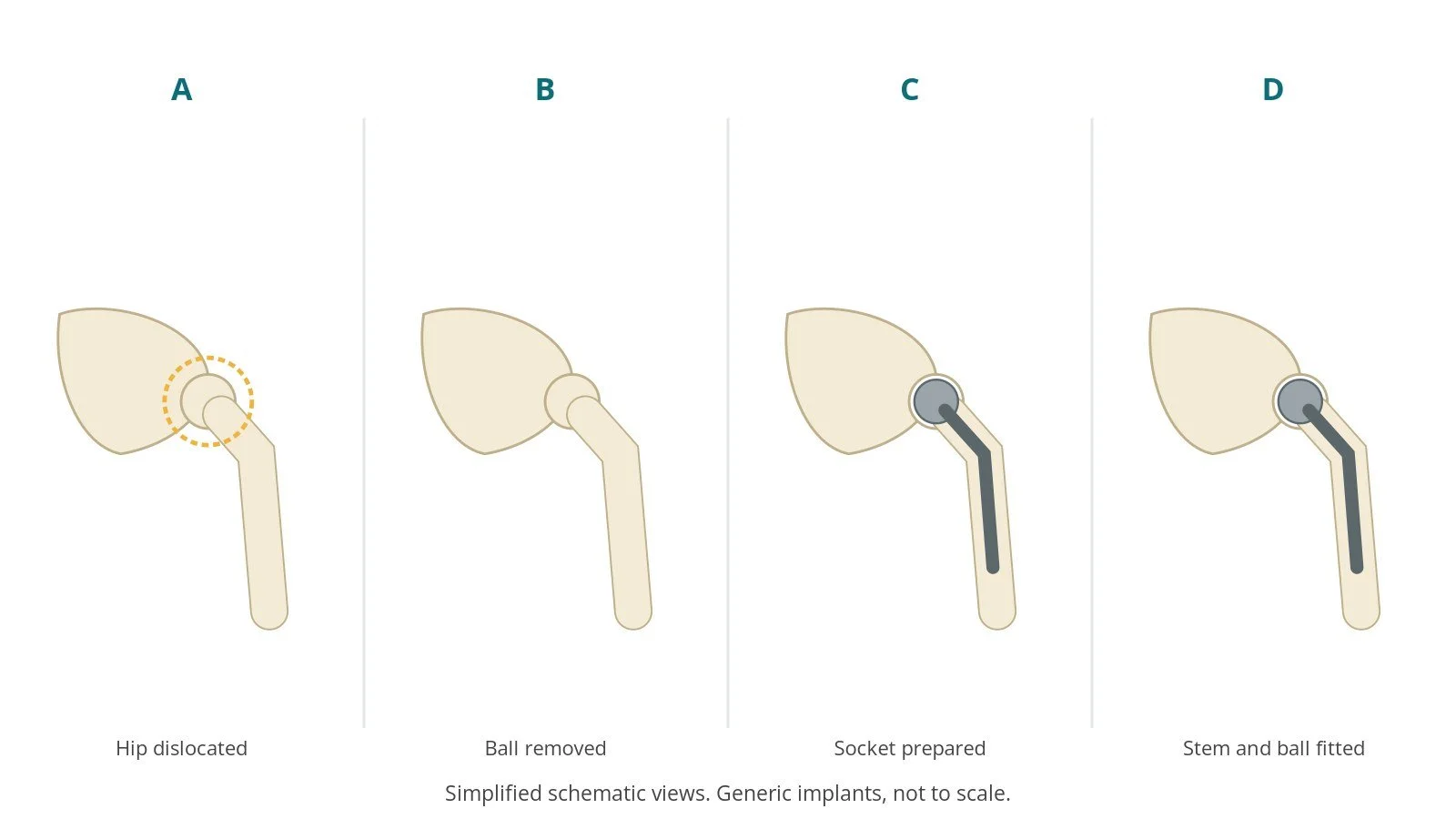
3. Replacing the hip
- A. Hip dislocated. The joint is opened and the hip dislocated.
- B. Ball removed. The worn ball is cut off the thigh bone.
- C. Socket prepared. The socket is reamed and the new cup and liner fitted, size per device and operator.
- D. Stem and ball fitted. The thigh bone is prepared, trials tested, and the final stem and ball fitted; the hip is put back in joint.
4. Finishing
Leg length and stability are checked. Soft tissues are repaired and the wound closed in layers. Final counts are confirmed, implant details recorded, and the patient goes to recovery with a full handover, including limb checks (circulation and nerves), as per centre protocol.
Recovery and aftercare
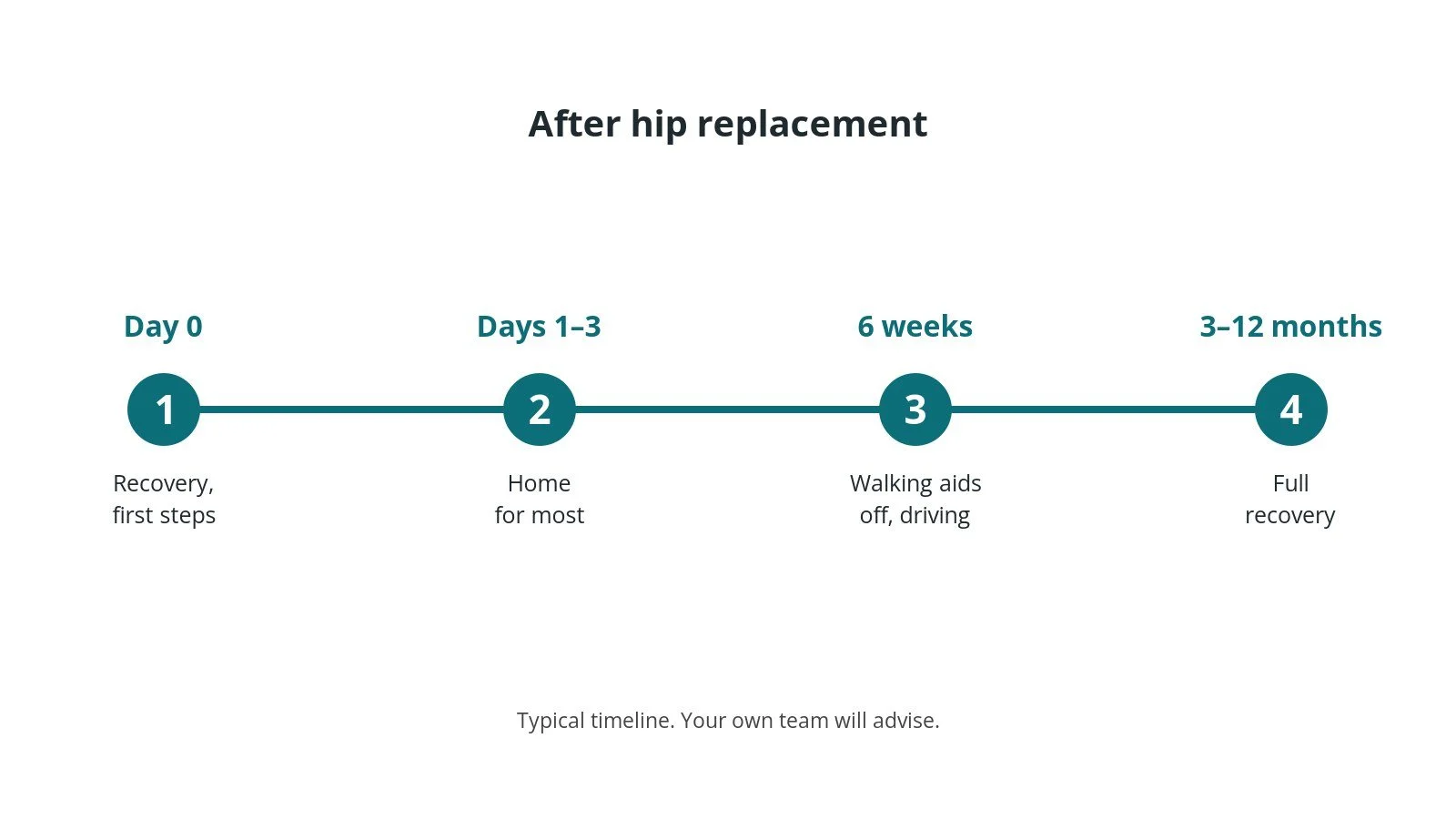
- First hours: in recovery, then a ward; pain relief, anti-sickness medicine and limb checks.
- Getting up: physiotherapists help you walk, often on the day of surgery or the next day (enhanced recovery).
- Going home: often 1–3 days after surgery.
- Exercises: do your physiotherapy exercises every day; they matter as much as the operation.
- Clot prevention: injections, tablets or stockings, as per centre protocol.
- Hip precautions: you may be advised to avoid certain positions for a few weeks; follow your team's advice.
- Driving: usually not for about 6 weeks; ask your team.
- Follow-up: wound check and clinic review, as per centre protocol.
Call 999 if you have chest pain or sudden breathlessness. Contact your team if you have increasing pain, a cold, numb or very swollen limb, calf pain, fever, or a wound that becomes red, hot or leaky.
Risks and complications
Your team will explain the risks that apply to you. Possible problems include:
- wound infection, or deep infection of the joint (uncommon but serious)
- blood clots in the legs or lungs
- dislocation of the new hip
- leg length difference
- fracture of the bone around the implant
- nerve injury (rare)
- loosening or wear needing further surgery in the future
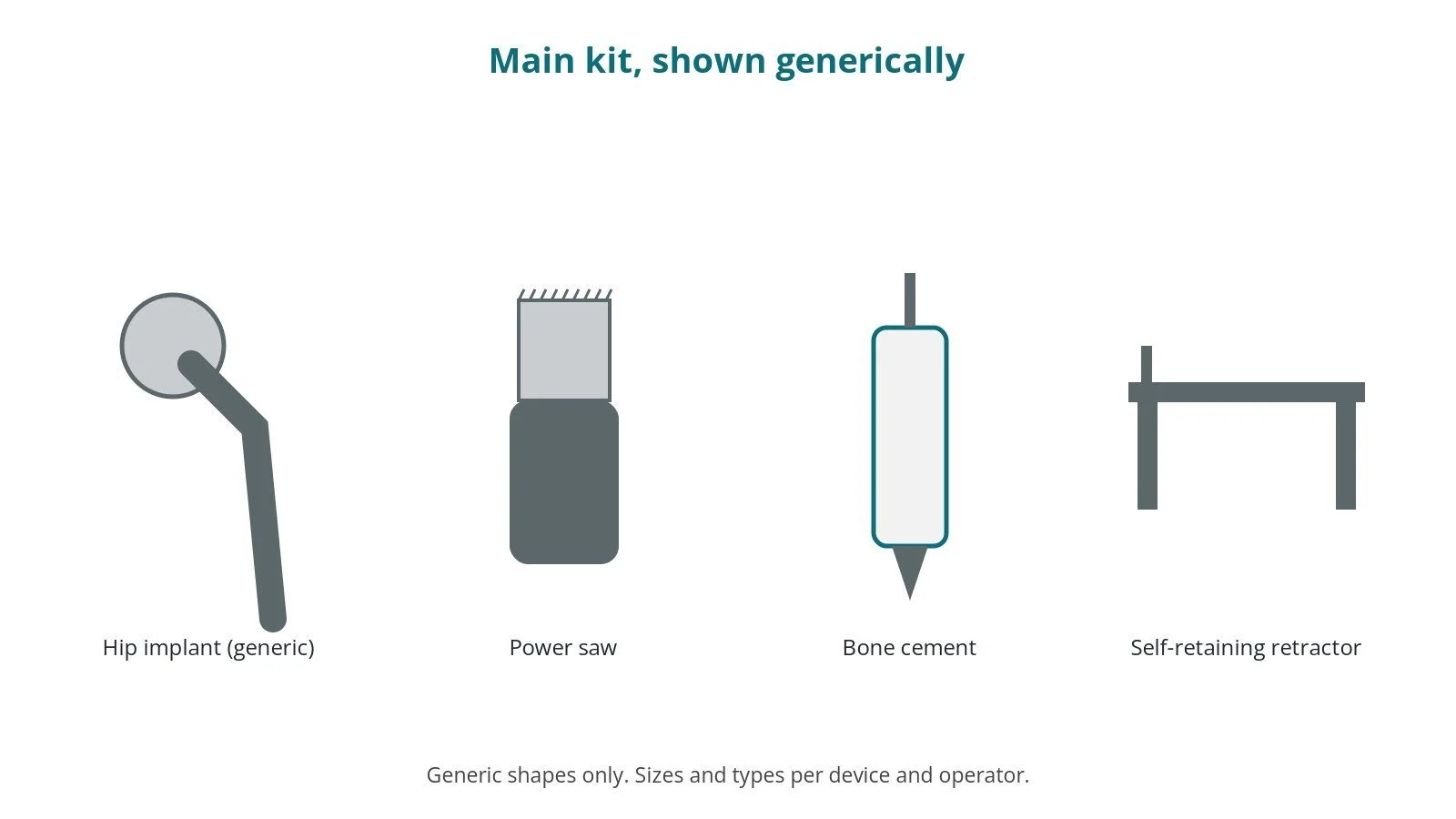
Theatre kit list (printable)
Example kit list
Every theatre has its own protocol, and sizes and doses vary.
- hip replacement instrument trays, reamers and broaches
- implants: cup, liner, stem and head, sizes per device and operator; trials
- power saw and reamer driver
- bone cement and mixing system if cemented, per device and operator
- positioning supports for side-lying
- pulsed lavage
- closure sutures or clips and dressings
Procedural steps
- Team brief, WHO sign in; side marked; implant check; anaesthesia
- Lateral (or supine) position with supports; prep and drape; count
- Incision; joint exposed and dislocated
- Neck cut; socket reamed; cup and liner
- Femur broached; trials; final implant check; stem and head; reduction
- Stability check; closure; counts; implant log; sign out and handover
First time in theatre?
💡 First-time tip
- Implant check. Read back the implant type, side and size before opening, and record it in the implant log.
- Site and side. Check the marking at sign in and again before the cut.
- Counts matter. Swabs, needles, instruments and small implant parts are counted; speak up if one is missing.
- Positioning. Check supports are secure and pressure areas padded before draping.
- Cement timing. Know the cement timings; watch the patient closely when cement goes in, as per centre protocol.
FAQ
How long does a hip replacement last?
Many last for many years; your surgeon will discuss what to expect.
Can it dislocate?
It is uncommon; following advice in the first weeks helps.
When can I walk?
Usually on the day of surgery or the next day, with help.
Related guides
Sources
All checked on 14 October 2026. Each page's own date is shown where it gives one.
- NHS. Hip replacement. nhs.uk/conditions/hip-replacement
- NICE. Joint replacement (primary): hip, knee and shoulder (NG157). nice.org.uk/guidance/ng157
- StatPearls (NCBI Bookshelf), search: total hip arthroplasty. ncbi.nlm.nih.gov/books
- National Joint Registry. njrcentre.org.uk
- World Health Organization. Surgical Safety Checklist. who.int
Disclaimer
Education only. This page is for general education for healthcare students, theatre staff and curious readers. It isn't medical advice and doesn't replace advice from your own doctor, surgical team or local unit protocols. Equipment and medicines are described generically. No product or manufacturer is recommended. If you think someone is having a medical emergency, call 999.
Disclosure: I work in the medical device industry. This page is independent education and isn't sponsored or reviewed by any company.
All diagrams on this page are original illustrations created for rodnieoro.com.