Roux-en-Y gastric bypass: an OR 101 guide
Reviewed by Rodnie Oro, cath lab charge nurse · Last reviewed: October 2026 · Education only, not medical advice
Gastric bypass in one minute
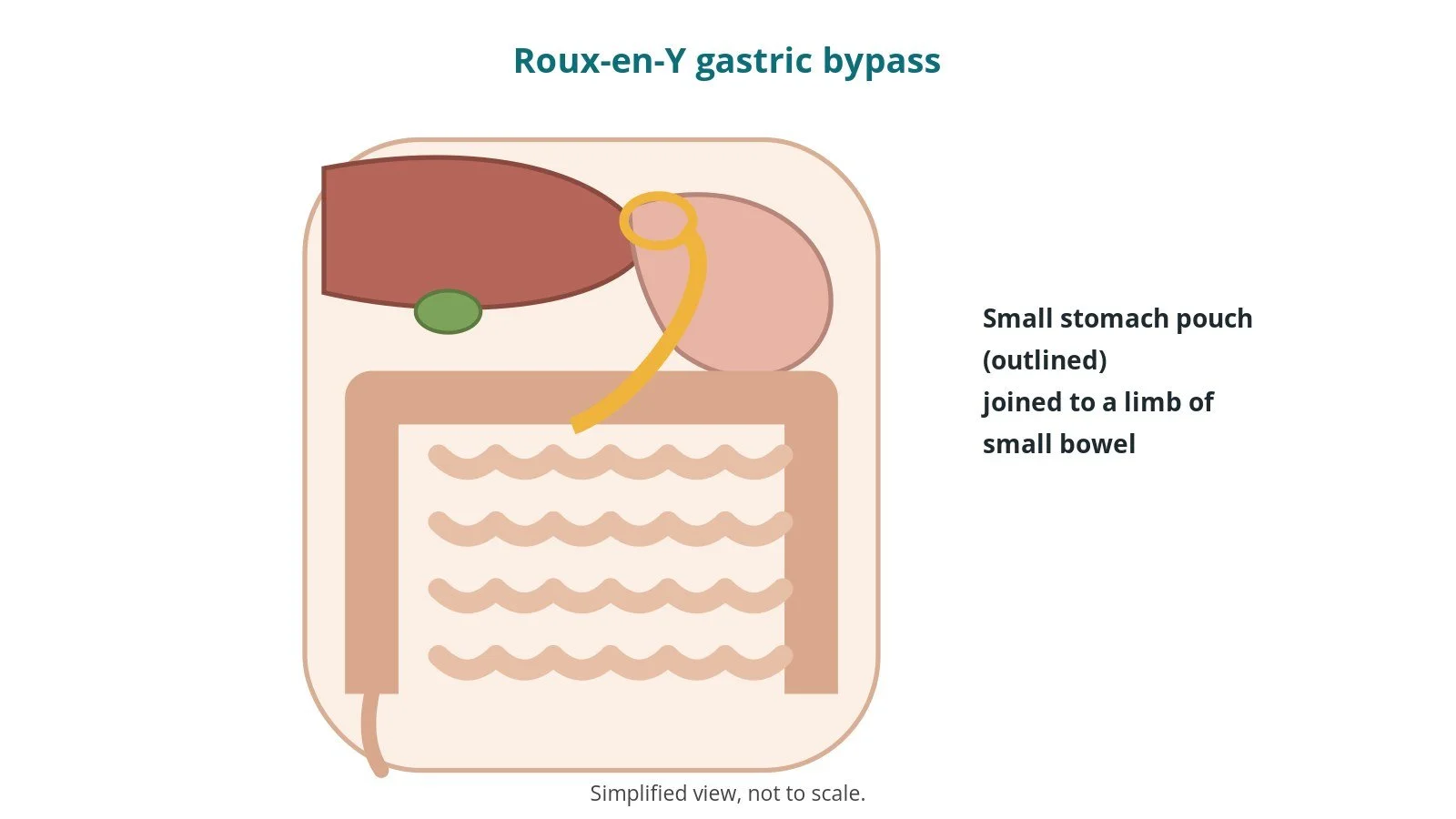
What it is: keyhole weight-loss surgery that makes a small stomach pouch and joins it to the small bowel, bypassing most of the stomach.
Who it is for: people living with severe obesity, often with type 2 diabetes or reflux, after assessment by a specialist team.
Main risks: leaks, bleeding, bowel blockage or internal hernia, ulcers, vitamin deficiencies.
Usually: under general anaesthetic, 1.5–3 hours, home in 1–2 days.
On this page: What is a Roux-en-Y gastric bypass? · Who is it for? · When is it done? · Step by step · Recovery · Risks · Kit list · First time in theatre? · FAQ
What is a Roux-en-Y gastric bypass?
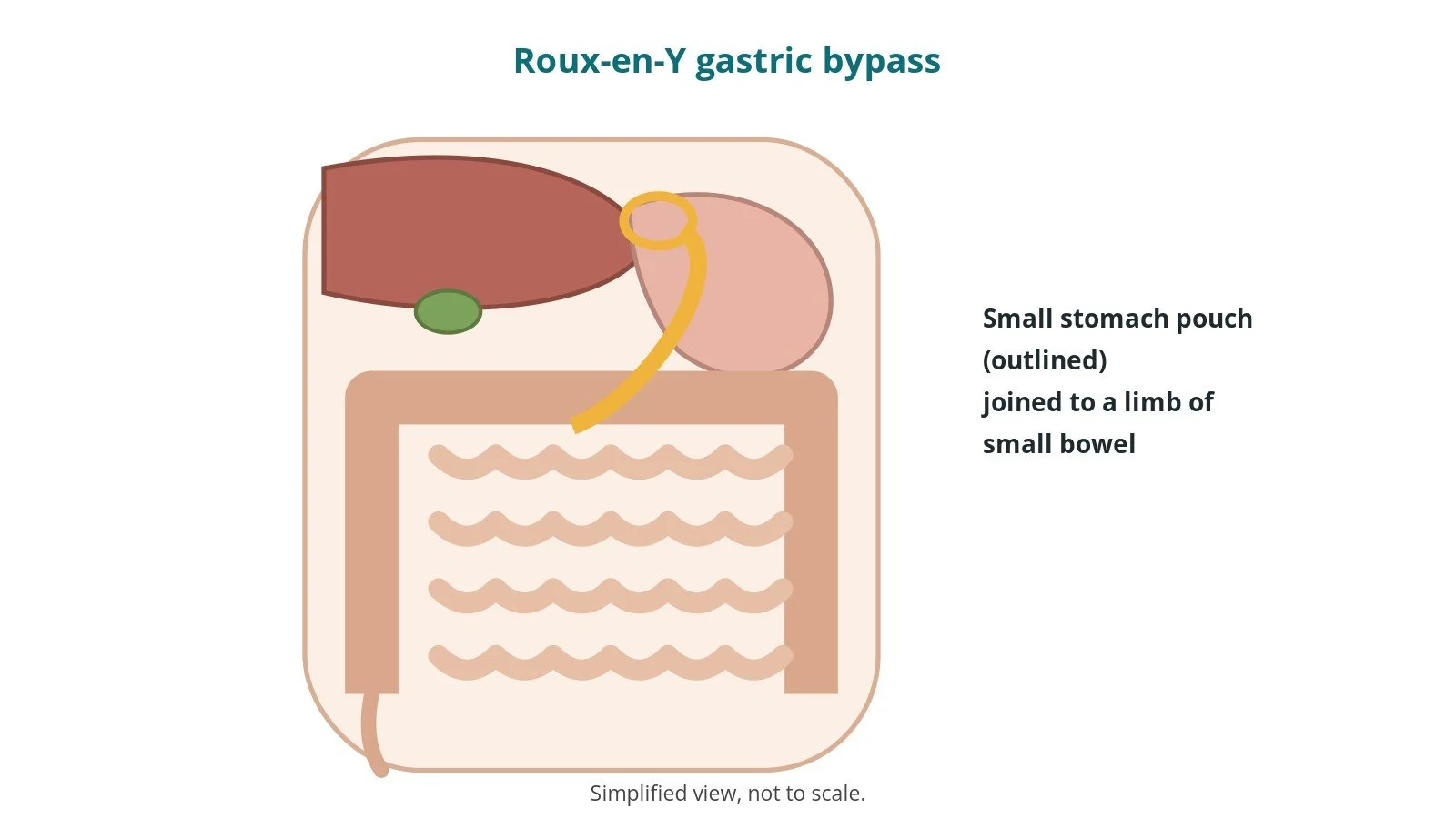
In a Roux-en-Y gastric bypass the surgeon:
- staples off a small pouch at the top of the stomach
- divides the small bowel and brings one end up to join the pouch (the "Roux limb")
- joins the other end back into the small bowel lower down, making a Y shape
Food then bypasses most of the stomach and the first part of the small bowel. This reduces how much you can eat and changes gut hormones. Lifelong follow-up and supplements are needed.
New to the acronyms? See the Cath Lab Abbreviations A–Z.
Who is it for?
It may be considered for people with:
- severe obesity, as defined by local criteria
- obesity with type 2 diabetes or severe reflux
- people who have tried other weight-loss methods under specialist care
The decision is made by your surgical team, who will talk through the reasons, the alternatives and the risks with you.
When is it done?
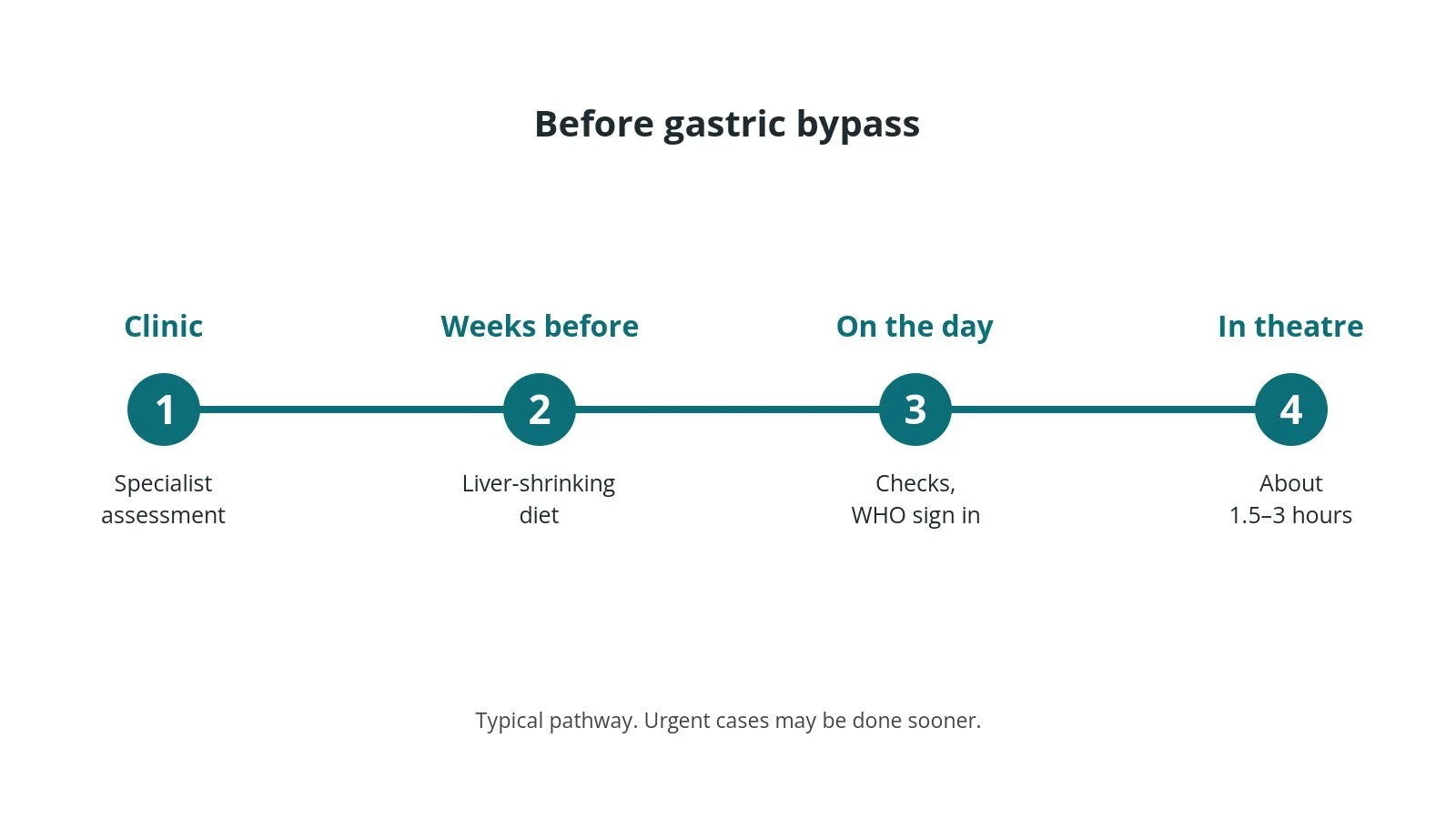
Most operations are planned; some are urgent. Before it, you usually have:
- assessment by a specialist weight-management team, including a dietitian and psychologist
- blood tests, an ECG and sometimes a camera test of the stomach
- a liver-shrinking diet for 2–4 weeks before surgery, as per centre protocol
- a review of your medicines, especially diabetes medicines and blood thinners, as per centre protocol
- a chance to ask questions and give consent
Step by step
1. Getting ready
Team brief and WHO checklist first. The anaesthetic team and ODP give a general anaesthetic and insert a breathing tube; antibiotics and blood-clot prevention are given as per centre protocol. The circulating practitioner checks positioning, pressure areas, the diathermy plate, warming, and that the camera stack and gas insufflator work. The scrub practitioner sets up the laparoscopic trolley and an open set in case of conversion, and does the first count. Bariatric equipment is checked: a table rated for the weight, longer ports and instruments, extra positioning supports and correctly sized compression devices.
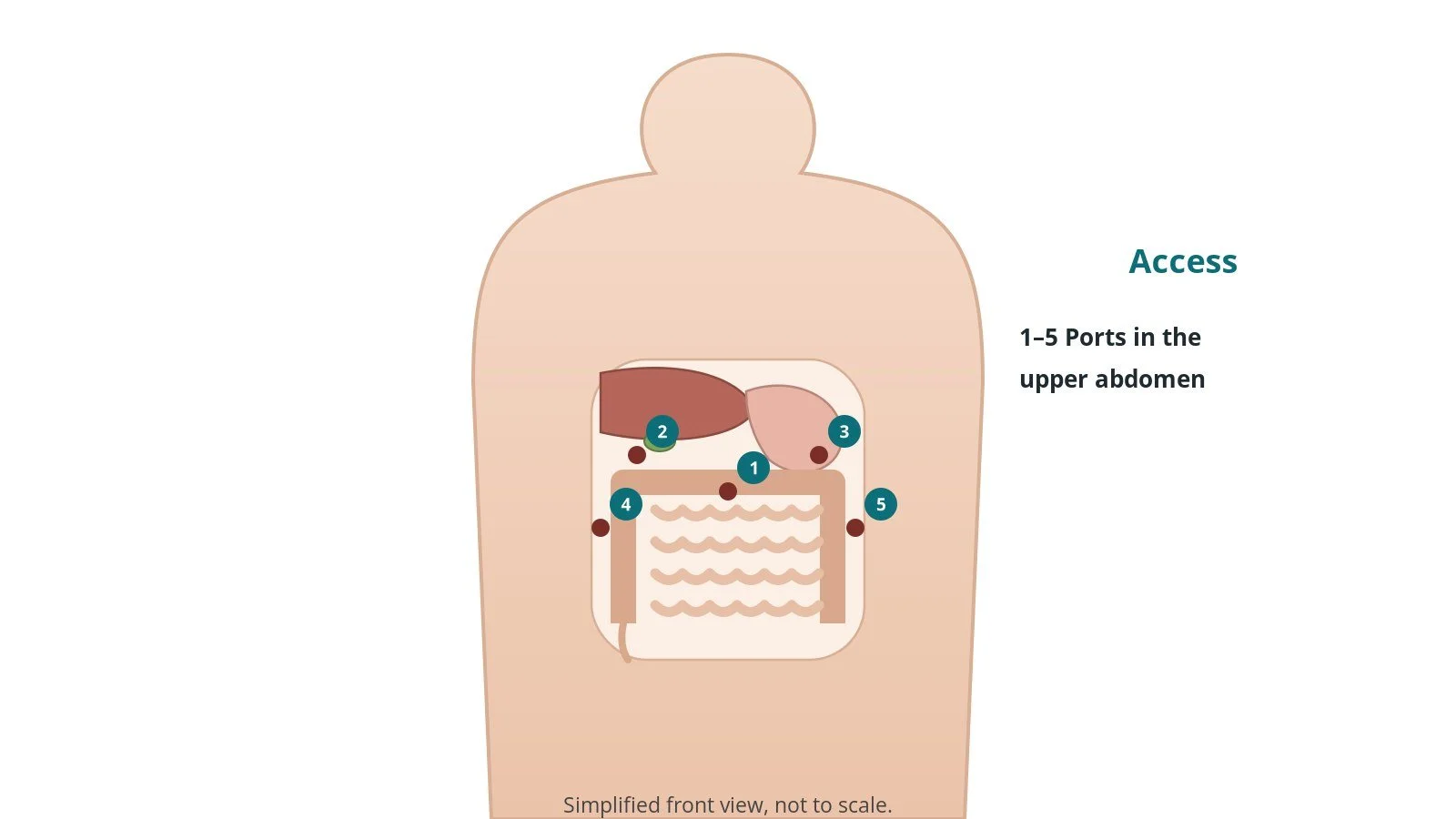
2. Access
Five or six ports in the upper abdomen, sizes per device and operator, and a liver retractor.
3. Making the bypass
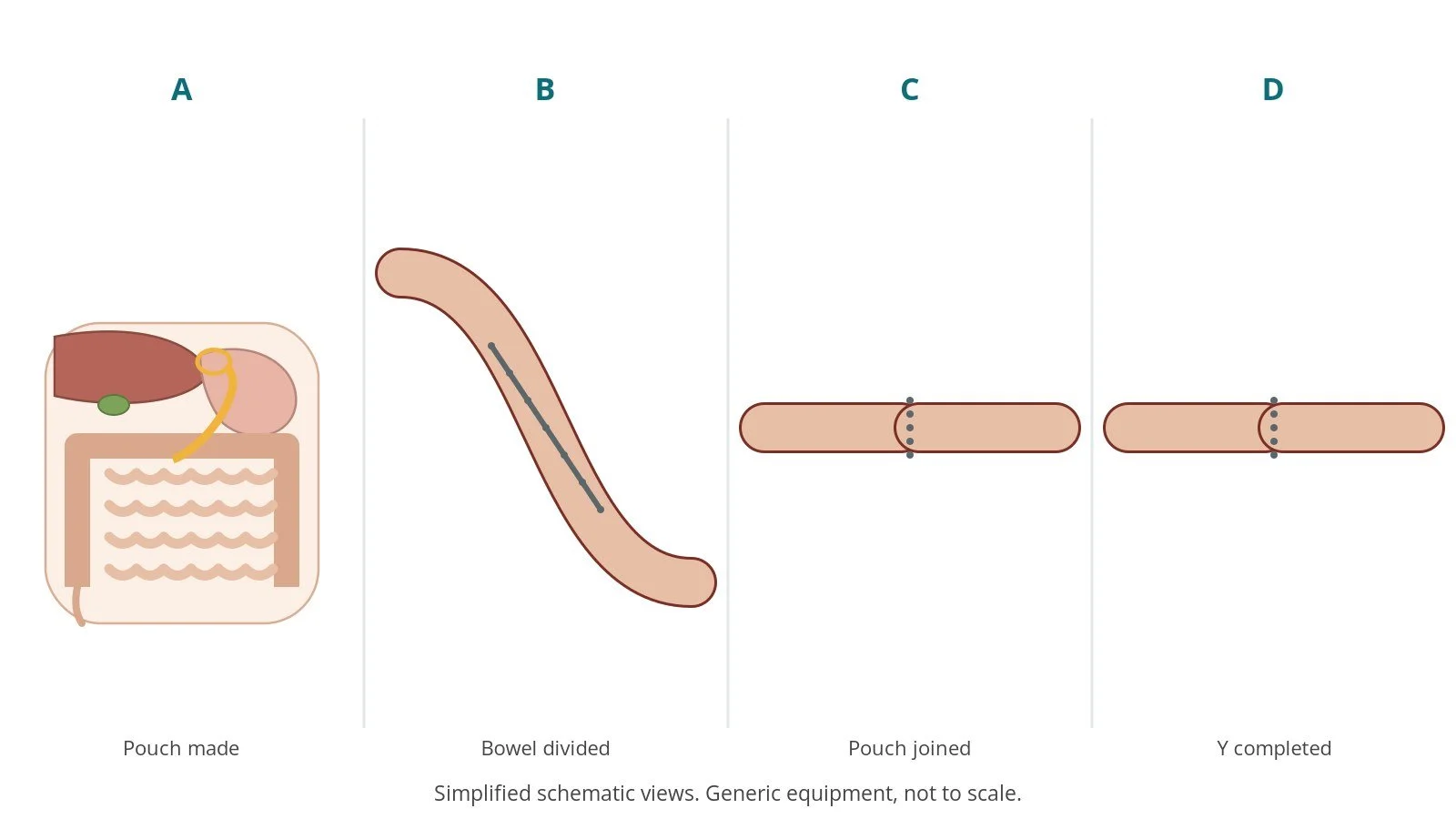
- A. Pouch made. A small stomach pouch is stapled off.
- B. Bowel divided. The small bowel is measured and divided.
- C. Pouch joined. A limb of small bowel is joined to the pouch (staples and sutures).
- D. Y completed. The bowel is joined lower down to complete the Y; gaps are closed to prevent internal hernia.
4. Finishing
The gas is let out, ports removed and the larger cuts closed (deep layer, per surgeon), then the skin with sutures or glue. Local anaesthetic is often injected into the wounds. Final counts are confirmed, specimens labelled and checked, and the patient goes to recovery with a full handover.
Recovery and aftercare
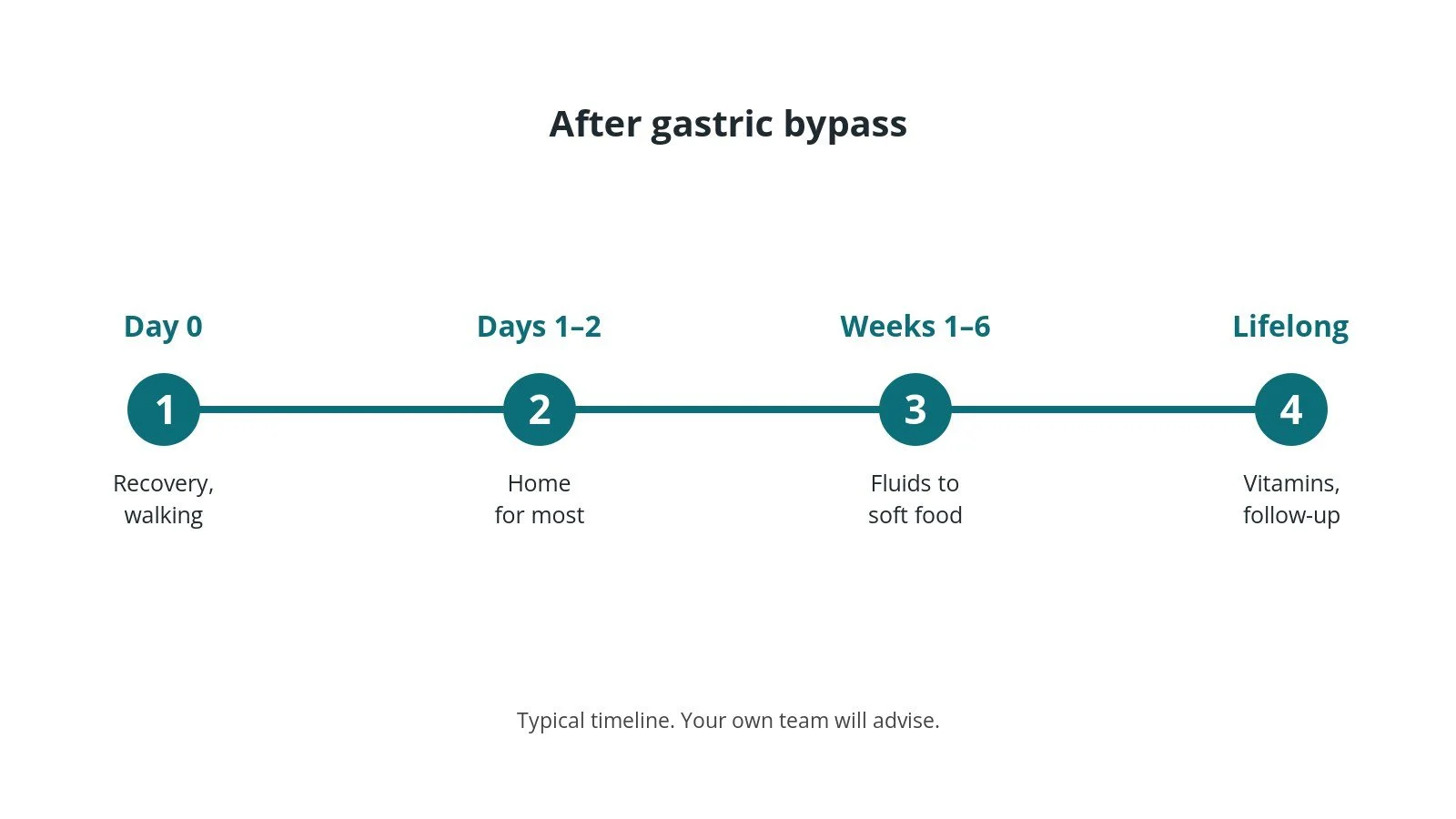
- First hours: in recovery, then a ward; pain relief, anti-sickness medicine and early walking.
- Going home: usually after 1–2 days.
- Eating: fluids, then pureed and soft food over several weeks, as advised by the dietitian.
- Vitamins: lifelong vitamin and mineral supplements, as advised.
- Activity: walking from day one; avoid heavy lifting for about 4–6 weeks.
- Follow-up: regular clinic and dietitian reviews, often for years.
Call 999 if you have severe pain, heavy bleeding, breathlessness or collapse. Contact your team or GP if you have a fever, worsening tummy pain or swelling, vomiting, or a wound that becomes red, hot or leaky.
Risks and complications
Your team will explain the risks that apply to you. Possible problems include:
- a leak from a join (uncommon but serious)
- bleeding
- bowel blockage or internal hernia, sometimes years later
- ulcers at the join (avoid smoking and anti-inflammatory painkillers)
- dumping syndrome after sugary food
- vitamin and mineral deficiencies
- blood clots in the legs or lungs
Theatre kit list (printable)
Example kit list
Every theatre has its own protocol, and sizes and doses vary.
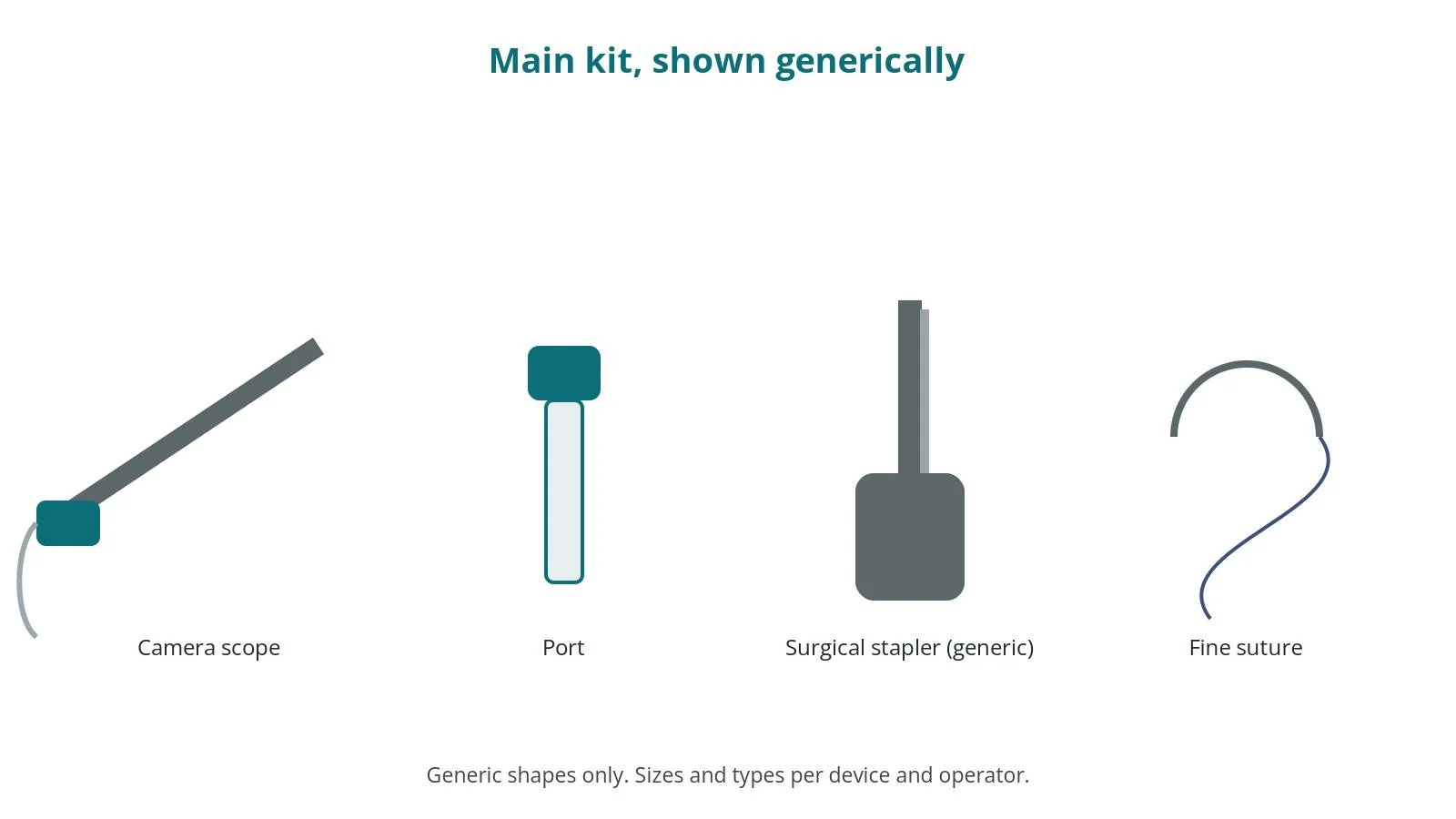
- laparoscopic stack: camera, scope, light source, gas insufflator and warmer
- ports, sizes per device and operator, and an entry needle or open-entry kit, per surgeon
- laparoscopic graspers, scissors, dissectors and suction-irrigation
- energy device, per surgeon
- liver retractor
- linear staplers and reloads, sizes per device and operator
- fine sutures for joins and gap closure
- calibration tube, per surgeon
- leak test kit, per surgeon
- bariatric table, positioning supports and long instruments
Procedural steps
- Team brief, WHO sign in; anaesthesia; antibiotics and clot prevention as per centre protocol
- Positioning with supports; prep and drape; count
- Ports; liver retractor
- Pouch formed; bowel measured and divided
- Pouch and lower bowel joins; gaps closed
- Leak test; closure; counts; sign out and handover
First time in theatre?
💡 First-time tip
- Know your role. Scrub, circulating, anaesthetic and ODP each have their own checks; ask at the team brief.
- Counts matter. Swabs, needles and instruments are counted before, during and at closure; speak up if one is missing.
- Specimens. Label every specimen with site and side, and check it with the scrub practitioner before it leaves theatre.
- Moving and handling. Use the right equipment and enough people to transfer and position safely.
- Long instruments. Check bariatric-length ports and instruments are available before the start.
FAQ
Is it reversible?
Technically sometimes, but it is treated as permanent.
How is it different from a sleeve?
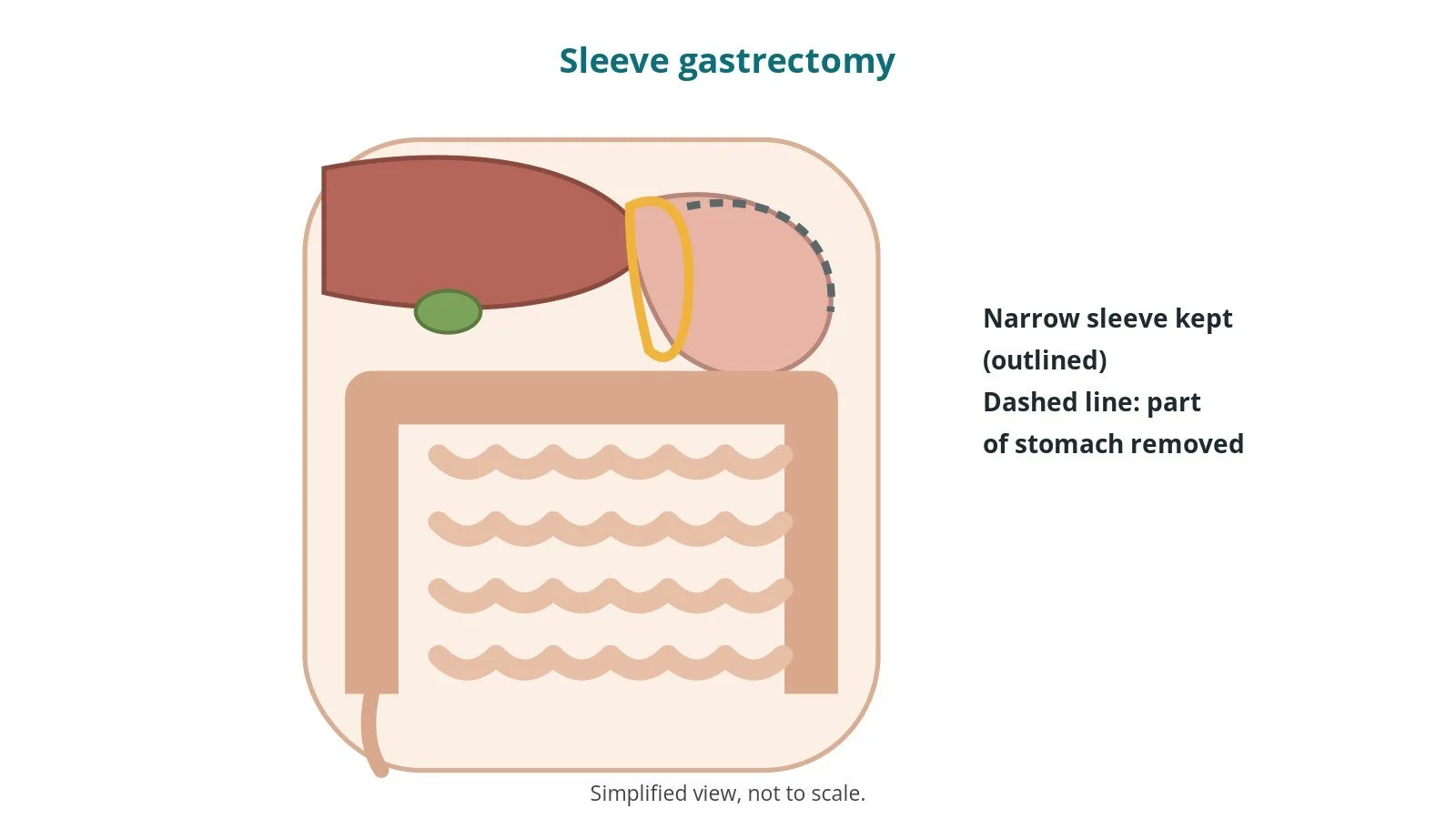
A sleeve removes part of the stomach; a bypass reroutes food past most of it.
Can I take anti-inflammatory painkillers?
Usually not, because of the ulcer risk. Ask your team.
Related guides
Sources
All checked on 14 October 2026. Each page's own date is shown where it gives one.
- NHS. Weight loss surgery. nhs.uk/conditions/weight-loss-surgery
- NICE. Overweight and obesity management (NG246). nice.org.uk/guidance/ng246
- StatPearls (NCBI Bookshelf), search: gastric bypass. ncbi.nlm.nih.gov/books
- World Health Organization. Surgical Safety Checklist. who.int
Disclaimer
Education only. This page is for general education for healthcare students, theatre staff and curious readers. It isn't medical advice and doesn't replace advice from your own doctor, surgical team or local unit protocols. Equipment and medicines are described generically. No product or manufacturer is recommended. If you think someone is having a medical emergency, call 999.
Disclosure: I work in the medical device industry. This page is independent education and isn't sponsored or reviewed by any company.
All diagrams on this page are original illustrations created for rodnieoro.com.