Breast reduction surgery: an OR 101 guide
Reviewed by Rodnie Oro, cath lab charge nurse · Last reviewed: October 2026 · Education only, not medical advice
Breast reduction in one minute
What it is: surgery to remove breast tissue and skin to make the breasts smaller and lift them (reduction mammoplasty).
Who it is for: people with large breasts causing neck, back or shoulder pain, skin problems or limits on activity.
Main risks: bleeding, infection, wound healing problems, change in nipple sensation, scarring, asymmetry.
Usually: under general anaesthetic, 2–4 hours, 1–2 nights in hospital or a day case.
On this page: What is breast reduction? · Who is it for? · When is it done? · Step by step · Recovery · Risks · Kit list · First time in theatre? · FAQ
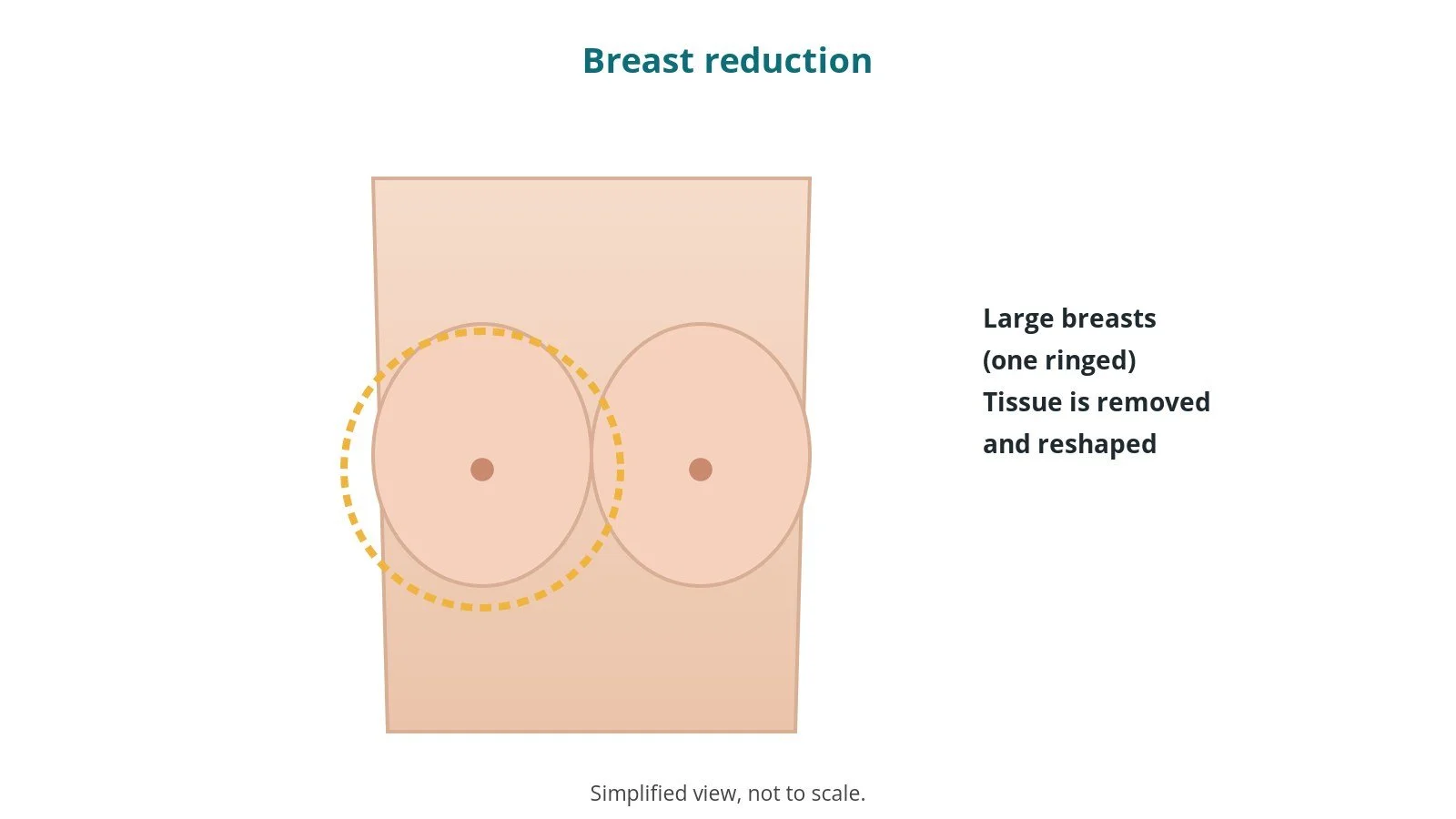
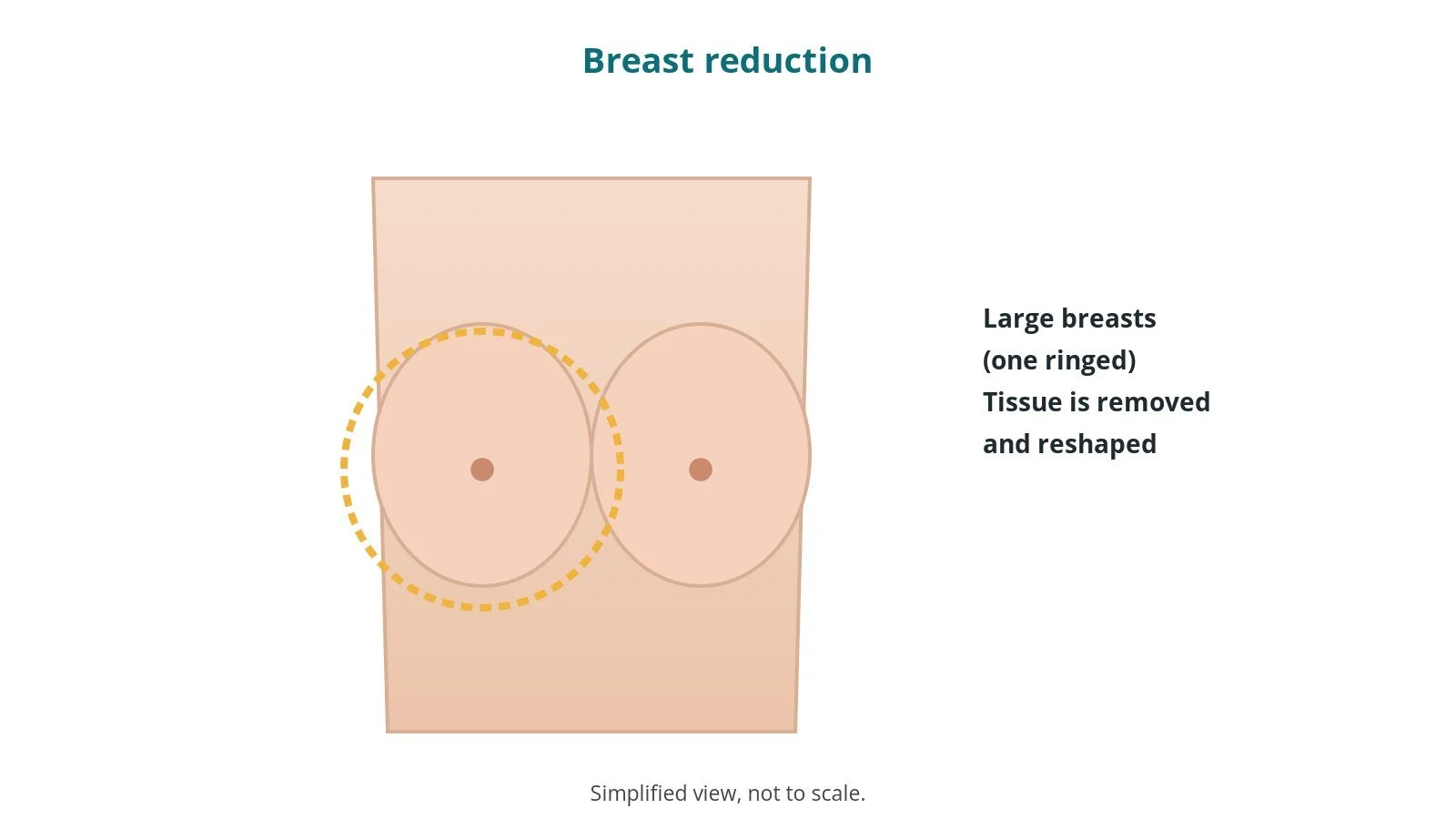
Simplified outline diagram of the chest with large breasts, one ringed
What is breast reduction?
Breast reduction (reduction mammoplasty) removes breast tissue and skin, and moves the nipple higher.
The surgeon:
- marks the breasts with the patient standing before surgery
- removes tissue and skin, often in a keyhole or anchor-shaped pattern
- keeps the nipple attached to a strip of tissue (pedicle) where possible
- shapes the breast and closes in layers
On the NHS it is available only when local criteria are met. Breast tissue is sent to the lab.
New to the acronyms? See the Cath Lab Abbreviations A–Z.
Who is it for?
It may be considered for people with:
- large breasts causing pain or other symptoms, when criteria are met
- to match breast size after other surgery
The decision is made by your plastic or breast surgery team, who will talk through the reasons, the alternatives and the risks with you.
When is it done?
Most operations are planned; some are urgent. Before it, you usually have:
- an examination, measurements and photographs (with consent)
- sometimes a breast scan
- advice to stop smoking, as healing is affected
- a review of medicines, as per centre protocol
- a chance to ask questions and give consent
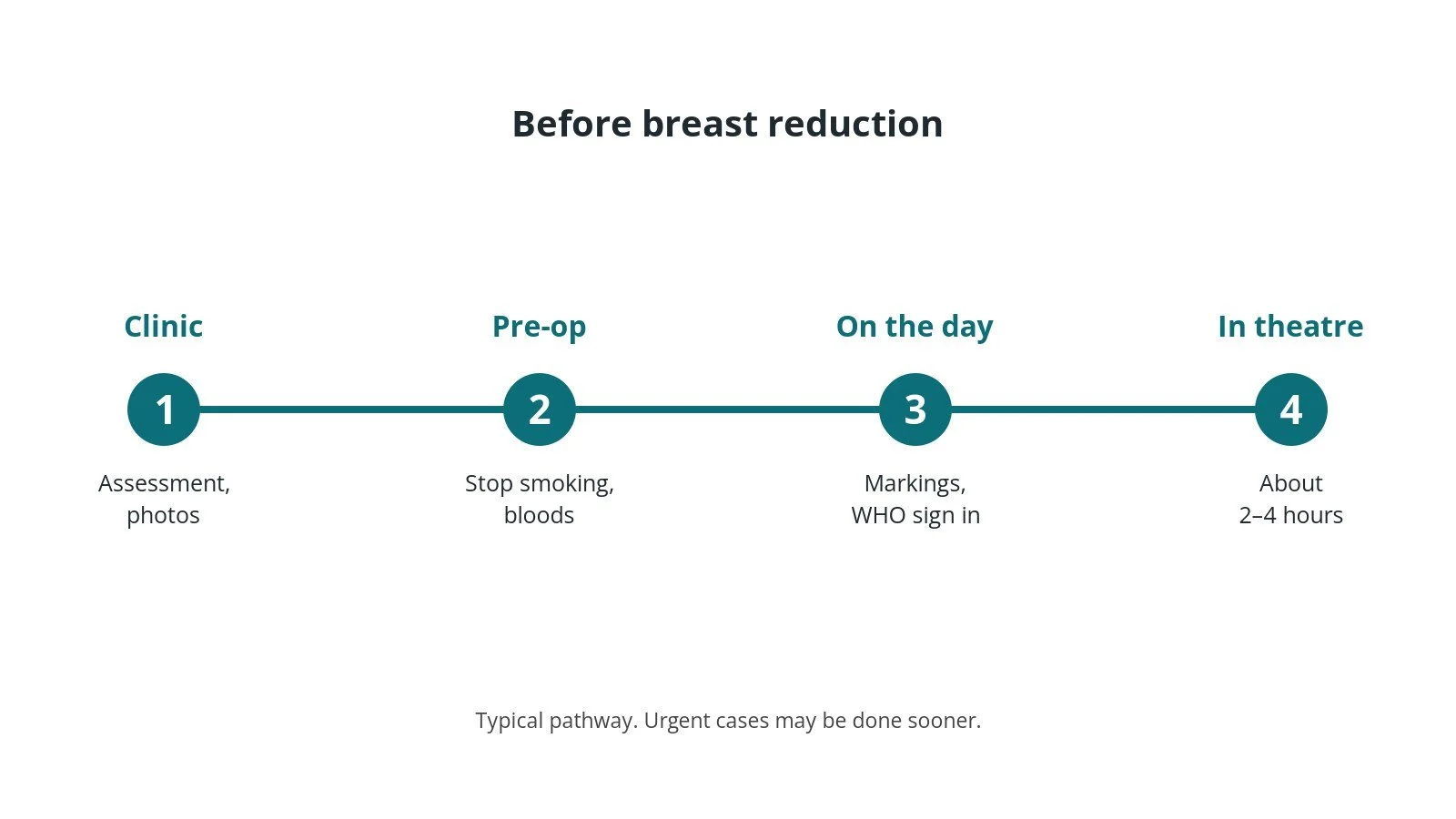
Timeline of the usual steps before breast reduction: Clinic: Assessment, photos, Pre-op: Stop smoking, bloods, On the day: Markings, WHO sign in, In theatre: About 2–4 hours
Step by step
1. Getting ready
Team brief and WHO checklist first, including the pre-op markings. The anaesthetic team and ODP give the anaesthetic (general, as per centre protocol); antibiotics and blood-clot prevention are given as per centre protocol. The circulating practitioner checks positioning, pressure areas, the diathermy plate and warming. The scrub practitioner sets up the instrument trolley and does the first count. The patient is positioned with arms secured so they can be sat up during surgery to check shape.
2. Access
Cuts follow the pre-op markings: around the nipple, down the lower breast and often along the crease beneath.
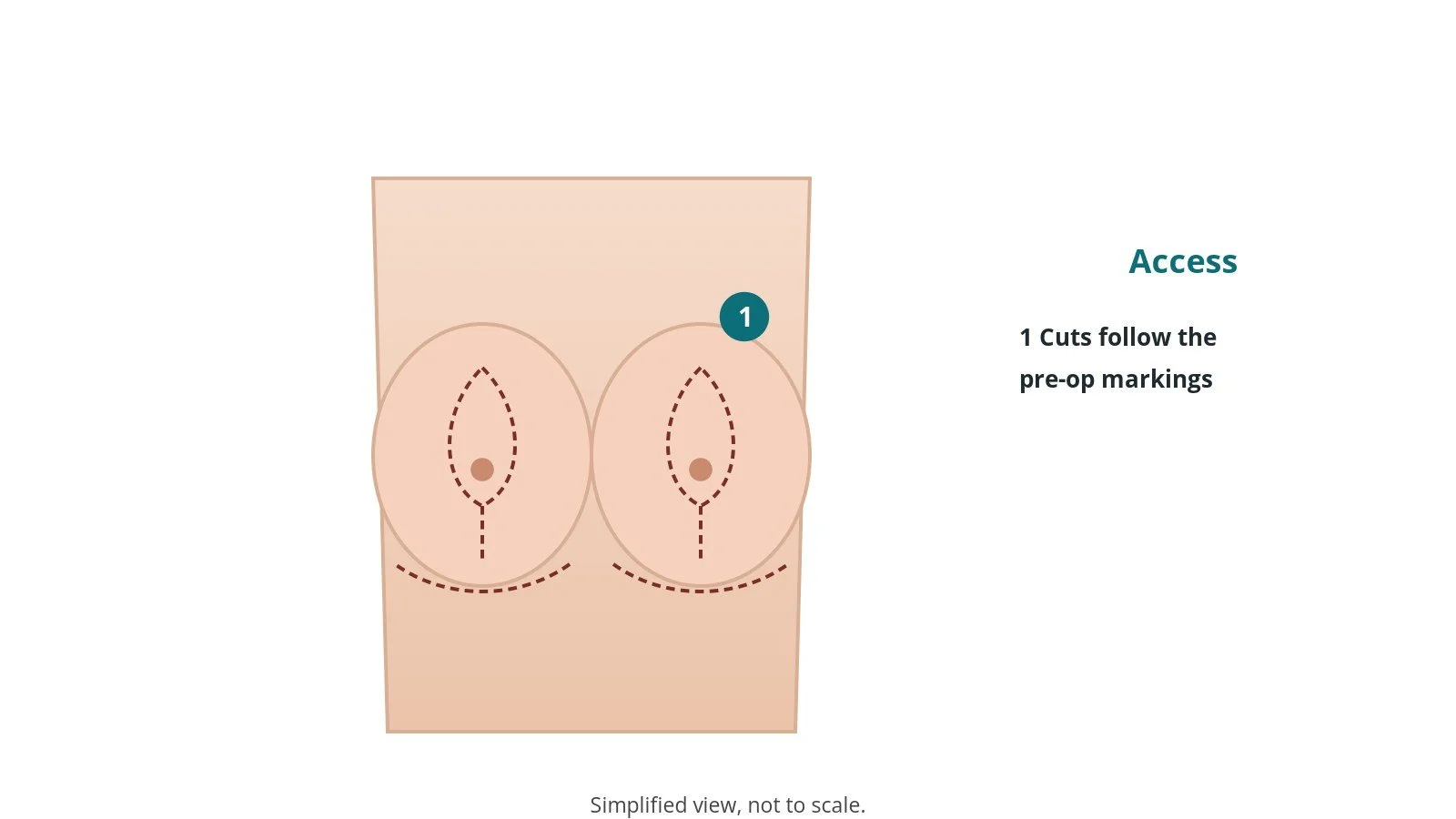
Diagram of the chest with keyhole and anchor-shaped markings on both breasts
3. Reducing and reshaping
- A. Large breasts. The markings guide the operation.
- B. Markings. Skin and tissue are incised along the markings.
- C. Tissue removed. Excess tissue is removed and the nipple moved up.
- D. Reshaped. The breasts are shaped and closed.
Tissue from each side is weighed, labelled left or right, and sent to the lab.
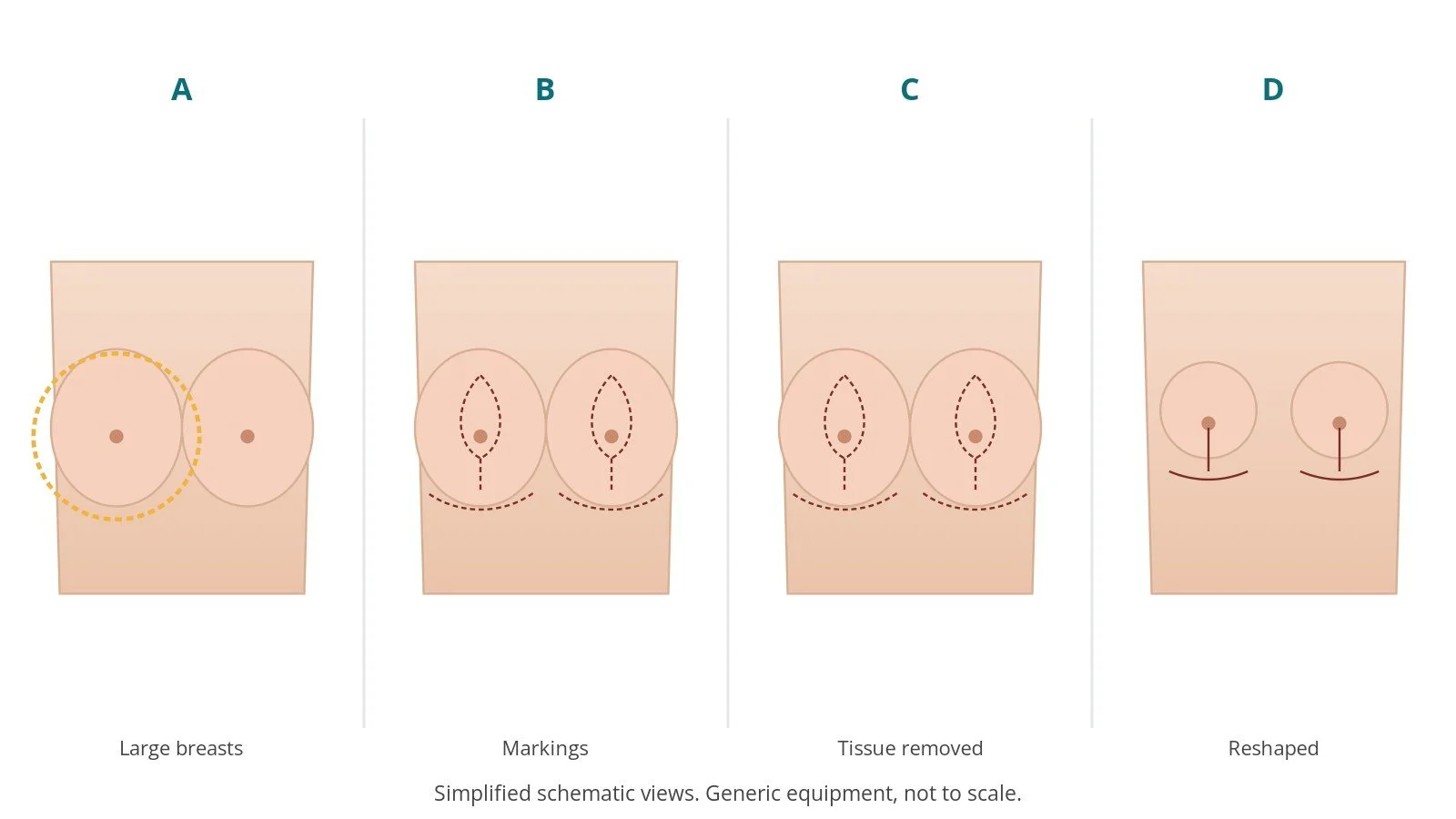
Four-panel schematic of breast reduction: large breasts, markings, tissue removed, reshaped
4. Finishing
Drains may be placed, per surgeon, and the wounds closed and dressed. Final counts are confirmed, specimens labelled by side, and the patient goes to recovery with a full handover including nipple checks.
Recovery and aftercare
- First day: pain relief and nipple checks.
- Going home: often 1–2 days.
- Bra: a supportive bra day and night for some weeks, as advised.
- Activity: avoid heavy lifting for about 6 weeks.
- Scars: fade over months.
- Follow-up: wound check and clinic review.
Call 999 if you have chest pain or sudden breathlessness. Contact your team if a wound becomes red, hot, swollen or leaky, a flap or graft changes colour, or you have a fever.
Risks and complications
Your team will explain the risks that apply to you. Possible problems include:
- bleeding or haematoma
- infection
- wound healing problems, especially where scars meet
- change or loss of nipple sensation
- problems with nipple blood supply (rare)
- scarring and asymmetry
- difficulty breastfeeding
Theatre kit list (printable)
Example kit list
Every theatre has its own protocol, and sizes and doses vary.
- plastic surgery instrument set
- marking pen and tape measure
- diathermy
- scales for weighing tissue
- drains, per surgeon
- fine closure sutures
- dressings and support bra
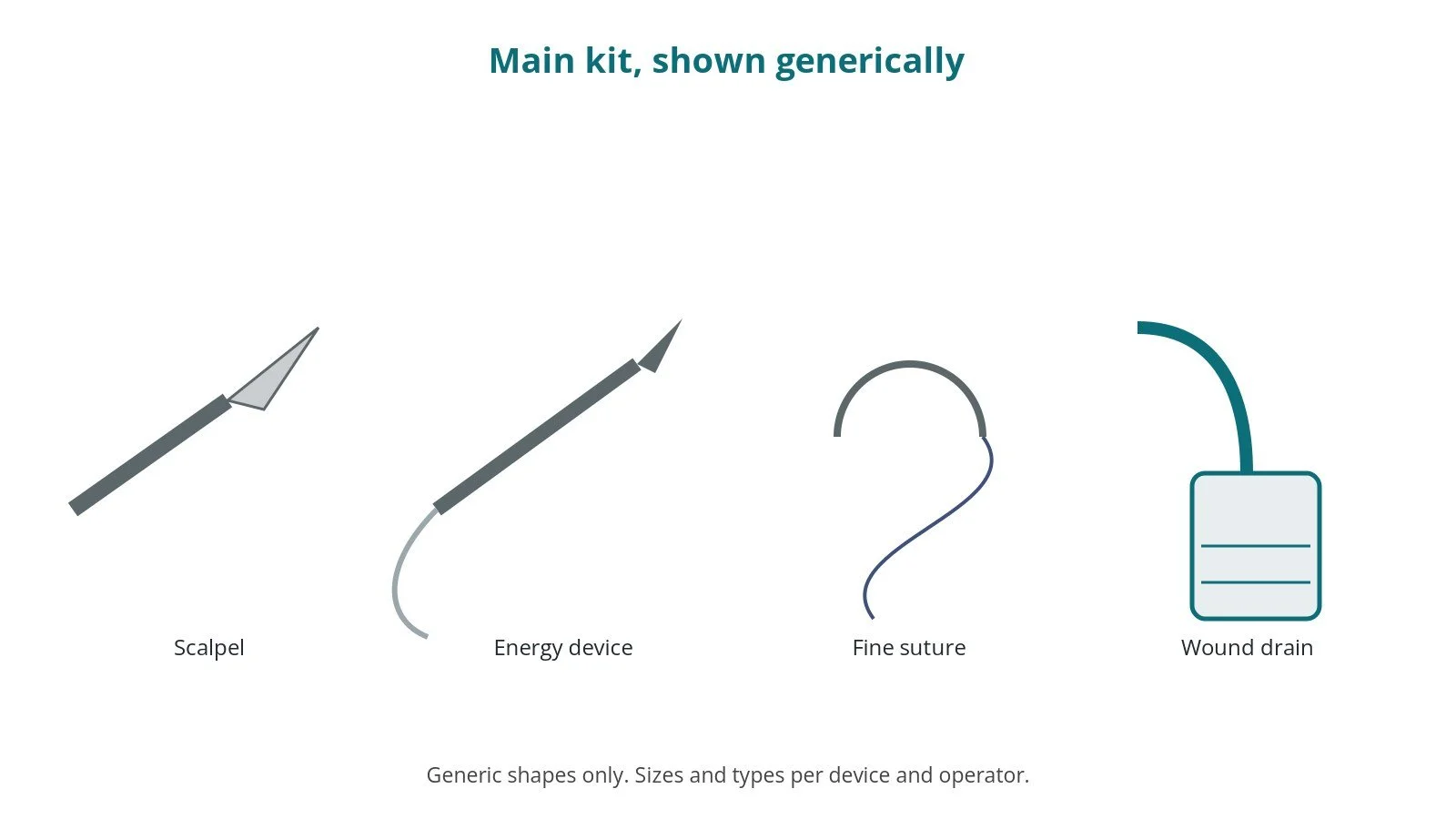
Generic drawings of the main kit: scalpel, energy device, fine suture, wound drain
Procedural steps
- Team brief, WHO sign in; markings checked; anaesthesia
- Positioning with arms secured; prep; count
- Incisions along markings
- Tissue removed; nipple repositioned; tissue weighed and labelled
- Sat up to check shape; haemostasis
- Drains; closure; dressings; counts; sign out and handover
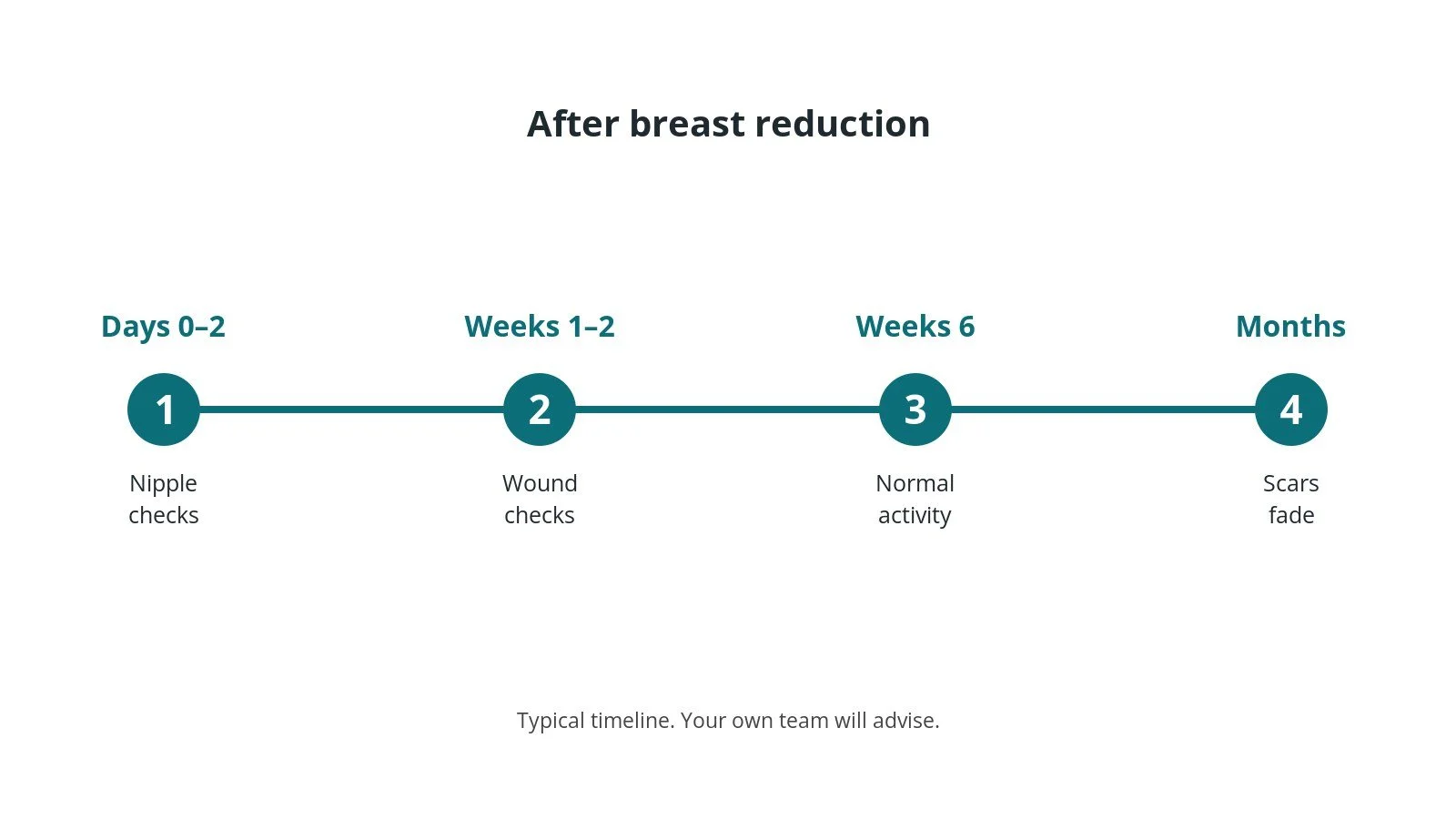
Recovery timeline after breast reduction: Days 0–2: Nipple checks, Weeks 1–2: Wound checks, Weeks 6: Normal activity, Months: Scars fade
First time in theatre?
💡 First-time tip
- Know your role. Scrub, circulating, anaesthetic and ODP each have their own checks; ask at the team brief.
- Counts matter. Swabs, needles and instruments are counted before, during and at closure; speak up if one is missing.
- Markings. Pre-op markings guide the whole operation; take care not to wipe them off during prep.
- Positioning. Some operations need the patient sat up during surgery; secure arms and check pressure areas.
- Warmth. Large areas of skin are exposed; keep warming running.
FAQ
Will I be able to breastfeed?
Some people can; it is not guaranteed.
How big will the scars be?
They follow the markings and fade over time.
Is it available on the NHS?
Only when local criteria are met.
Related guides
Sources
All checked on 14 October 2026. Each page's own date is shown where it gives one.
- NHS. Breast reduction (female). nhs.uk/conditions/breast-reduction
- StatPearls (NCBI Bookshelf), search: reduction mammaplasty. ncbi.nlm.nih.gov/books
- British Association of Plastic, Reconstructive and Aesthetic Surgeons. www.bapras.org.uk
- World Health Organization. Surgical Safety Checklist. who.int
Disclaimer
Education only. This page is for general education for healthcare students, theatre staff and curious readers. It isn't medical advice and doesn't replace advice from your own doctor, surgical team or local unit protocols. Equipment and medicines are described generically. No product or manufacturer is recommended. If you think someone is having a medical emergency, call 999.
Disclosure: I work in the medical device industry. This page is independent education and isn't sponsored or reviewed by any company.
All diagrams on this page are original illustrations created for rodnieoro.com.