Intravascular foreign body retrieval: a Cath Lab 101 guide
Reviewed by Rodnie Oro, cath lab charge nurse · Last reviewed: October 2026 · Education only, not medical advice
Foreign body retrieval in one minute
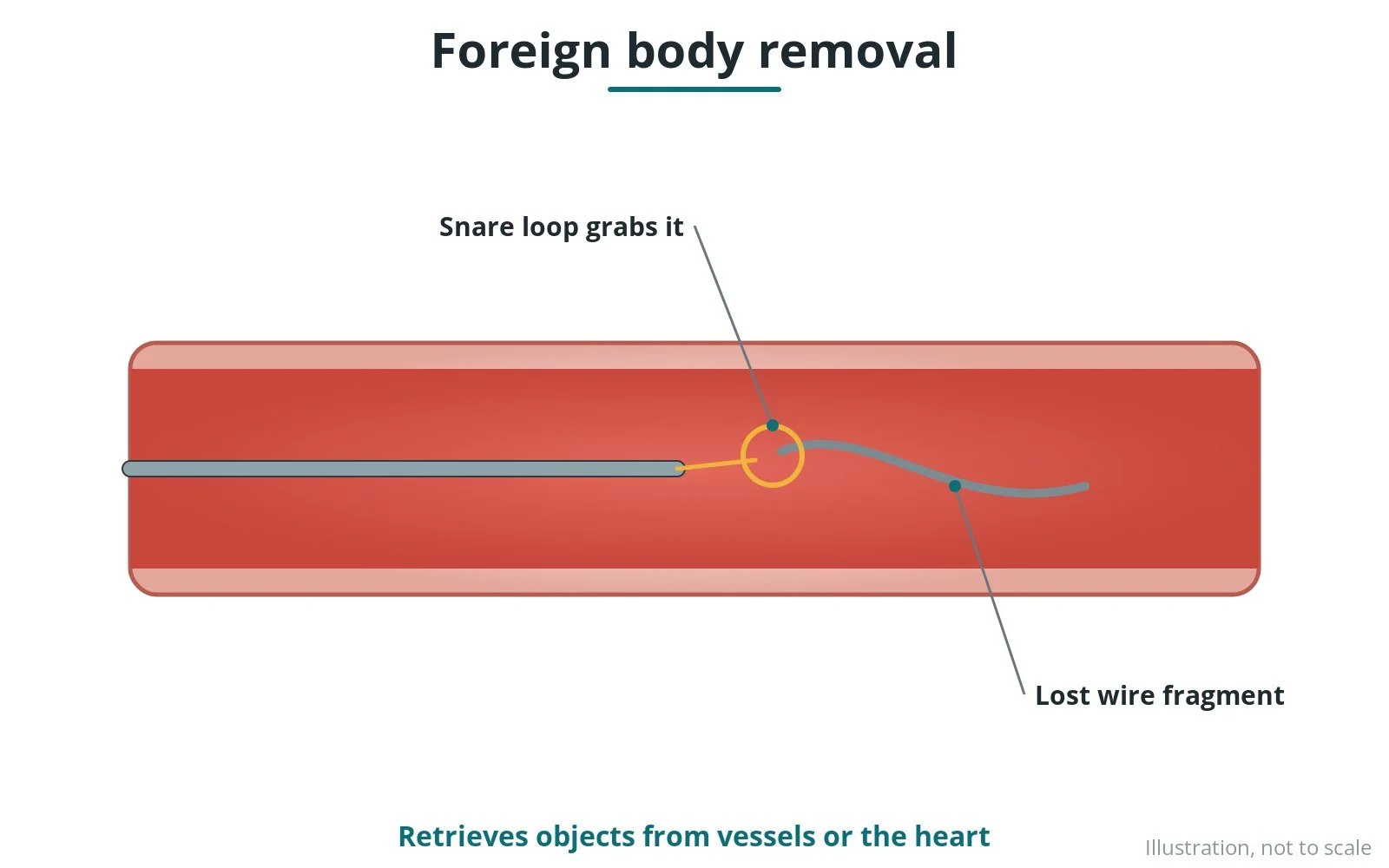
What it is: retrieving lost or broken equipment, such as part of a line, wire or catheter, from the heart or blood vessels using a catheter and a snare or similar tool.
Who it is for: people with a fragment that has moved into a vein, the heart or an artery, where leaving it could cause harm.
Main risks: bruising at the access site, rhythm problems, vessel injury and, rarely, damage to the heart or a need for surgery.
Usually: under local anaesthetic with sedation, 30–90 minutes, often home the same or next day.
On this page: What is intravascular foreign body retrieval? · Who is it for? · When is it done? · Step by step · Recovery · Risks · Kit list · First time in the lab? · FAQ
What is intravascular foreign body retrieval?
Occasionally, part of a medical device can break off or move inside the body, for example a fragment of a central line, a guidewire or a stent.
In the cath lab:
- the object is found on X-ray
- a catheter is guided close to it
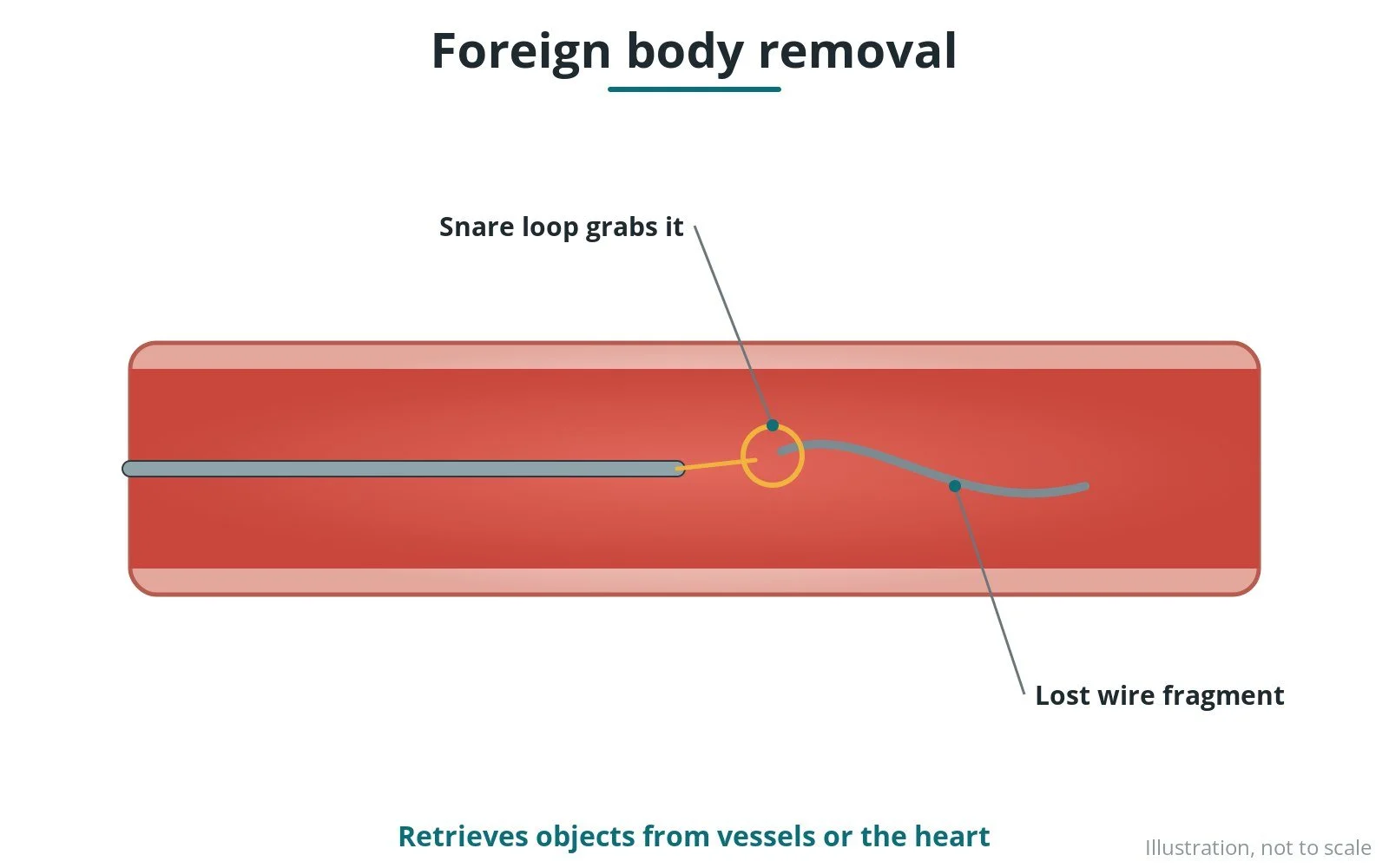
- a snare (a wire loop), basket or grasping tool catches it
- it is pulled into a sheath and removed
Most fragments can be removed this way without surgery.
New to the acronyms? See the Cath Lab Abbreviations A–Z.
Who is it for?
It may be considered for people with:
- a fragment of a central line or catheter in a vein or the heart
- a lost guidewire or broken wire tip
- a misplaced device or stent that has moved
The decision is made by your heart team, who will talk through the reasons, the alternatives and the risks with you.
When is it done?
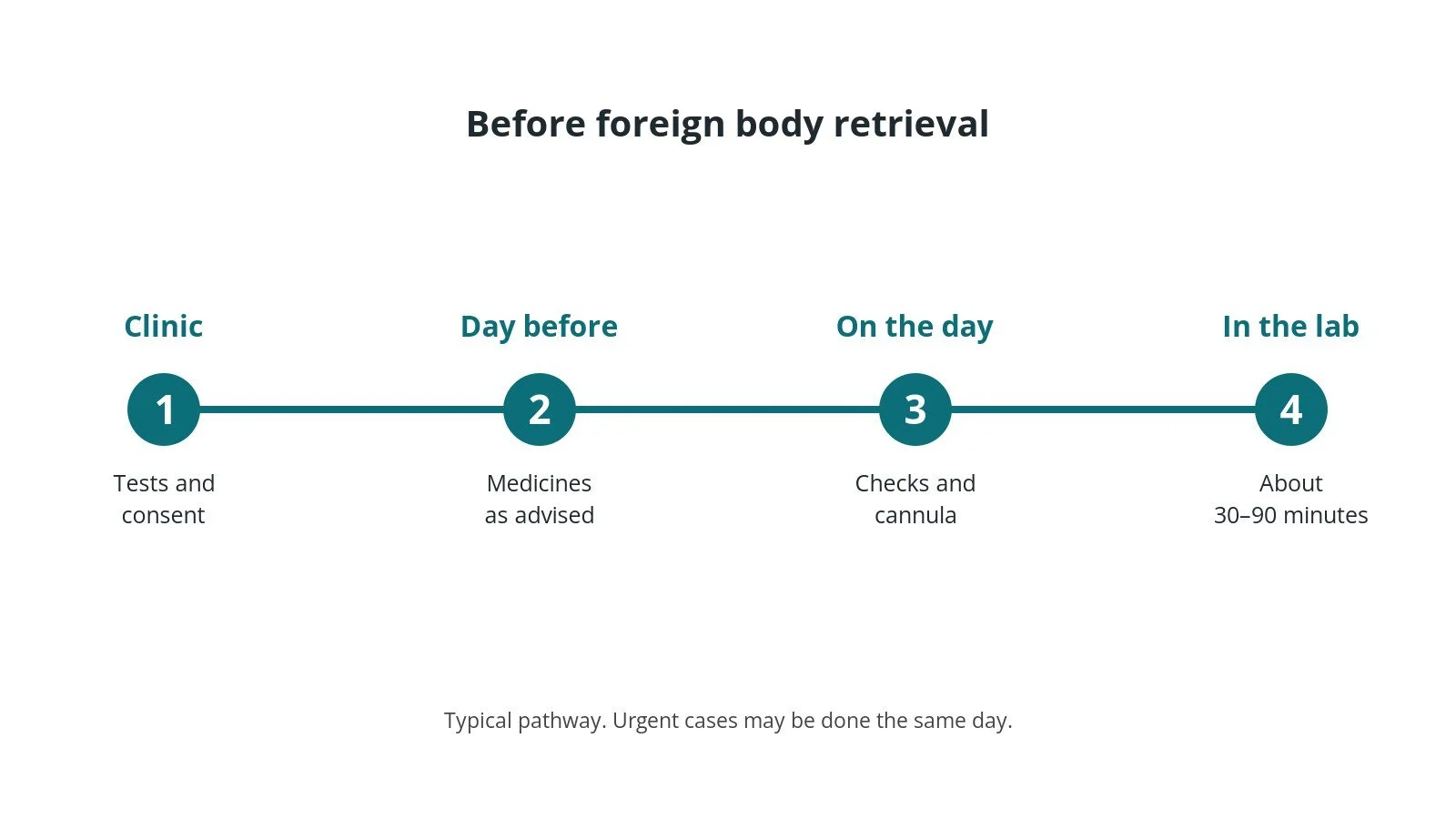
It can be planned in advance or done urgently. Before it, you usually have:
- blood tests, including kidney function and blood count
- an ECG, and often an echo or other scan
- a review of your medicines, especially blood thinners and diabetes medicines, as per centre protocol
- a chance to ask questions and give consent
Step by step
1. Getting ready
You lie on the X-ray table. ECG, blood pressure and oxygen levels are monitored. The skin over the access site is cleaned and numbed with local anaesthetic; some people also have light sedation, as per centre protocol.
2. Access
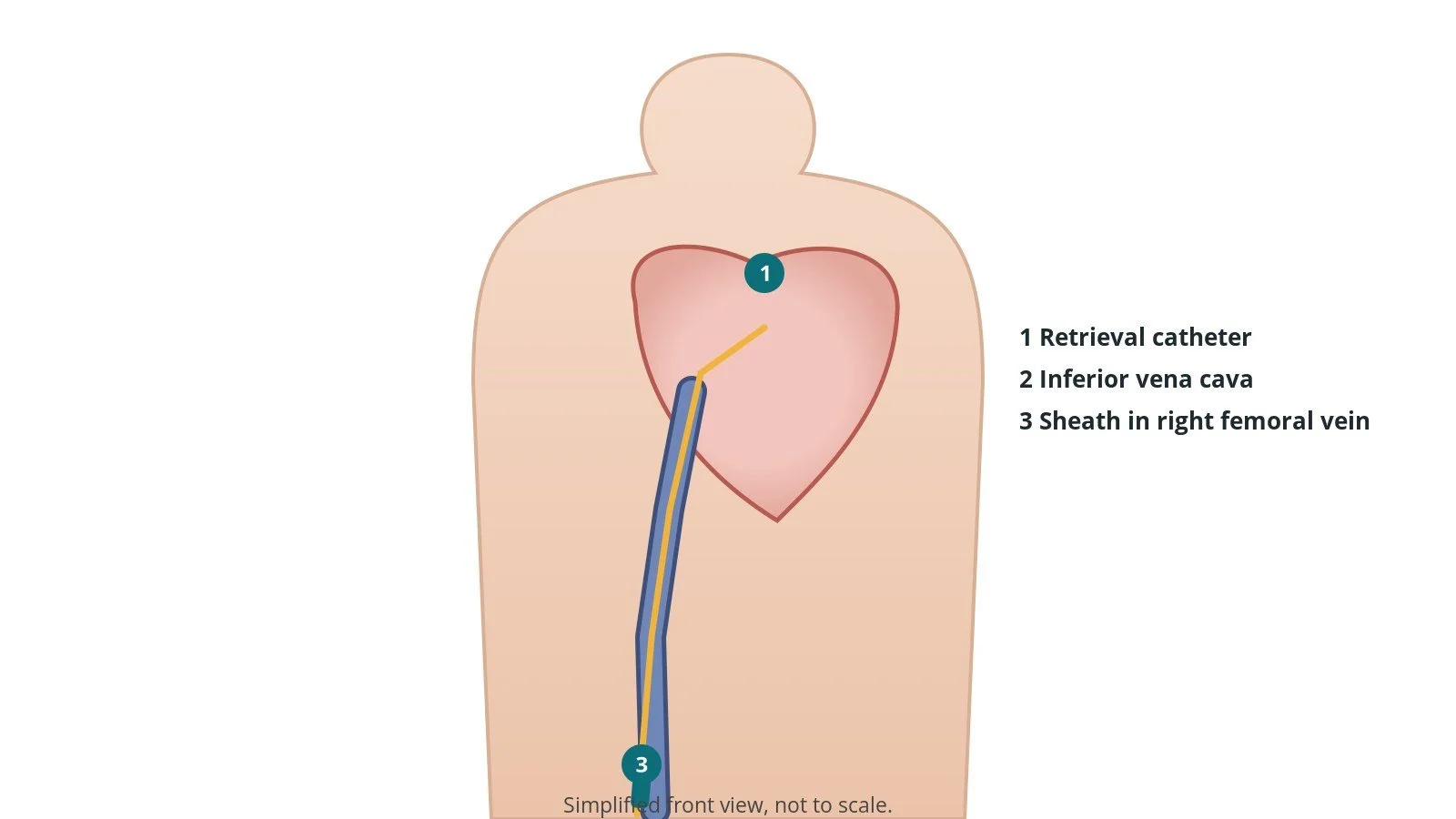
A sheath is placed in a vein or artery depending on where the object is, sizes per device and operator, often larger than usual so the object can be pulled in.
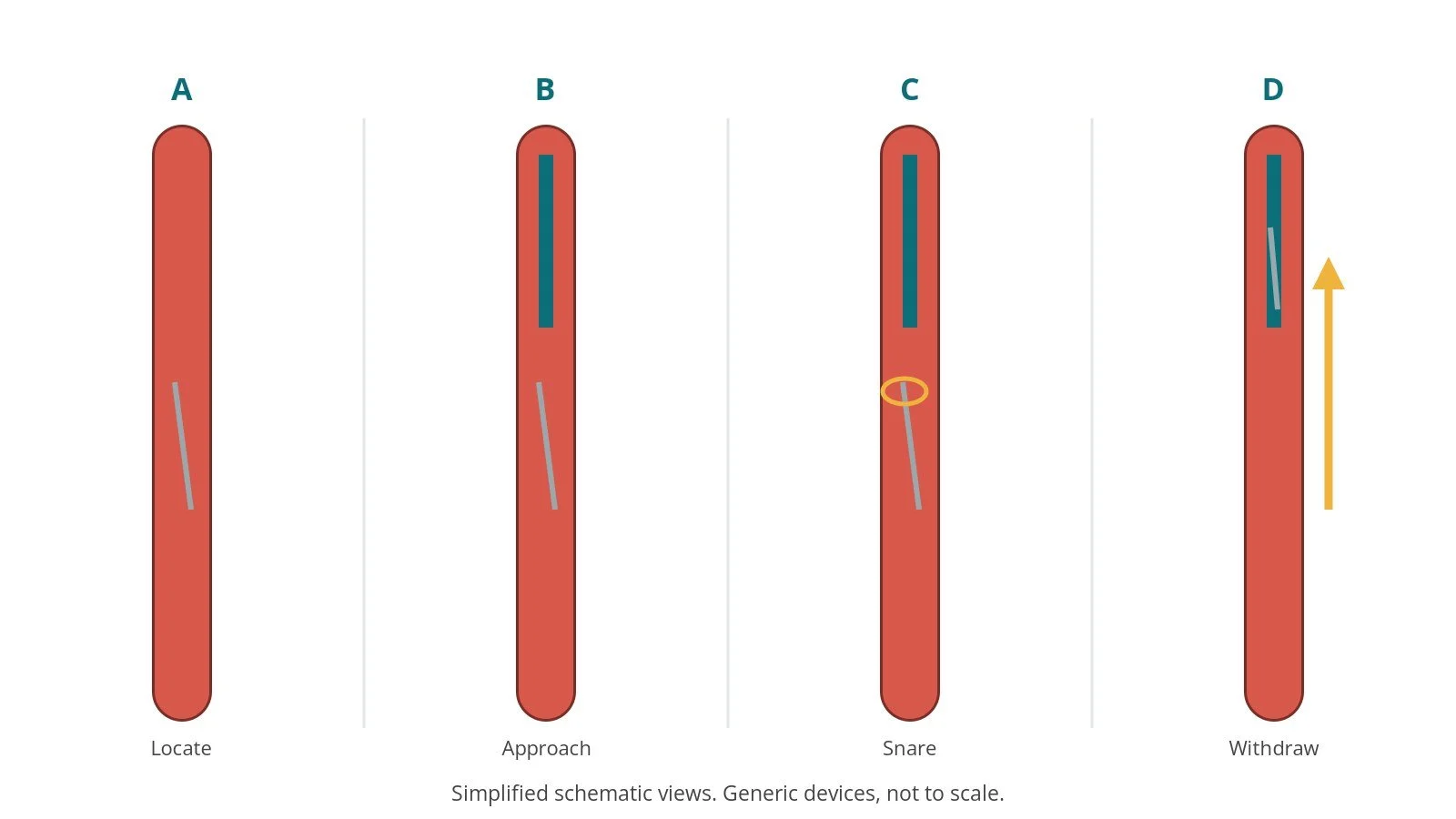
3. Retrieval
- A. Locate. The object is found on X-ray.
- B. Approach. A catheter is guided near it.
- C. Snare. The snare loop grabs one end.
- D. Withdraw. The object is pulled into the sheath and out.
4. Finishing
The catheters are removed. The sheath is taken out and the site closed with pressure, a band or a closure device, per device and operator.
Recovery and aftercare
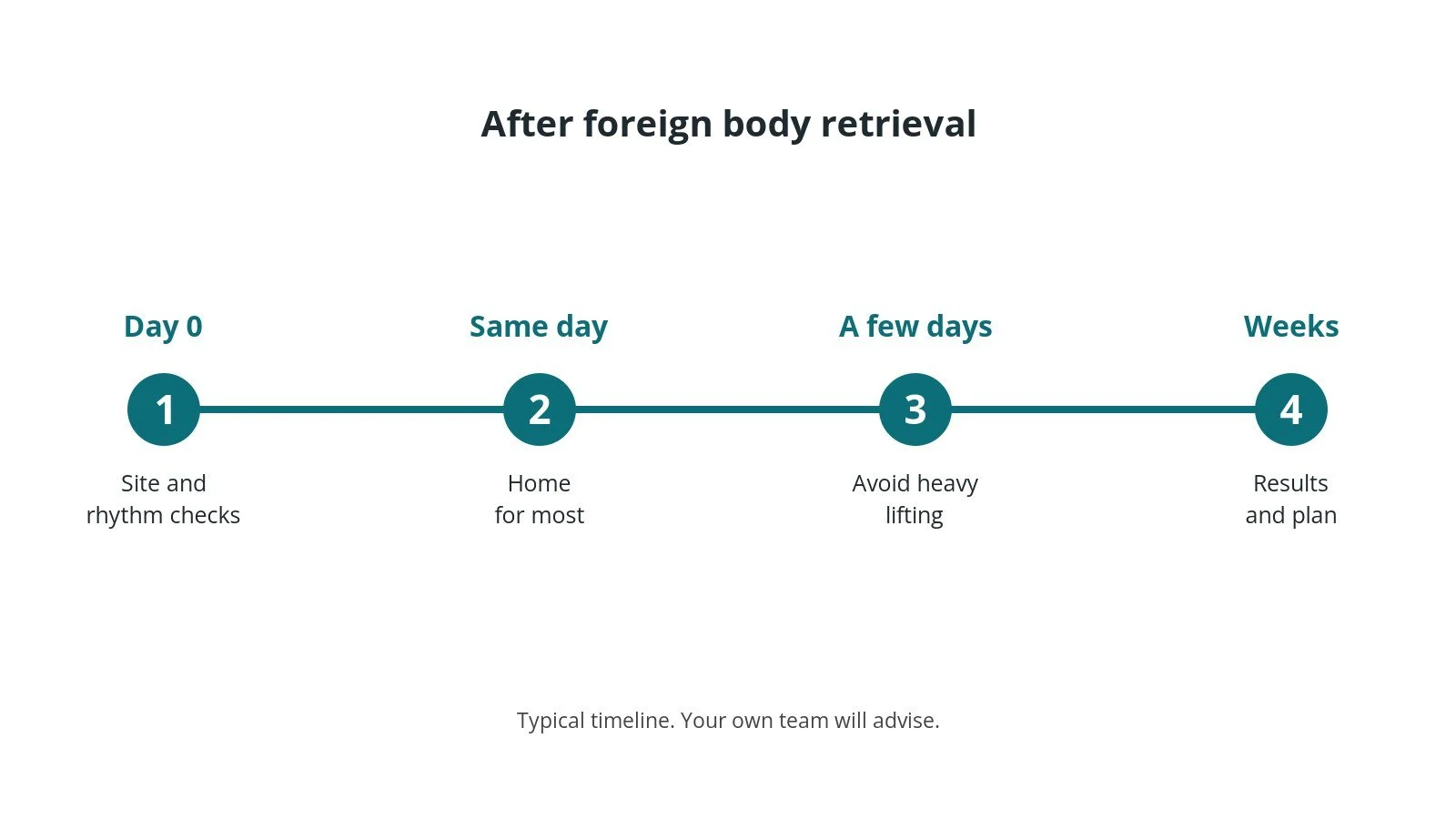
- First hours: you rest while the nurses check the access site, pulse and blood pressure, as per centre protocol.
- Going home: usually the same day, with someone to take you home.
- Access site: avoid heavy lifting and strenuous activity for a few days; a small bruise is common.
- Results: the team will usually explain the findings before you go home, and send a report to your own doctor.
- Driving: ask your team; for a planned test it is often a couple of days, but it depends on your heart condition.
Call 999 if you have chest pain, breathlessness, fainting, signs of a stroke, or heavy bleeding or swelling at the access site.
Risks and complications
Your team will explain the risks that apply to you. Possible problems include:
- bruising or bleeding at the access site (common, usually minor)
- damage to the artery or vein at the access site (uncommon)
- reaction to the contrast dye, or effects on kidney function
- heart rhythm disturbances, usually brief
- heart attack, stroke or serious complications (rare)
- X-ray exposure, kept as low as possible
- the object breaking further or moving
- damage to a heart valve or vessel; surgery very rarely needed
Cath lab kit list (printable)
Barts example kit list
An example from one UK centre, written generically. Every lab has its own protocol, and sizes and doses vary.
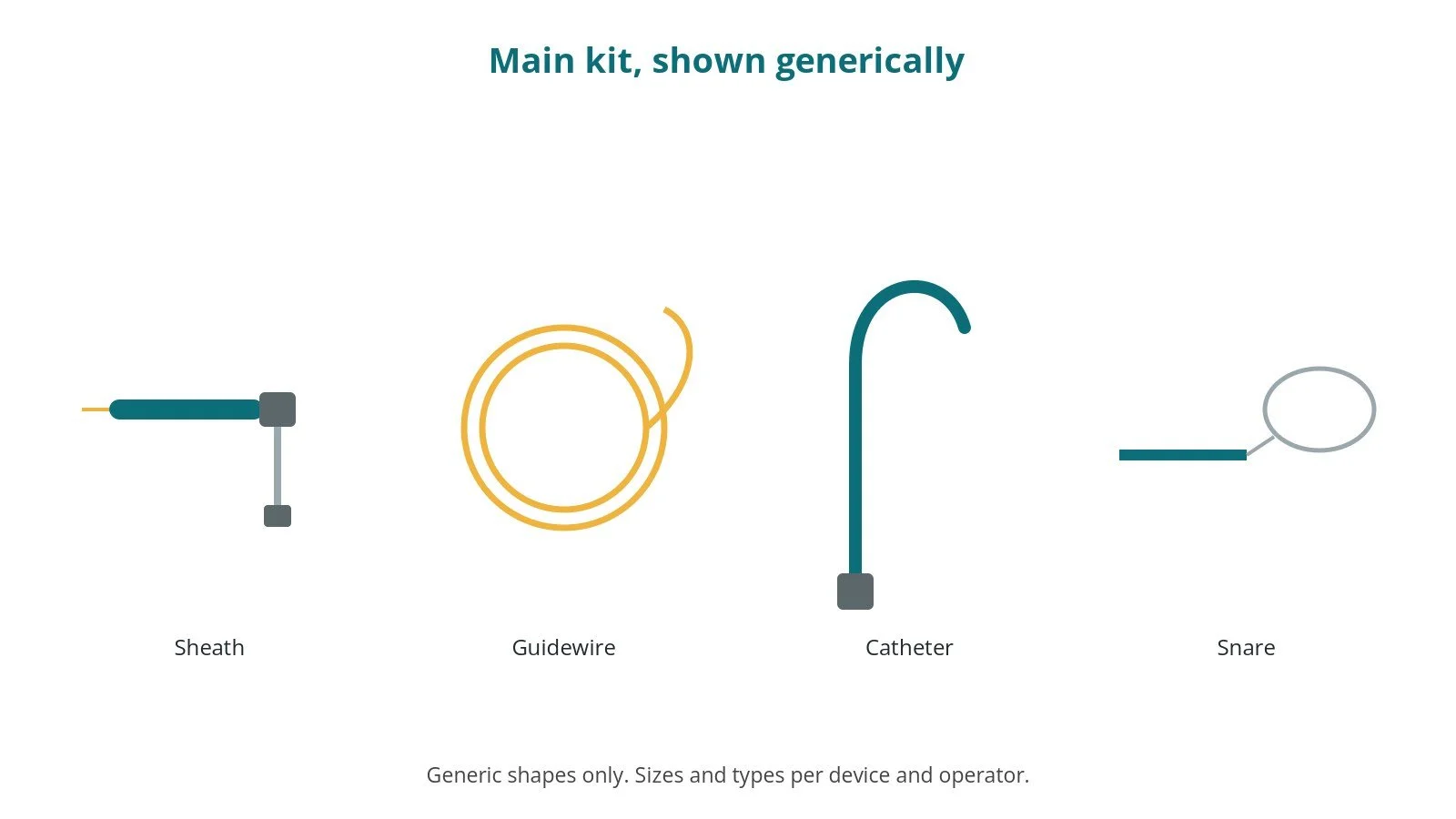
- sheath, size per device and operator (often larger)
- guide or diagnostic catheters, per operator
- snares, sizes per device and operator
- retrieval basket or forceps, per operator
- heparin, as per centre protocol
Procedural steps (Barts example)
- X-ray to locate
- Access with appropriately sized sheath
- Catheter to the object
- Snare one free end
- Pull into sheath; remove together
- Check X-ray; haemostasis
First time in the cath lab?
💡 First-time tip
- Bigger sheath. The object may need a larger sheath.
- Grab an end. A free end is easiest to snare.
- Keep it. Keep the retrieved object for incident reporting.
- Check nothing is left. Final X-ray.
FAQ
How did it get there?
Usually a device fragment; the team will explain.
Is surgery needed?
Rarely.
Will I be told?
Yes; you will be fully informed.
Related Cath Lab 101 guides
Sources
All checked on 10 October 2026. Each page's own date is shown where it gives one.
- StatPearls (NCBI Bookshelf), search: intravascular foreign body retrieval. ncbi.nlm.nih.gov/books
- British Heart Foundation. Tests and procedures. bhf.org.uk/informationsupport/tests
Disclaimer
Education only. This page is for general education for healthcare students, cath lab staff and curious readers. It isn't medical advice and doesn't replace advice from your own doctor, heart team or local unit protocols. Equipment and medicines are described generically. No product or manufacturer is recommended. If you think someone is having a heart emergency, call 999.
Disclosure: I work in the medical device industry. This page is independent education and isn't sponsored or reviewed by any company.
All diagrams on this page are original illustrations created for rodnieoro.com.