Burr hole surgery for chronic subdural haematoma: an OR 101 guide
Reviewed by Rodnie Oro, cath lab charge nurse · Last reviewed: October 2026 · Education only, not medical advice
Burr hole in one minute
What it is: surgery to make one or two small holes in the skull to drain an old blood collection (chronic subdural haematoma) pressing on the brain.
Who it is for: people, often older adults, with symptoms such as confusion, headache or weakness from a chronic subdural haematoma.
Main risks: the collection coming back, bleeding, infection, seizures.
Usually: under general or local anaesthetic, about 1 hour, a few days in hospital.
On this page: What is burr hole surgery? · Who is it for? · When is it done? · Step by step · Recovery · Risks · Kit list · First time in theatre? · FAQ
What is burr hole surgery?
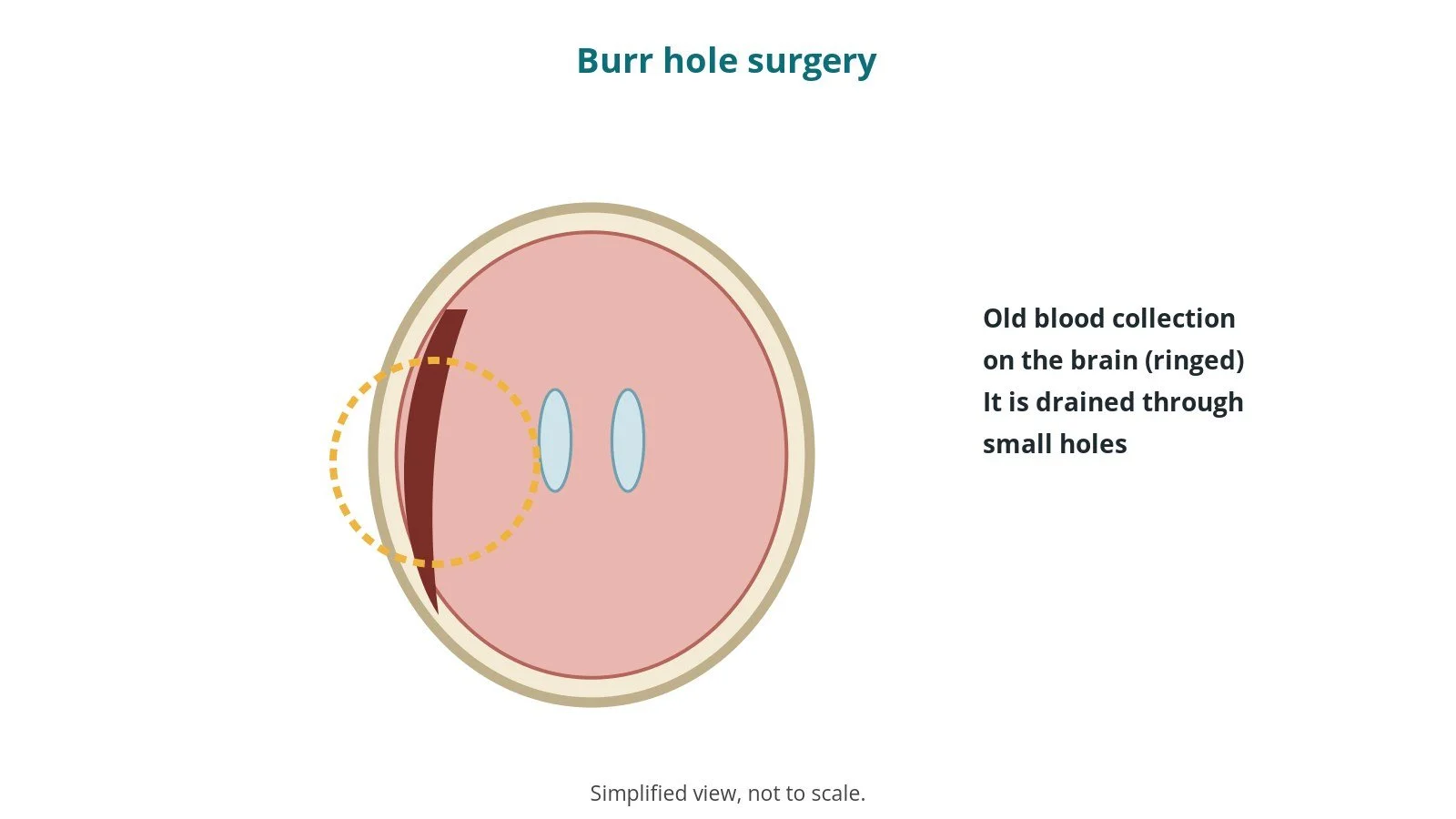
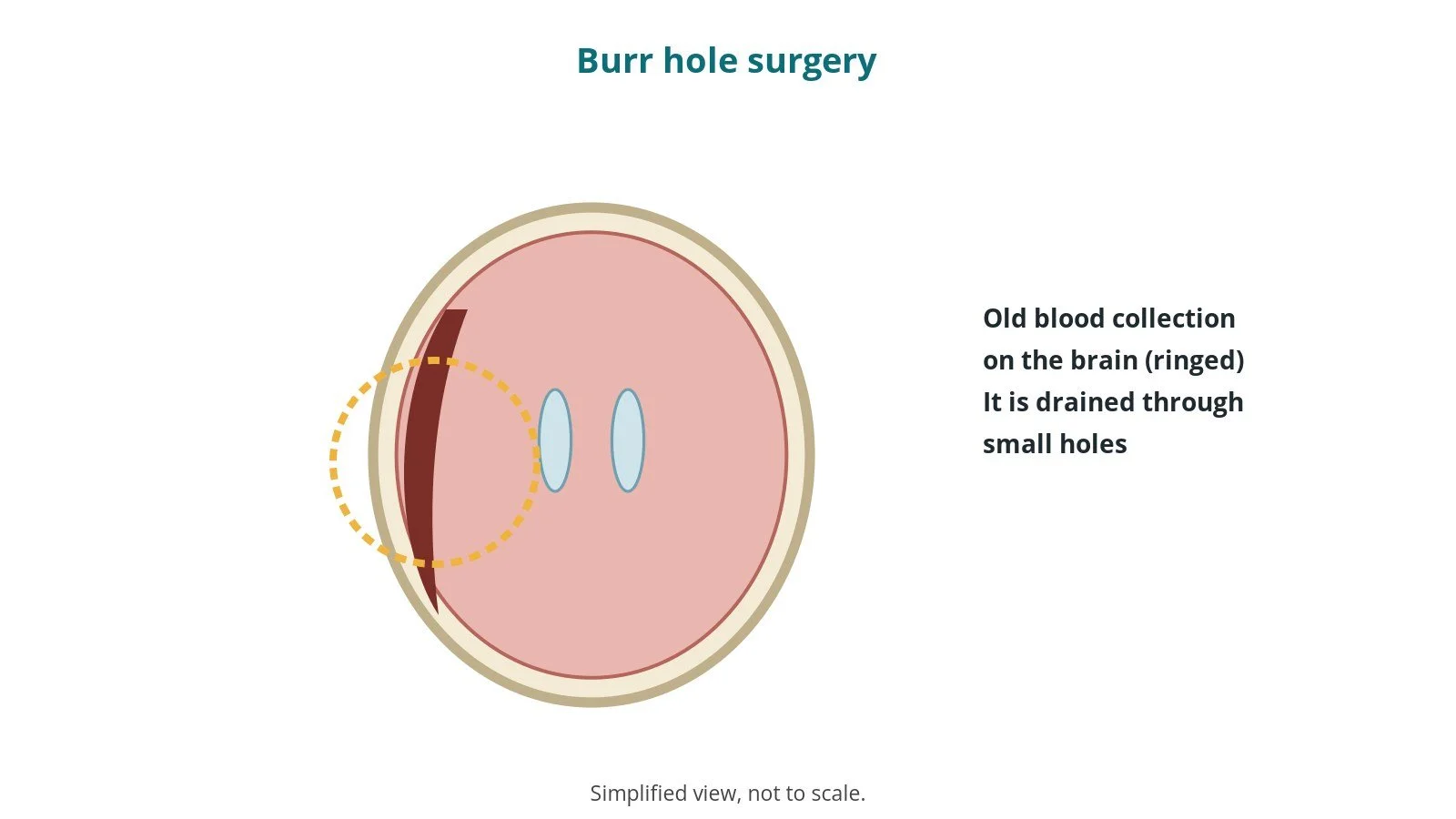
A chronic subdural haematoma is an old collection of blood between the brain and its covering. It often follows a minor head injury, sometimes weeks earlier, and is more common in older people and those on blood thinners.
In burr hole surgery the surgeon:
- makes one or two small cuts on the scalp
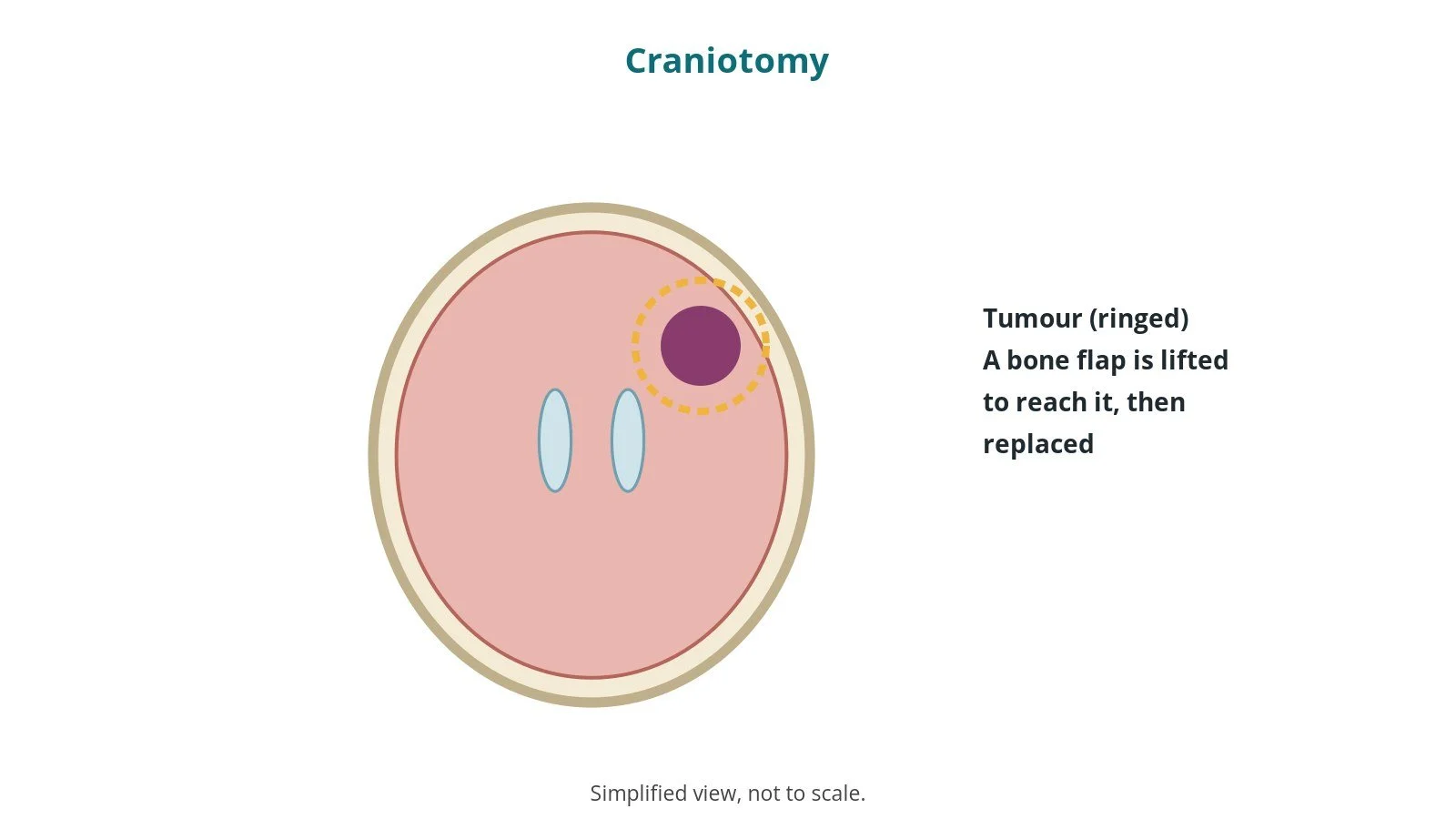
- drills burr holes through the skull
- opens the covering and washes out the old blood with warm fluid
- often leaves a soft drain for a day or two
Some people are treated with other methods, as per centre protocol.
New to the acronyms? See the Cath Lab Abbreviations A–Z.
Who is it for?
It may be considered for people with:
- a chronic subdural haematoma causing symptoms
The decision is made by your neurosurgical team, who will talk through the reasons, the alternatives and the risks with you.
When is it done?
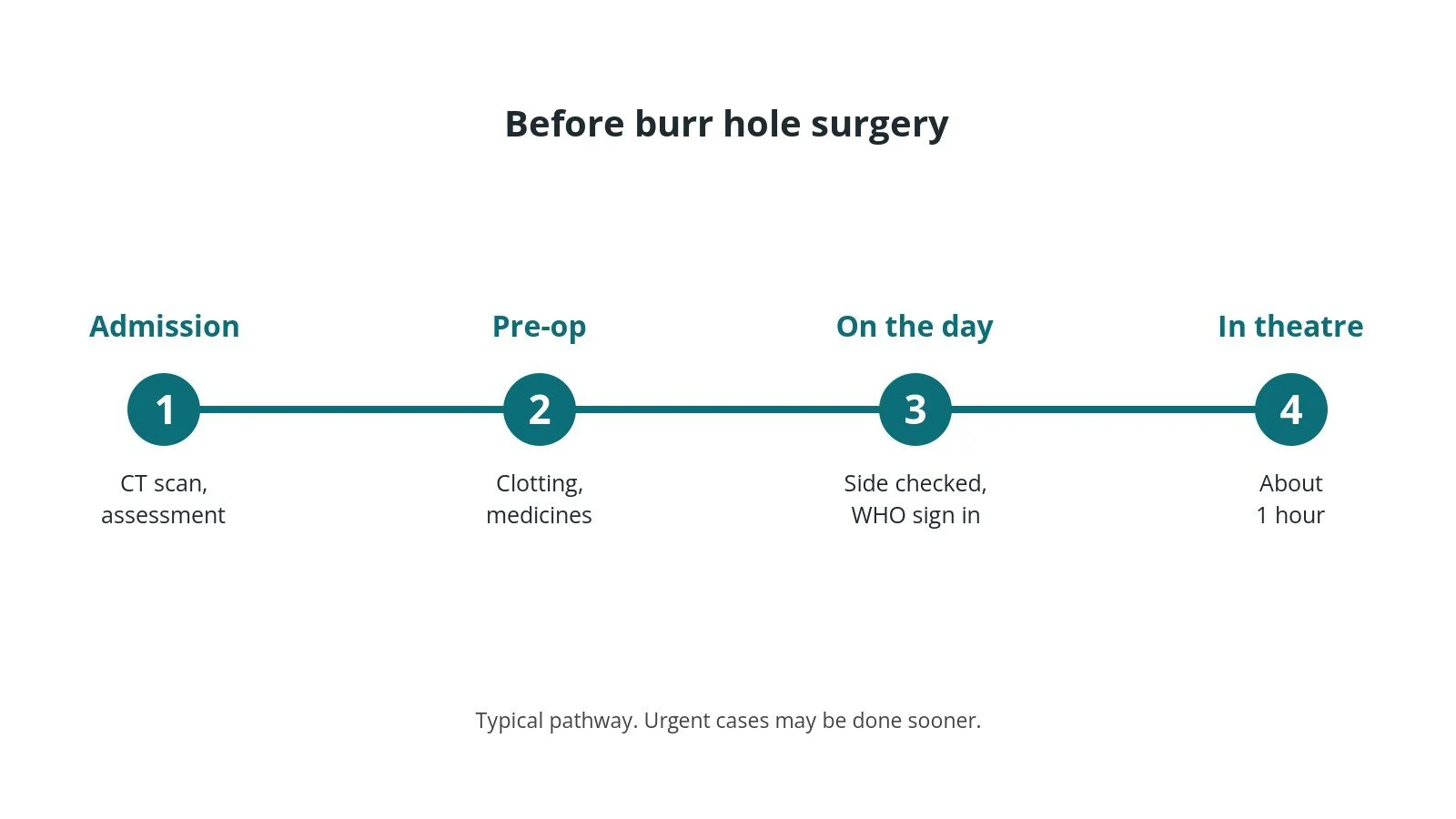
Most operations are planned; some are urgent. Before it, you usually have:
- a CT scan
- blood tests, including clotting
- a plan for blood thinners, as per centre protocol
- a chance to ask questions and give consent
Step by step
1. Getting ready
Team brief and WHO checklist first, including the site and side marking. The anaesthetic team and ODP give the anaesthetic (general, or local with sedation, as per centre protocol); antibiotics and blood-clot prevention are given as per centre protocol. The circulating practitioner checks positioning, pressure areas, the diathermy plate and warming. The scrub practitioner sets up the instrument trolley and does the first count. The side is checked against the scan; the head is positioned and supported.
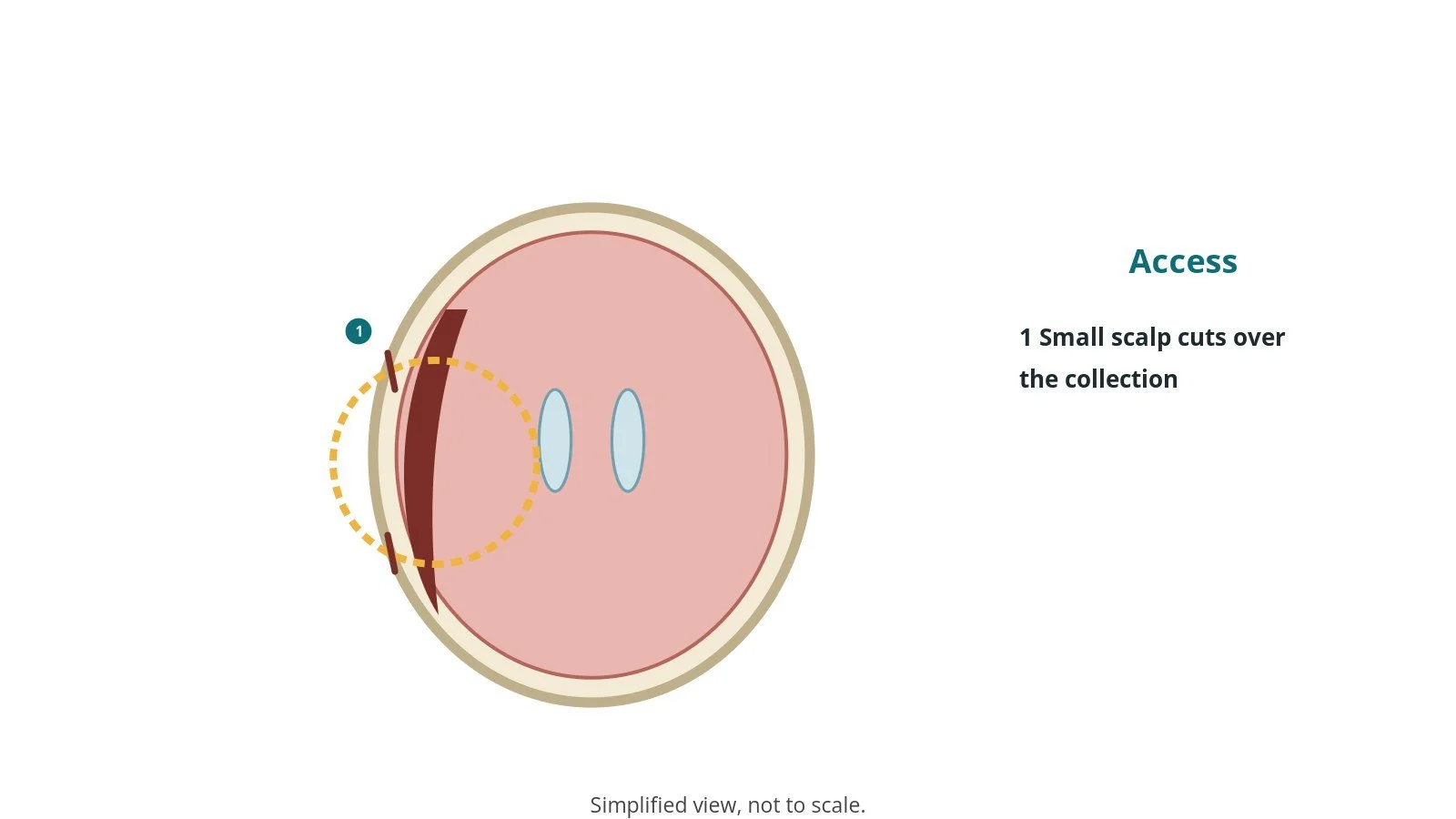
2. Access
One or two small scalp cuts on the side of the collection.
3. Draining the collection
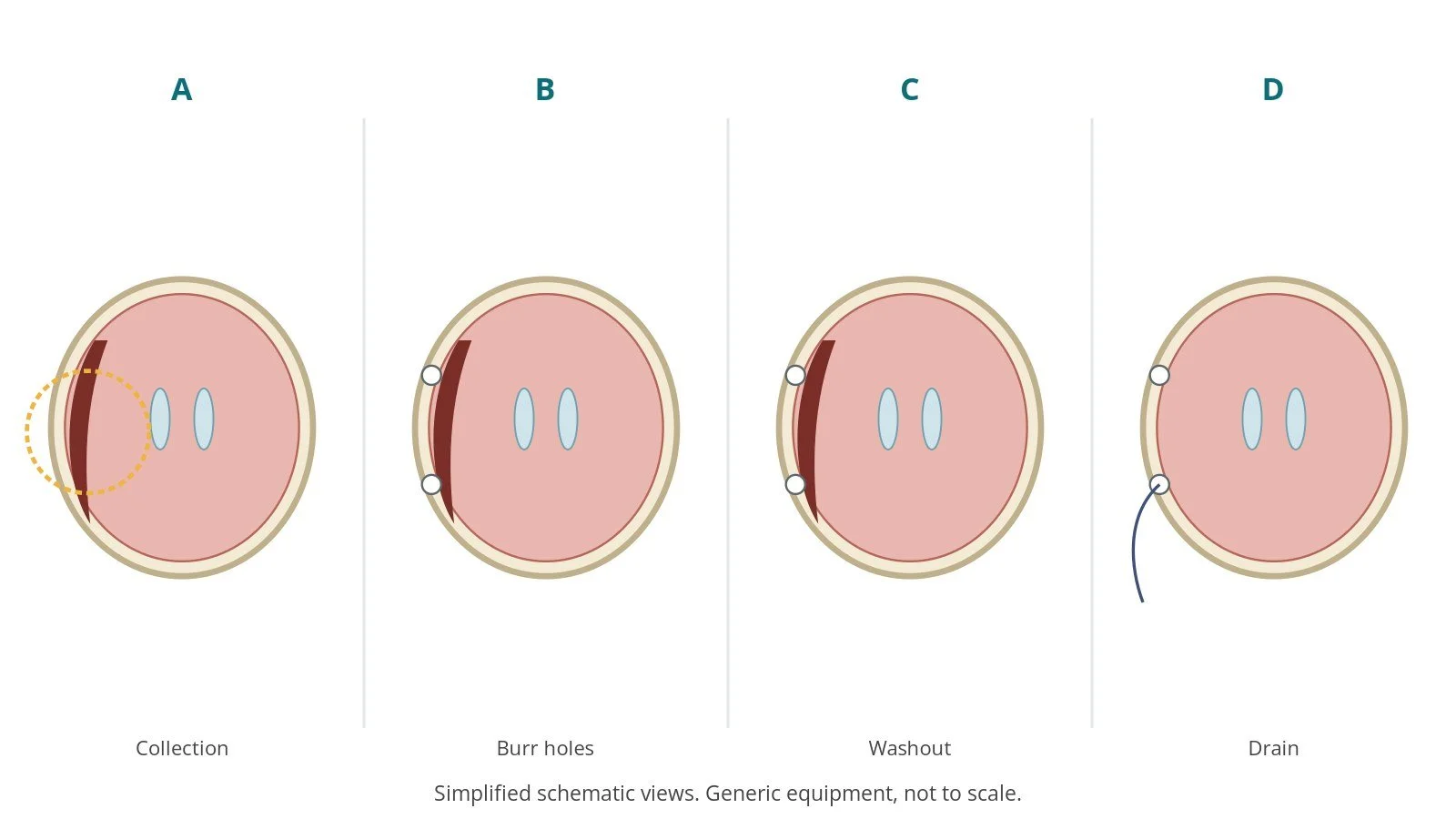
- A. Collection. The side and site are confirmed on the scan.
- B. Burr holes. One or two small holes are drilled.
- C. Washout. The old blood is washed out with warm fluid.
- D. Drain. A soft drain may be left in place.
Warm irrigation fluid is ready before the holes are made.
4. Finishing
The drain is secured, if used, and the scalp closed. Final counts are confirmed and the patient goes to recovery with neuro checks and drain instructions.
Recovery and aftercare
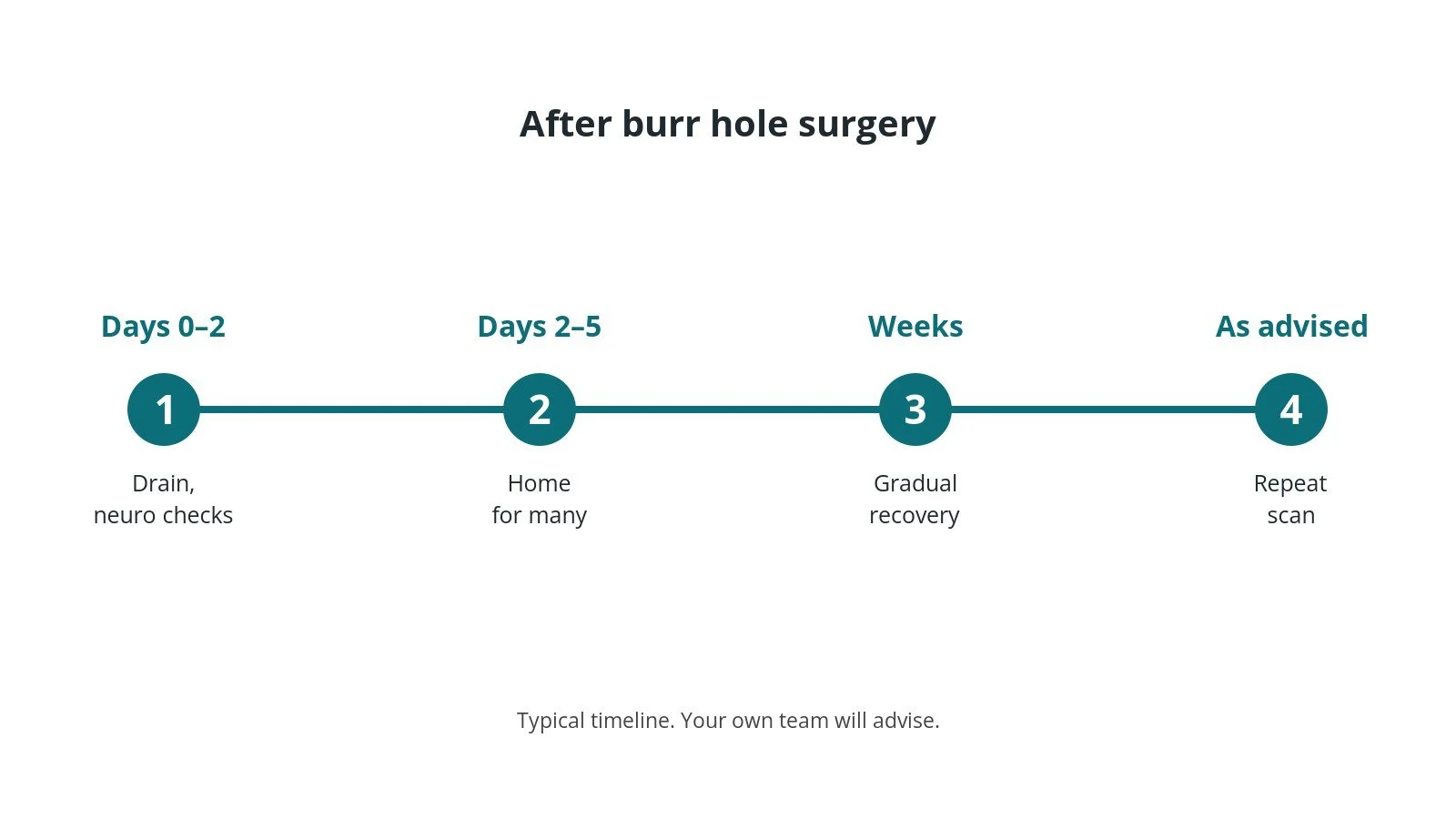
- First 1–2 days: often lying flat while the drain is in, as per centre protocol.
- Drain: removed after 1–2 days.
- Going home: often a few days, sometimes longer for rehabilitation.
- Blood thinners: restarted only when advised.
- Warning signs: worsening headache, confusion or weakness; seek help.
- Follow-up: sometimes a repeat scan.
Call 999 if you have a seizure, sudden severe headache, confusion, drowsiness, weakness or collapse. Contact your team if you have a fever, leaking wound, worsening headache or vomiting.
Risks and complications
Your team will explain the risks that apply to you. Possible problems include:
- the collection coming back
- bleeding in the brain
- infection
- seizures
- worsening confusion for a time
- chest infection or clots
Theatre kit list (printable)
Example kit list
Every theatre has its own protocol, and sizes and doses vary.
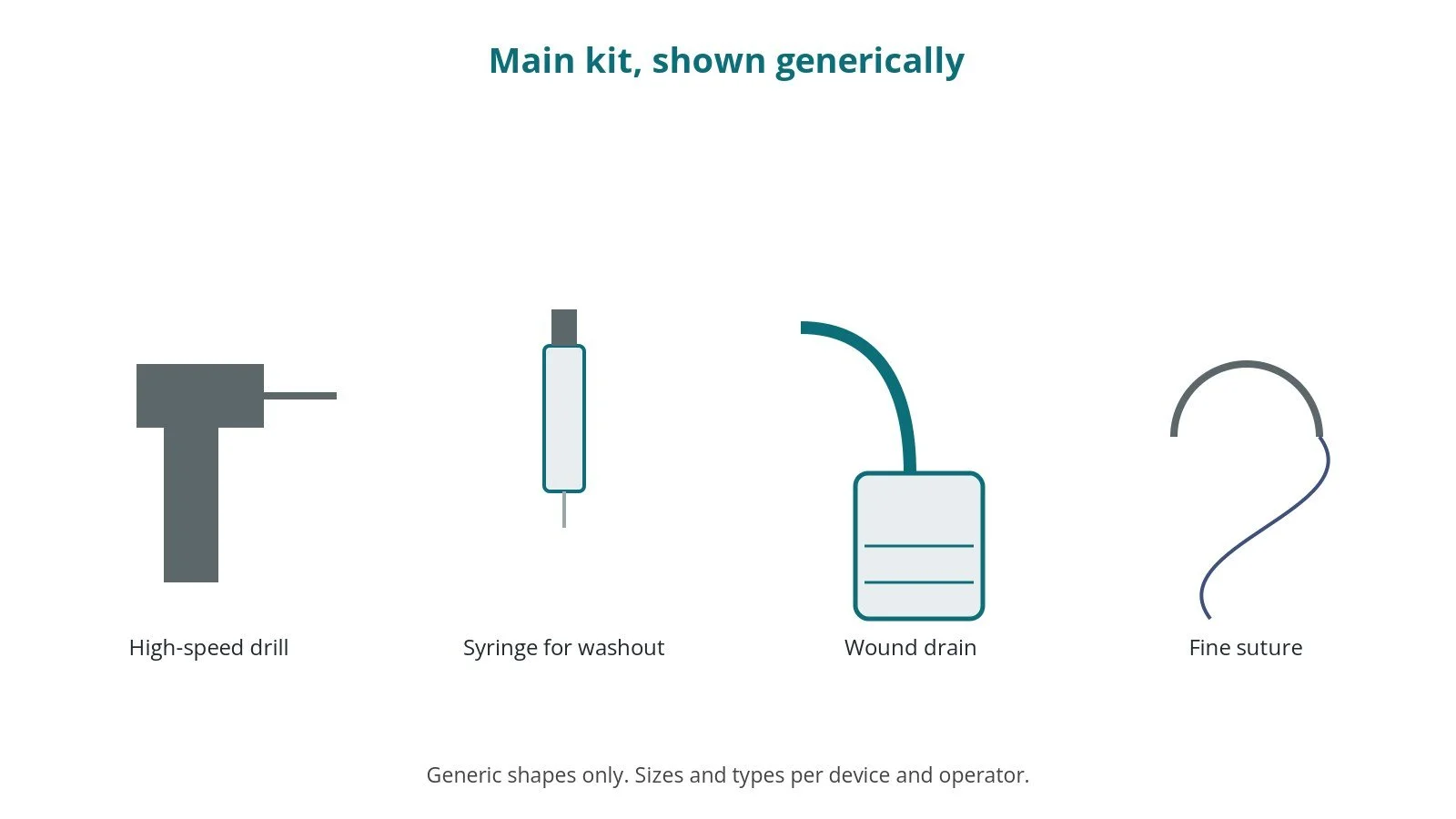
- high-speed drill or perforator
- fine instruments
- warm irrigation fluid and syringes
- soft subdural drain, per surgeon
- bipolar diathermy
- closure sutures or clips
- drain bag
Procedural steps
- Team brief, WHO sign in; side checked with scan; anaesthesia
- Positioning; prep and drape; count
- Scalp cuts; burr holes
- Covering opened; washout
- Drain placed if used
- Closure; counts; drain secured; sign out and handover
First time in theatre?
💡 First-time tip
- Know your role. Scrub, circulating, anaesthetic and ODP each have their own checks; ask at the team brief.
- Counts matter. Swabs, needles and instruments are counted before, during and at closure; speak up if one is missing.
- Side check. Check the side against the scan at every step.
- Warm fluid. Have warm irrigation fluid ready before the holes are made.
- Drain care. Hand over drain position and instructions clearly.
FAQ
Will I need a big operation?
Usually not; the holes are small.
Can it come back?
Sometimes; a repeat operation may be needed.
What about my blood thinners?
Your team will advise when to restart.
Related guides
Sources
All checked on 14 October 2026. Each page's own date is shown where it gives one.
- NHS. Subdural haematoma. nhs.uk/conditions/subdural-haematoma
- NICE. Head injury: assessment and early management (NG232). nice.org.uk/guidance/ng232
- StatPearls (NCBI Bookshelf), search: chronic subdural hematoma. ncbi.nlm.nih.gov/books
- Society of British Neurological Surgeons. www.sbns.org.uk
- World Health Organization. Surgical Safety Checklist. who.int
Disclaimer
Education only. This page is for general education for healthcare students, theatre staff and curious readers. It isn't medical advice and doesn't replace advice from your own doctor, surgical team or local unit protocols. Equipment and medicines are described generically. No product or manufacturer is recommended. If you think someone is having a medical emergency, call 999.
Disclosure: I work in the medical device industry. This page is independent education and isn't sponsored or reviewed by any company.
All diagrams on this page are original illustrations created for rodnieoro.com.