Tonsillectomy: an OR 101 guide
Reviewed by Rodnie Oro, cath lab charge nurse · Last reviewed: October 2026 · Education only, not medical advice
Tonsillectomy in one minute
What it is: surgery to remove the tonsils through the mouth, with no cuts on the skin.
Who it is for: people with frequent severe tonsillitis, quinsy, or enlarged tonsils causing breathing problems in sleep.
Main risks: bleeding (sometimes days later), pain, infection, damage to teeth or lips (rare).
Usually: under general anaesthetic, about 30 minutes, often a day case.
On this page: What is a tonsillectomy? · Who is it for? · When is it done? · Step by step · Recovery · Risks · Kit list · First time in theatre? · FAQ
What is a tonsillectomy?
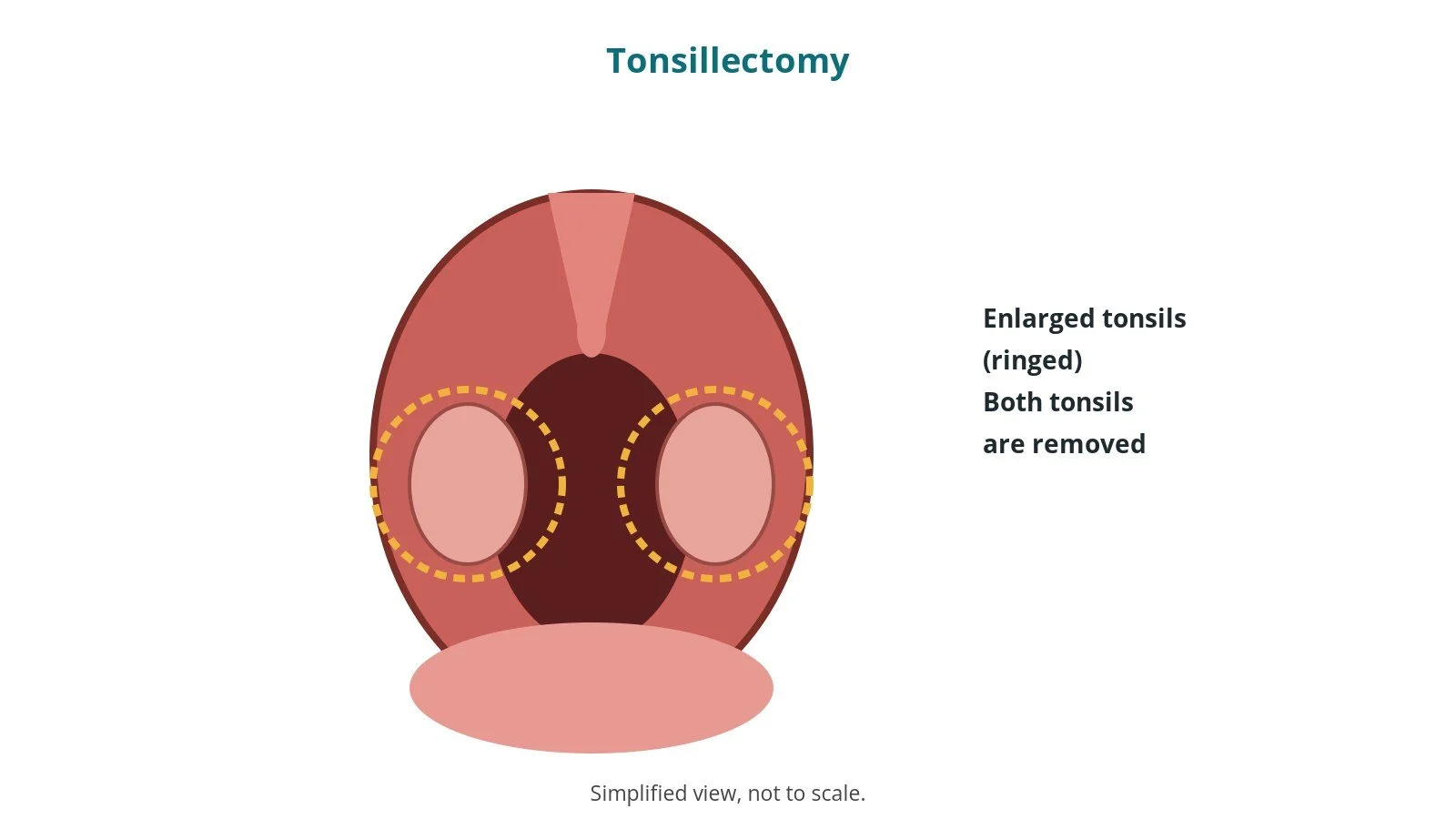
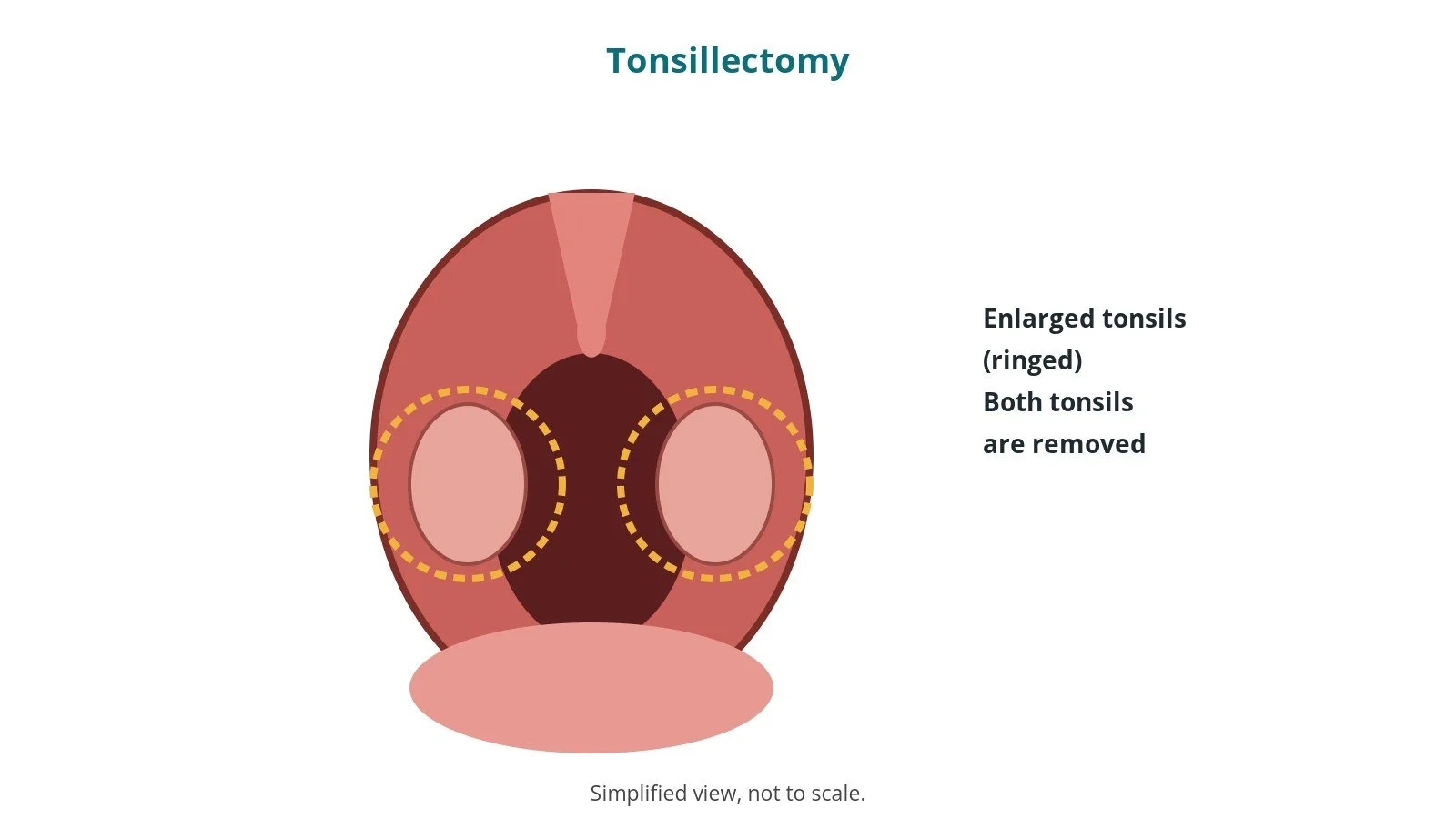
The tonsils are two lumps of tissue at the back of the throat. They can become repeatedly infected (tonsillitis) or enlarged enough to block breathing during sleep.
In a tonsillectomy the surgeon:
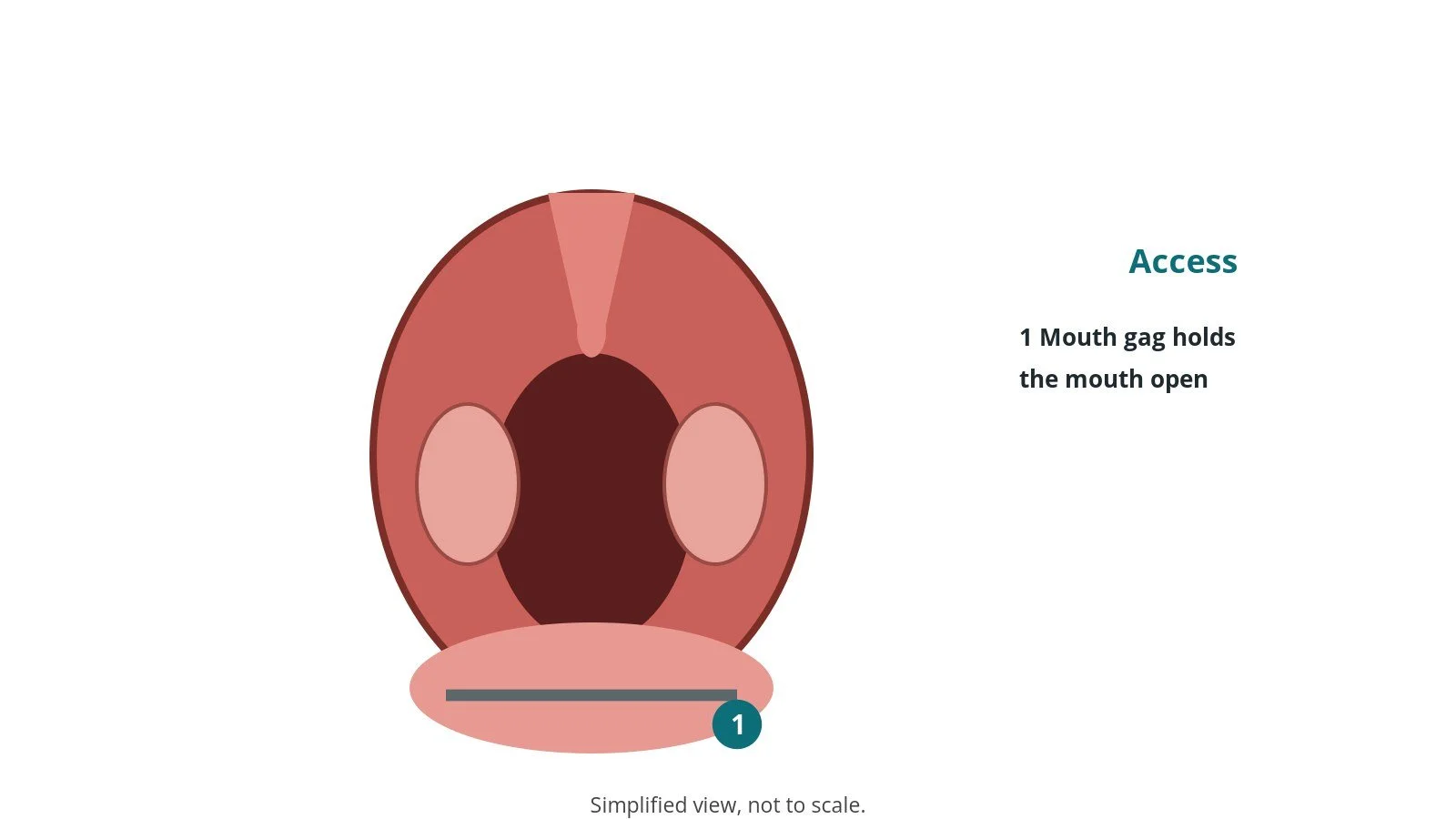
- opens the mouth with a mouth gag
- removes each tonsil with cold steel instruments or an energy device, per surgeon
- controls bleeding with ties or diathermy
Sometimes only part of each tonsil is removed (tonsillotomy), especially in children with sleep breathing problems.
New to the acronyms? See the Cath Lab Abbreviations A–Z.
Who is it for?
It may be considered for people with:
- frequent, severe tonsillitis, as per national criteria
- repeated quinsy (abscess near the tonsil)
- enlarged tonsils causing breathing problems during sleep, especially in children
The decision is made by your ENT team, who will talk through the reasons, the alternatives and the risks with you.
When is it done?
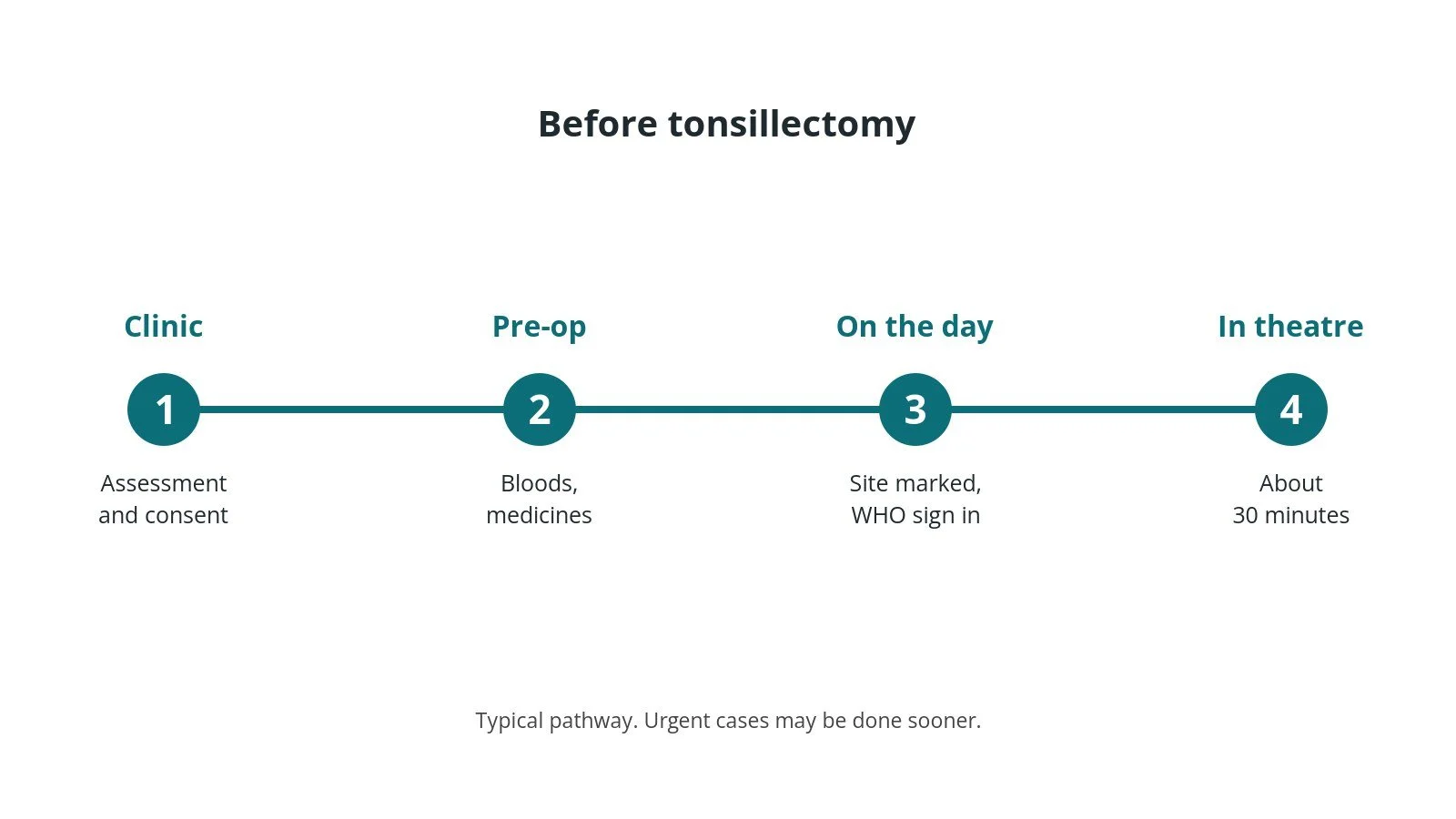
Most operations are planned; some are urgent. Before it, you usually have:
- an examination of the throat
- sometimes a sleep study for breathing problems
- a review of medicines and any bleeding history, as per centre protocol
- a chance to ask questions and give consent
Step by step
1. Getting ready
Team brief and WHO checklist first, including the airway plan and bleeding history. The anaesthetic team and ODP give the anaesthetic (general, with a breathing tube shaped to suit the mouth gag, as per centre protocol); medicines are given as per centre protocol. The circulating practitioner checks positioning, pressure areas, the diathermy plate and warming. The scrub practitioner sets up the instrument trolley and does the first count. The mouth gag, suction and energy settings are checked, and a shoulder roll placed.
2. Access
No skin cuts: the mouth is held open with a mouth gag to reach the tonsils.
3. Removing the tonsils
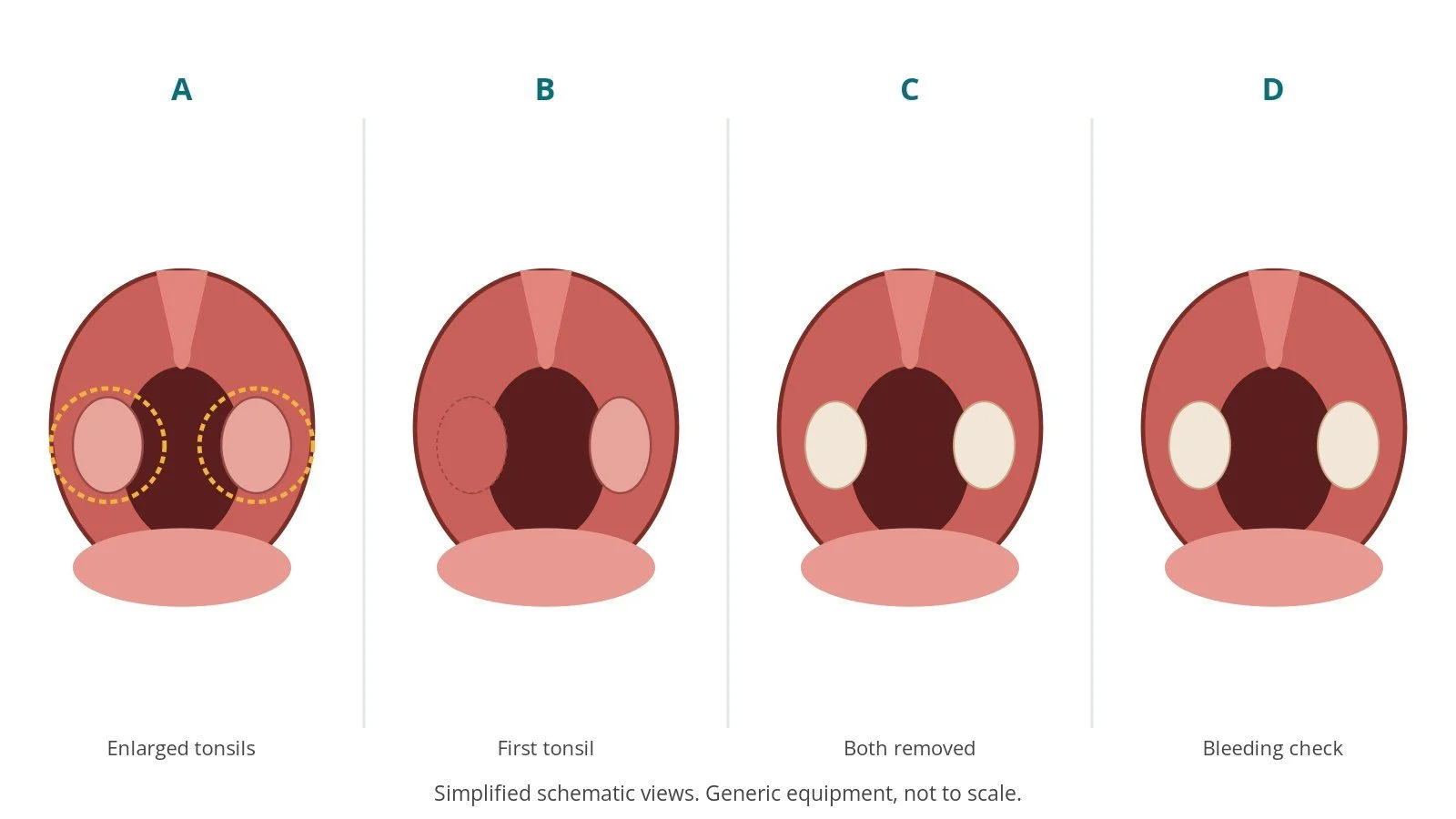
- A. Enlarged tonsils. The tonsils are seen with the mouth gag in place.
- B. First tonsil. The first tonsil is removed.
- C. Both removed. The second tonsil is removed.
- D. Bleeding check. The beds are checked for bleeding.
The team watches the breathing tube closely; the anaesthetist and surgeon agree before the gag is moved.
4. Finishing
Both tonsil beds are checked and suction cleared. The gag is released carefully and teeth checked. Final counts (including any throat pack) are confirmed, specimens labelled and checked, and the patient goes to recovery on their side with a full handover.
Recovery and aftercare
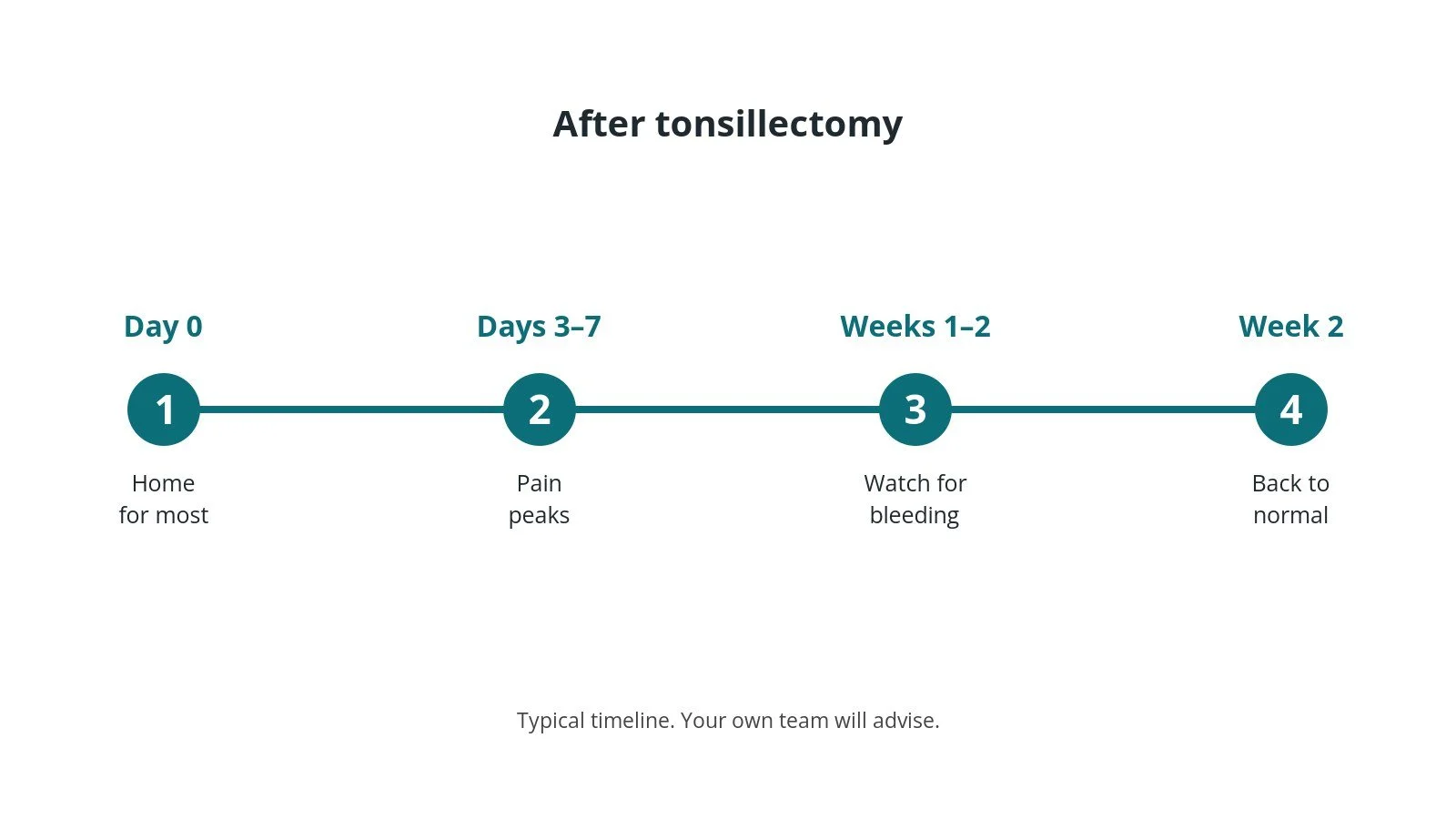
- First hours: watched for bleeding; usually home the same day or next day.
- Pain: worst around days 3–7; take pain relief regularly.
- Eat normally: normal food helps healing.
- Bleeding: any bleeding is urgent; go to hospital.
- Time off: about 2 weeks off school or work.
- Infection: avoid crowded places for a short time.
Call 999 if you are coughing or vomiting a lot of blood or have difficulty breathing. Contact your team if you have bleeding, a high temperature, increasing pain or are unable to eat or drink.
Risks and complications
Your team will explain the risks that apply to you. Possible problems include:
- bleeding, which can happen up to 2 weeks later and may need a return to theatre
- pain and earache
- infection
- damage to teeth, lips or gums (rare)
- change in voice (rare)
Theatre kit list (printable)
Example kit list
Every theatre has its own protocol, and sizes and doses vary.
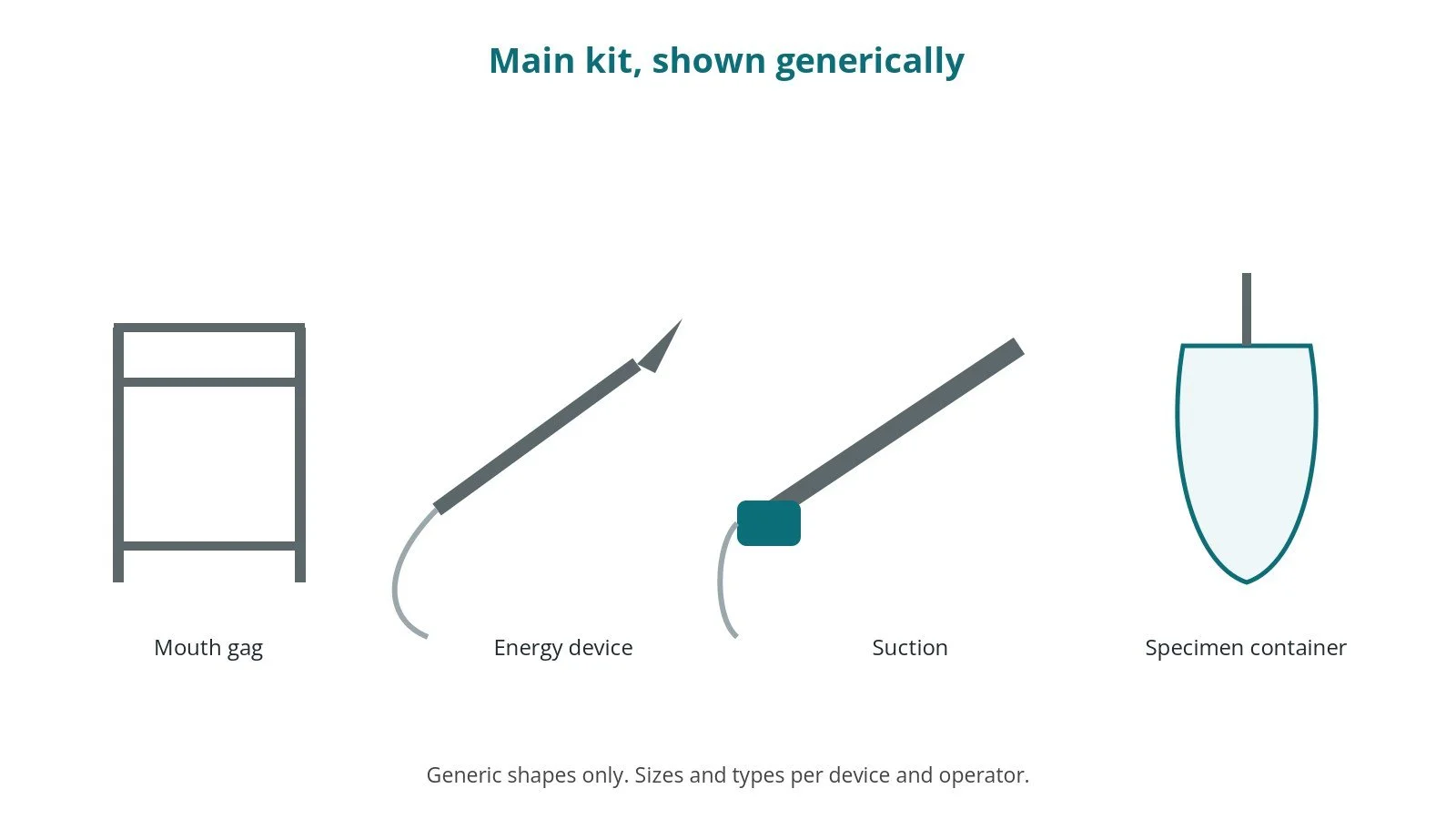
- tonsillectomy set with mouth gag
- energy device, per surgeon, with settings per device and operator
- ties and suction
- shoulder roll
- throat pack, as per centre protocol
- specimen pots
Procedural steps
- Team brief, WHO sign in; airway plan; anaesthesia
- Shoulder roll; mouth gag placed; count
- First tonsil removed
- Second tonsil removed
- Haemostasis; suction
- Gag off; teeth checked; counts; specimens; sign out and handover
First time in theatre?
💡 First-time tip
- Know your role. Scrub, circulating, anaesthetic and ODP each have their own checks; ask at the team brief.
- Counts matter. Swabs, needles and instruments are counted before, during and at closure; speak up if one is missing.
- Shared airway. The surgeon and anaesthetist share the airway; know the plan for the breathing tube and suction.
- Throat pack. If a throat pack is used, it is recorded and its removal confirmed, as per centre protocol.
- Specimens. Label each specimen with site and side.
FAQ
How painful is it?
Sore for 1–2 weeks; regular pain relief helps.
Can I eat normally?
Yes; normal food helps healing.
When should I worry?
Any bleeding: go to hospital straight away.
Related guides
Sources
All checked on 14 October 2026. Each page's own date is shown where it gives one.
- NHS. Tonsillitis. nhs.uk/conditions/tonsillitis
- StatPearls (NCBI Bookshelf), search: tonsillectomy. ncbi.nlm.nih.gov/books
- ENT UK. www.entuk.org
- World Health Organization. Surgical Safety Checklist. who.int
Disclaimer
Education only. This page is for general education for healthcare students, theatre staff and curious readers. It isn't medical advice and doesn't replace advice from your own doctor, surgical team or local unit protocols. Equipment and medicines are described generically. No product or manufacturer is recommended. If you think someone is having a medical emergency, call 999.
Disclosure: I work in the medical device industry. This page is independent education and isn't sponsored or reviewed by any company.
All diagrams on this page are original illustrations created for rodnieoro.com.