Coronary artery bypass grafting (CABG): an OR 101 guide
Reviewed by Rodnie Oro, cath lab charge nurse · Last reviewed: October 2026 · Education only, not medical advice
CABG in one minute
What it is: open-heart surgery where a blood vessel taken from the chest, arm or leg is joined to a heart artery beyond a blockage, so blood can flow around it.
Who it is for: people with narrowings in several heart arteries, or in the main left artery, where the heart team agrees surgery is the best option.
Main risks: bleeding, irregular heartbeat, infection of the wound, stroke, kidney problems; rarely heart attack or death.
Usually: under general anaesthetic, 3–6 hours, about a week in hospital.
On this page: What is CABG? · Who is it for? · When is it done? · Step by step · Recovery · Risks · Kit list · First time in theatre? · FAQ
What is CABG?
The heart muscle gets its blood from the coronary arteries. When fatty plaque narrows or blocks them, the muscle can be short of oxygen, causing angina or a heart attack.
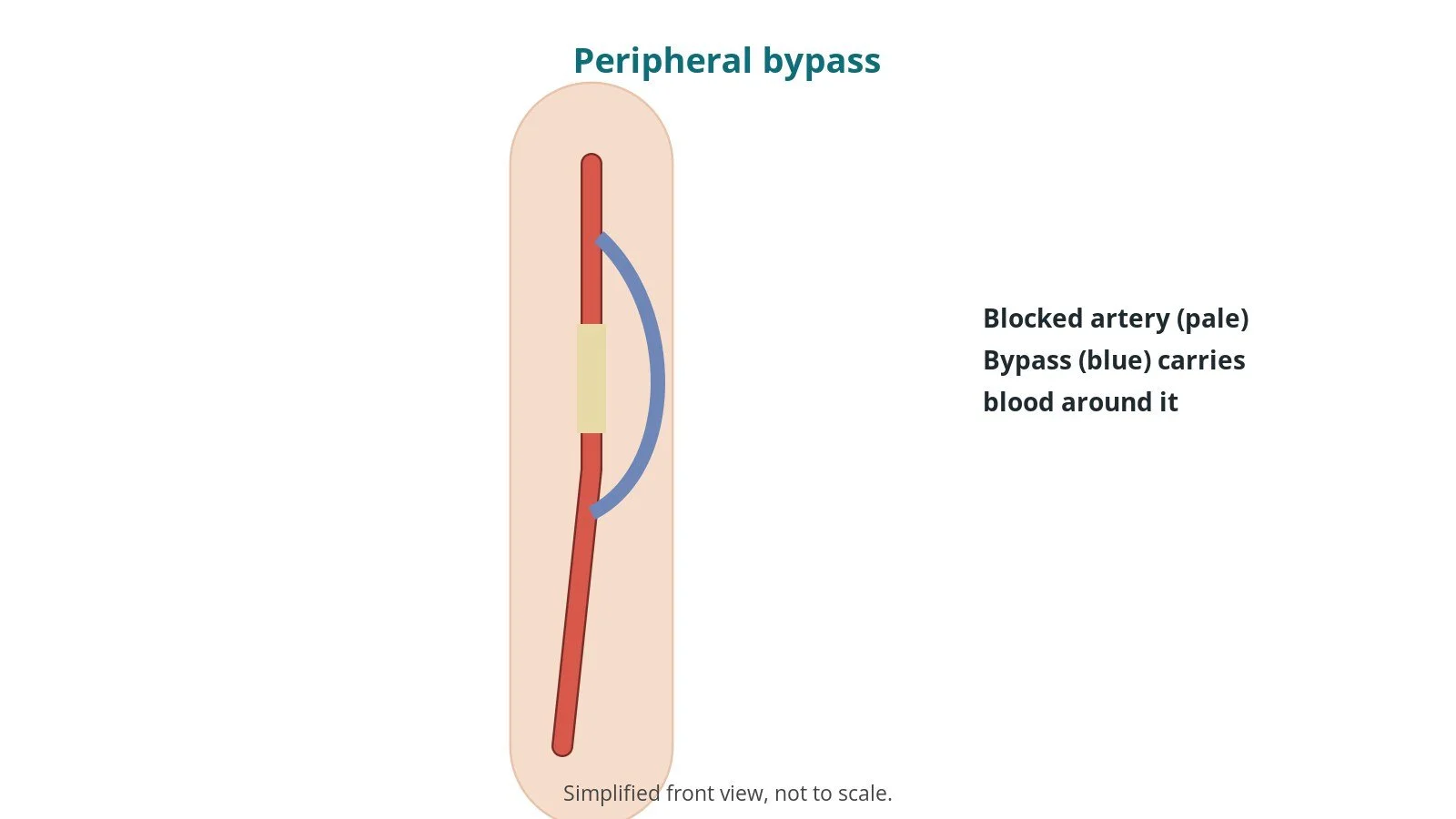
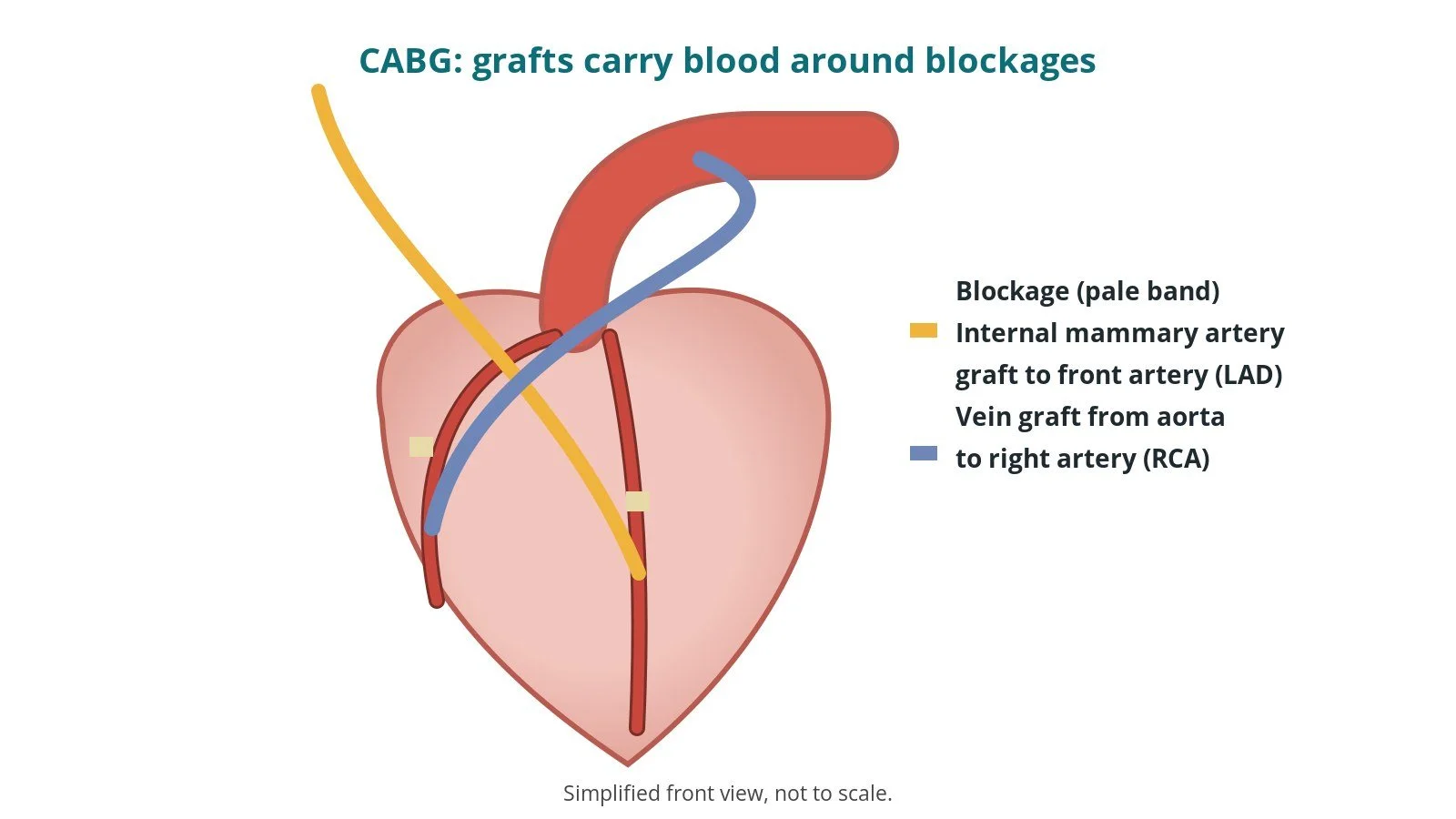
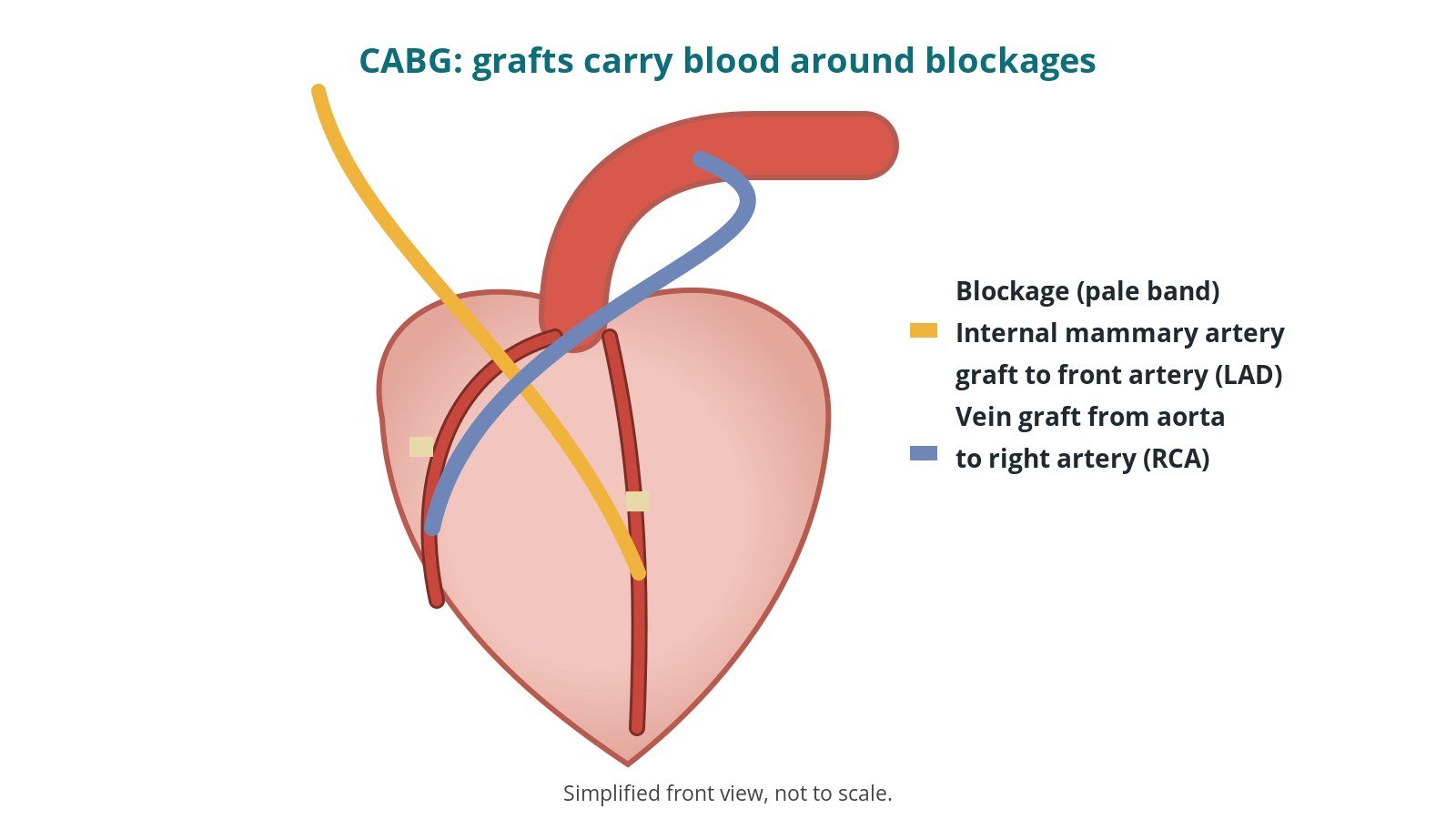
In CABG the surgeon creates a detour (a "graft") around each blockage:
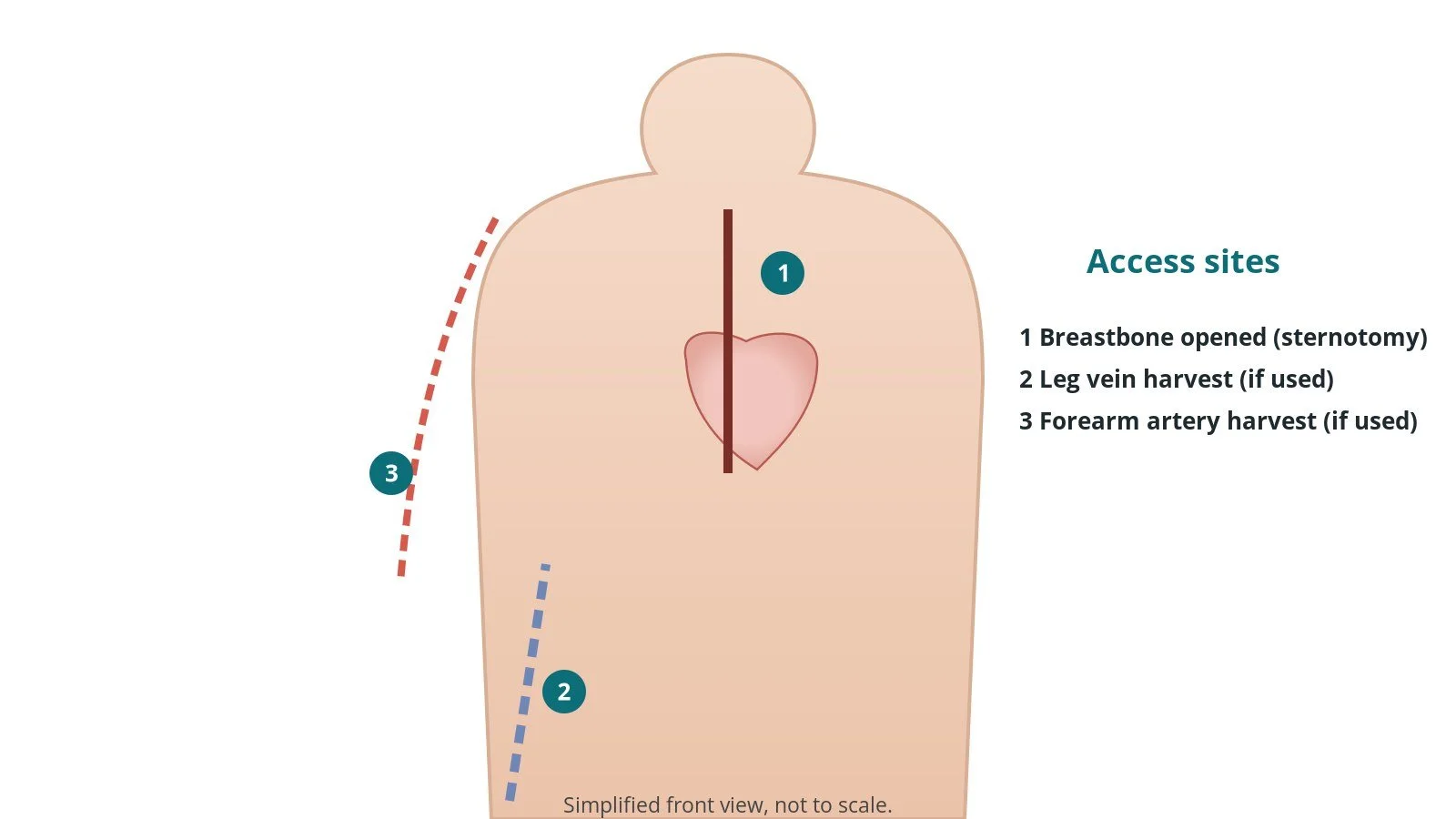
- Internal mammary (thoracic) artery: an artery inside the chest wall, usually left attached at its top end and joined to the front heart artery (LAD)
- Radial artery: taken from the forearm and used as a free graft
- Saphenous vein: taken from the leg; one end is joined to the aorta, the other beyond the blockage
Most operations use a heart-lung (bypass) machine so the heart can be stopped while the grafts are sewn ("on-pump"). Some are done with the heart still beating ("off-pump"), per surgeon and centre.
New to the acronyms? See the Cath Lab Abbreviations A–Z.
Who is it for?
It may be considered for people with:
- narrowing of the left main coronary artery
- disease in several heart arteries, especially with diabetes or reduced heart pumping
- angina that is not controlled by medicines, where stents are not suitable
- urgent cases after a heart attack or a complication in the cath lab, as per centre protocol
The decision is made by your heart team, who will talk through the reasons, the alternatives (medicines or PCI) and the risks with you.
When is it done?
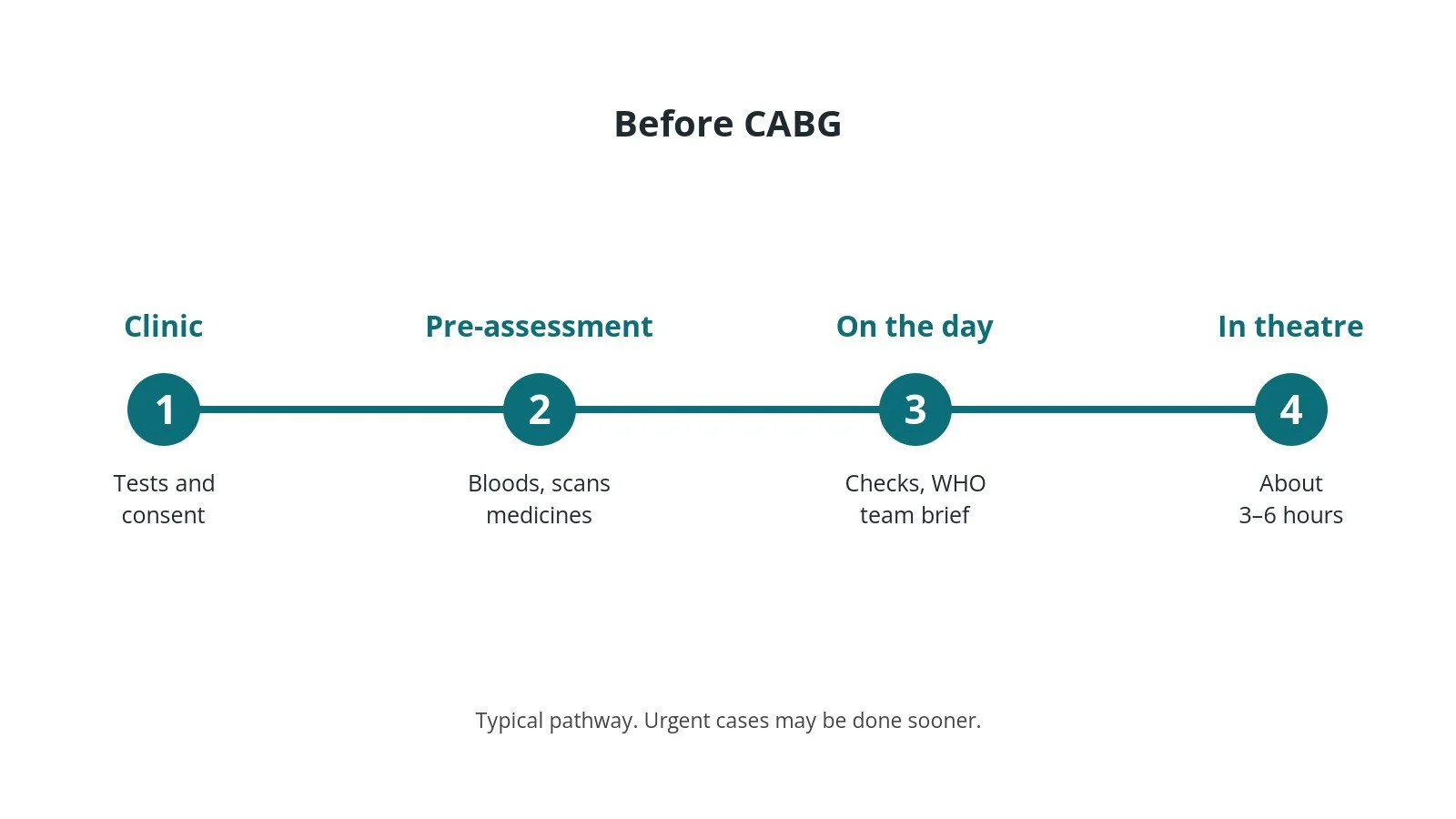
Most operations are planned; some are urgent or emergency. Before it, you usually have:
- a coronary angiogram showing which arteries are narrowed
- blood tests, including kidney function, blood count, clotting and group and save / crossmatch
- an ECG, echo, chest X-ray and often lung function tests or scans of the neck arteries
- a review of your medicines, especially blood thinners and diabetes medicines, as per centre protocol
- a pre-assessment visit, skin preparation instructions and a chance to ask questions and give consent
Step by step
1. Getting ready
Theatre team brief and WHO checklist first. The anaesthetic team and ODP place large cannulas, an arterial line and a central line, then give the general anaesthetic and insert a breathing tube and a probe for heart ultrasound (TOE), drugs as per centre protocol. A urinary catheter and temperature probe go in. The scrub practitioner sets up the main and harvest trolleys; the circulating practitioner checks positioning, pressure areas, diathermy plate and warming; the perfusionist primes and checks the bypass circuit.
2. Access
The surgeon opens the breastbone (median sternotomy) and the heart's sac (pericardium). At the same time, a second operator may harvest the leg vein or forearm artery, and the surgeon takes down the internal mammary artery from inside the chest wall. Instrument and swab counts are recorded, as per centre protocol.
3. Grafting
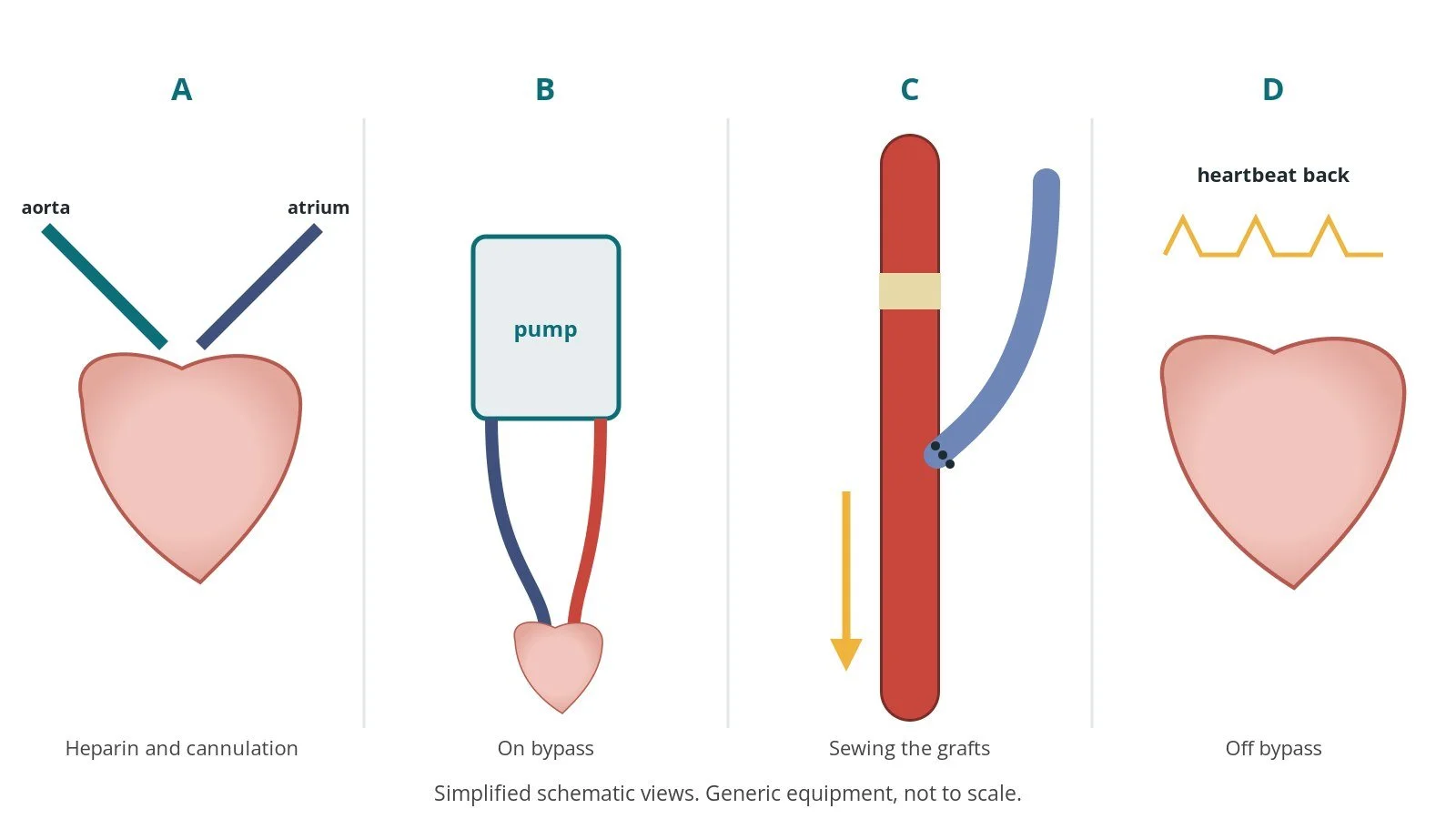
- A. Heparin and cannulation. Heparin is given (dose as per centre protocol) and tubes (cannulas) are placed in the aorta and right atrium, sizes per device and operator.
- B. On bypass. The heart-lung machine takes over; the aorta is clamped and cardioplegia solution stops the heart, as per centre protocol.
- C. Sewing the grafts. Each graft is stitched to a heart artery beyond the blockage with very fine sutures, then the vein grafts to the aorta.
- D. Off bypass. The clamp is removed, the heart restarts, the team checks the grafts and pressures, and the patient is weaned off the machine.
In off-pump surgery, stabilisers hold a small area of the beating heart still while each graft is sewn.
4. Finishing
Heparin is reversed (as per centre protocol). Temporary pacing wires and chest drains are placed, the breastbone is closed with steel wires, and the skin is closed. Final counts are confirmed before closure, and the patient is transferred, still asleep, to the cardiac intensive care unit with a full handover.
Recovery and aftercare
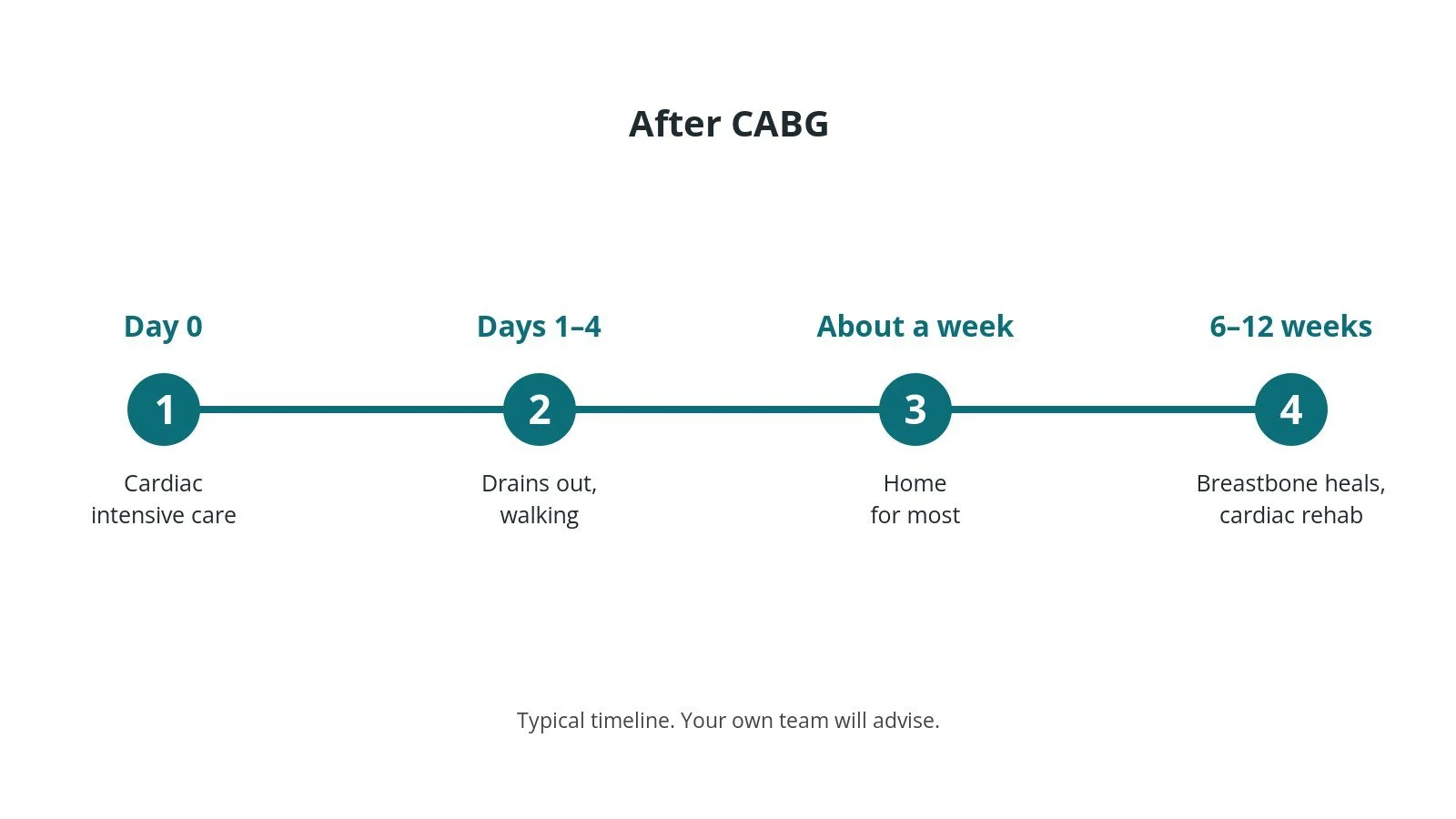
- First hours: in cardiac intensive care; the breathing tube usually comes out within hours, as per centre protocol.
- First days: drains, lines and pacing wires come out; physiotherapy and walking start early.
- Going home: often around 5–7 days after the operation.
- Breastbone: no heavy lifting, pushing or pulling for about 6–12 weeks while it heals; ask your team.
- Medicines: take them exactly as prescribed; don't stop blood thinners without talking to your heart team.
- Driving: the DVLA rules depend on your operation and condition; ask your team.
- Follow-up: clinic review and cardiac rehabilitation where offered.
Call 999 if you have chest pain, breathlessness, fainting or signs of a stroke. Contact your team if a wound becomes red, hot, leaky or the breastbone clicks.
Risks and complications
Your team will explain the risks that apply to you. Possible problems include:
- bleeding needing blood transfusion or a return to theatre
- irregular heartbeat, especially atrial fibrillation in the first days
- wound infection (chest or leg/arm)
- kidney problems, often temporary
- confusion after surgery, or stroke
- heart attack, graft problems, or death (uncommon to rare)
Theatre kit list (printable)
Example kit list
Every theatre has its own protocol, and sizes and doses vary.
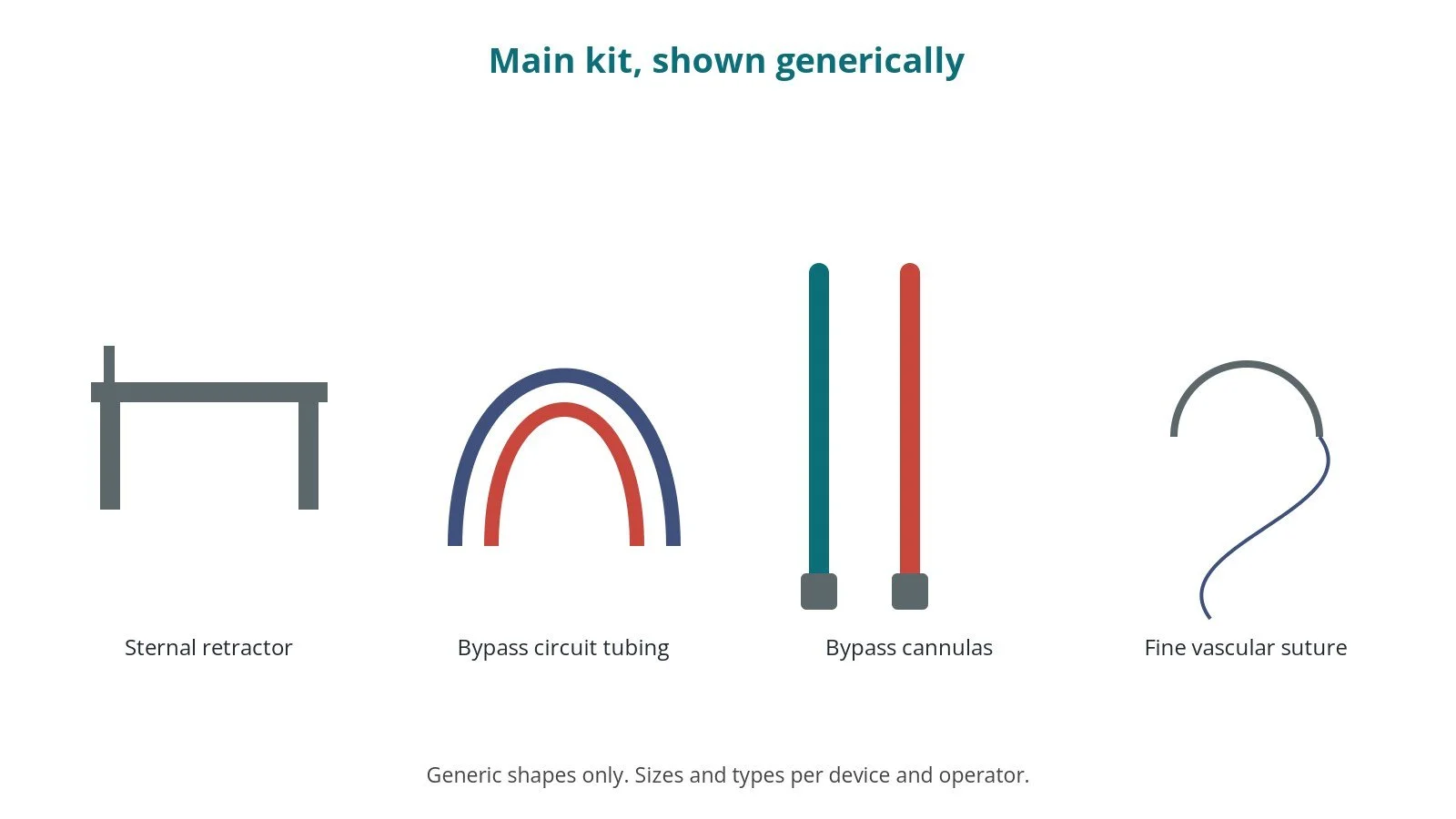
- cardiac major instrument set, sternal saw and sternal retractor
- harvest set for the leg vein or radial artery; internal mammary retractor
- fine coronary instruments (micro scissors, forceps, needle holders)
- fine vascular sutures, sizes per surgeon
- bypass circuit, aortic and venous cannulas, sizes per device and operator
- cardioplegia set and solution, as per centre protocol
- heparin and its reversal, as per centre protocol
- off-pump stabiliser and blower-mister, per surgeon
- temporary pacing wires and pacing box, chest drains and drainage system
- sternal wires and closure sutures; dressings
- defibrillator with internal paddles available
Procedural steps
- Team brief, WHO sign in; anaesthesia, lines and TOE
- Prep and drape; counts; sternotomy and conduit harvest
- Heparin; check clotting time; cannulation; on bypass
- Cross-clamp, cardioplegia; distal then proximal anastomoses
- Clamp off, rewarm, wean from bypass; heparin reversal
- Haemostasis; pacing wires, drains; counts; closure; sign out and handover
First time in theatre?
💡 First-time tip
- Know your role. Scrub, circulating, anaesthetic/ODP and perfusion each have their own checks; ask at the team brief.
- Counts matter. Swabs, needles and instruments are counted before, during and at closure; speak up if one is missing.
- Clotting time. Know when heparin is given and who calls the clotting result before bypass.
- Stay sterile. Keep clear of the trolleys and drapes unless you are scrubbed.
- Pacing and drains. Have the pacing box and drainage system ready before the chest is closed.
FAQ
Is the heart stopped?
Usually yes, for part of the operation, while a heart-lung machine pumps the blood. Some operations are done on a beating heart.
How many grafts are done?
It depends on how many arteries are narrowed: often between one and four or more.
Is CABG the same as a stent?
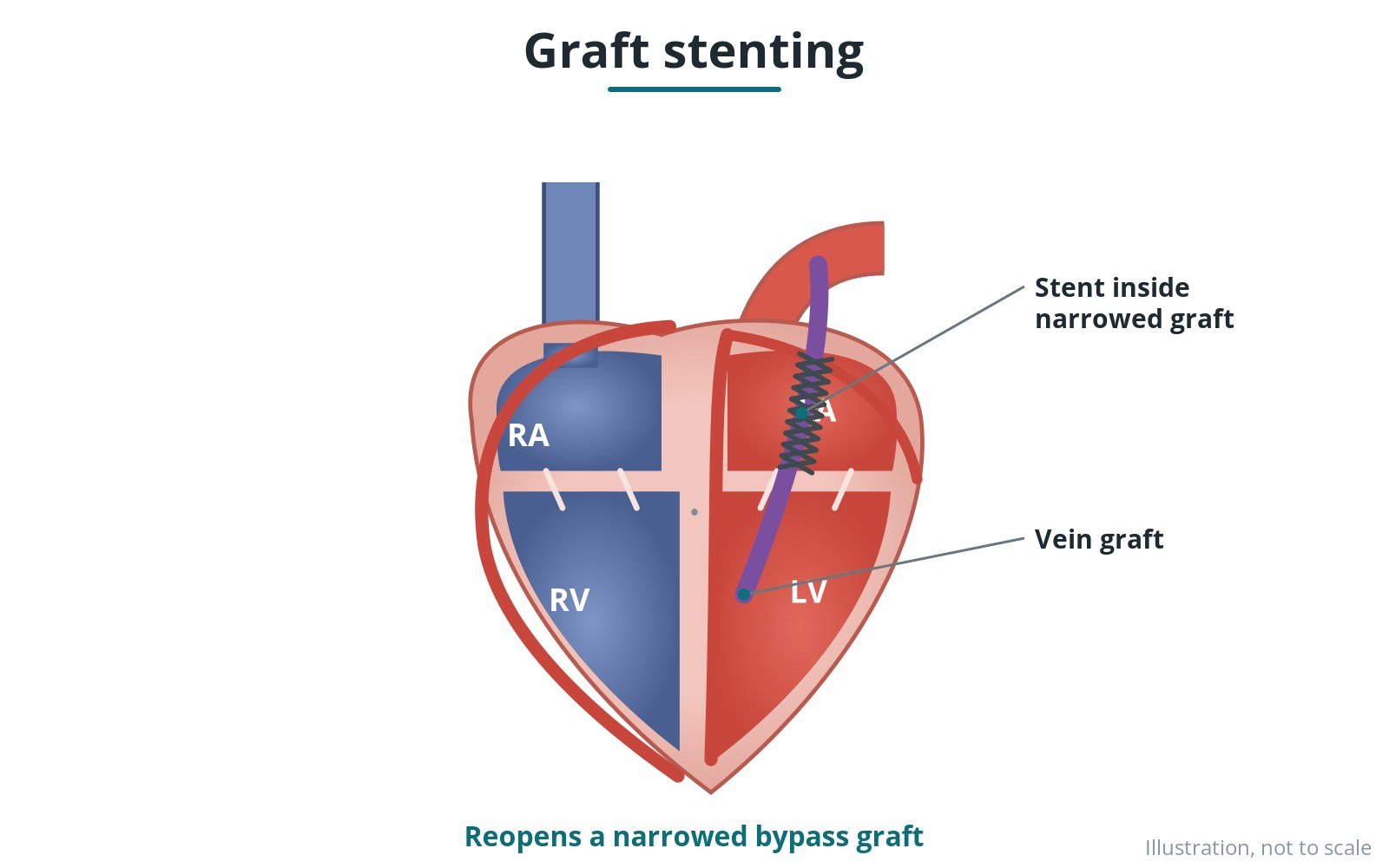
No. A stent opens the artery from inside through a catheter; CABG creates a new route around the blockage through surgery.
Related guides
- Coronary angiogram
- PCI (coronary angioplasty and stents)
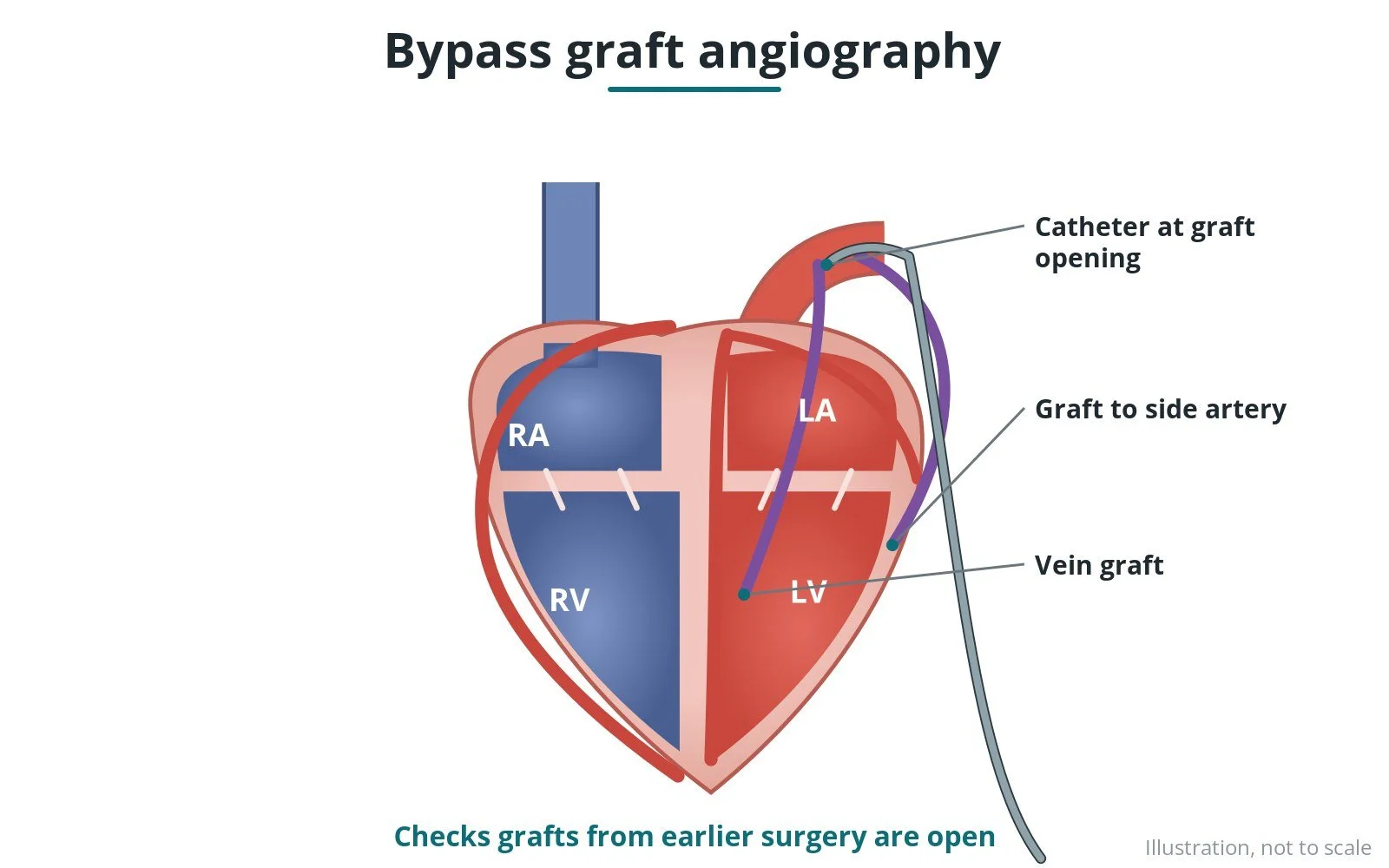
- Bypass graft angiography
- Cath Lab Abbreviations A–Z
Sources
All checked on 14 October 2026. Each page's own date is shown where it gives one.
- Vrints C, et al. 2024 ESC Guidelines for the management of chronic coronary syndromes. Eur Heart J 2024;45(36):3415–3537. PubMed 39210710
- NHS. Coronary artery bypass graft. nhs.uk/conditions/coronary-artery-bypass-graft-cabg
- StatPearls (NCBI Bookshelf), search: coronary artery bypass graft. ncbi.nlm.nih.gov/books
- World Health Organization. Surgical Safety Checklist. who.int
Disclaimer
Education only. This page is for general education for healthcare students, theatre staff and curious readers. It isn't medical advice and doesn't replace advice from your own doctor, surgical team or local unit protocols. Equipment and medicines are described generically. No product or manufacturer is recommended. If you think someone is having a heart emergency, call 999.
Disclosure: I work in the medical device industry. This page is independent education and isn't sponsored or reviewed by any company.
All diagrams on this page are original illustrations created for rodnieoro.com.