Surgical aortic valve replacement (AVR): an OR 101 guide
Reviewed by Rodnie Oro, cath lab charge nurse · Last reviewed: October 2026 · Education only, not medical advice
Surgical AVR in one minute
What it is: open-heart surgery to remove a narrowed or leaking aortic valve and sew in a new valve, either mechanical or tissue.
Who it is for: people with severe aortic stenosis or regurgitation where the heart team agrees surgery is the best option.
Main risks: bleeding, irregular heartbeat, needing a pacemaker, infection, stroke; rarely death.
Usually: under general anaesthetic, 3–5 hours, about a week in hospital.
On this page: What is surgical AVR? · Who is it for? · When is it done? · Step by step · Recovery · Risks · Kit list · First time in theatre? · FAQ
What is surgical AVR?
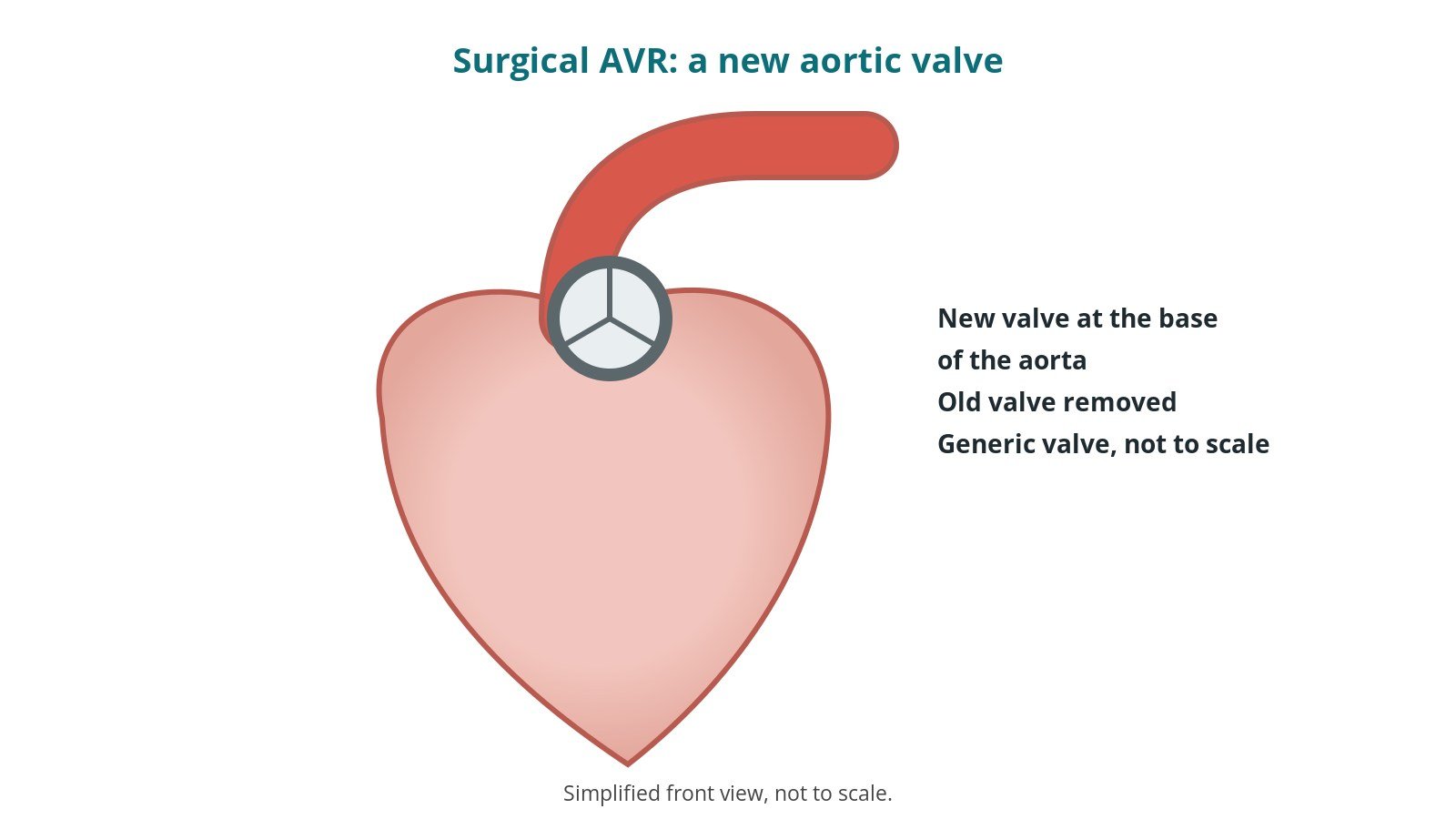
The aortic valve sits between the main pumping chamber (left ventricle) and the aorta. It can become narrowed (stenosis), often from calcium, or leaky (regurgitation).
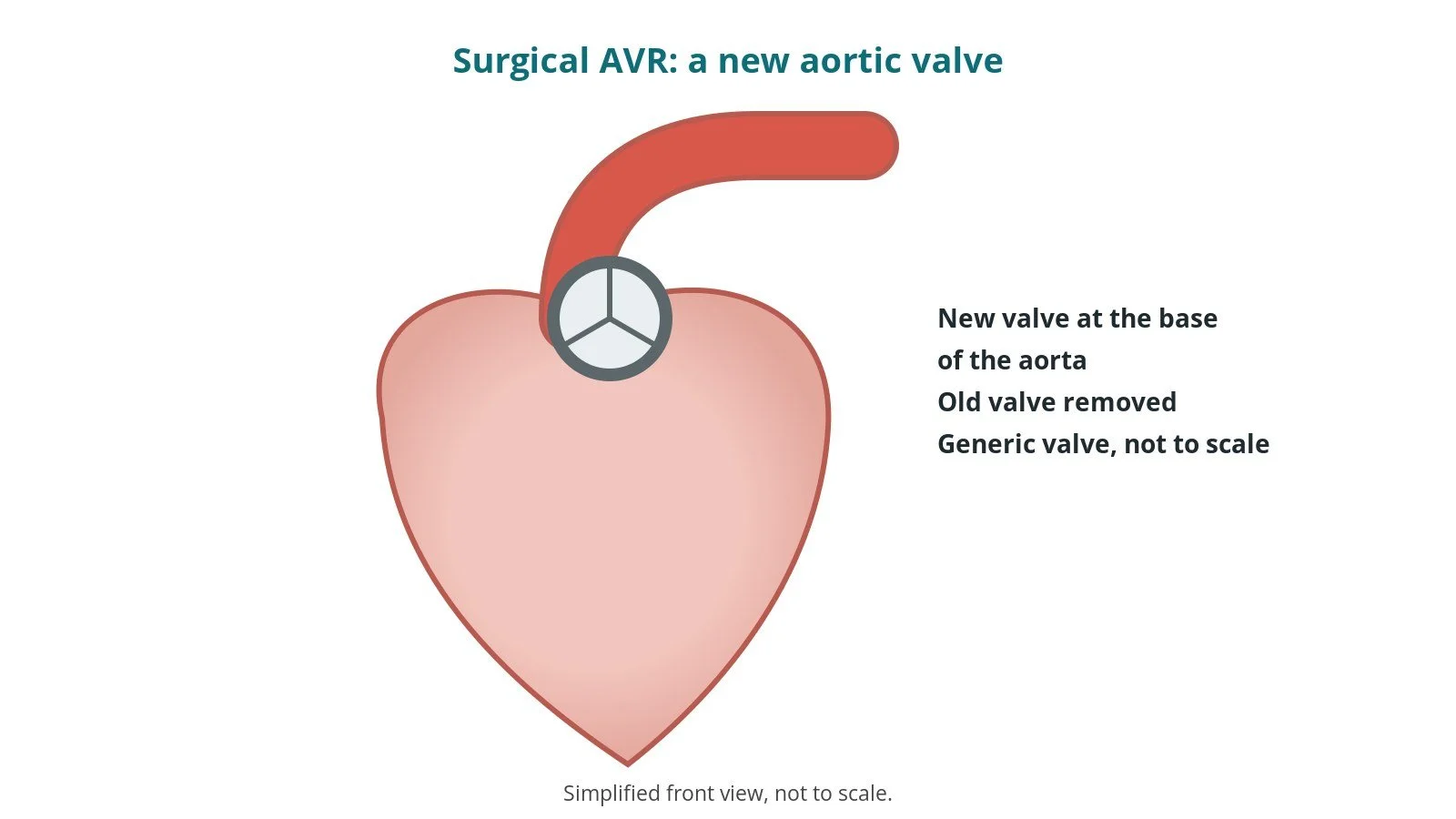
In surgical AVR the surgeon opens the aorta, cuts out the diseased valve, removes the calcium and sews a new valve into place:
- Mechanical valve: made of durable materials; needs lifelong blood thinners
- Tissue (biological) valve: made from animal tissue; usually no lifelong blood thinners, but may wear out over time
The valve type is chosen by the patient and the heart team together. A heart-lung (bypass) machine supports the circulation while the heart is stopped. Some centres use smaller (keyhole) incisions, per surgeon. A catheter-based option, TAVI, is also available for some people.
New to the acronyms? See the Cath Lab Abbreviations A–Z.
Who is it for?
It may be considered for people with:
- severe narrowing of the aortic valve (aortic stenosis) causing symptoms
- severe leaking of the aortic valve (aortic regurgitation)
- valve disease plus other heart surgery needed, such as bypass grafts
- infection of the valve (endocarditis), in some cases
The decision is made by your heart team, who will talk through the reasons, the alternatives (including TAVI) and the risks with you.
When is it done?
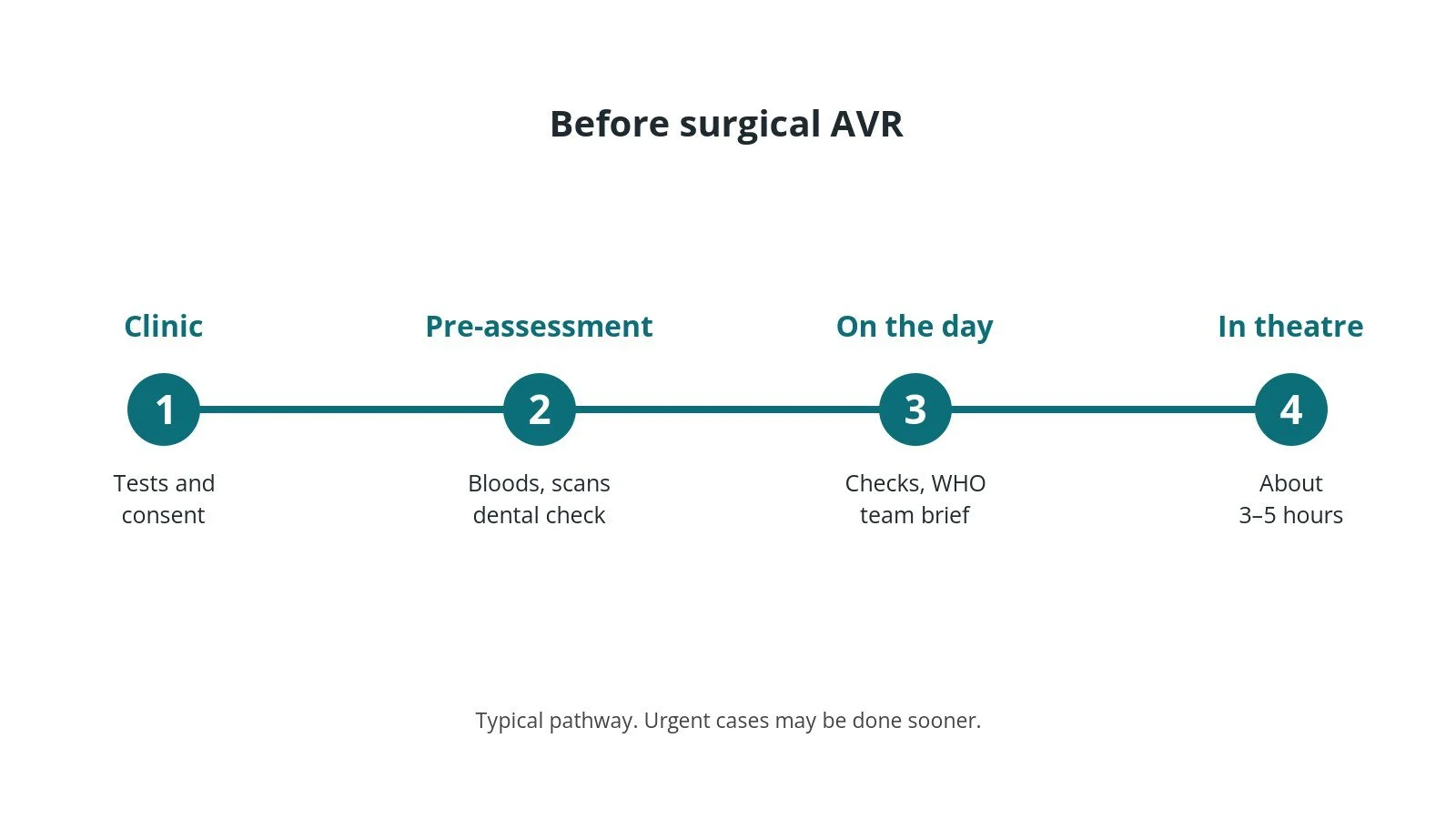
Most operations are planned; some are urgent. Before it, you usually have:
- an echo, often a CT scan and a coronary angiogram
- blood tests, including kidney function, clotting and group and save / crossmatch
- an ECG and chest X-ray
- a dental check to treat any infection before surgery
- a review of your medicines, especially blood thinners, as per centre protocol
- a chance to ask questions, choose a valve type and give consent
Step by step
1. Getting ready
Theatre team brief and WHO checklist first. The anaesthetic team and ODP place large cannulas, an arterial line and a central line, give the general anaesthetic and insert a breathing tube and a heart ultrasound probe (TOE), drugs as per centre protocol. The scrub practitioner sets up the main trolley and valve instruments; the circulating practitioner checks positioning, pressure areas, diathermy plate, warming and that the implant sizes are available; the perfusionist primes and checks the bypass circuit.
2. Access
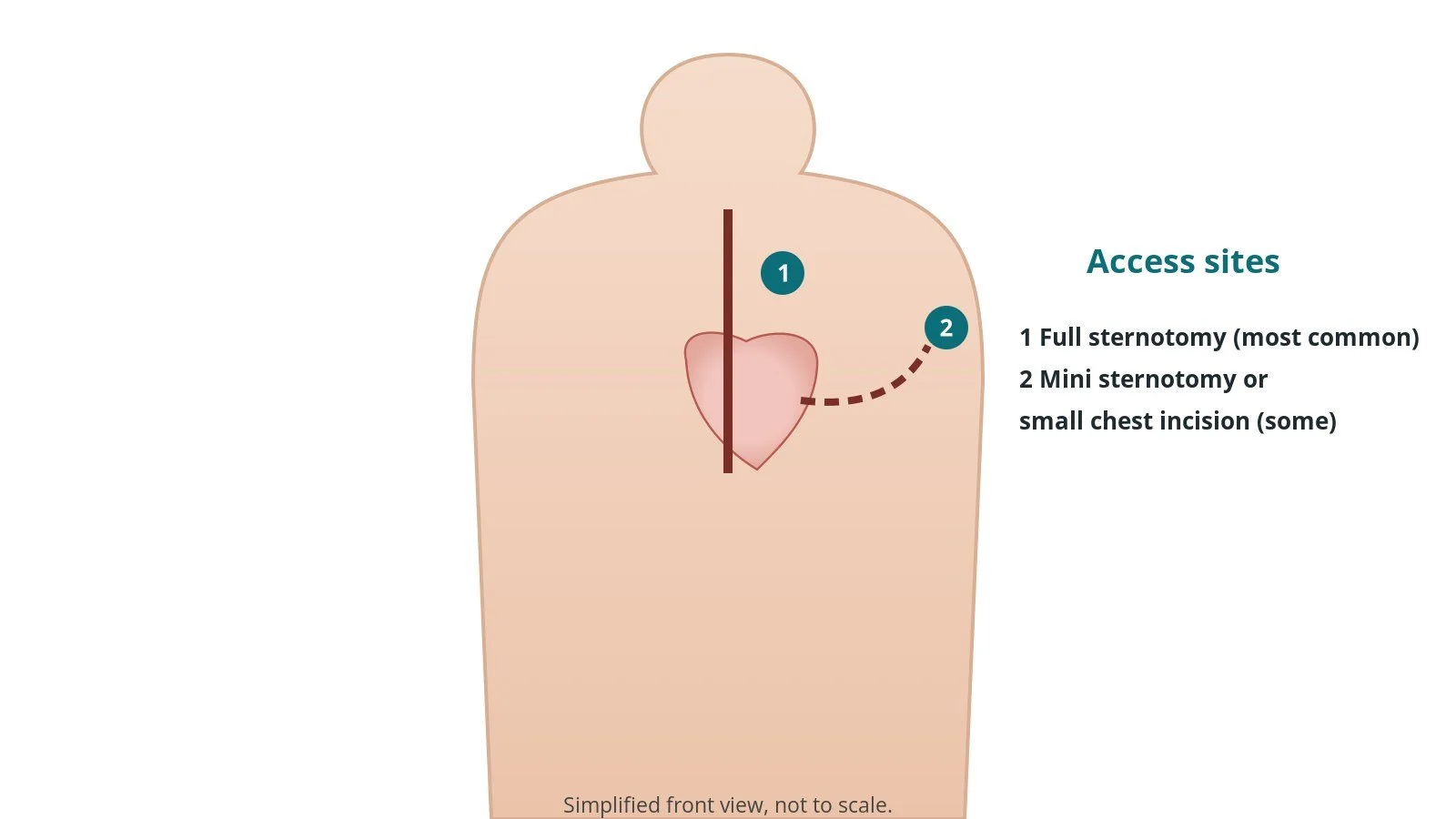
Most often a full median sternotomy (breastbone opened). Some surgeons use a partial (mini) sternotomy or a small incision between the ribs, per surgeon and centre. The pericardium is opened and counts are recorded, as per centre protocol.
3. Replacing the valve
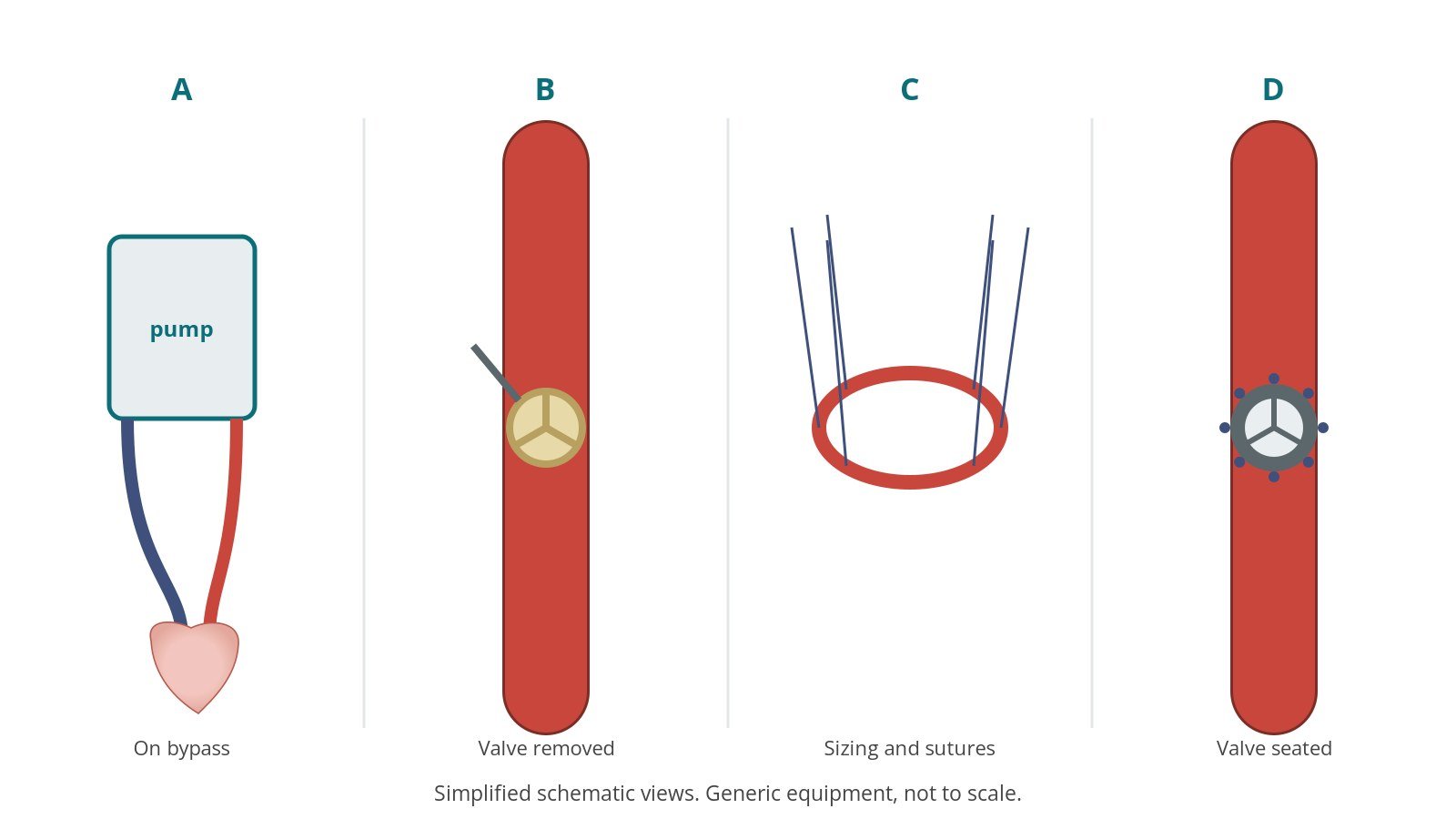
- A. On bypass. Heparin is given (as per centre protocol), cannulas placed and the heart-lung machine started; the aorta is clamped and cardioplegia stops the heart.
- B. Valve removed. The aorta is opened, the diseased leaflets are cut out and calcium is removed carefully, with debris collected.
- C. Sizing and sutures. The opening is measured with sizers, size per device and operator; stitches are placed around the ring and through the new valve.
- D. Valve seated. The new valve is lowered into place, the stitches tied, and the aorta closed.
The scrub practitioner keeps track of every pledget and suture pair; the circulating practitioner opens the chosen valve only after a spoken size and type check.
4. Finishing
The heart is restarted and the team checks the valve with TOE before coming off bypass. Heparin is reversed (as per centre protocol). Temporary pacing wires and chest drains are placed, the breastbone is closed with steel wires, and the skin is closed. Implant details are recorded, final counts confirmed, and the patient goes to cardiac intensive care with a full handover.
Recovery and aftercare
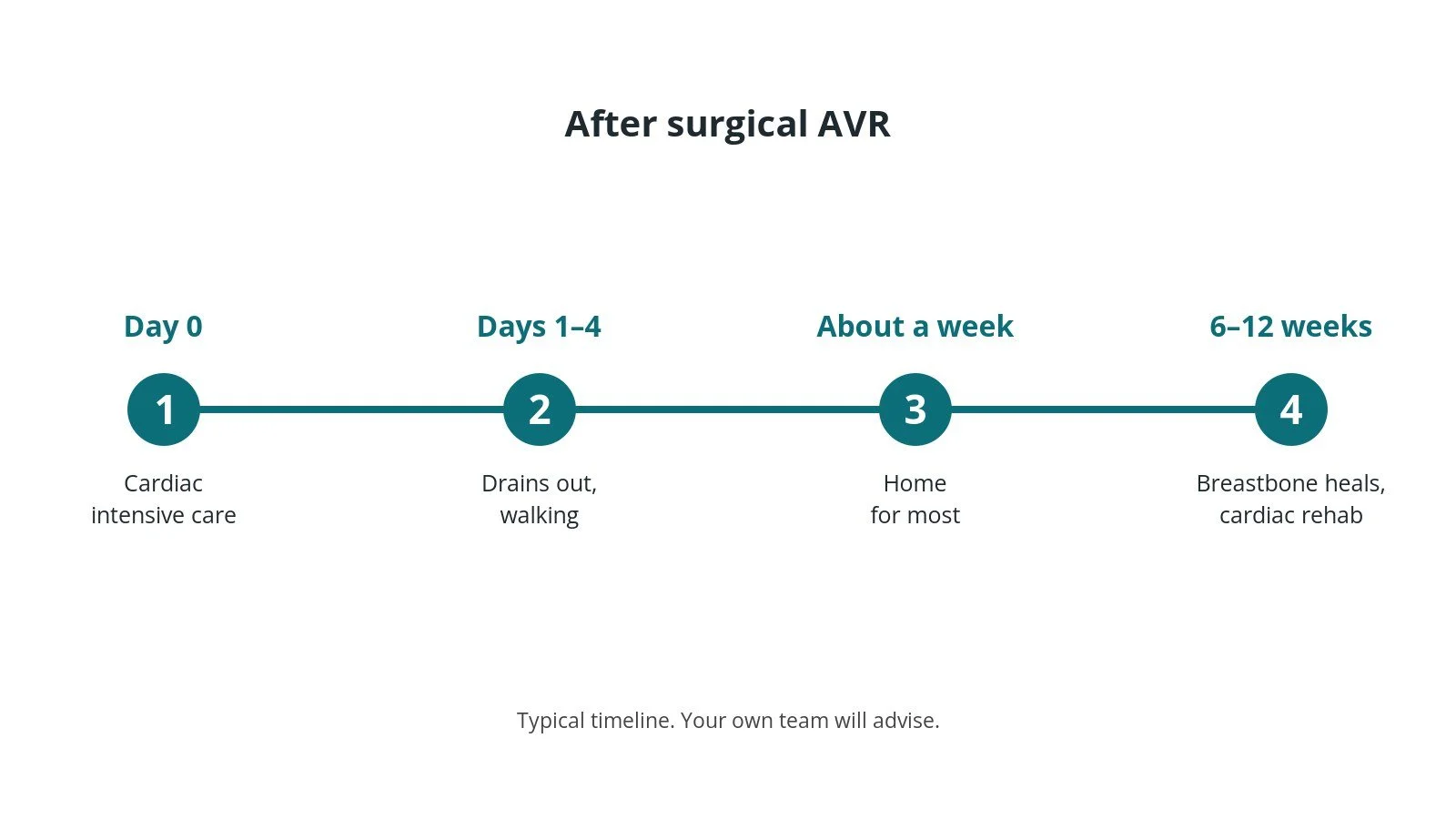
- First hours: in cardiac intensive care; the breathing tube usually comes out within hours, as per centre protocol.
- First days: drains, lines and pacing wires come out; physiotherapy and walking start early.
- Going home: often around 5–7 days after the operation.
- Breastbone: no heavy lifting, pushing or pulling for about 6–12 weeks; ask your team. Keyhole approaches may recover faster.
- Medicines: some people need blood thinners after valve surgery, short term or lifelong; take them exactly as prescribed.
- Dental care and infection: good dental hygiene matters; tell dentists and doctors you have a heart valve.
- Follow-up: clinic review, echo scans and cardiac rehabilitation where offered.
Call 999 if you have chest pain, breathlessness, fainting or signs of a stroke. Contact your team if you have a fever, or a wound becomes red, hot or leaky.
Risks and complications
Your team will explain the risks that apply to you. Possible problems include:
- bleeding needing blood transfusion or a return to theatre
- irregular heartbeat, especially atrial fibrillation; some people need a permanent pacemaker
- wound infection, or infection of the new valve (endocarditis)
- kidney problems, often temporary
- confusion after surgery, or stroke
- valve leak or further surgery in the future
- death (uncommon)
Theatre kit list (printable)
Example kit list
Every theatre has its own protocol, and sizes and doses vary.
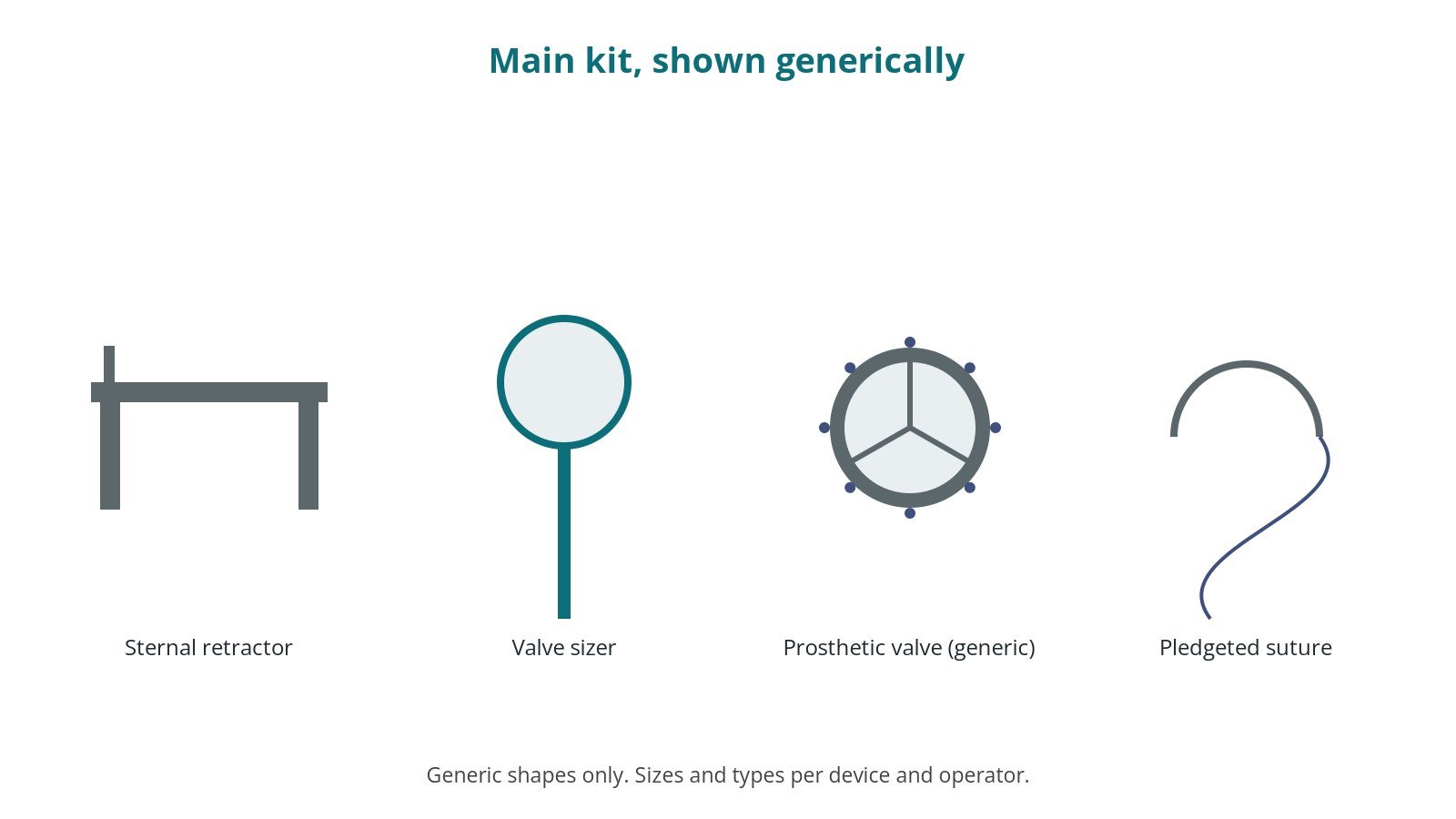
- cardiac major instrument set, sternal saw and sternal retractor
- aortic valve instruments (valve retractors, leaflet scissors, rongeurs for calcium)
- valve sizers and the chosen prosthetic valve, size per device and operator
- pledgeted valve sutures, sizes per surgeon
- bypass circuit, aortic and venous cannulas, sizes per device and operator
- cardioplegia set and solution, as per centre protocol
- heparin and its reversal, as per centre protocol
- temporary pacing wires and pacing box, chest drains and drainage system
- sternal wires and closure sutures; dressings
- implant log and labels
Procedural steps
- Team brief, WHO sign in; anaesthesia, lines and TOE
- Prep and drape; counts; sternotomy
- Heparin; clotting check; cannulation; on bypass
- Cross-clamp, cardioplegia; aortotomy; valve excision and decalcification
- Sizing; valve sutures; implant check; valve seated; aortotomy closed
- De-air, clamp off, TOE check, wean; reversal; pacing wires, drains; counts; closure; sign out and handover
First time in theatre?
💡 First-time tip
- Know your role. Scrub, circulating, anaesthetic/ODP and perfusion each have their own checks; ask at the team brief.
- Implant check. The valve or ring type and size are read back out loud and checked before opening; record them in the implant log.
- Counts matter. Swabs, needles and instruments are counted before, during and at closure; speak up if one is missing.
- Keep valves wet. Some tissue valves must be rinsed and kept moist, as per the instructions for use; don't let them dry out.
- Pacing and drains. Have the pacing box and drainage system ready before the chest is closed.
FAQ
Mechanical or tissue valve?
It depends on age, lifestyle and other health factors. Your heart team will explain the trade-offs.
Is it the same as TAVI?
No. TAVI places a valve through a catheter without opening the chest; surgical AVR removes the old valve through an open operation.
Will I hear the valve?
Some mechanical valves make a quiet clicking sound; tissue valves are silent.
Related guides
- TAVI (transcatheter aortic valve implantation)
- Coronary angiogram
- Coronary artery bypass grafting (CABG)
- Cath Lab Abbreviations A–Z
Sources
All checked on 14 October 2026. Each page's own date is shown where it gives one.
- Praz F, et al. 2025 ESC/EACTS Guidelines for the management of valvular heart disease. Eur Heart J 2025;46(44):4635–4736. PubMed 40878295
- NHS. Aortic valve replacement. nhs.uk/conditions/aortic-valve-replacement
- StatPearls (NCBI Bookshelf), search: aortic valve replacement. ncbi.nlm.nih.gov/books
- World Health Organization. Surgical Safety Checklist. who.int
Disclaimer
Education only. This page is for general education for healthcare students, theatre staff and curious readers. It isn't medical advice and doesn't replace advice from your own doctor, surgical team or local unit protocols. Equipment and medicines are described generically. No product or manufacturer is recommended. If you think someone is having a medical emergency, call 999.
Disclosure: I work for a company that makes a device used in this procedure. This page is independent education, isn't sponsored or reviewed by any company, and doesn't recommend any product.
All diagrams on this page are original illustrations created for rodnieoro.com.