DC cardioversion and TOE-guided cardioversion: a Cath Lab 101 guide
Reviewed by Rodnie Oro, cath lab charge nurse · Last reviewed: November 2026 · Education only, not medical advice
DC cardioversion and TOE-guided cardioversion in one minute
What it is: DC cardioversion is a controlled electric shock through pads on the chest, given under sedation or a short anaesthetic, to change an abnormal heart rhythm back to normal (sinus) rhythm. The shock is synchronised so it lands on the R wave. In a TOE-guided cardioversion, a camera probe in the gullet first checks the heart for clots.
Who it is for: People with atrial fibrillation or atrial flutter (and sometimes other rhythms) when the team plans to restore a normal rhythm, usually to improve symptoms.
Main risks: Stroke from a clot (lowered by blood thinners or a TOE), sore or red skin under the pads, a slow heart rate afterwards, reactions to sedation, and the rhythm coming back. Your team will explain your own risk.
Usually: A day case, with sedation or a short general anaesthetic. The shock takes seconds; you are usually home within a few hours.
On this page: What is DC cardioversion and TOE-guided cardioversion? · Who is it for? · When is it done? · Step by step · Recovery · Risks · Kit list · First time in the lab? · FAQ
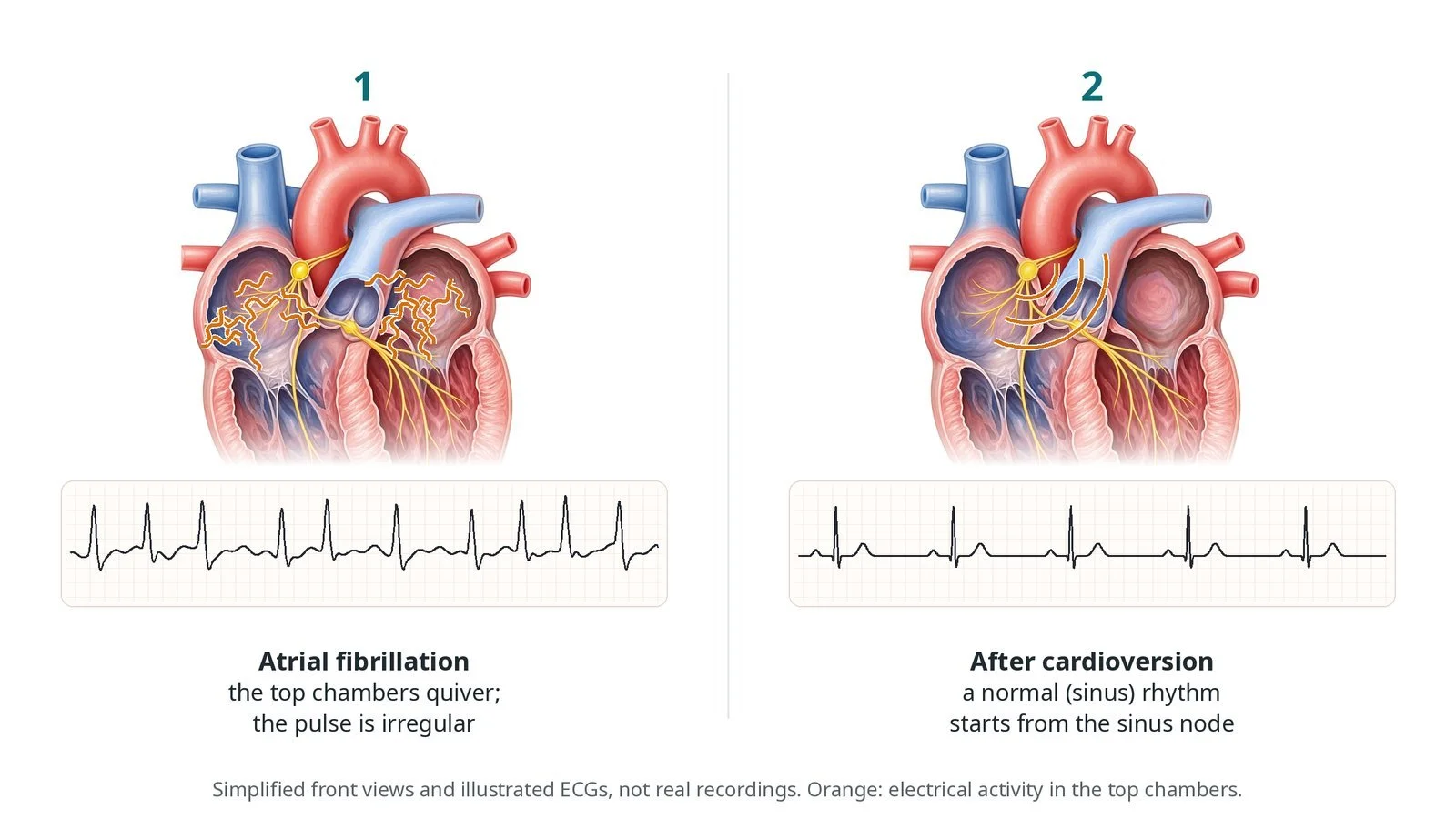
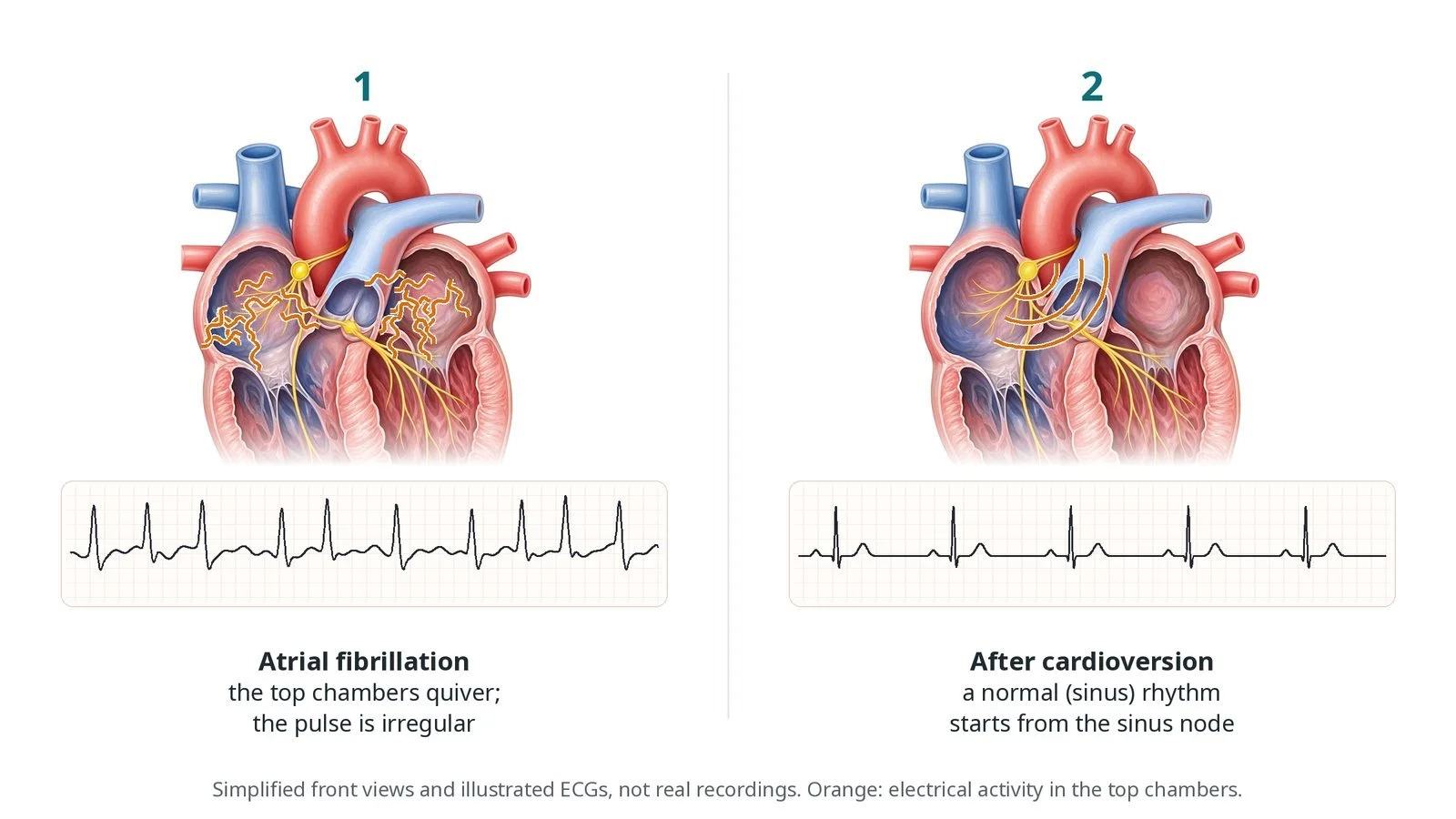
(1) Atrial fibrillation: the top chambers quiver and the pulse is irregular. (2) After cardioversion: a normal (sinus) rhythm starts from the sinus node.
What is DC cardioversion and TOE-guided cardioversion?
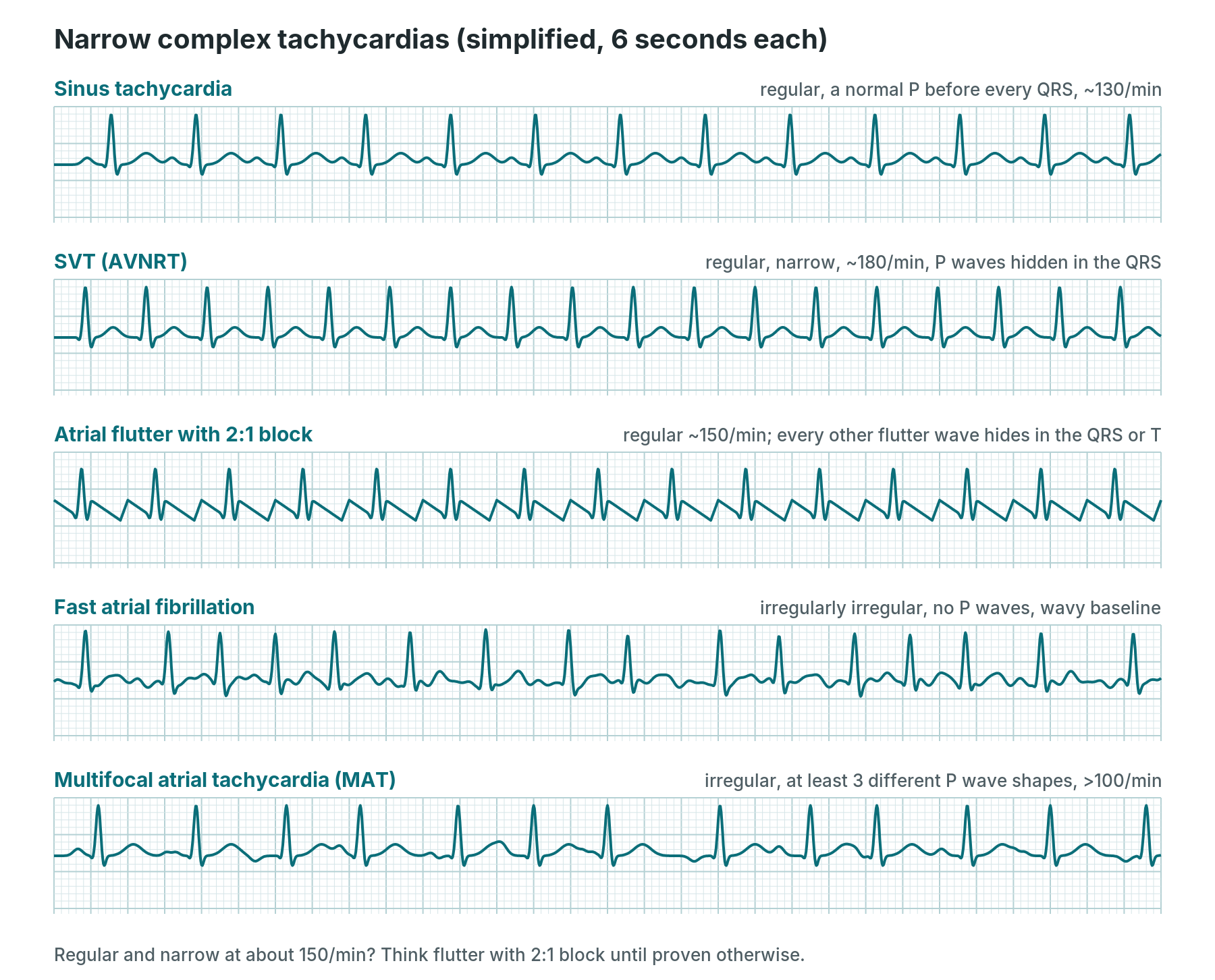
In atrial fibrillation (AF), the top chambers (atria) quiver with chaotic electrical activity instead of a regular beat from the sinus node. The pulse is irregular and often fast. In atrial flutter, a single large circuit spins around the right atrium.
A shock passes through the whole heart at once and makes every cell reset together. The sinus node can then take over again. The shock is synchronised: the defibrillator times it to the R wave, because a shock on the T wave can trigger ventricular fibrillation.
When the atria do not squeeze properly, blood can pool and clot, most often in the left atrial appendage, a small pouch off the left atrium. When normal rhythm returns, the atria start squeezing again and a clot could be pushed out and cause a stroke. That is why people take a blood thinner for at least 3 weeks before, or have a TOE to look for clot first, and keep taking it afterwards.
New to the acronyms? See the Cath Lab Abbreviations A–Z.
Who is it for?
Decided by the cardiology team, using ESC and NICE guidance. Usually:
AF or atrial flutter causing symptoms, where restoring normal rhythm is the aim
as a test of whether normal rhythm makes someone feel better
urgently, when a fast rhythm is making someone unwell (an emergency shock)
Who it may not suit: If a clot is seen on TOE, cardioversion is put off and anticoagulation continued. It is less likely to work, or to last, when AF has been present for a long time. A pacemaker or ICD is not a reason to stop, but the device is checked.
The decision is made by your heart team, who will talk through the reasons, the alternatives and the risks with you.
When is it done?
Most are planned day cases. You usually need:
a blood thinner taken every day without missed doses for at least 3 weeks, or a TOE on the day to check for clot
fasting before sedation, as per centre protocol
an ECG on the day to confirm the rhythm is still abnormal, and blood tests such as potassium as per centre protocol
gives you a chance to ask questions and give consent
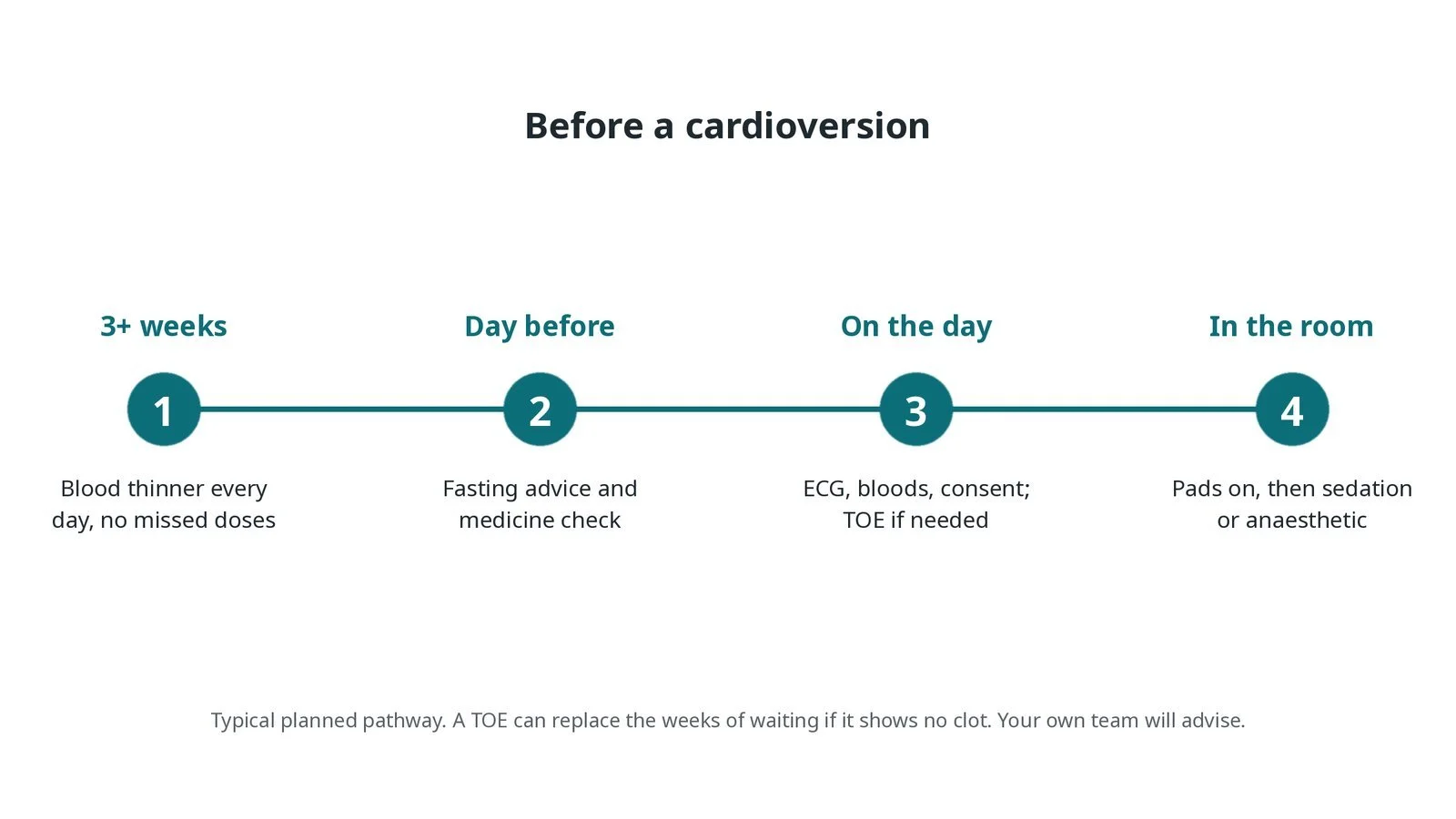
Before a cardioversion: a blood thinner every day for at least 3 weeks; fasting advice; ECG, bloods, consent and a TOE if needed; pads on, then sedation or anaesthetic.
Step by step
1. Checks
The team confirms the rhythm on an ECG, that the blood thinner has been taken correctly (or that a TOE is planned), fasting, allergies and consent. If you have a pacemaker or ICD, a device check is arranged before and after.
Watch: If anticoagulation has been missed and no TOE is planned, stop and tell the operator before sedation.
2. TOE if needed
For a TOE-guided cardioversion, the throat is numbed and a thin camera probe is passed into the gullet under sedation. The operator looks for clot, especially in the left atrial appendage. If there is no clot, the cardioversion goes ahead straight away.
3. The cardioversion
A. Check. The rhythm, anticoagulation or a clear TOE, and consent are confirmed.
B. Pads and sedation. Pads go front and side, or front and back, kept well away from (ideally at least 8 cm from) any device box. Monitoring is attached, then sedation or a short anaesthetic is given by a trained clinician.
C. Synchronise. Sync mode is turned on and the operator checks that a marker sits on each R wave, not on the T wave.
D. Shock and check. Everyone stands clear and the shock is given. The ECG is checked for normal rhythm. If needed, a further shock is given, checking sync is still on and energy and pad position are per centre protocol.
Watch: If the shock is not synchronised and VF follows, give an immediate unsynchronised defibrillation and follow resuscitation guidelines.
4. Recovery
You wake within minutes. A 12-lead ECG records the new rhythm, and blood pressure, oxygen and the pad sites are checked. Any device is checked.
5. Going home
Most people go home a few hours later with a responsible adult. The blood thinner continues for at least 4 weeks, and often long term, as advised.
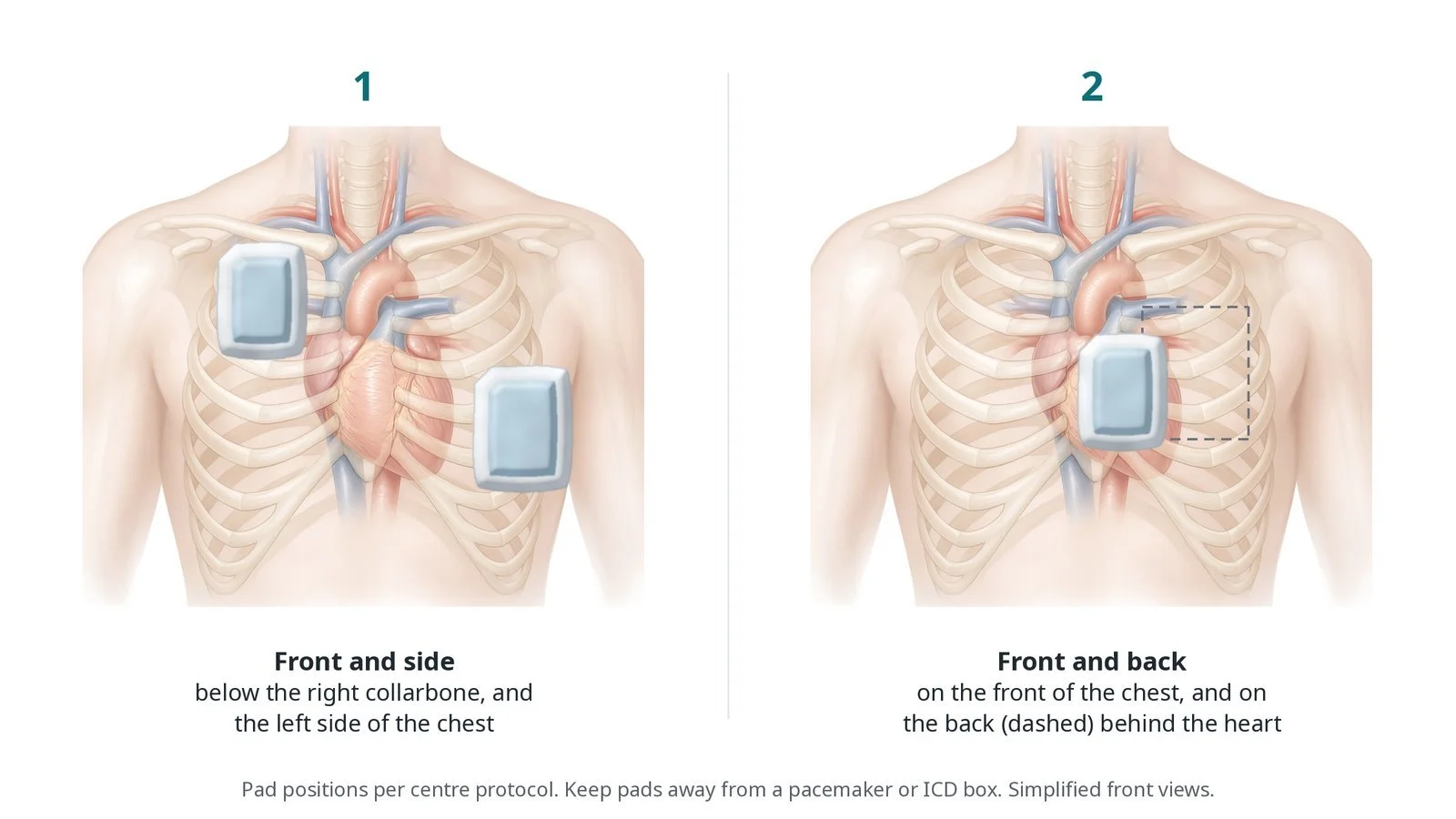
Pad positions: (1) front and side: below the right collarbone and the left side of the chest; (2) front and back: on the chest and on the back behind the heart.
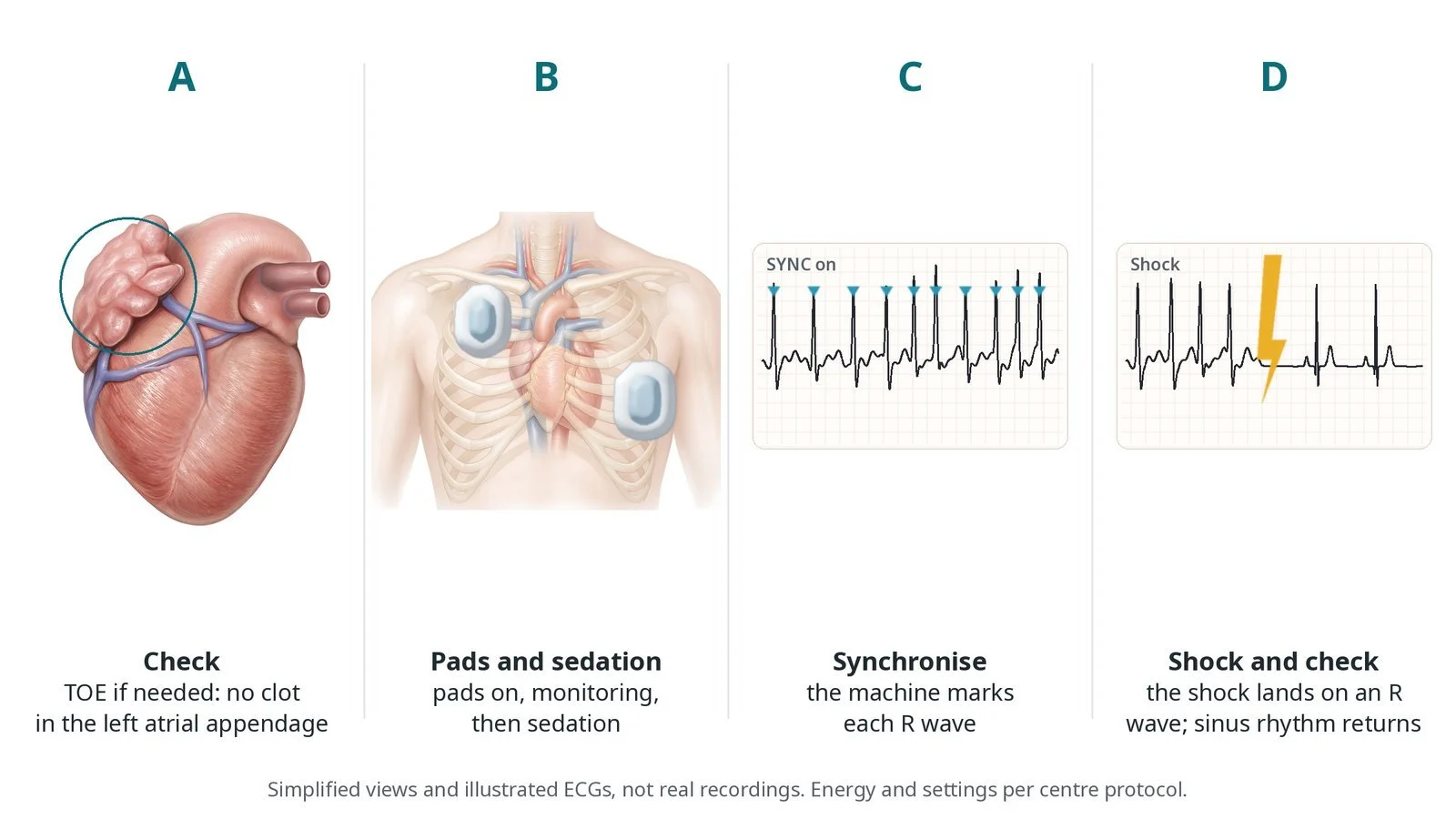
A: TOE if needed to check for clot in the left atrial appendage. B: pads on, monitoring, then sedation. C: synchronise so the machine marks each R wave. D: the shock lands on an R wave and sinus rhythm returns.
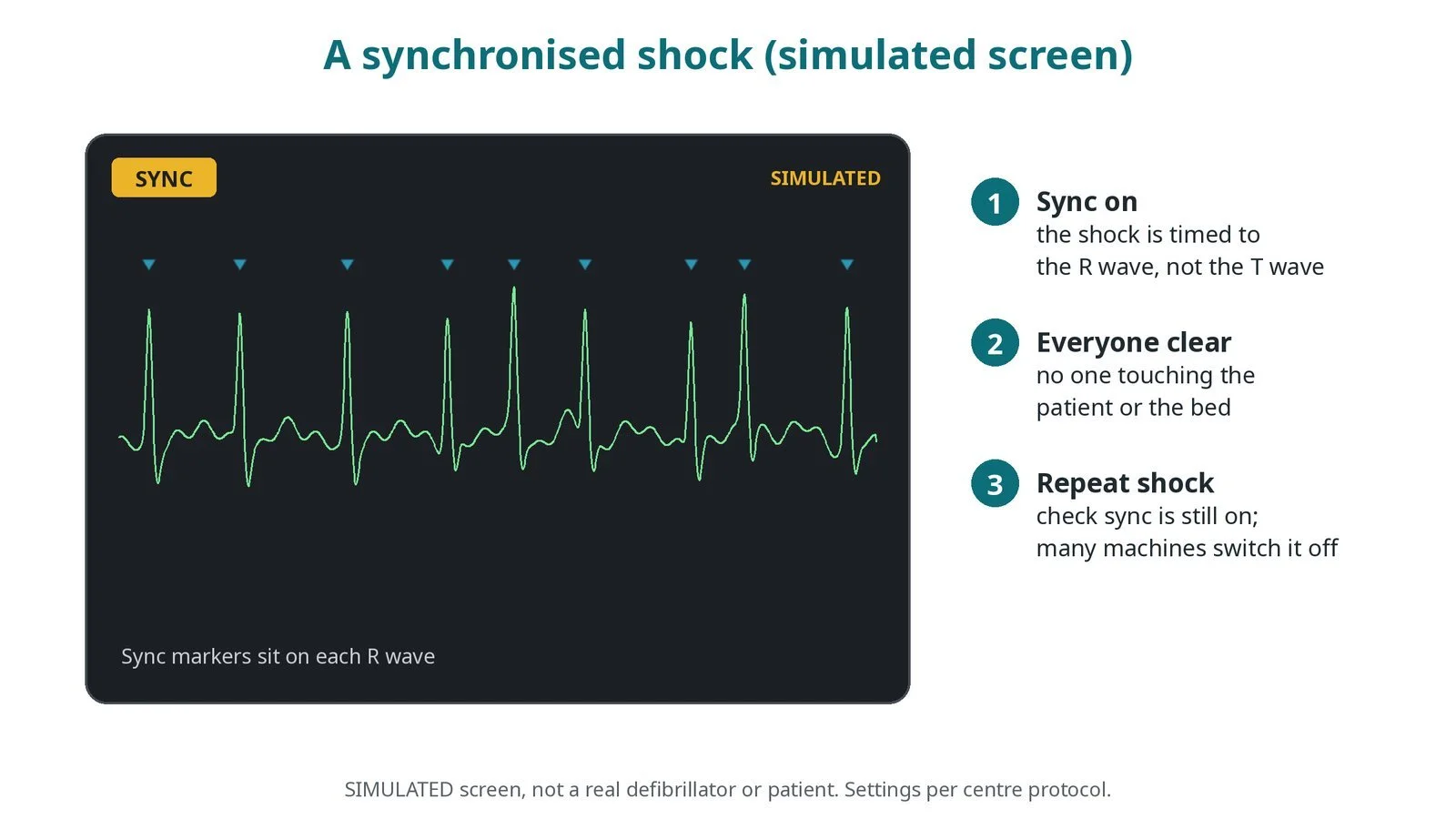
SIMULATED screen: (1) sync on, so the shock is timed to the R wave; (2) everyone clear; (3) before a repeat shock, check sync is still on.
Recovery and aftercare
First hours: monitoring of heart rhythm, blood pressure and oxygen while the sedation wears off.
Going home: usually the same day with a responsible adult, who should stay with you overnight.
Medicines: keep taking your blood thinner without missing doses; other rhythm medicines continue as advised.
Skin: the skin under the pads may be red or sore for a few days; a simple moisturiser can help.
Driving: do not drive for at least 24 hours after sedation, or as advised. Check with your team about DVLA rules for your heart condition.
Follow-up: an ECG or clinic review to see if normal rhythm has lasted.
Call 999 if you have chest pain, fainting, sudden breathlessness, or signs of a stroke such as face drooping, arm weakness or slurred speech.
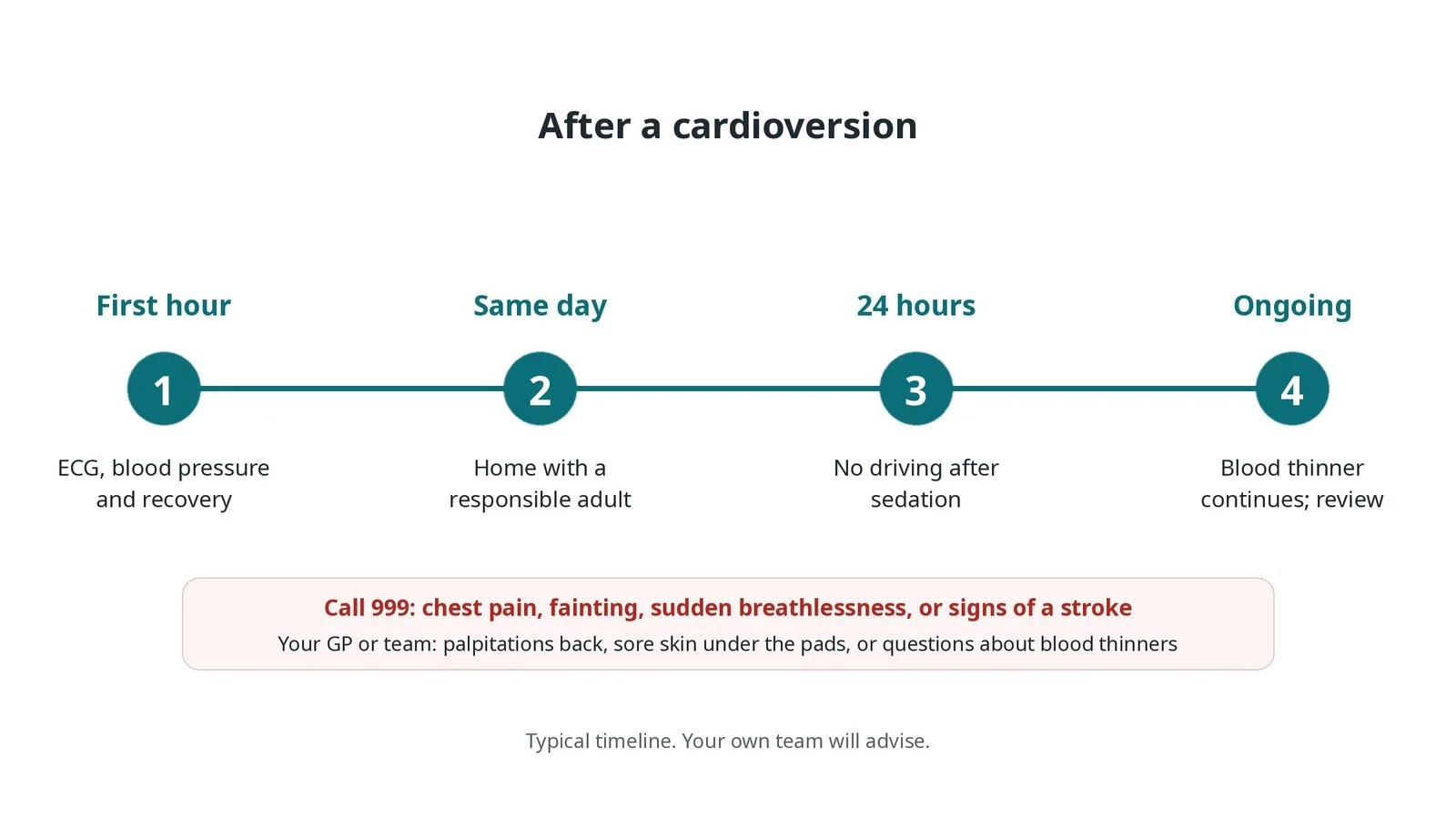
After a cardioversion: (1) ECG, blood pressure and recovery; (2) home the same day with a responsible adult; (3) no driving for 24 hours after sedation; (4) the blood thinner continues, with a review.
Risks and complications
Your team will explain the risks that apply to you. Possible problems include:
Stroke or other clot (rare with good anticoagulation or a TOE)
Sore, red or burned skin under the pads
Slow heart rate or a pause after the shock (uncommon)
Problems with sedation or breathing (uncommon)
Ventricular fibrillation if the shock is not synchronised (rare)
The abnormal rhythm coming back: This is common, sometimes within days or weeks.
Small throat injury from the TOE probe (rare)
Cath lab kit list (printable)
Barts example kit list
An example from one UK centre, written generically. Every lab has its own protocol, and sizes and doses vary.
defibrillator with sync mode and ECG monitoring
adhesive defibrillator pads
sedation or anaesthetic drugs and airway equipment, as per centre protocol
oxygen, suction and a bag-valve-mask
12-lead ECG machine
TOE probe, bite guard and echo machine, if TOE-guided
emergency drugs and a temporary pacing option nearby
device programmer, if the patient has a pacemaker or ICD
Procedural steps (Barts example)
Checks
TOE if needed
The cardioversion
Recovery
Going home
First time in the cath lab?
Sync, sync, sync. Check the markers sit on the R waves before every shock. It is the single most important safety step.
Pads matter. Good skin contact, the right position and distance from any device box all help it work and avoid burns.
Know the anticoagulation story. Weeks of taken doses, or a clear TOE, are what make it safe.
Airway first. The sedationist leads; keep suction and oxygen ready and the bed flat if needed.
Ask the patient directly about missed blood thinner doses in the last 3 weeks. A gap may mean a TOE first.
Have suction ready and a bite guard in place for the TOE.
Say 'sync on' and 'all clear' out loud, every time.
Many defibrillators switch sync off after each shock. Recheck before a repeat shock.
FAQ
Will I feel the shock?
No. You are asleep or deeply sedated. Some people notice a sore chest afterwards.
Why do I need blood thinners for weeks first?
They lower the chance that a clot forms in the heart and is pushed out when normal rhythm returns.
What if it does not work?
Sometimes a further shock works. If AF comes back, your team will discuss other options, such as medicines or an ablation.
What is the TOE for?
It looks for clot in the heart from the gullet, so the cardioversion can be done safely without waiting weeks.
Related Cath Lab 101 guides
SVT and atrial flutter ablation (coming soon)
Sources
All checked on 12 November 2026. Each page's own date is shown where it gives one.
Van Gelder IC, et al. 2024 ESC Guidelines for the management of atrial fibrillation. Eur Heart J 2024;45(36):3314–3414
NICE. Atrial fibrillation: diagnosis and management (NG196). nice.org.uk/guidance/ng196
DVLA. Assessing fitness to drive: a guide for medical professionals (cardiovascular disorders). gov.uk
StatPearls (NCBI Bookshelf), search: synchronized electrical cardioversion. ncbi.nlm.nih.gov/books
Disclaimer
Education only. This page is for general education for healthcare students, cath lab staff and curious readers. It isn't medical advice and doesn't replace advice from your own doctor, heart team or local unit protocols. Equipment and medicines are described generically. No product or manufacturer is recommended. If you think someone is having a heart emergency, call 999.
Disclosure: I work in the medical device industry. This page is independent education and isn't sponsored or reviewed by any company.
All diagrams on this page are original illustrations created for rodnieoro.com.