Myocardial metabolism studies (research): a Cath Lab 101 guide
Reviewed by Rodnie Oro, cath lab charge nurse · Last reviewed: October 2026 · Education only, not medical advice
Myocardial metabolism studies in one minute
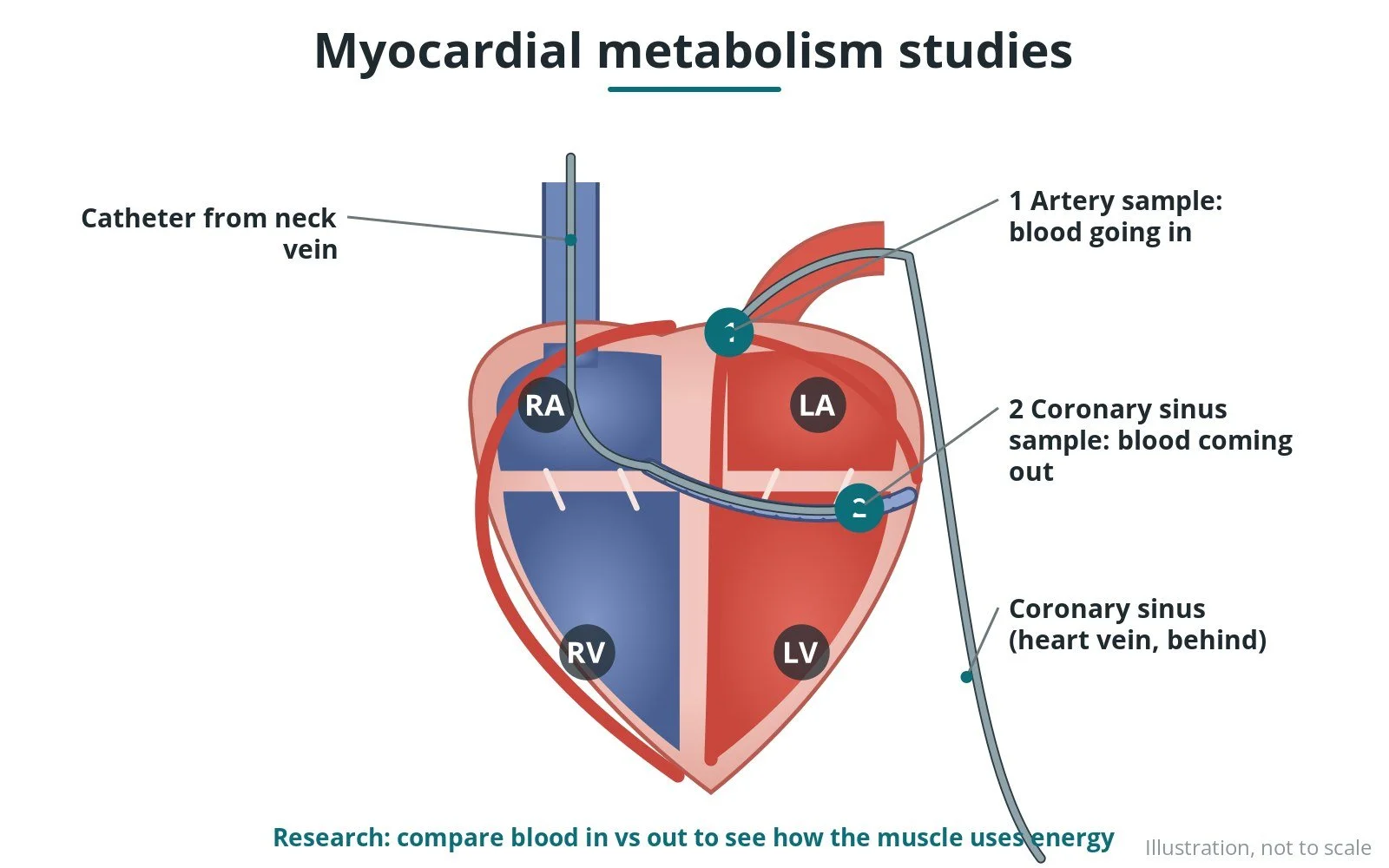
What it is: a research procedure: blood samples from an artery and from the heart's main vein (the coronary sinus) are compared to study how the heart muscle uses energy, such as fats and sugars.
Who it is for: only people taking part in approved research studies. It is not a routine test.
Main risks: those of a heart catheter procedure: bruising, brief rhythm disturbances and, rarely, damage to the coronary sinus or other vessels.
Usually: under local anaesthetic, often alongside a planned procedure, as set out in the study.
On this page: What are myocardial metabolism studies? · Who is it for? · When is it done? · Step by step · Recovery · Risks · Kit list · First time in the lab? · FAQ
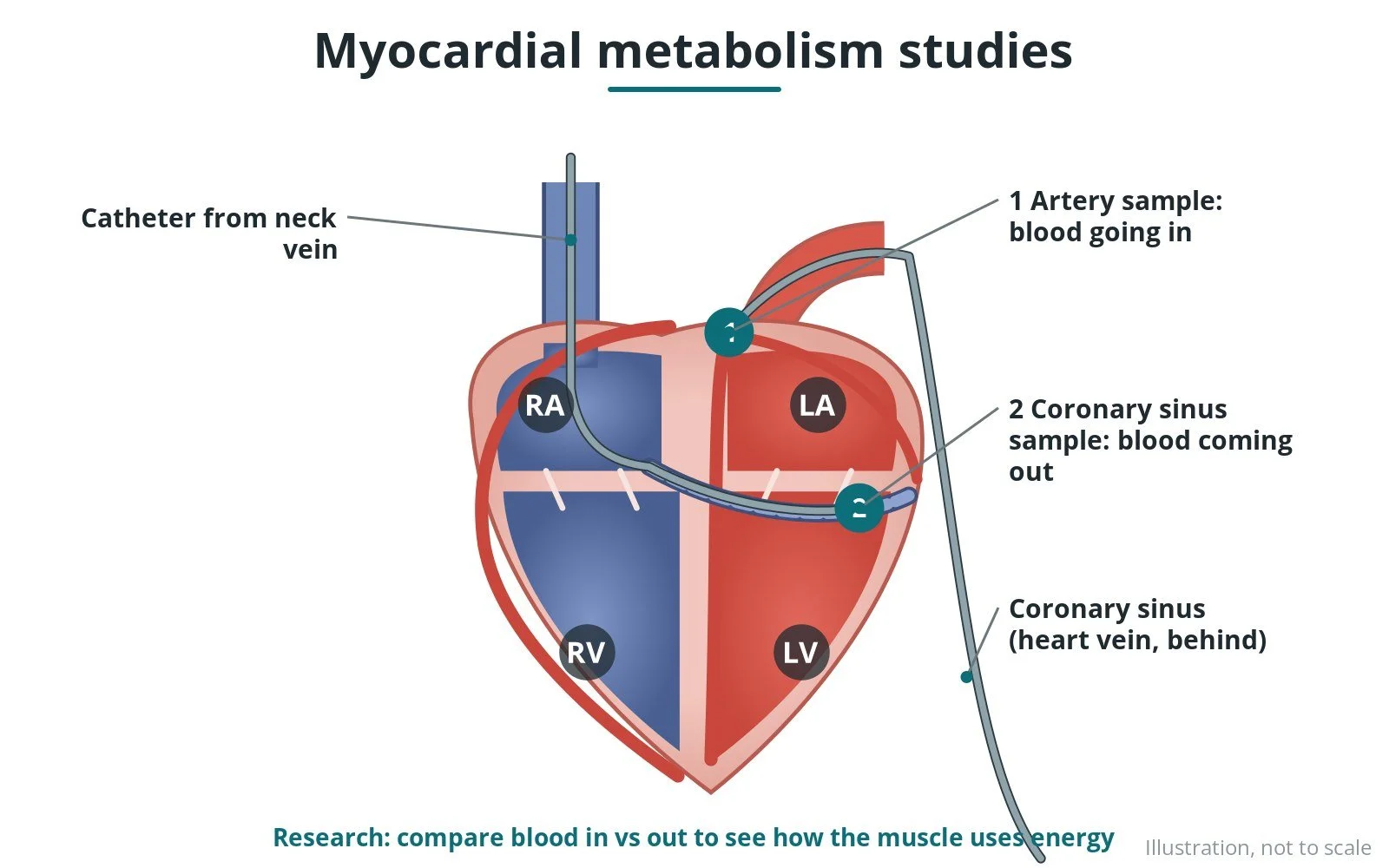
Paired samples: blood in (artery) and blood out (coronary sinus).
What are myocardial metabolism studies?
Blood going into the heart muscle comes from the coronary arteries. Blood coming out drains into the coronary sinus, a vein on the back of the heart that empties into the right atrium.
By sampling both:
- researchers can see what the heart takes up and releases, such as oxygen, sugars, fats and lactate
- some studies add a measure of coronary sinus flow
Important: this is a research technique. It is done only within approved studies with ethics approval and informed consent.
New to the acronyms? See the Cath Lab Abbreviations A–Z.
Who is it for?
Only:
- participants in approved research studies on heart muscle energy use, for example in heart failure, cardiomyopathy or coronary disease
The decision is made by your heart team, who will talk through the reasons, the alternatives and the risks with you.
When is it done?
It is scheduled by the study team. Before it, participants usually have:
- study consent and screening
- fasting as set by the study
- a review of medicines as per study and centre protocol
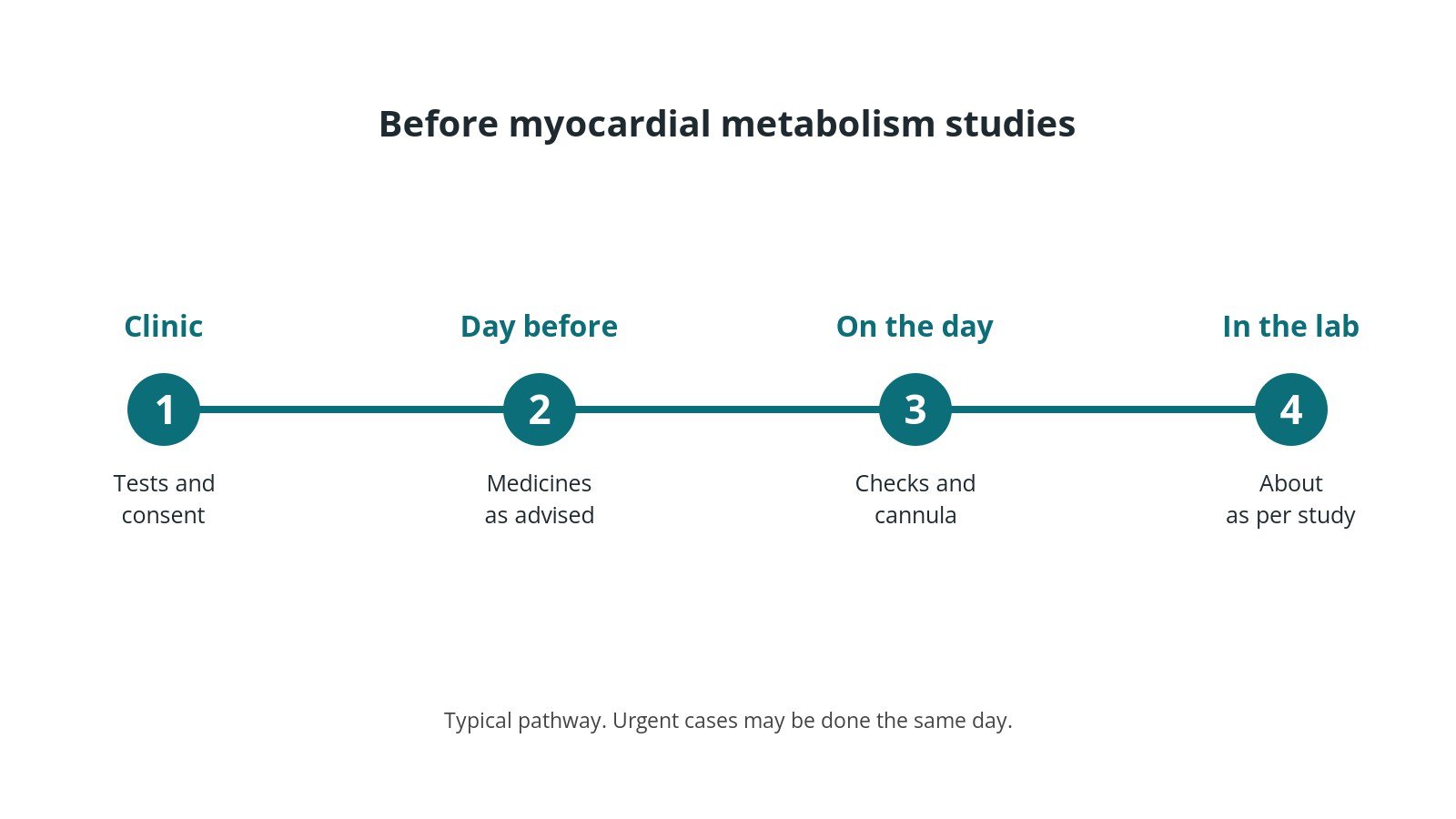
Before the procedure: tests and consent, medicine advice, checks on the day, then the cath lab.
Step by step
1. Getting ready
You lie on the X-ray table. ECG, blood pressure and oxygen levels are monitored. The skin over the access site is cleaned and numbed with local anaesthetic; some people also have light sedation, as per centre protocol.
2. Access
A venous sheath (often neck or arm) and an arterial sheath are placed, sizes per device and operator.
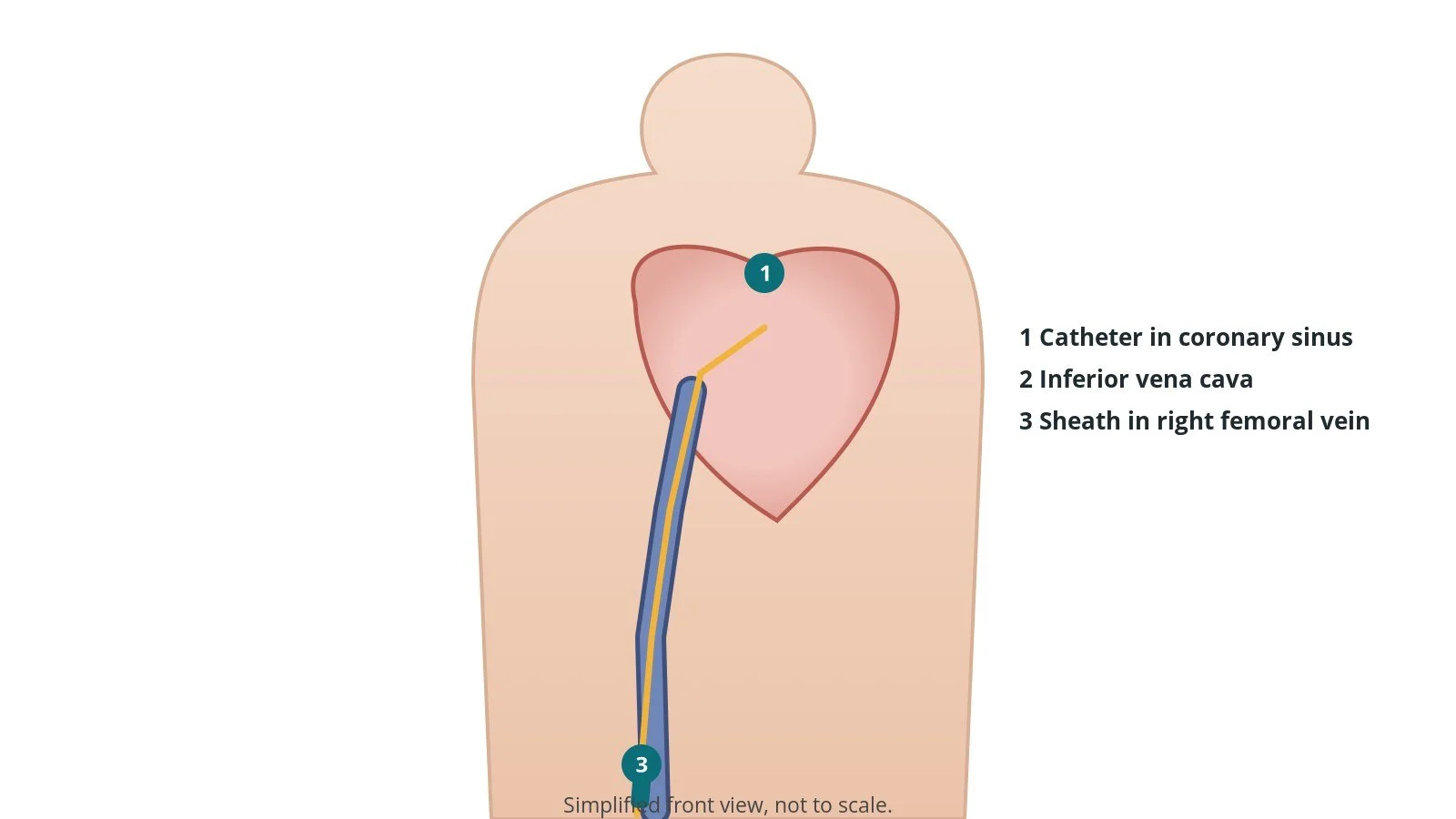
Access: Catheter in coronary sinus; Inferior vena cava; Sheath in right femoral vein.
3. Sampling
- A. Find the coronary sinus. A shaped catheter is guided into the coronary sinus.
- B. Paired samples. Arterial and coronary sinus samples are taken at the same time.
- C. Repeat. Samples may be repeated at set times or after a stress such as pacing, per study.
- D. Finish. Samples are labelled and sent as per study protocol.
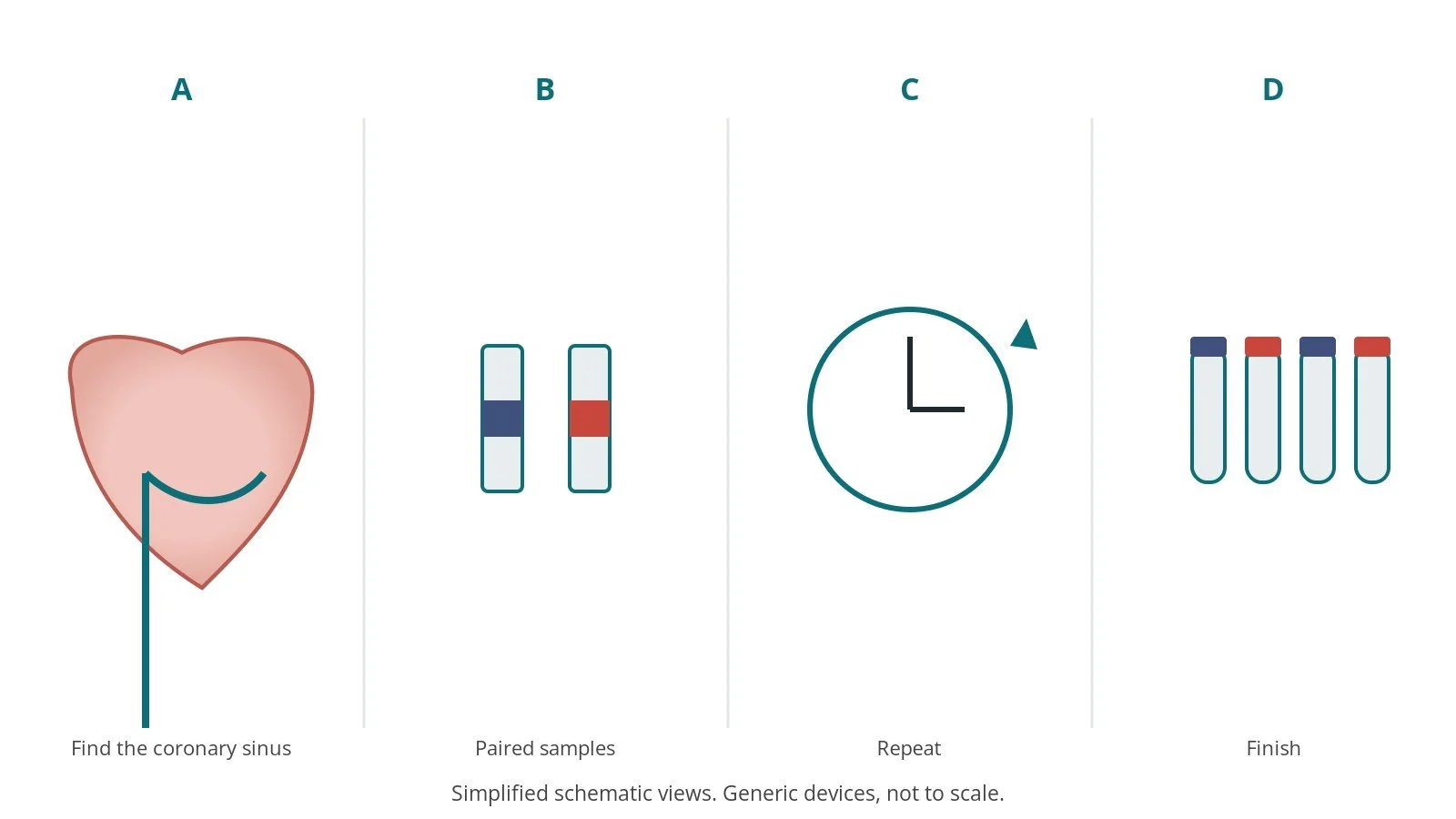
A: find the coronary sinus. B: paired samples. C: repeat. D: finish.
4. Finishing
The catheters are removed. The sheath is taken out and the site closed with pressure, a band or a closure device, per device and operator.
Recovery and aftercare
- First hours: you rest while the nurses check the access site, pulse and blood pressure, as per centre protocol.
- Going home: usually the same day, with someone to take you home.
- Access site: avoid heavy lifting and strenuous activity for a few days; a small bruise is common.
- Results: the team will usually explain the findings before you go home, and send a report to your own doctor.
- Driving: ask your team; for a planned test it is often a couple of days, but it depends on your heart condition.
Call 999 if you have chest pain, breathlessness, fainting, signs of a stroke, or heavy bleeding or swelling at the access site.
Risks and complications
Your team will explain the risks that apply to you. Possible problems include:
- bruising or bleeding at the access site (common, usually minor)
- damage to the artery or vein at the access site (uncommon)
- reaction to the contrast dye, or effects on kidney function
- heart rhythm disturbances, usually brief
- heart attack, stroke or serious complications (rare)
- X-ray exposure, kept as low as possible
- rarely, injury to the coronary sinus
- unknown risks, as with any research procedure
Cath lab kit list (printable)
Barts example kit list
An example from one UK centre, written generically. Every lab has its own protocol, and sizes and doses vary.
- venous and arterial sheaths, size per device and operator
- coronary sinus catheter, per operator
- labelled sample tubes per study protocol
- ice or transport per study protocol
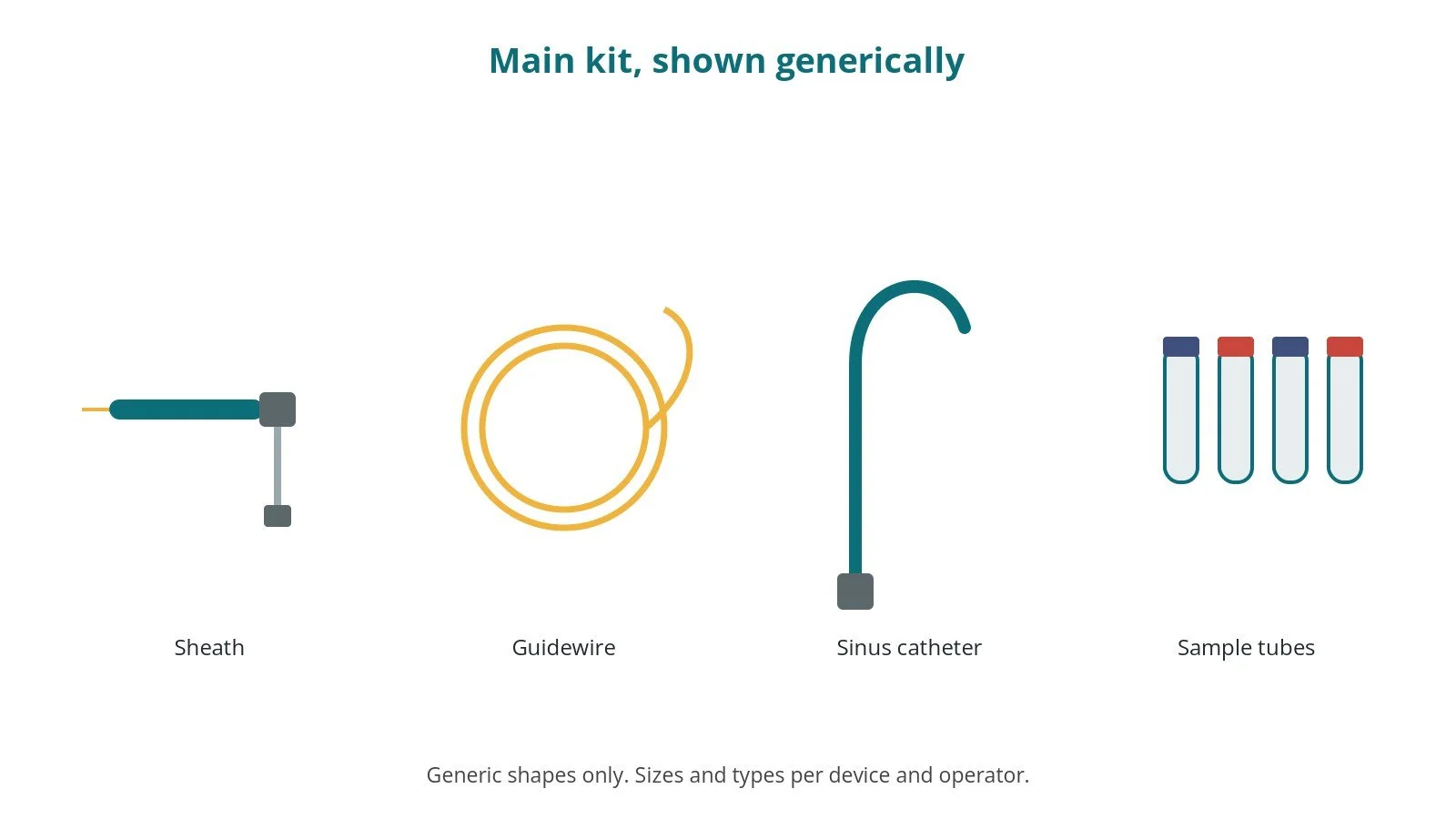
Main kit (generic): Sheath; Guidewire; Sinus catheter; Sample tubes.
Procedural steps (Barts example)
- Study checks and consent confirmed
- Venous and arterial access
- Coronary sinus catheter positioned and confirmed
- Paired samples at set times
- Samples labelled and processed; catheters out
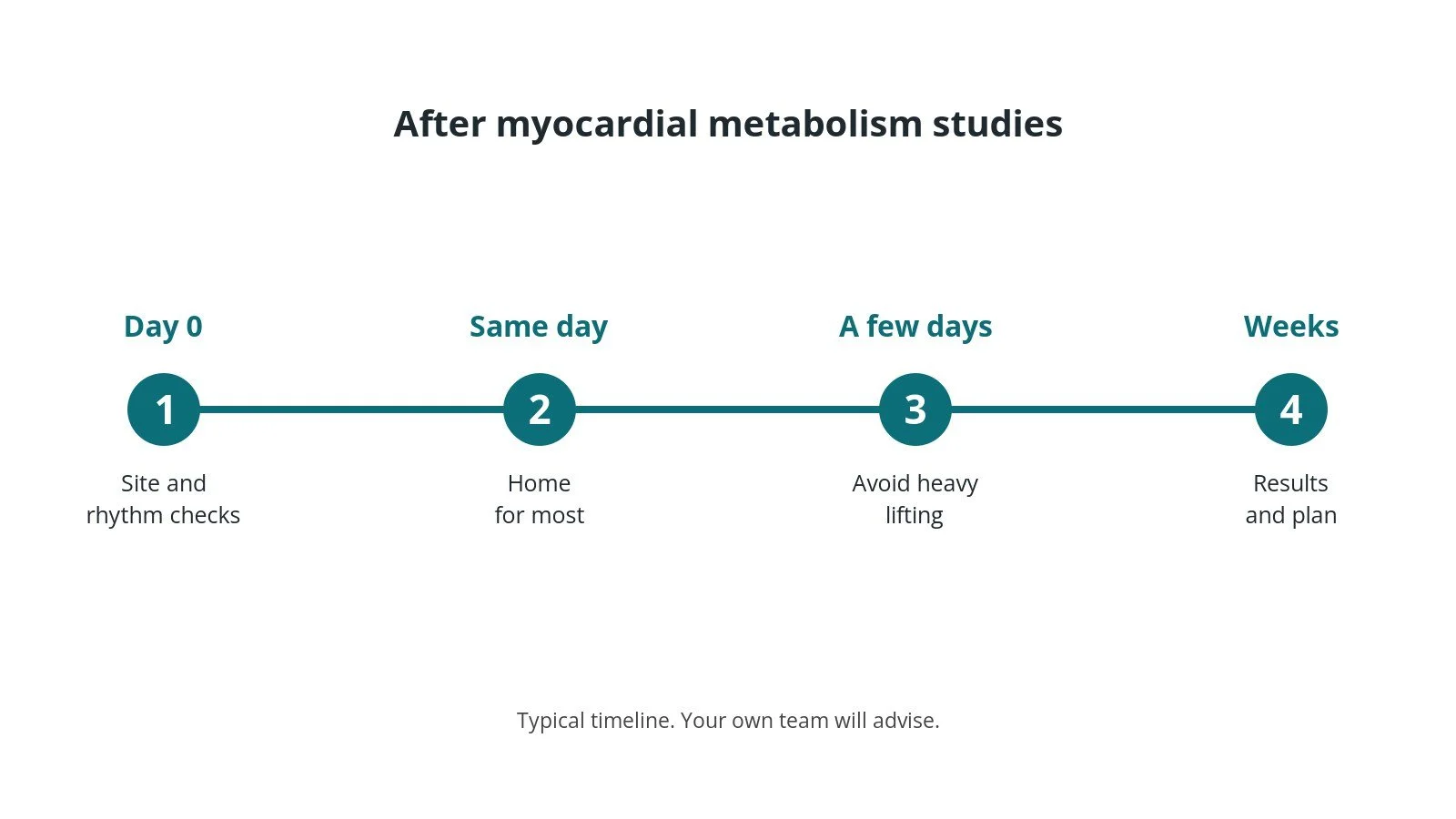
After the procedure: (1) Site and rhythm checks; (2) Home for most; (3) Avoid heavy lifting; (4) Results and plan.
First time in the cath lab?
💡 First-time tip
- Timing is data. Record exact sample times.
- Paired means paired. Arterial and sinus samples together.
- Label carefully. Study samples can't be repeated later.
- Gentle in the sinus. The vein wall is thin.
FAQ
Is this a treatment?
No. It is research.
Do I have to take part?
No. Taking part is voluntary.
Will I get results?
The study team will explain what they can share.
Related Cath Lab 101 guides
Sources
All checked on 10 October 2026. Each page's own date is shown where it gives one.
- McDonagh TA, et al. 2021 ESC Guidelines for the diagnosis and treatment of acute and chronic heart failure. Eur Heart J 2021;42(36):3599–3726. PubMed 34447992
- NHS. Clinical trials. nhs.uk/conditions/clinical-trials
- StatPearls (NCBI Bookshelf), search: coronary sinus sampling. ncbi.nlm.nih.gov/books
Disclaimer
Education only. This page is for general education for healthcare students, cath lab staff and curious readers. It isn't medical advice and doesn't replace advice from your own doctor, heart team or local unit protocols. Equipment and medicines are described generically. No product or manufacturer is recommended. If you think someone is having a heart emergency, call 999.
Disclosure: I work in the medical device industry. This page is independent education and isn't sponsored or reviewed by any company.
All diagrams on this page are original illustrations created for rodnieoro.com.