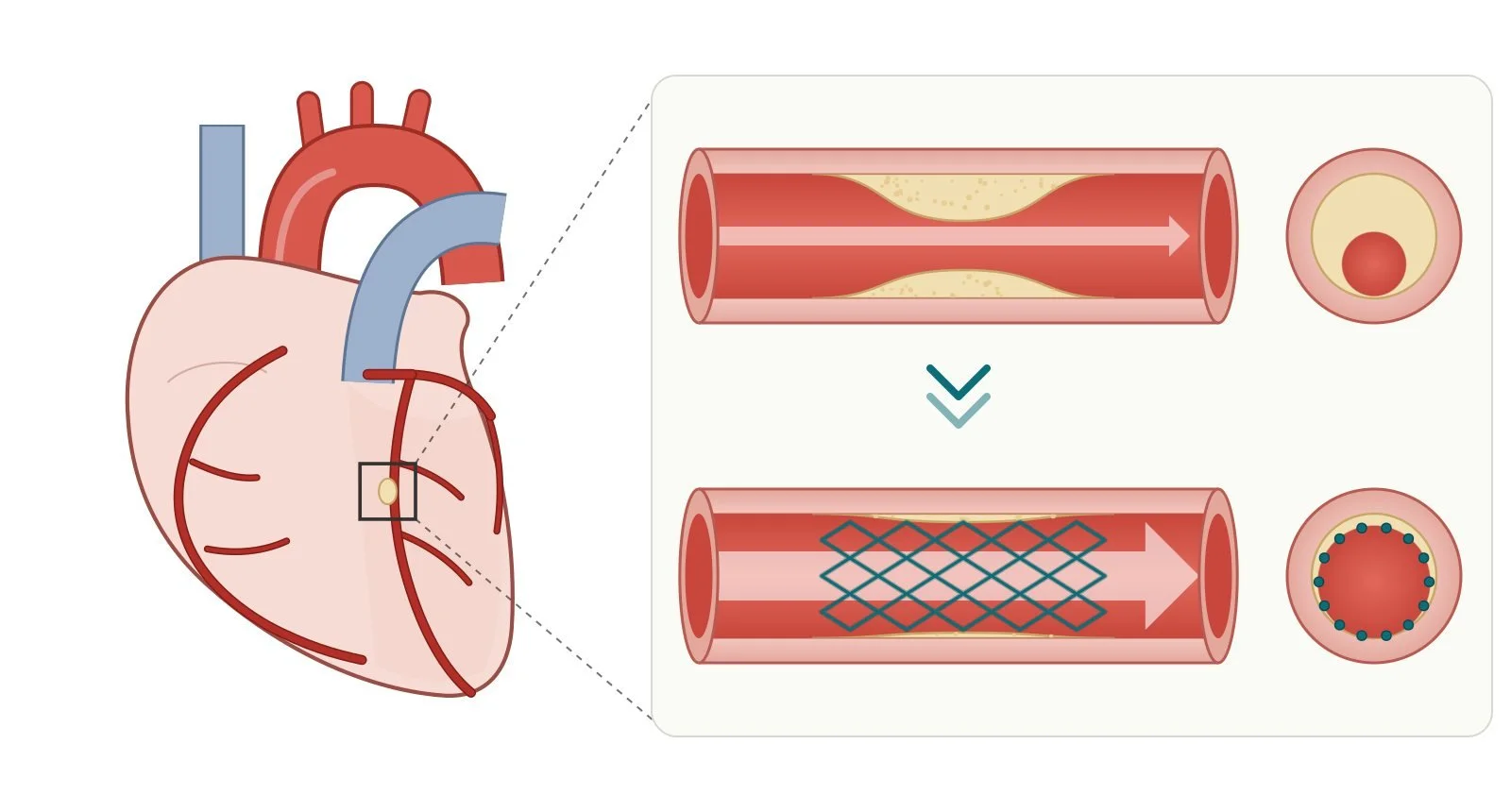
Intracoronary cell infusion (research procedure): a Cath Lab 101 guide
Reviewed by Rodnie Oro, cath lab charge nurse · Last reviewed: October 2026 · Education only, not medical advice
Intracoronary cell infusion in one minute
What it is: in some research studies, cells collected from a person's own bone marrow are processed and then delivered into a coronary artery through a catheter, to study whether they could help the heart muscle. A small balloon briefly stops blood flow while the cells are infused (the stop-flow technique).
Who it is for: only people taking part in an approved clinical research study, usually after a heart attack or with heart failure, who meet the study's criteria and give informed consent. It is not a standard NHS treatment.
Main risks: the usual risks of a coronary procedure: bleeding at the wrist, artery injury, heart rhythm problems, chest pain during balloon inflation and, rarely, heart attack or stroke; plus risks of the bone marrow collection. The study team will explain all risks.
Usually: under local anaesthetic, about 1 hour in the cath lab (bone marrow is collected earlier the same day or before), often home the same or next day.
On this page: What is intracoronary cell infusion? · Who is it for? · When is it done? · Step by step · Recovery · Risks · Kit list · First time in the lab? · FAQ
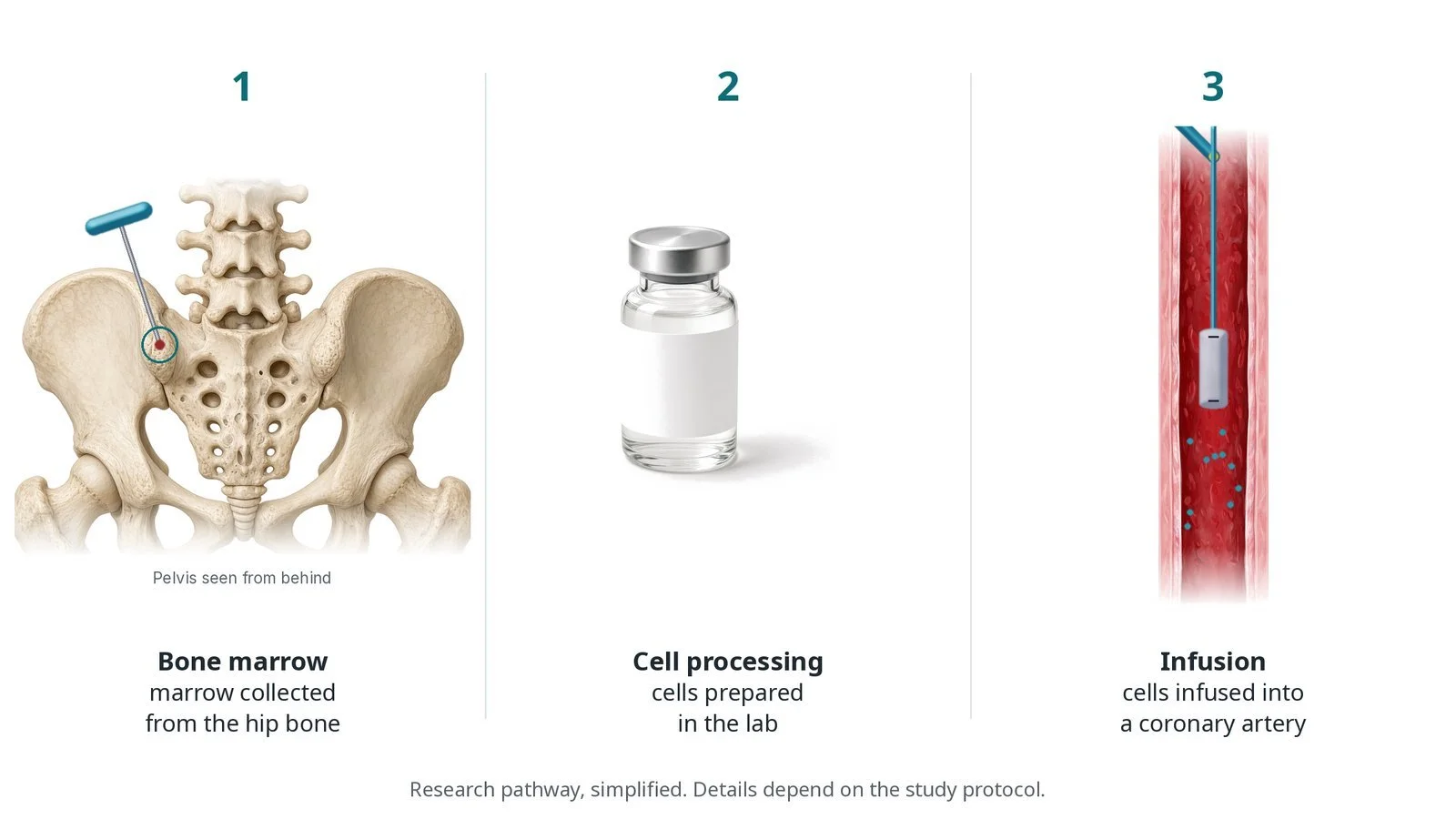
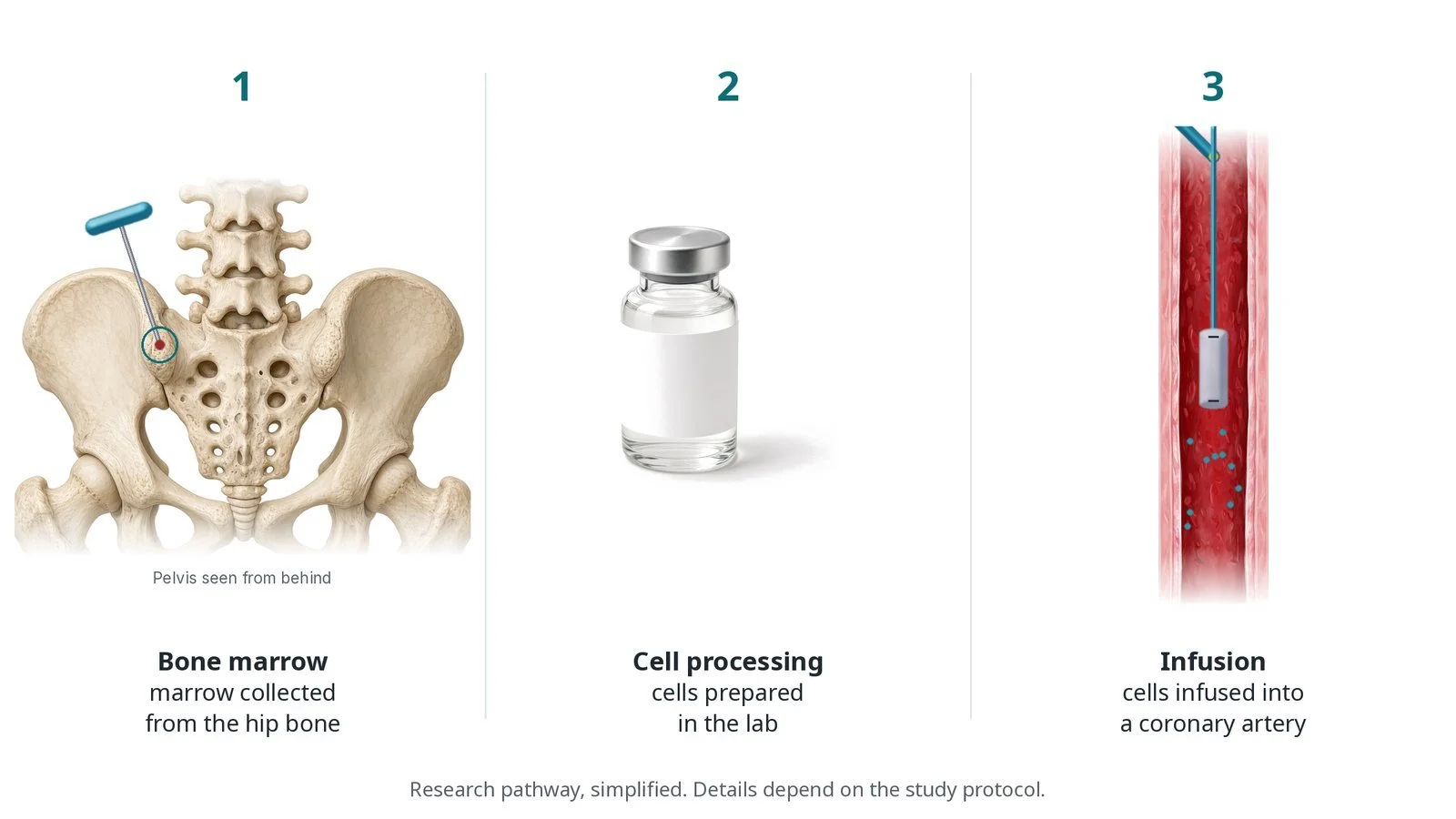
Research pathway: (1) bone marrow collected; (2) cells processed in the lab; (3) cells infused into a coronary artery.
What is intracoronary cell infusion?
After a heart attack, part of the heart muscle can be damaged and replaced by scar, which can lead to heart failure. Researchers have studied whether cells taken from a person's own body, most often from the bone marrow, might help the heart. These are sometimes called "stem cells", although bone marrow samples contain a mix of cell types.
In this research procedure:
bone marrow is collected, usually from the back of the hip bone under local anaesthetic, and processed in a laboratory
the processed cells are brought to the cath lab
a catheter is passed to the coronary artery supplying the affected area
a small balloon is inflated at low pressure to briefly stop blood flow while the cells are infused beyond it, so they stay in the area longer
Important: this is a research procedure. Whether it improves outcomes has not been established, and it is offered only within approved studies with ethics approval. It is not a routine treatment for heart attack or heart failure. Current guidelines for heart attack and heart failure recommend established treatments such as PCI and medicines.
New to the acronyms? See the Cath Lab Abbreviations A–Z.
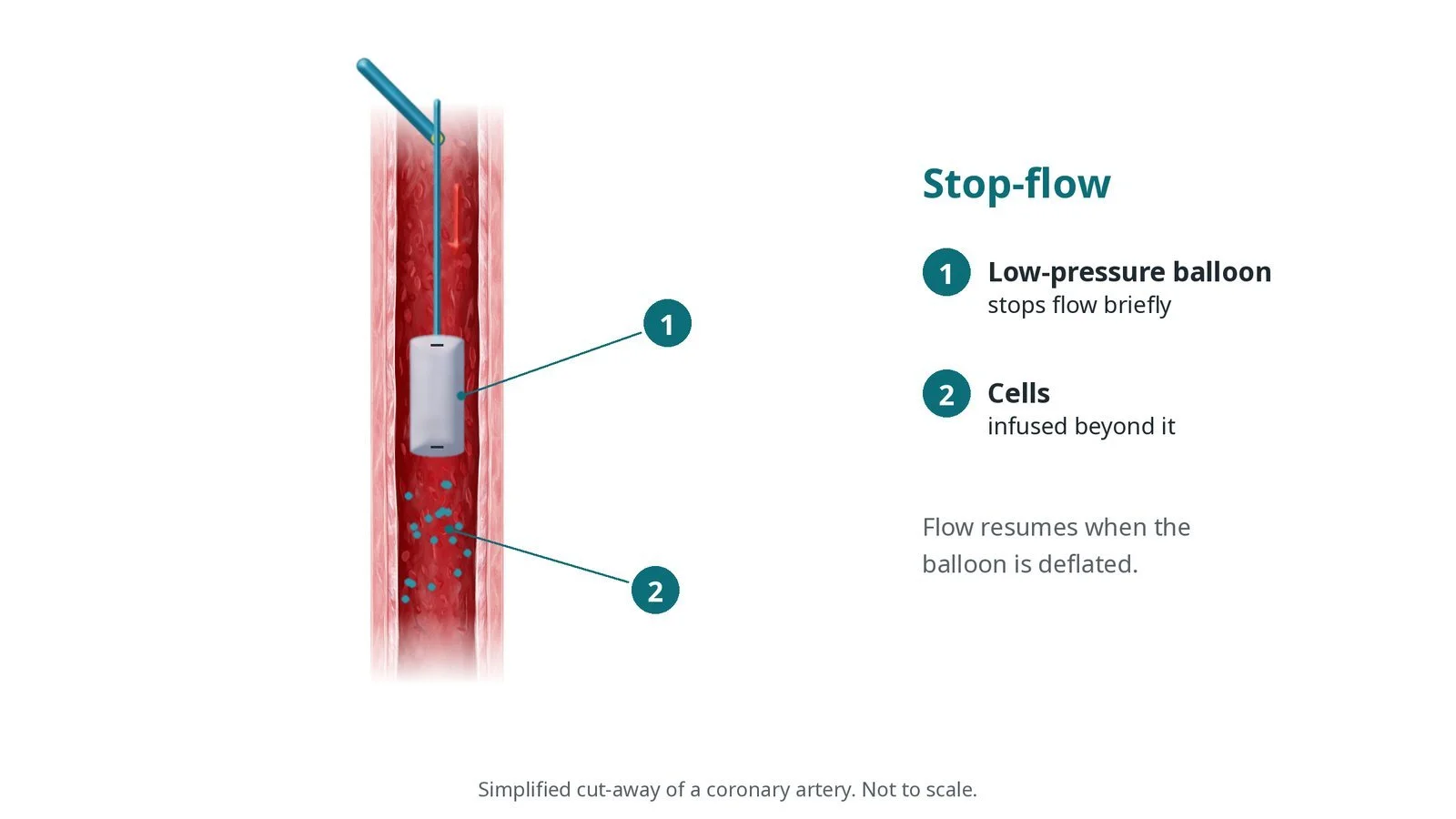
Stop-flow: (1) a low-pressure balloon briefly stops flow; (2) cells are infused beyond it.
Who is it for?
Only participants in an approved clinical trial. Each study sets its own criteria, for example a recent heart attack treated with PCI, or a type of heart failure. The ESC 2023 acute coronary syndrome and 2021 heart failure guidelines set out standard care, which participants continue to receive. In the UK, research studies are reviewed by a research ethics committee, and taking part is voluntary.
When is it done?
It is scheduled by the study team. Before it, participants usually have:
study consent and screening tests
an echo or MRI of the heart
bone marrow collection, earlier the same day or before, with cell processing in the laboratory
a review of blood thinners, as per study and centre protocol
Step by step
1. Getting ready
You lie on the X-ray table. The wrist (or groin) is numbed with local anaesthetic. ECG, blood pressure and oxygen levels are monitored. The processed cells arrive from the laboratory with the correct labels and are checked against your details.
2. Access
A sheath is placed in the radial artery (or femoral artery); sizes per device and operator. A diagnostic catheter shows the coronary arteries, then a guide catheter is placed at the opening of the target artery. Heparin is given, dose as per centre protocol.
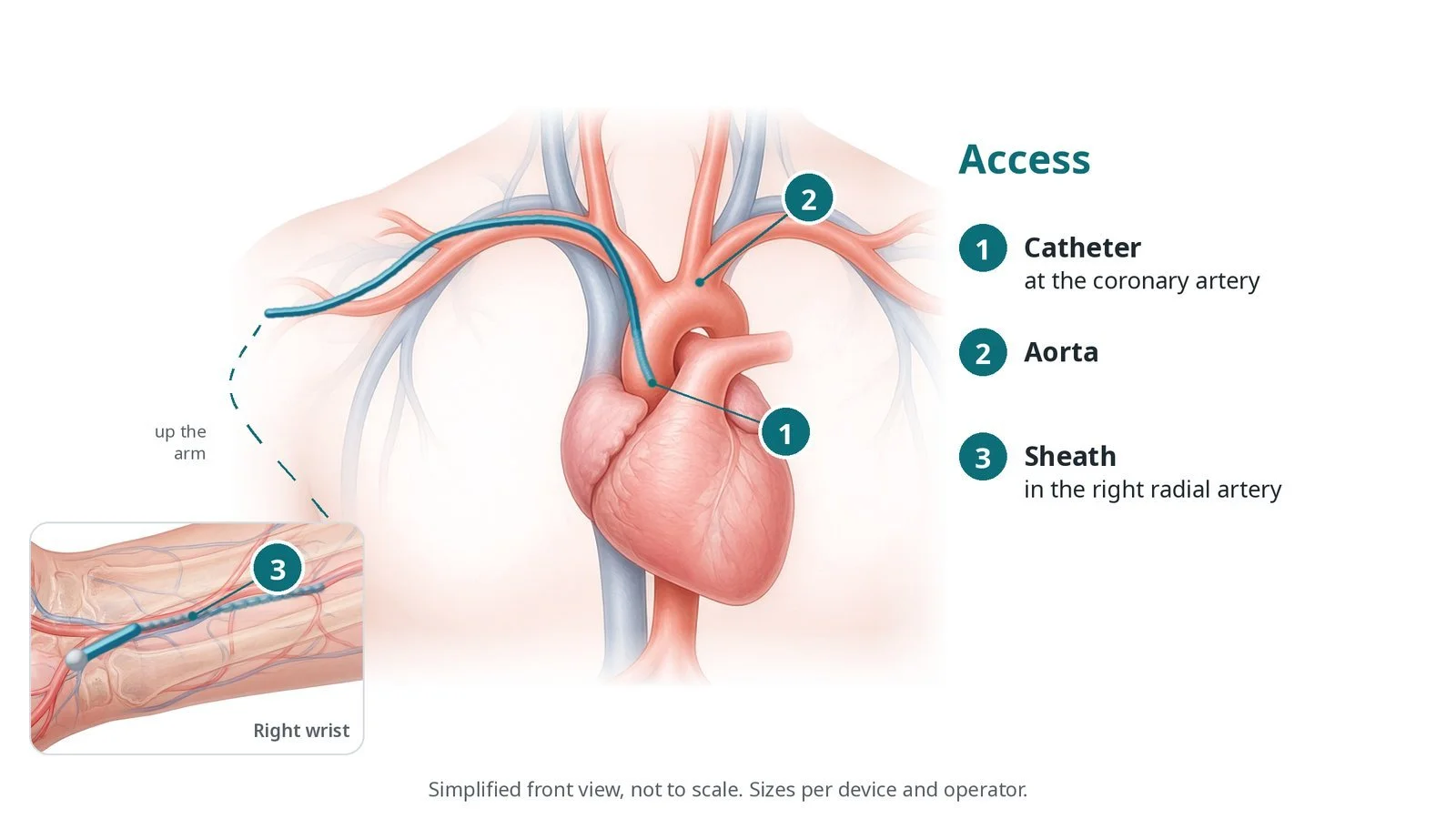
Access: (1) catheter at the coronary artery; (2) aorta; (3) sheath in the right radial artery.
3. Cell infusion
A. Wire. A thin coronary guidewire is passed down the artery beyond the target area.
B. Balloon in place. An over-the-wire balloon (or a microcatheter, per study protocol) is positioned in the artery, often at the site of a previous stent.
C. Stop flow and infuse. The balloon is inflated at low pressure to stop blood flow briefly. The wire is removed from the balloon's central channel and a portion of the cell solution is infused slowly through it.
D. Release. The balloon is deflated to restore flow. Steps C and D are repeated several times until all the cells are given, per study protocol.
You may feel brief chest discomfort while the balloon is inflated.
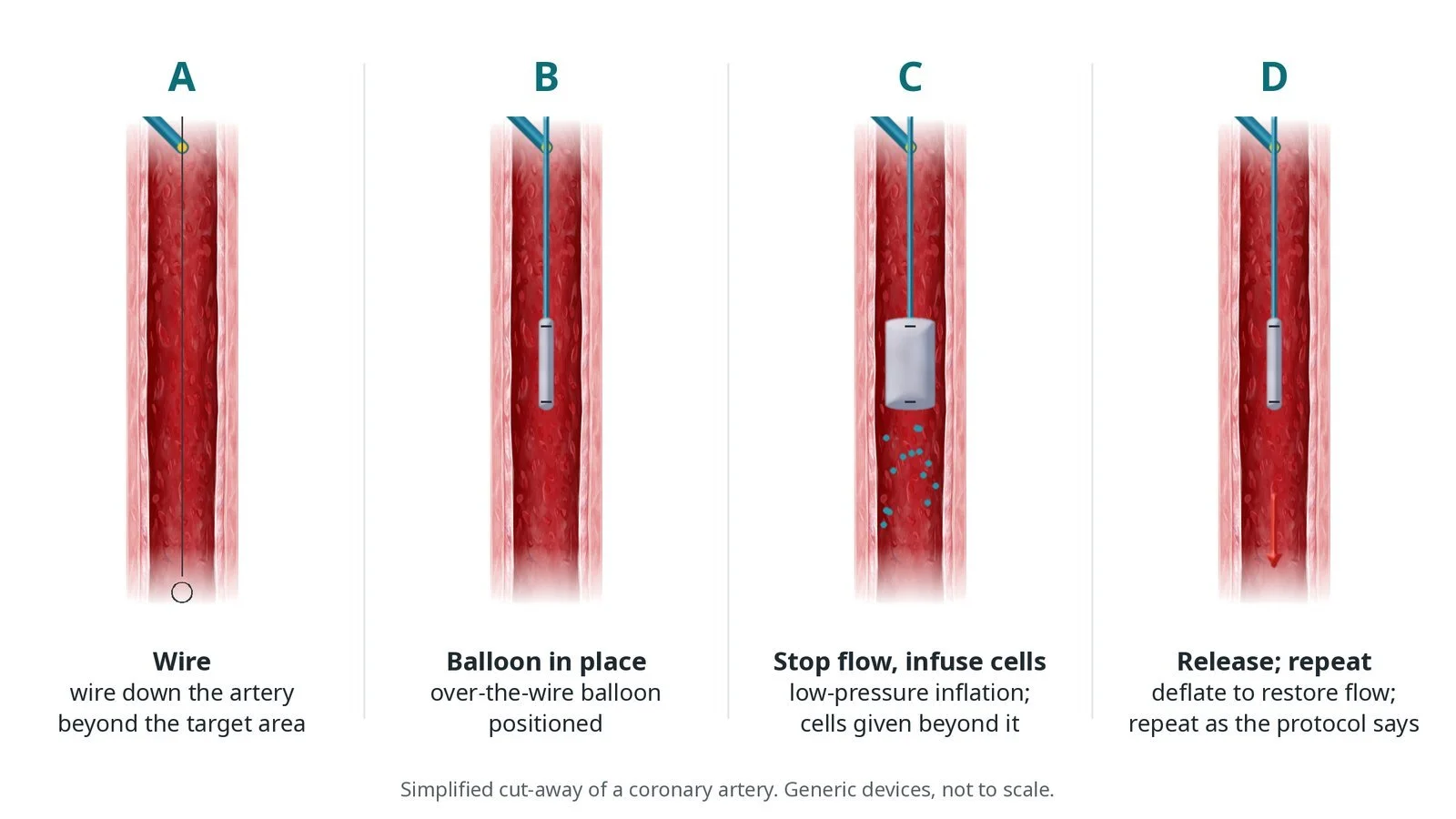
A: wire. B: balloon in place. C: stop flow, infuse cells. D: release; repeat.
4. Finishing
A final angiogram checks the artery. The sheath is removed and the wrist closed with a pressure band.
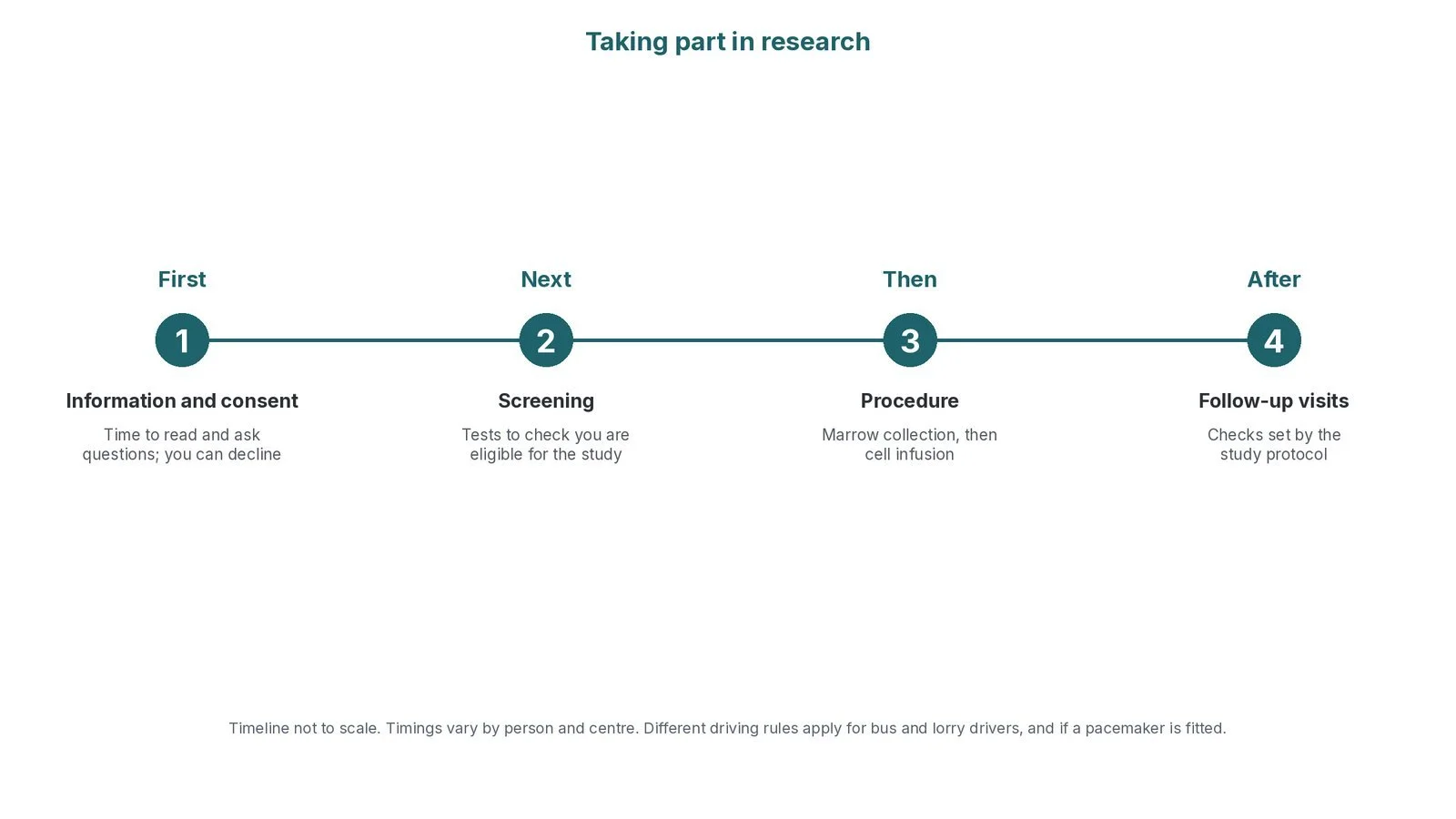
Taking part in research: (1) information and consent; (2) screening; (3) procedure; (4) follow-up visits.
Recovery and aftercare
First hours: checks of the wrist, heart rhythm and blood pressure, and the bone marrow site, as per centre protocol.
Going home: often the same or next day.
Bone marrow site: may be sore for a few days; keep the dressing clean.
Follow-up: study visits with scans and tests, as set out in the study information.
Medicines: continue your usual heart medicines unless told otherwise.
Driving: ask the study team; rules depend on your underlying heart condition (for example after a heart attack).
Call 999 if you have chest pain, breathlessness, fainting, or heavy bleeding from the wrist.
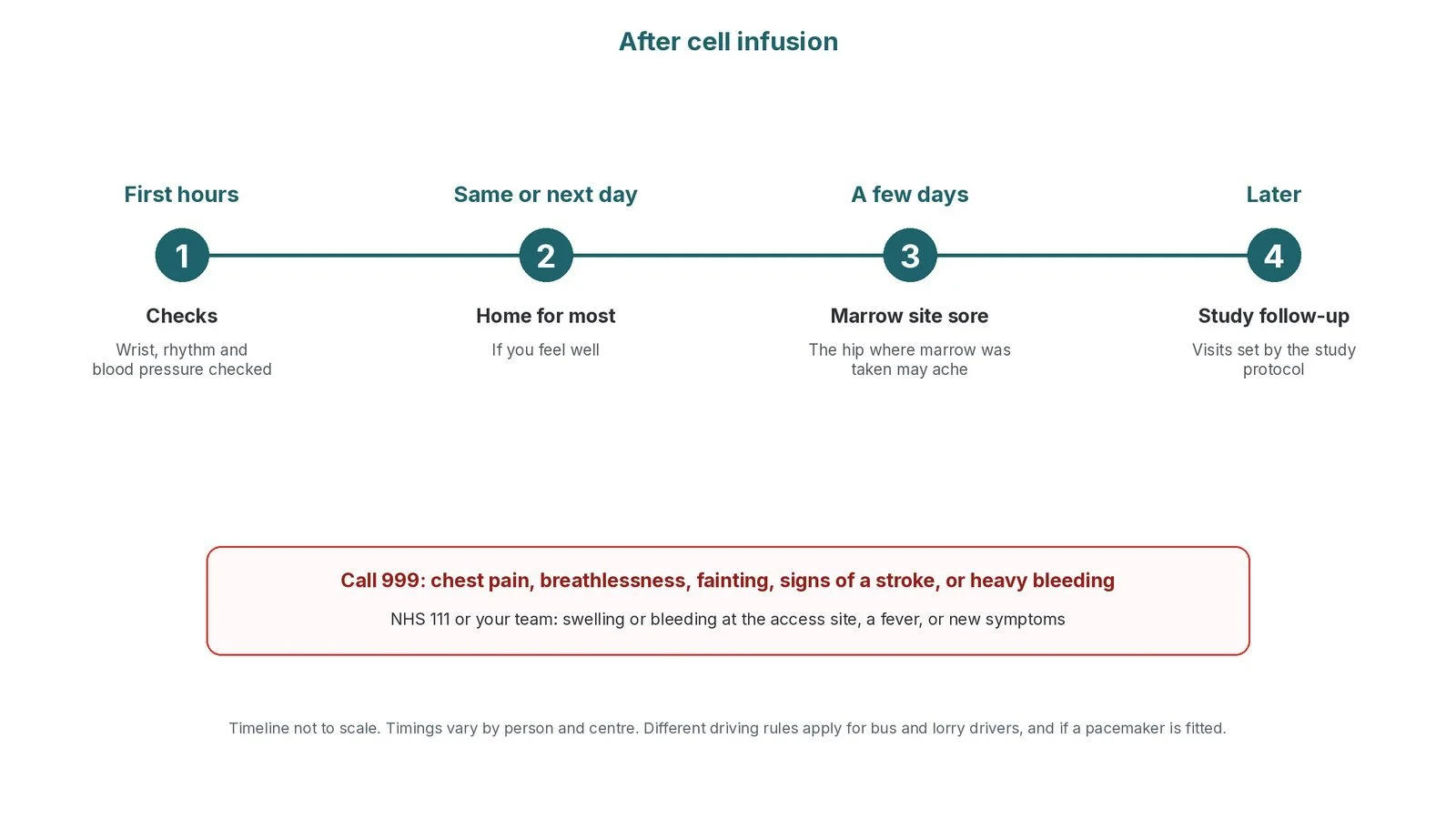
After cell infusion: (1) checks; (2) home for most; (3) bone marrow site sore for a few days; (4) study follow-up visits.
Risks and complications
The study team will explain all risks. Possible problems include:
bleeding or bruising at the wrist or groin
injury to the coronary artery from the wire or balloon
chest pain or ECG changes during balloon inflation, usually brief
heart rhythm problems
heart attack or stroke (rare)
pain, bruising or infection at the bone marrow collection site
unknown risks, as with any research treatment
Cath lab kit list (printable)
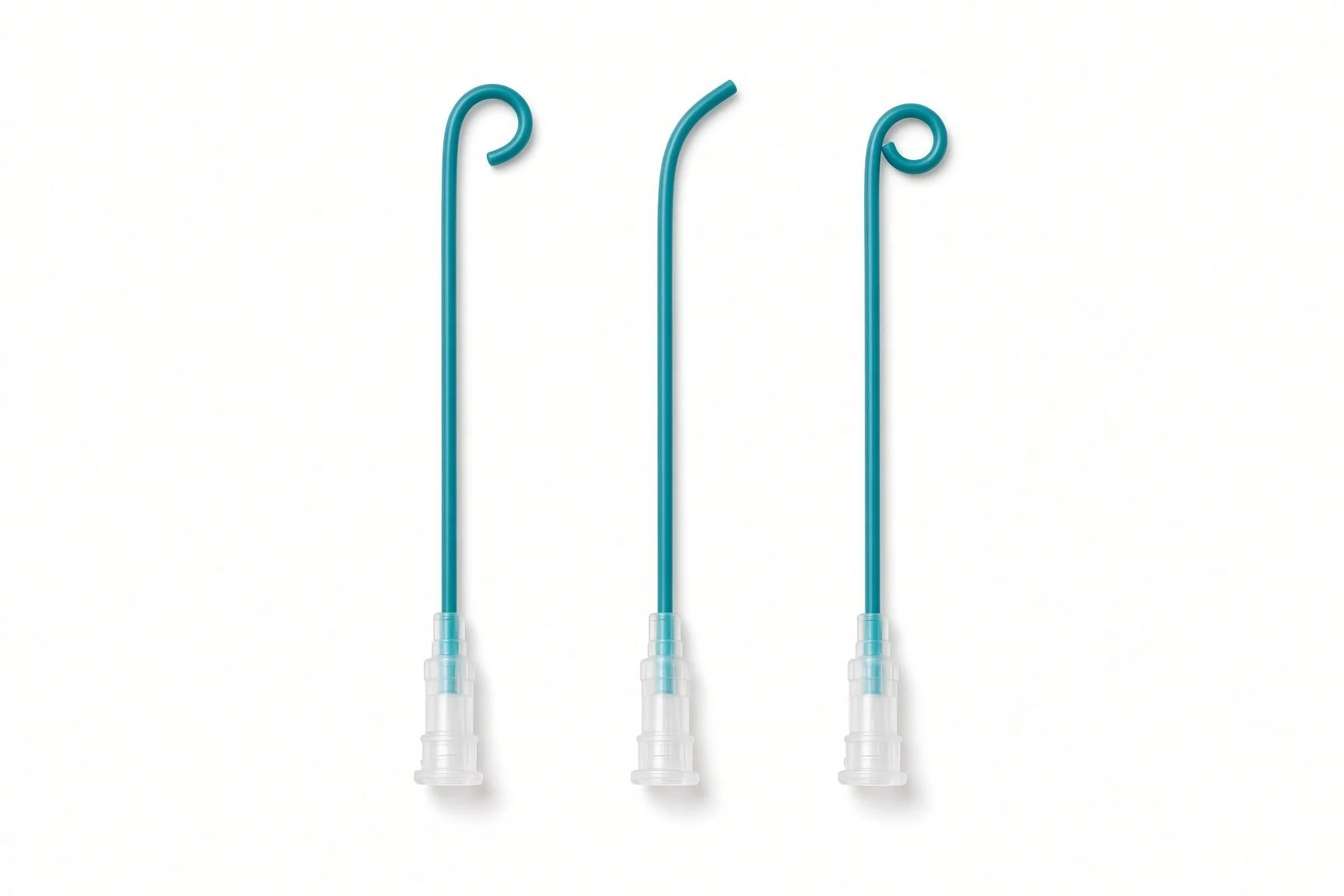
Right coronary shape diagnostic catheter (from the guide kit list; no published kit-page picture)
Barts example kit list
An example from one UK centre, written generically. Every lab and study has its own protocol, and sizes and doses vary.
radial arterial sheath, size per device and operator
right coronary shape diagnostic catheter
extra-backup guide catheter, per operator
coronary guidewires (two), per operator
microcatheter, per operator
over-the-wire semi-compliant balloon, size depending on the vessel, per device and operator
PCI kit (Y-connector, inflation device and accessories)
study cell product, checked and labelled per study protocol
heparin, as per centre protocol
Procedural steps (Barts example)
Cell product received and checked against patient details
Right radial access; heparin; coronary angiogram
Guide catheter to the target artery; guidewire beyond the target
Over-the-wire balloon positioned; low-pressure inflation; wire removed; cells infused through the central channel
Deflate; repeat cycles per protocol
Final angiogram; sheath out; wrist band
First time in the cath lab?
💡 First-time tip
Check the cells like blood. Confirm patient identity and labels on the cell product, as per study protocol. Timing matters. The study protocol sets how long the cells can wait; keep track. Low-pressure inflations. Note inflation times; the patient may feel chest discomfort. Document for the study. Research procedures need accurate timings and records. Reassure the patient. Explain that brief chest discomfort during inflation is expected.
FAQ
Is this a proven treatment?
No. It is a research procedure. Studies are designed to find out whether it helps.
Do I have to take part?
No. Taking part is voluntary, and you can withdraw at any time without affecting your usual care.
Where do the cells come from?
Usually your own bone marrow, collected earlier with a needle under local anaesthetic.
Will I still get my normal treatment?
Yes. Research participants continue to receive standard care.
Related Cath Lab 101 guides
Sources
All checked on 10 October 2026. Each page's own date is shown where it gives one.
Byrne RA, et al. 2023 ESC Guidelines for the management of acute coronary syndromes. Eur Heart J 2023;44(38):3720–3826. PubMed 37622654
McDonagh TA, et al. 2021 ESC Guidelines for the diagnosis and treatment of acute and chronic heart failure. Eur Heart J 2021;42(36):3599–3726. PubMed 34447992
NHS. Clinical trials. nhs.uk/conditions/clinical-trials
NHS. Stem cell and bone marrow transplants (bone marrow collection explained). nhs.uk
British Heart Foundation. Heart failure. bhf.org.uk
Disclaimer
Education only. This page is for general education for healthcare students, cath lab staff and curious readers. It isn't medical advice and doesn't replace advice from your own doctor, heart team or local unit protocols. Equipment and medicines are described generically. No product or manufacturer is recommended. If you think someone is having a heart emergency, call 999.
Disclosure: I work for a company that makes a device used in this procedure. This page is independent education, isn't sponsored or reviewed by any company, and doesn't recommend any product.
All diagrams on this page are original illustrations created for rodnieoro.com.