Cutting and scoring balloon angioplasty: a Cath Lab 101 guide
Reviewed by Rodnie Oro, cath lab charge nurse · Last reviewed: October 2026 · Education only, not medical advice
Cutting balloon angioplasty in one minute
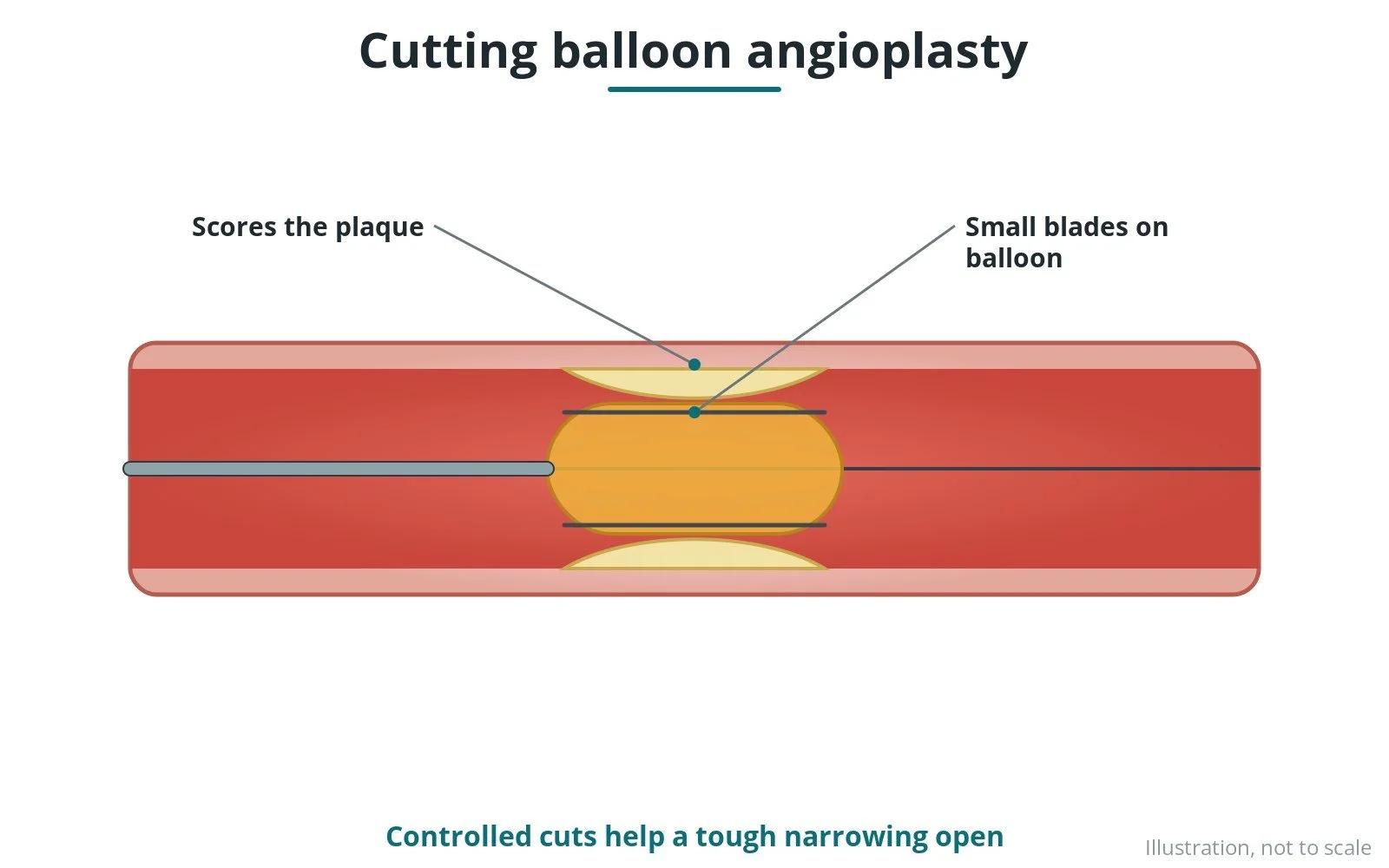
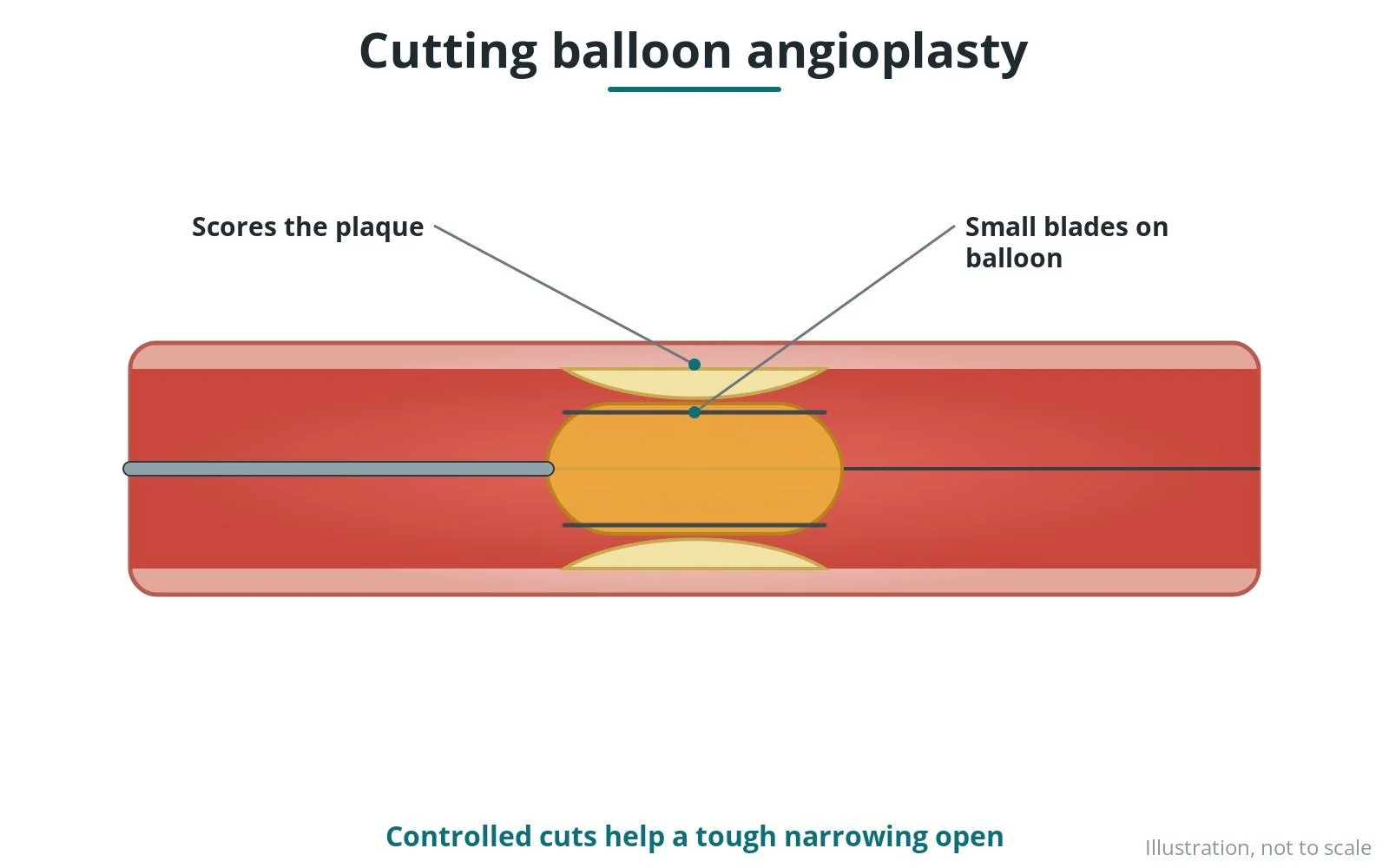
What it is: a special balloon with tiny blades or scoring elements on its surface, used during PCI to make controlled cuts in tough plaque so the artery can be opened evenly.
Who it is for: people having PCI with fibrous or calcified narrowings, narrowings inside an old stent, or narrowings at a branch.
Main risks: those of PCI, including artery tear and rarely perforation, heart attack or emergency surgery.
Usually: part of a PCI under local anaesthetic, 1–2 hours.
On this page: What is cutting balloon angioplasty? · Who is it for? · When is it done? · Step by step · Recovery · Risks · Kit list · First time in the lab? · FAQ
What is cutting balloon angioplasty?
A standard balloon pushes plaque outwards. If plaque is tough, the balloon may slip or the artery may tear unevenly.
- a cutting balloon has small blades mounted along it; when inflated, they score the plaque in lines
- a scoring balloon uses wires or ridges around it to do something similar
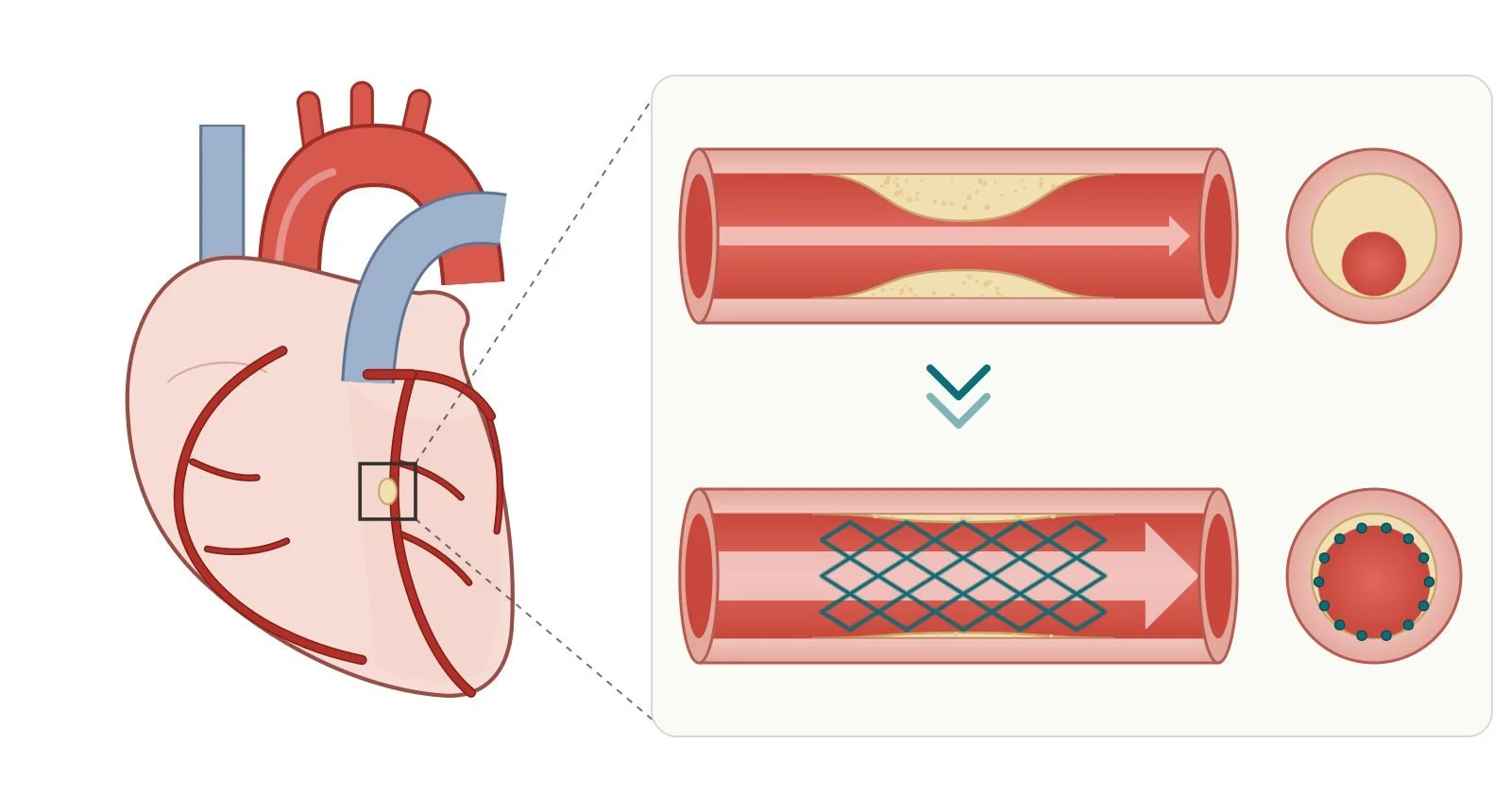
The controlled cuts let the artery open more evenly at lower pressure. A stent is usually placed afterwards.
New to the acronyms? See the Cath Lab Abbreviations A–Z.
Who is it for?
It may be considered for people with:
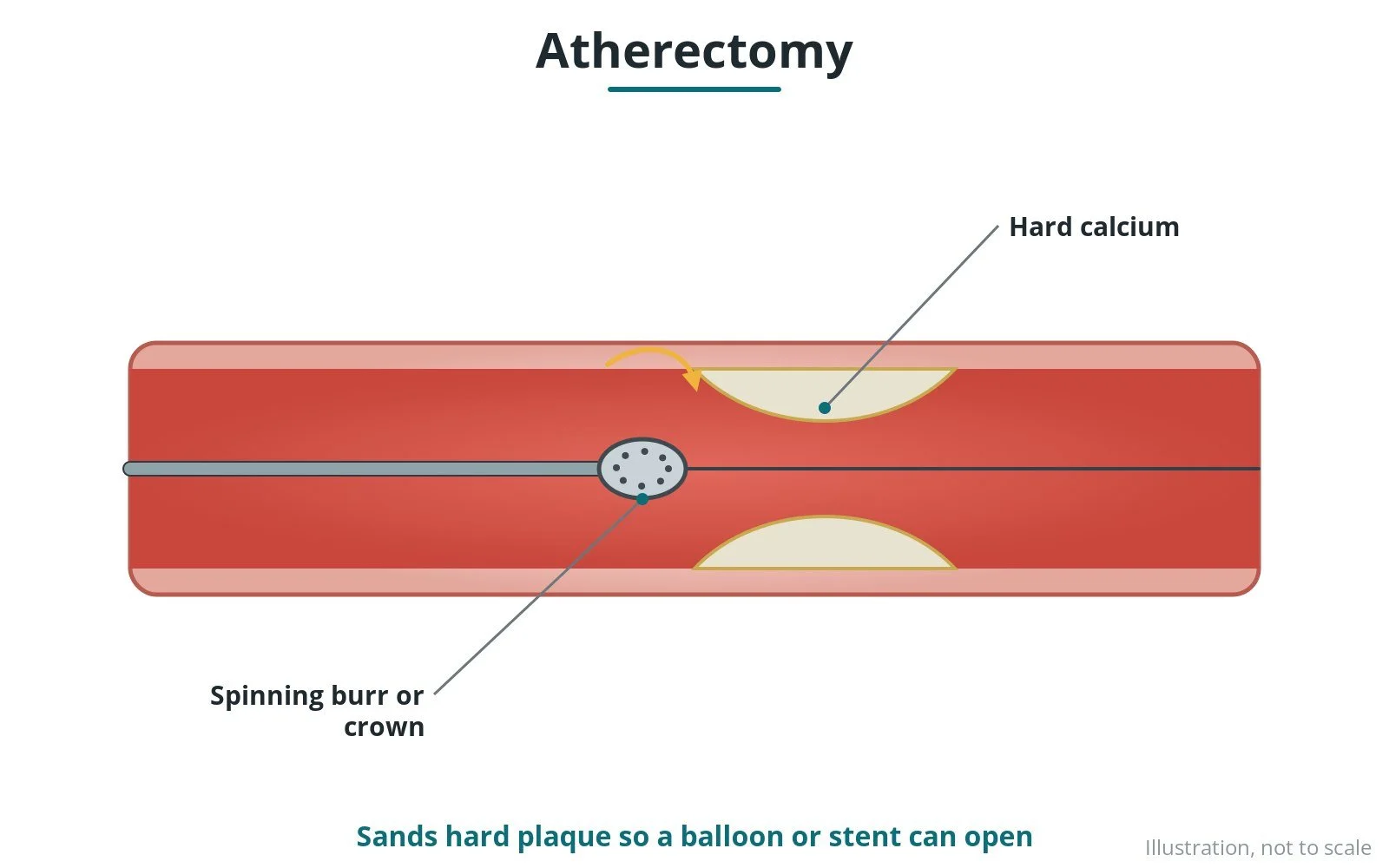
- tough fibrous or calcified narrowings
- narrowings inside an old stent (in-stent restenosis)
- narrowings at the opening of an artery or a branch
The decision is made by your heart team, who will talk through the reasons, the alternatives and the risks with you.
When is it done?
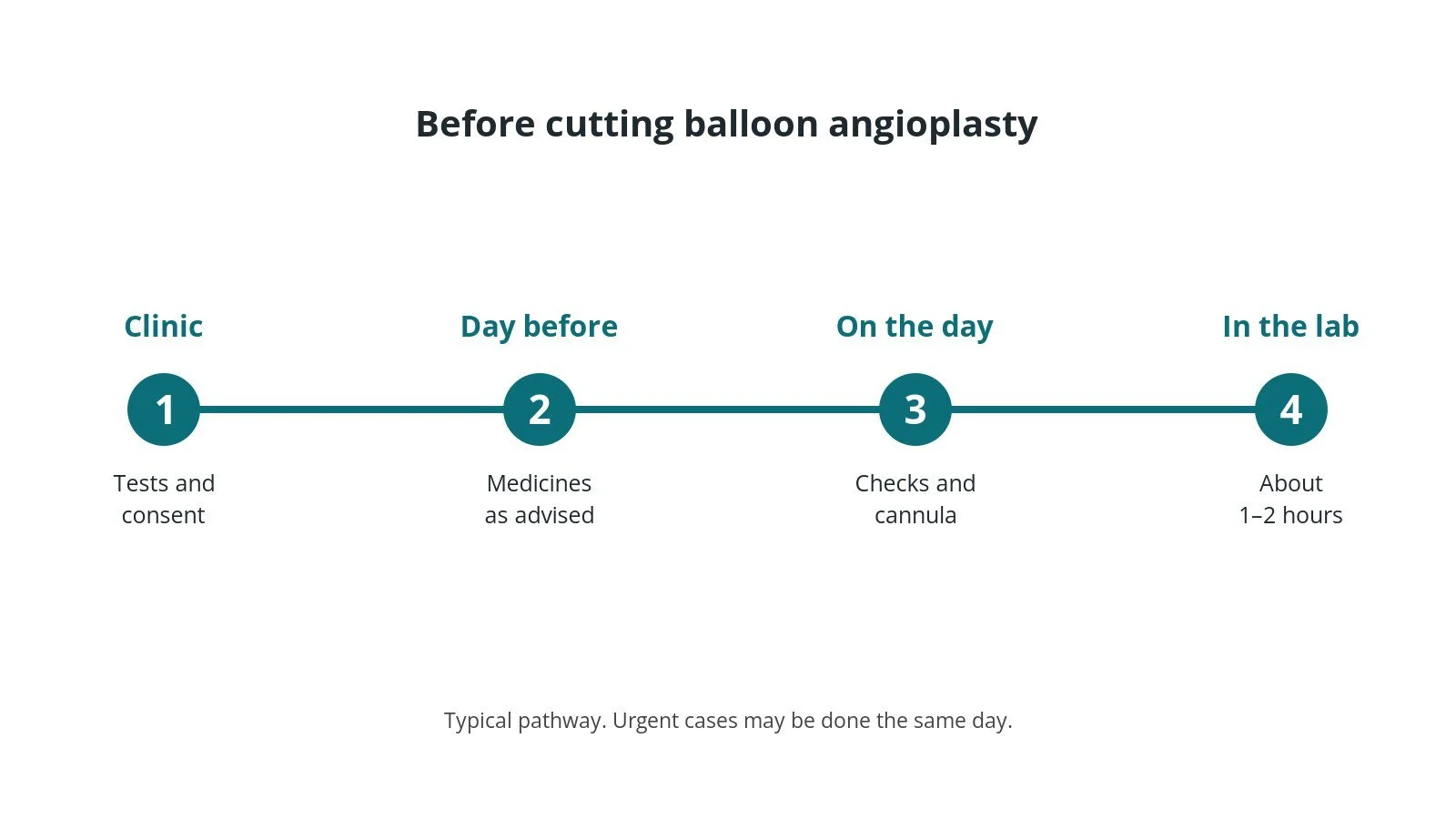
It can be planned in advance or done urgently. Before it, you usually have:
- blood tests, including kidney function and blood count
- an ECG, and often an echo or other scan
- a review of your medicines, especially blood thinners and diabetes medicines, as per centre protocol
- a chance to ask questions and give consent
Step by step
1. Getting ready
You lie on the X-ray table. The wrist (or groin) is numbed with local anaesthetic. ECG, blood pressure and oxygen levels are monitored. You may be given medicines to thin the blood, as per centre protocol.
2. Access
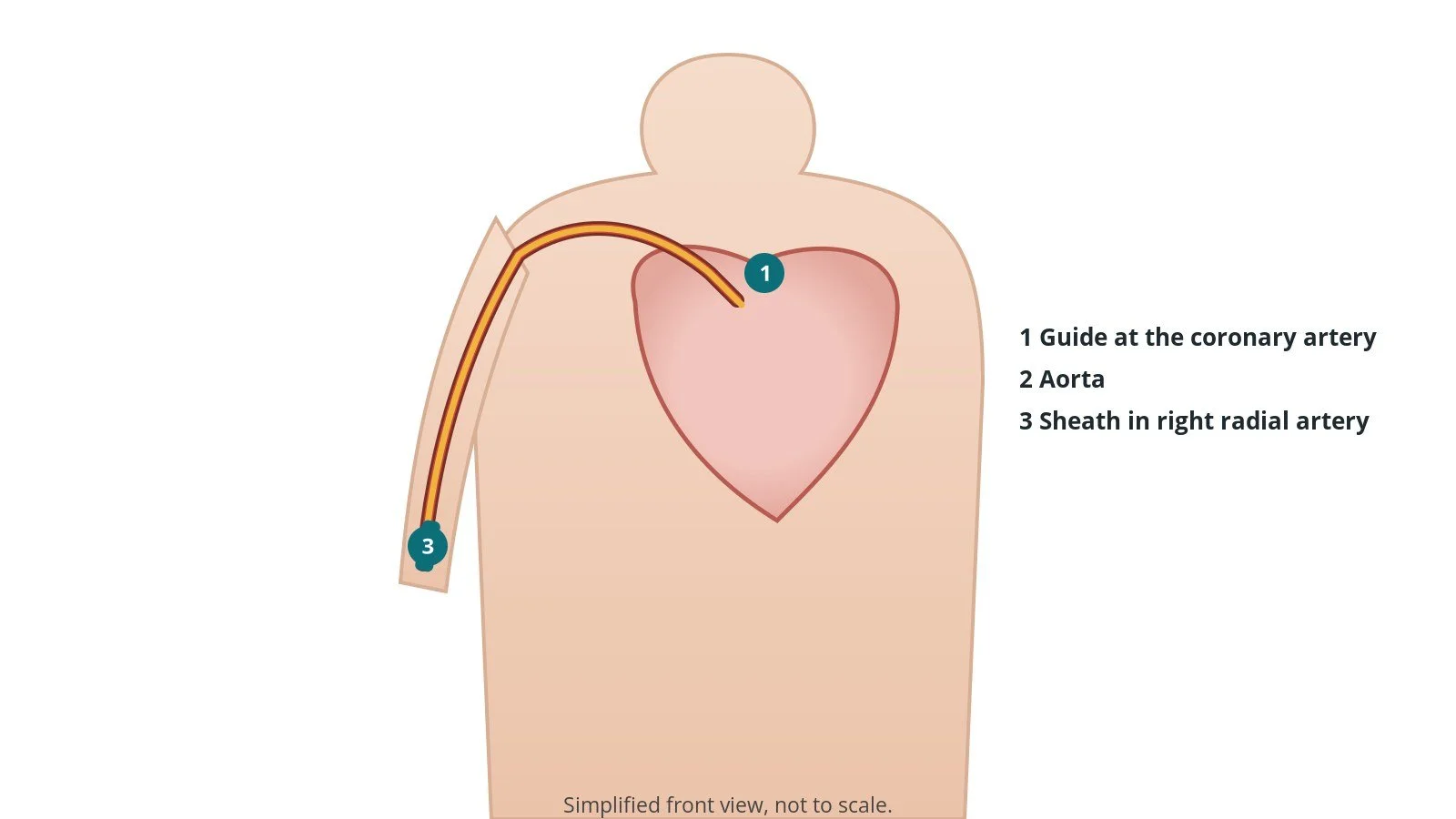
A sheath is placed in the radial artery at the wrist or the femoral artery in the groin, sizes per device and operator. A guide catheter is placed at the opening of the coronary artery and heparin is given, dose as per centre protocol. A thin guidewire is passed across the narrowing.
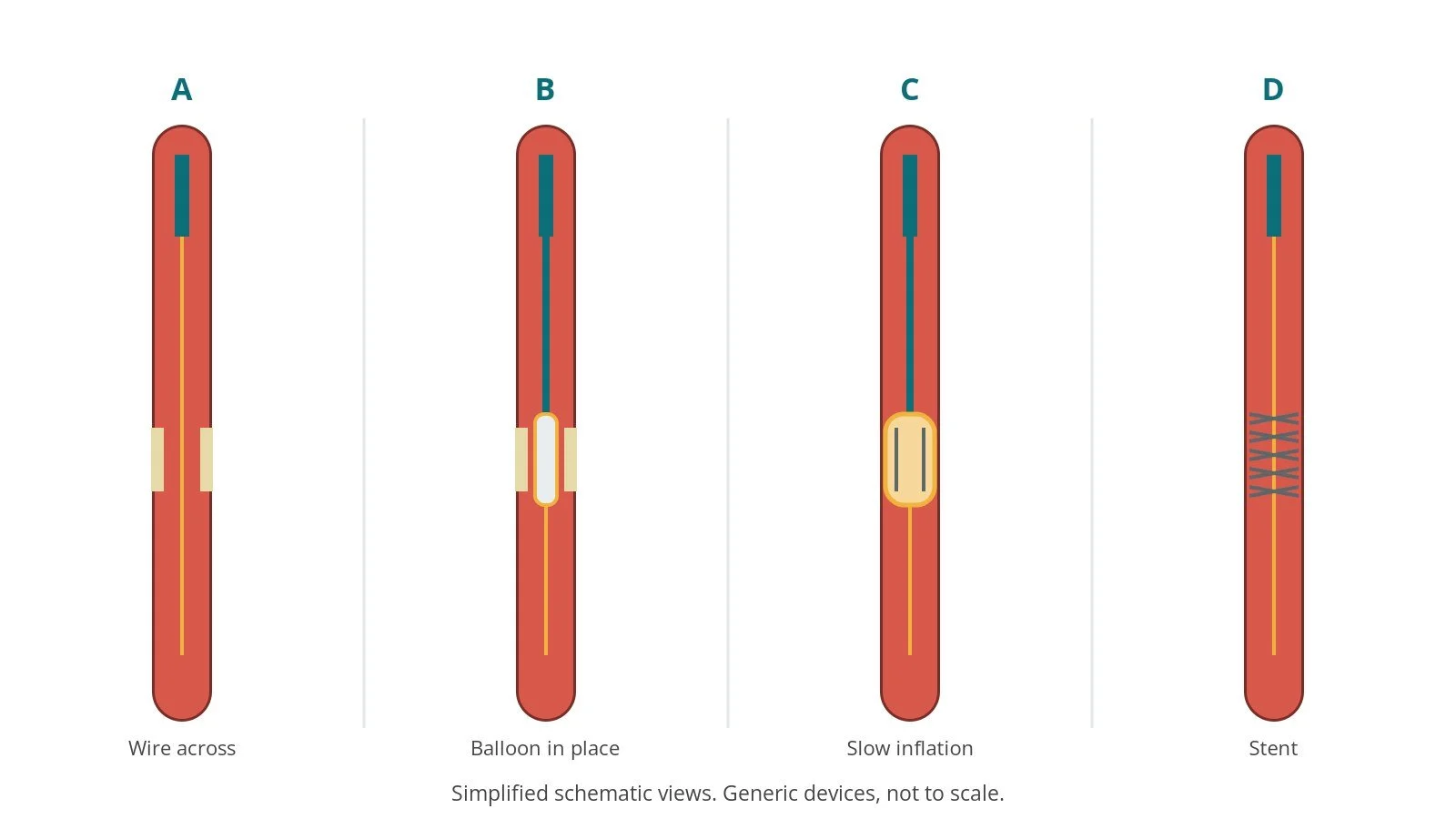
3. Lesion preparation
- A. Wire across. The guidewire crosses the narrowing.
- B. Balloon in place. The cutting or scoring balloon is positioned across the narrowing.
- C. Slow inflation. It is inflated slowly, per device and operator, then deflated.
- D. Stent. The artery is usually stented and post-dilated.
You may feel chest discomfort while a balloon or device is in the artery. Tell the team; it usually settles quickly.
4. Finishing
A final angiogram checks the result. The sheath is removed and the wrist closed with a pressure band, or the groin with pressure or a closure device, per device and operator.
Recovery and aftercare
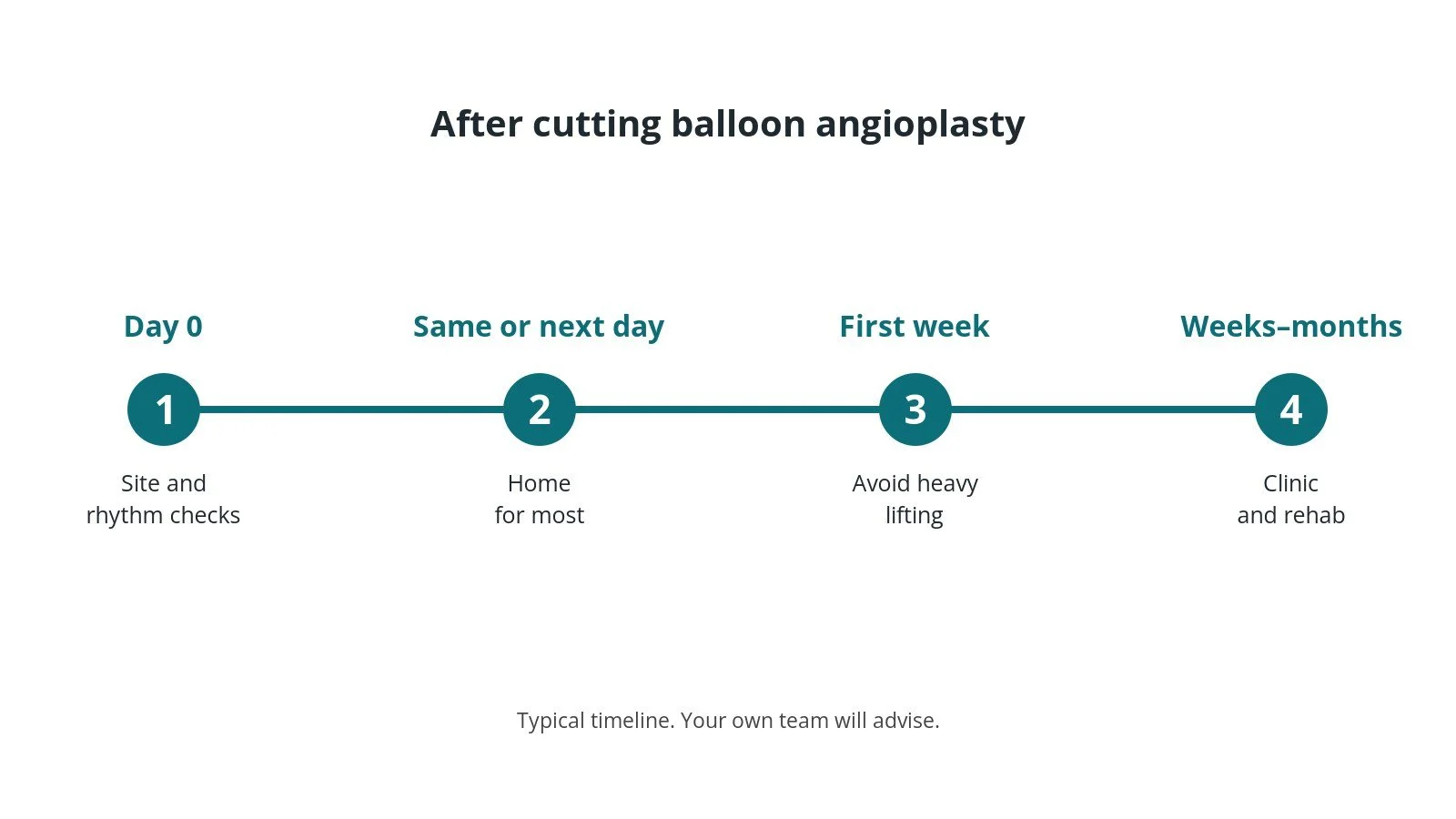
- First hours: checks of the wrist or groin, heart rhythm and blood pressure, as per centre protocol.
- Going home: often the same or next day.
- Medicines: take your blood thinners exactly as prescribed; don't stop them without talking to your heart team.
- Activity: avoid heavy lifting with the treated arm or leg for a few days.
- Driving: the DVLA rules depend on your condition; ask your team.
- Follow-up: clinic review and cardiac rehabilitation where offered.
Call 999 if you have chest pain, breathlessness, fainting, signs of a stroke, or heavy bleeding or swelling at the access site.
Risks and complications
Your team will explain the risks that apply to you. Possible problems include:
- bruising or bleeding at the wrist or groin
- damage to the treated artery, such as a tear (dissection) or, rarely, a perforation
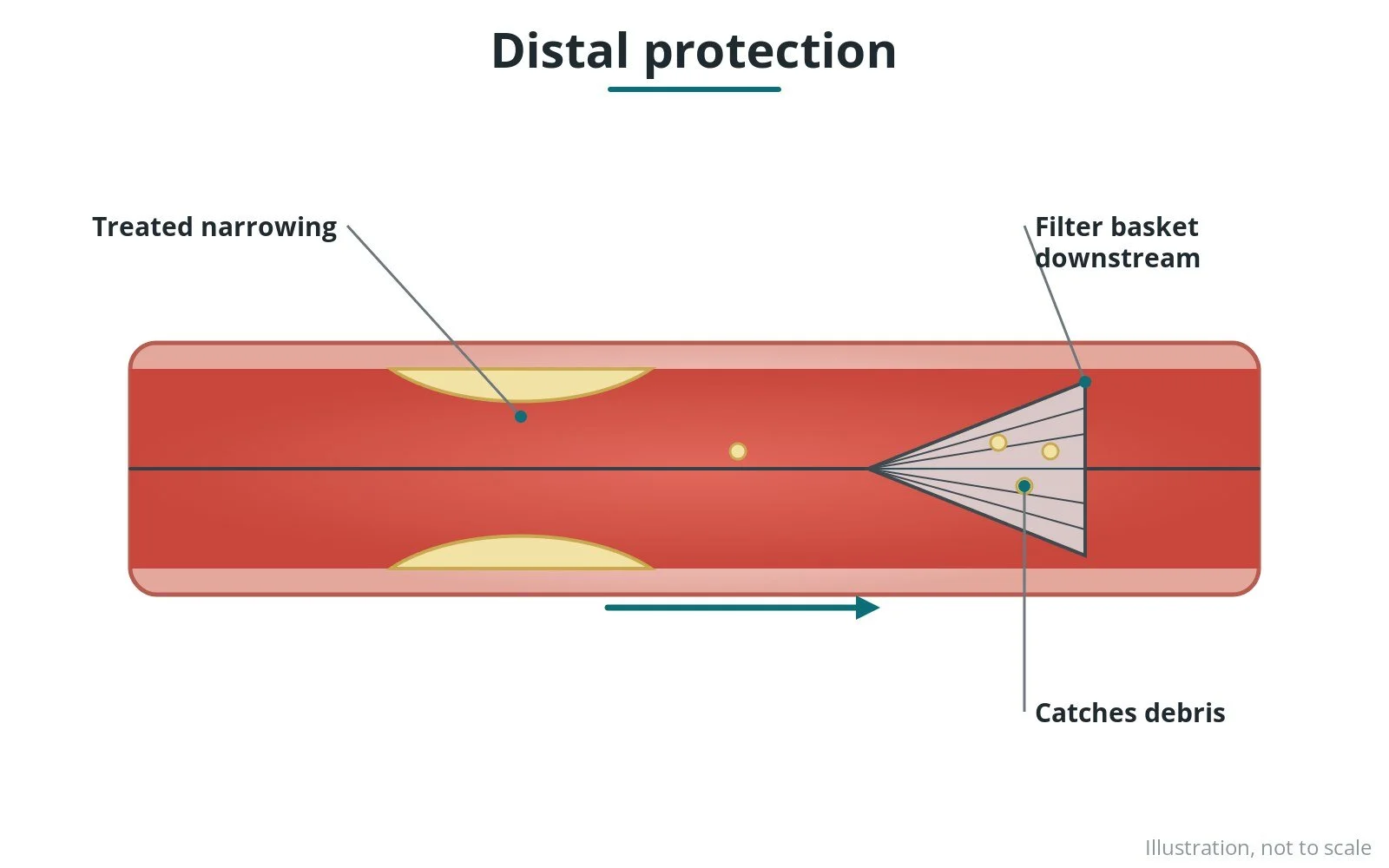
- debris or clot travelling downstream, causing chest pain or a small heart attack
- heart rhythm problems
- kidney effects from contrast dye
- heart attack, emergency surgery, stroke or death (rare)
Cath lab kit list (printable)
Barts example kit list
An example from one UK centre, written generically. Every lab has its own protocol, and sizes and doses vary.
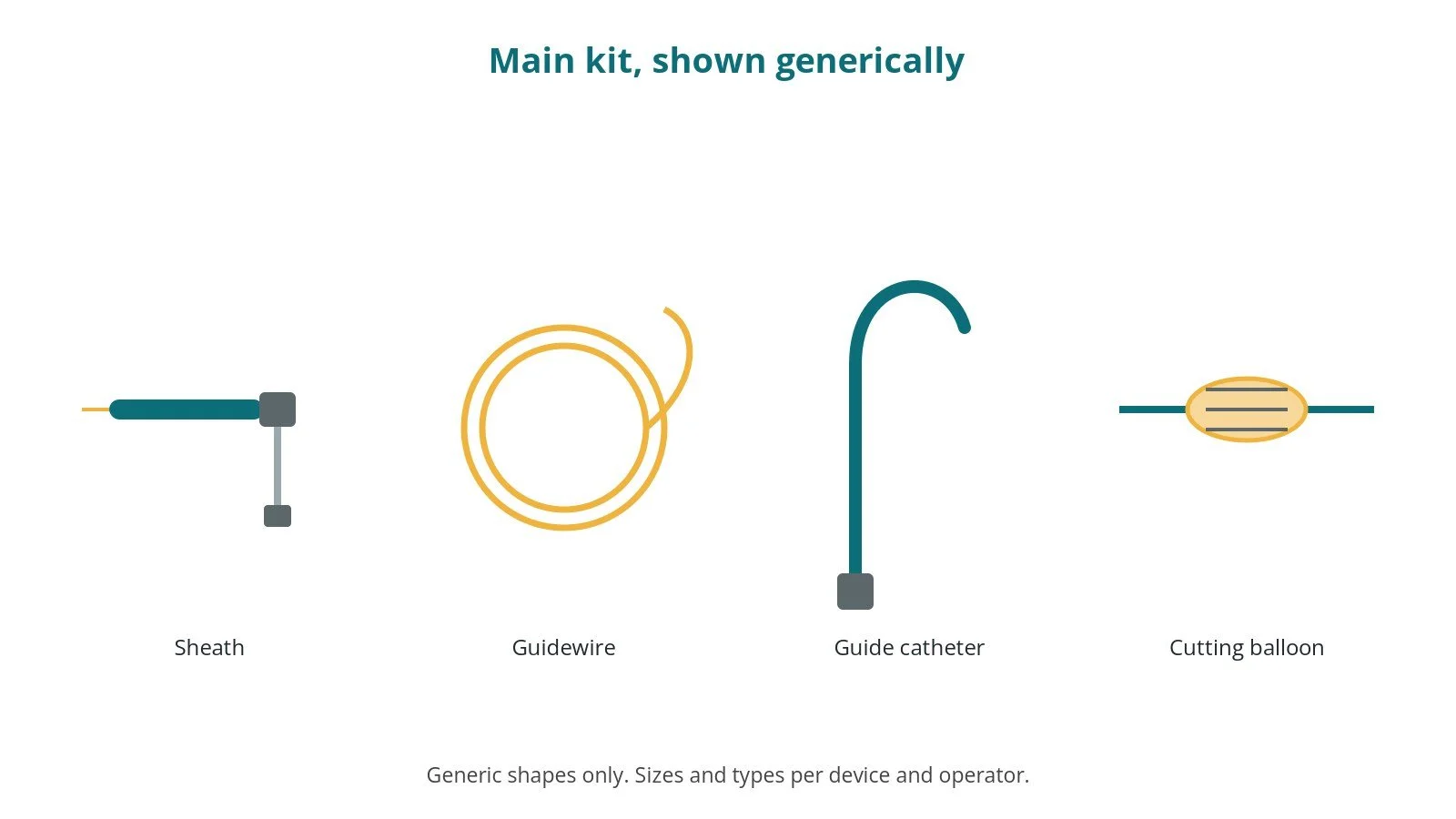
- radial or femoral arterial sheath, size per device and operator
- guide catheter, shape per operator
- coronary guidewire(s), per operator
- PCI kit (Y-connector, inflation device and accessories)
- heparin, as per centre protocol
- cutting or scoring balloon, size per device and operator
- non-compliant and semi-compliant balloons
- stents, sizes per device and operator
Procedural steps (Barts example)
- Access; guide; angiogram
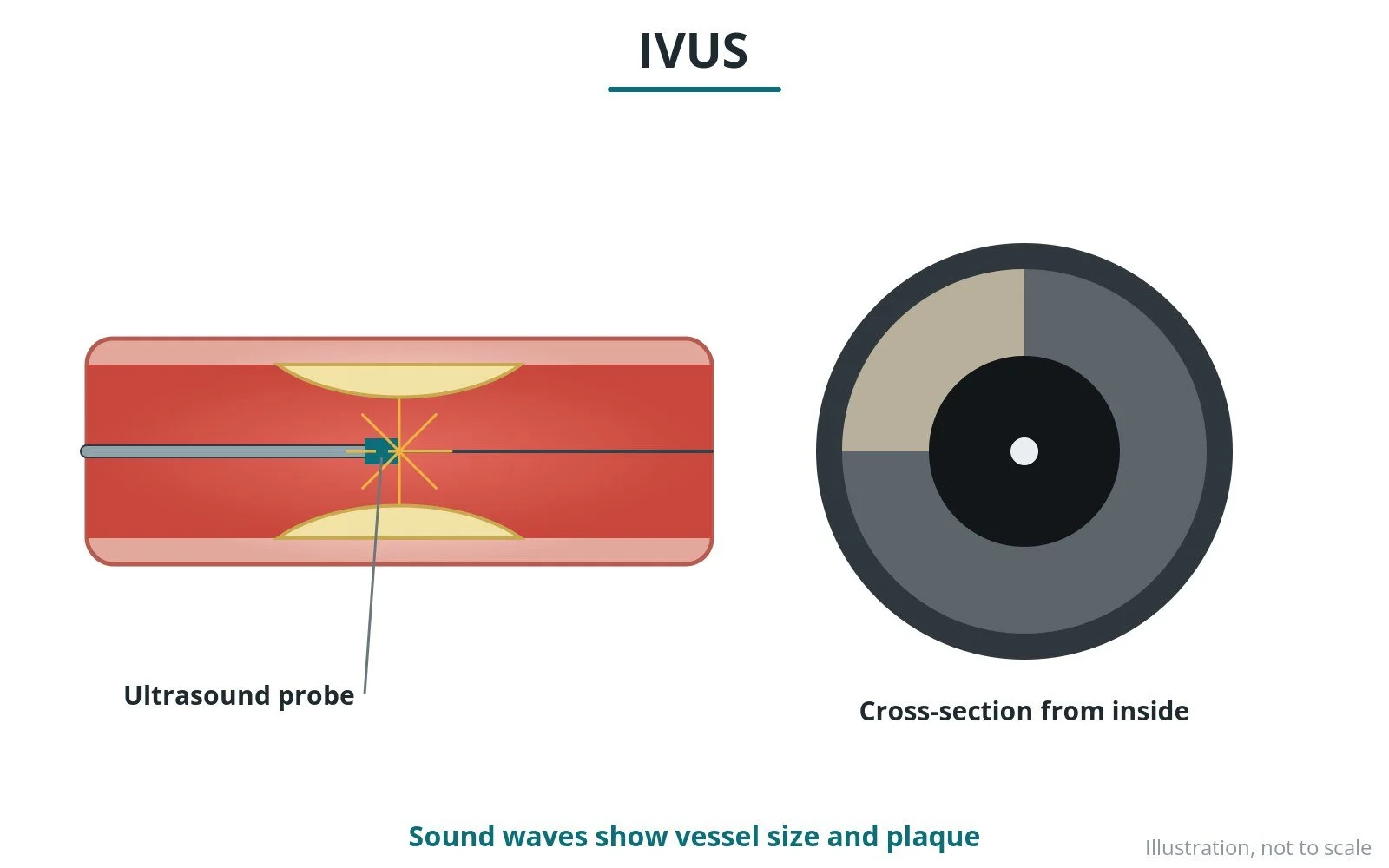
- Wire across; imaging if needed
- Cutting or scoring balloon; slow inflation and deflation
- Stent; post-dilatation
- Final angiogram
First time in the cath lab?
💡 First-time tip
- Slow in, slow out. These balloons are inflated and deflated slowly.
- Never force. They are stiffer; tell the operator if the balloon catches.
- Note the pressure. Record inflation pressures.
- Check for tears. Watch the next angiogram closely.
FAQ
Are the blades left behind?
No. They are fixed to the balloon and removed with it.
Will I still get a stent?
Usually, yes.
Is it different for me?
The experience is like a standard PCI.
Related Cath Lab 101 guides
- PCI (coronary angioplasty and stents)
- Coronary angiogram
- Chronic total occlusion (CTO PCI)
- Cath Lab Abbreviations A–Z
Sources
All checked on 10 October 2026. Each page's own date is shown where it gives one.
- Knuuti J, et al. 2019 ESC Guidelines for the diagnosis and management of chronic coronary syndromes. Eur Heart J 2020;41(3):407–477. PubMed 31504439
- Byrne RA, et al. 2023 ESC Guidelines for the management of acute coronary syndromes. Eur Heart J 2023;44(38):3720–3826. PubMed 37622654
- StatPearls (NCBI Bookshelf), search: cutting balloon angioplasty. ncbi.nlm.nih.gov/books
Disclaimer
Education only. This page is for general education for healthcare students, cath lab staff and curious readers. It isn't medical advice and doesn't replace advice from your own doctor, heart team or local unit protocols. Equipment and medicines are described generically. No product or manufacturer is recommended. If you think someone is having a heart emergency, call 999.
Disclosure: I work for a company that makes a device used in this procedure. This page is independent education, isn't sponsored or reviewed by any company, and doesn't recommend any product.
All diagrams on this page are original illustrations created for rodnieoro.com.