Pacemaker and ICD generator change and upgrade: a Cath Lab 101 guide
Reviewed by Rodnie Oro, cath lab charge nurse · Last reviewed: November 2026 · Education only, not medical advice
Pacemaker and ICD generator change and upgrade in one minute
What it is: A generator change replaces the pacemaker or ICD box when its battery reaches the elective replacement point. The old box is removed from the pocket, the leads are tested and, if they work well, connected to a new box. An upgrade adds one or more leads, for example to change a pacemaker to CRT or to an ICD.
Who it is for: Anyone whose device battery is nearing the end, as shown at device clinic or remote monitoring, and people whose needs have changed and need a different system.
Main risks: Infection (higher than for a first implant), bleeding or a bruise, damage to a lead, and problems with pacing during the change in someone who depends on it. Your team will explain your own risk.
Usually: Under local anaesthetic with or without sedation, about 45 minutes to 1 hour for a box change (longer for an upgrade), often home the same day.
On this page: What is pacemaker and ICD generator change and upgrade? · Who is it for? · When is it done? · Step by step · Recovery · Risks · Kit list · First time in the lab? · FAQ
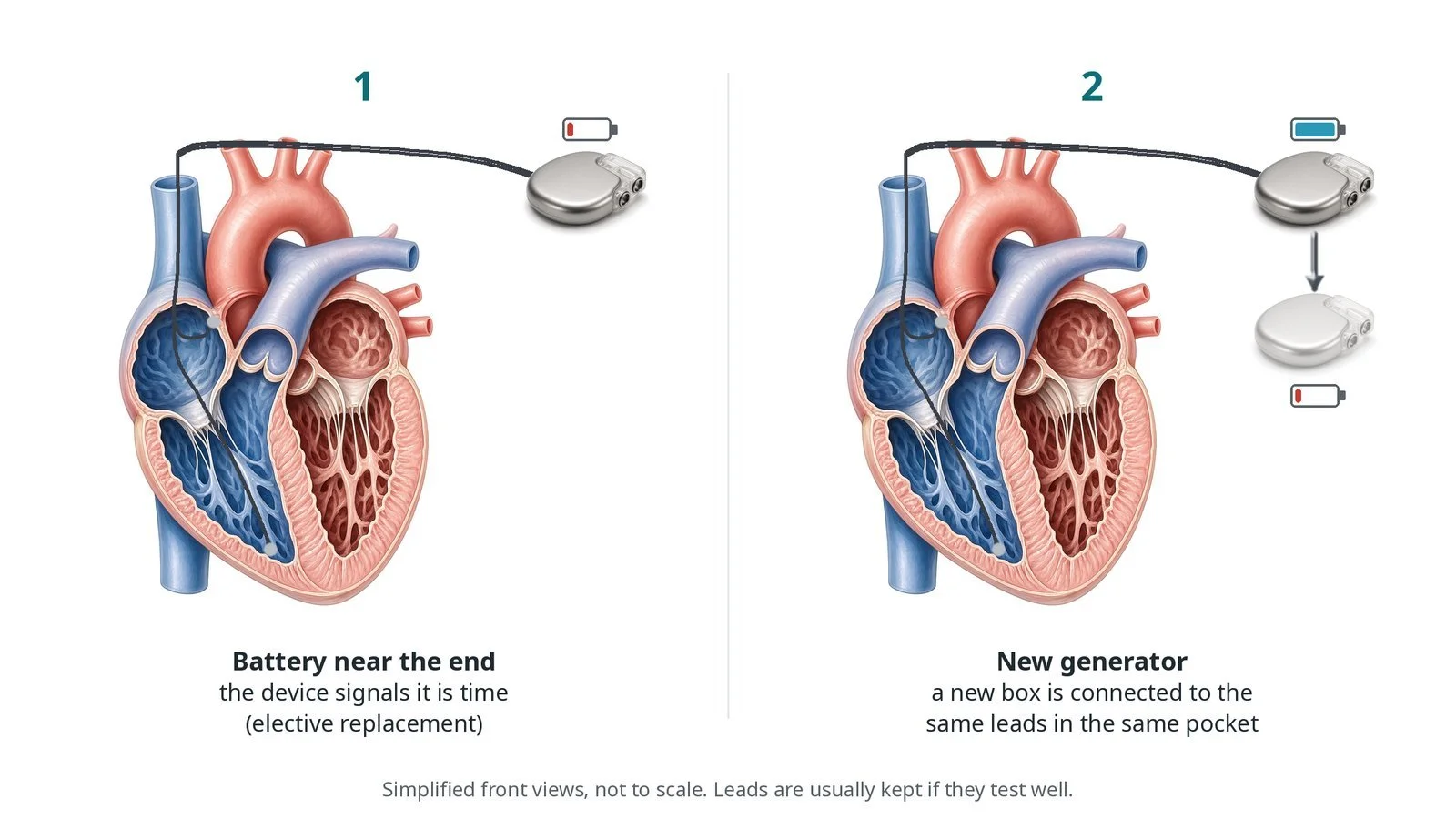
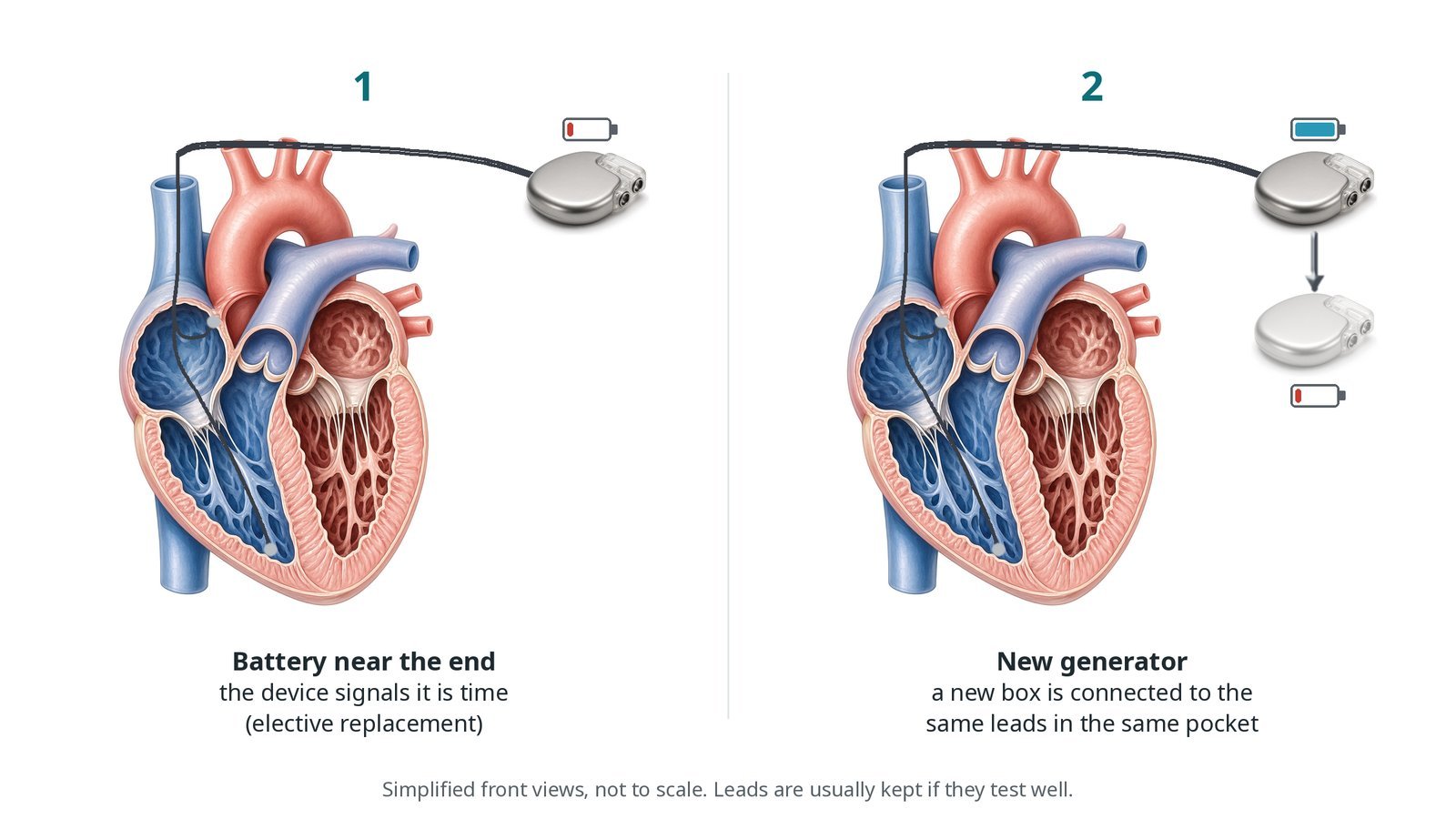
(1) Battery near the end: the device signals it is time for elective replacement. (2) New generator: a new box is connected to the same leads in the same pocket.
What is pacemaker and ICD generator change and upgrade?
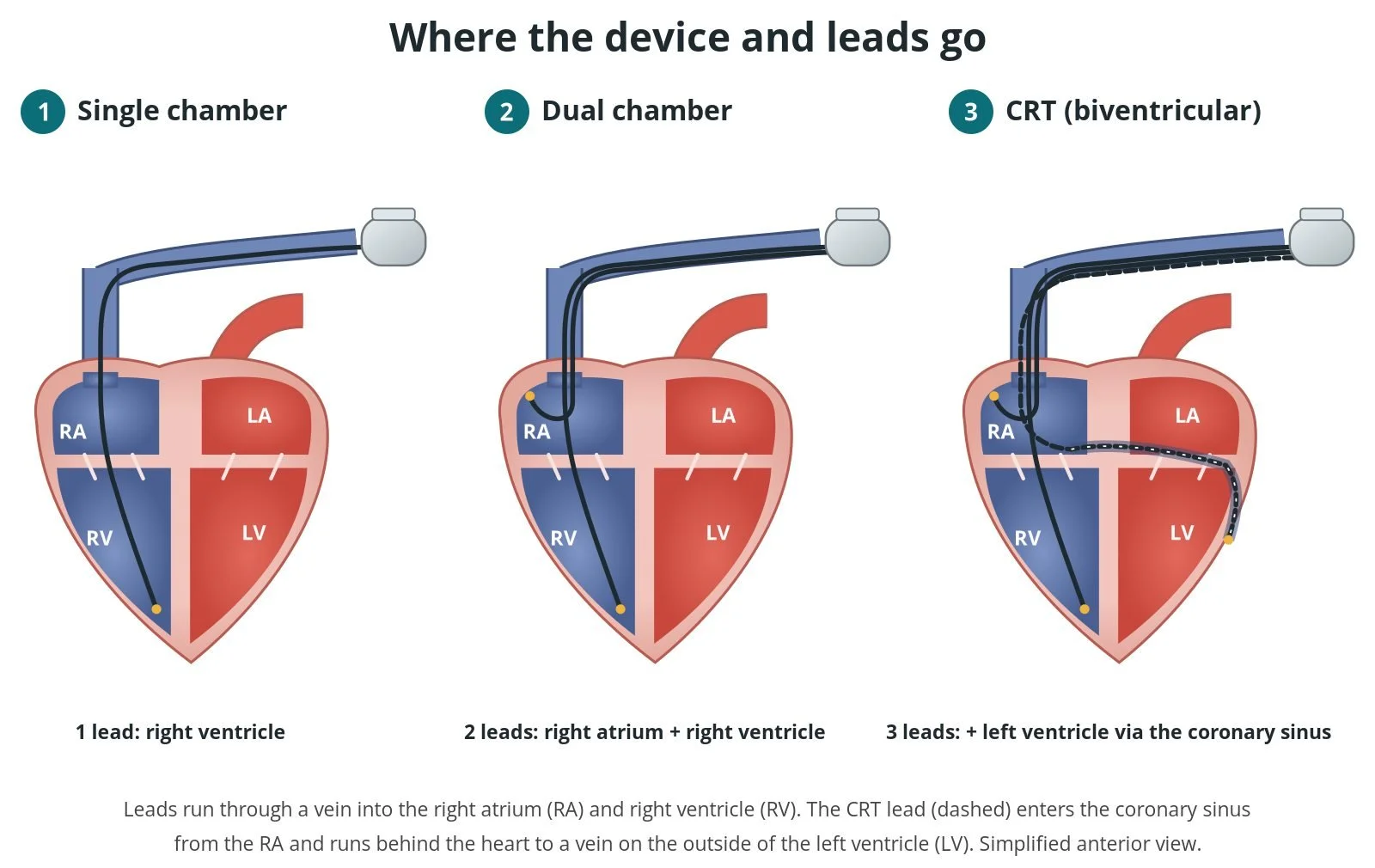
The generator holds the battery and the electronics. It sits in a pocket under the skin, or under the muscle, usually below the left collarbone. The leads run from its header through a vein into the heart. Over the years, scar tissue forms around the box and the leads.
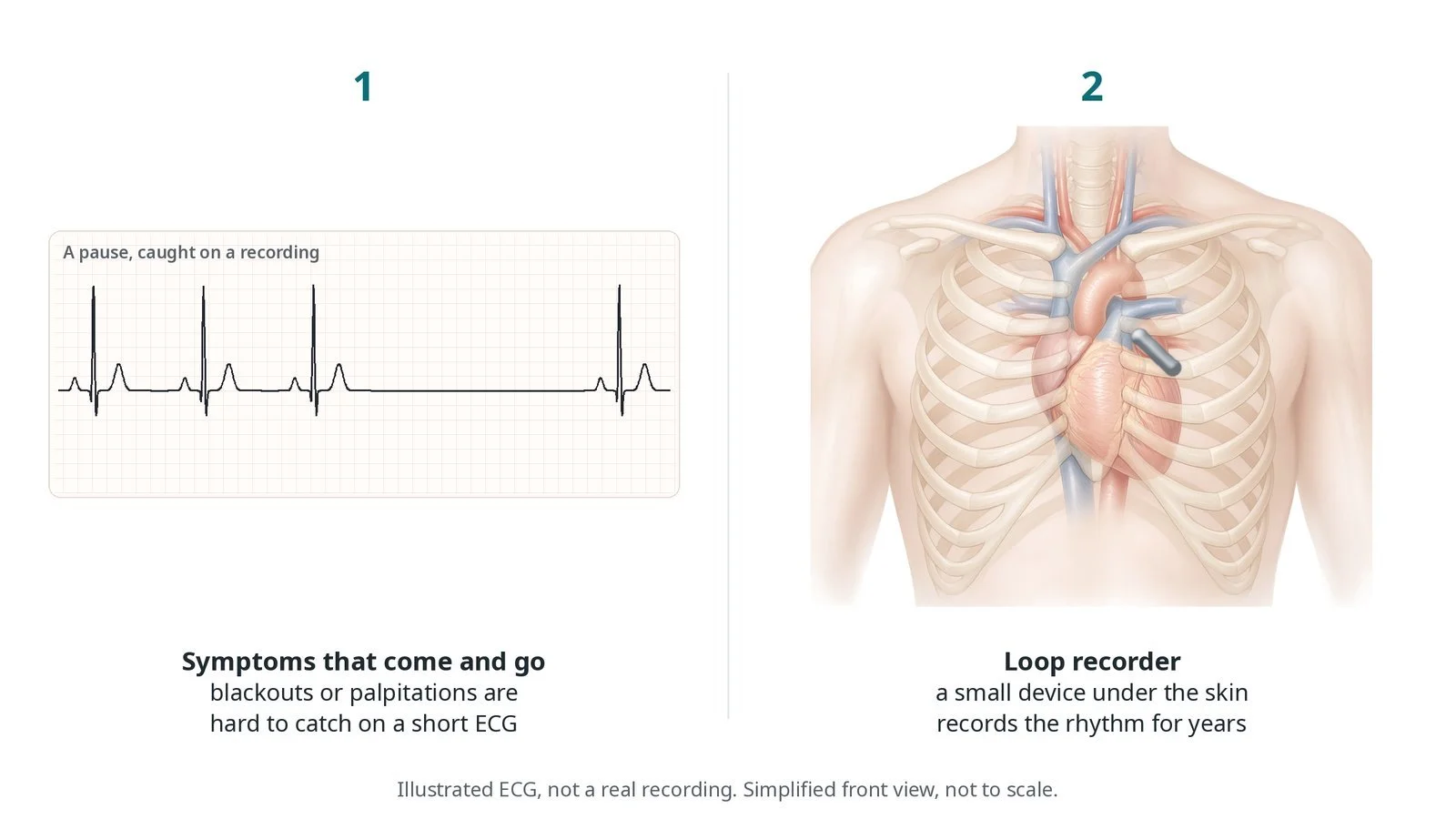
Devices are checked regularly. When the battery reaches the elective replacement indicator, there is still time to plan a change, usually within a few months, before it runs out.
Some people are pacing-dependent: without pacing their heart rate would be dangerously slow or stop. For them, the moment the lead is unplugged from the old box must be short and planned, sometimes with a temporary pacing wire.
An ICD treats fast rhythms with shocks. Diathermy (electrical cutting and sealing) can be mistaken for a dangerous rhythm, so ICD therapies are switched off during the procedure, with external pads on, and switched back on at the end.
New to the acronyms? See the Cath Lab Abbreviations A–Z.
Who is it for?
People whose pacemaker, ICD or CRT battery has reached the elective replacement point, and people who need an upgrade, for example:
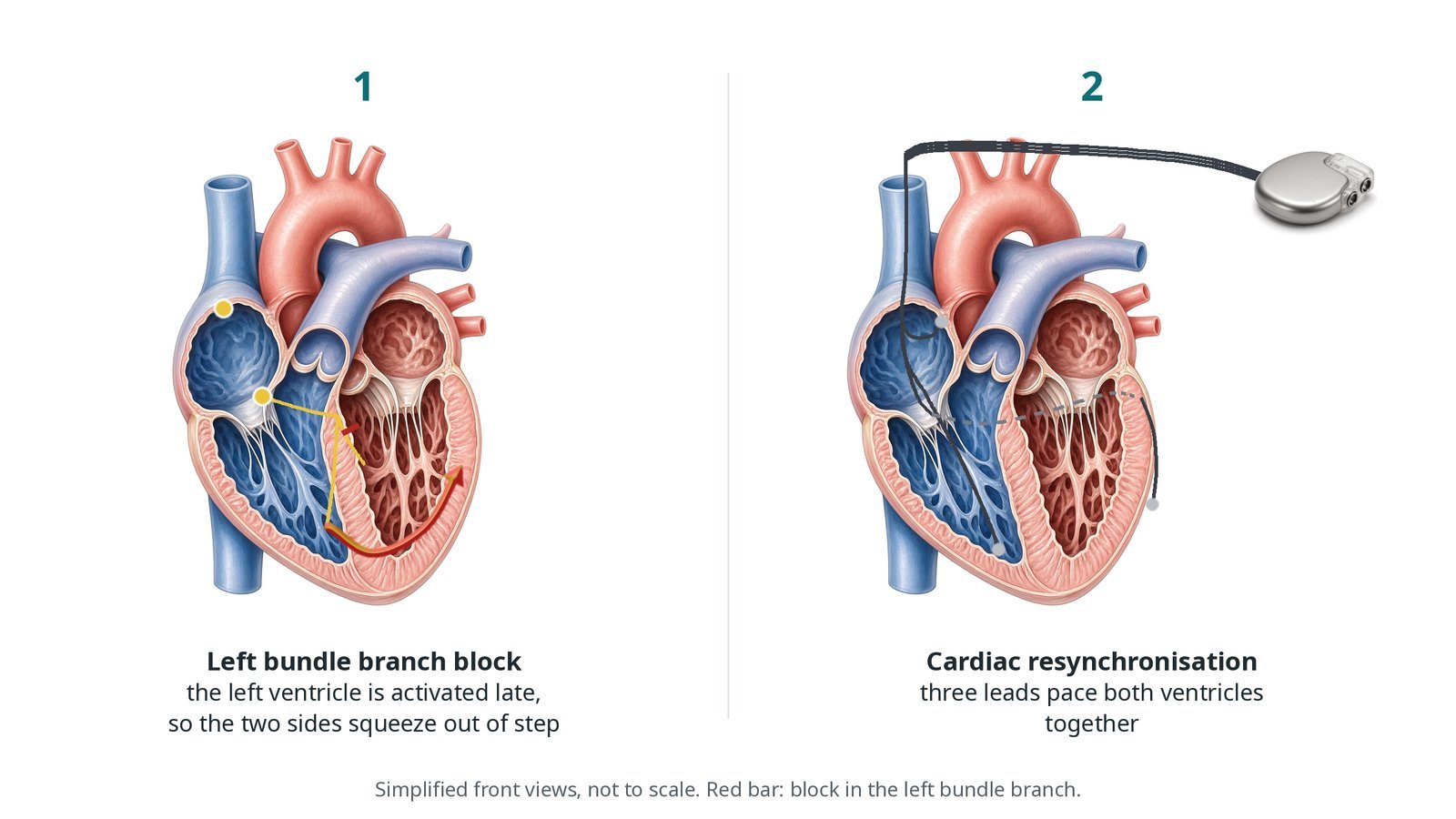
from a pacemaker to CRT because the heart has weakened with a lot of pacing
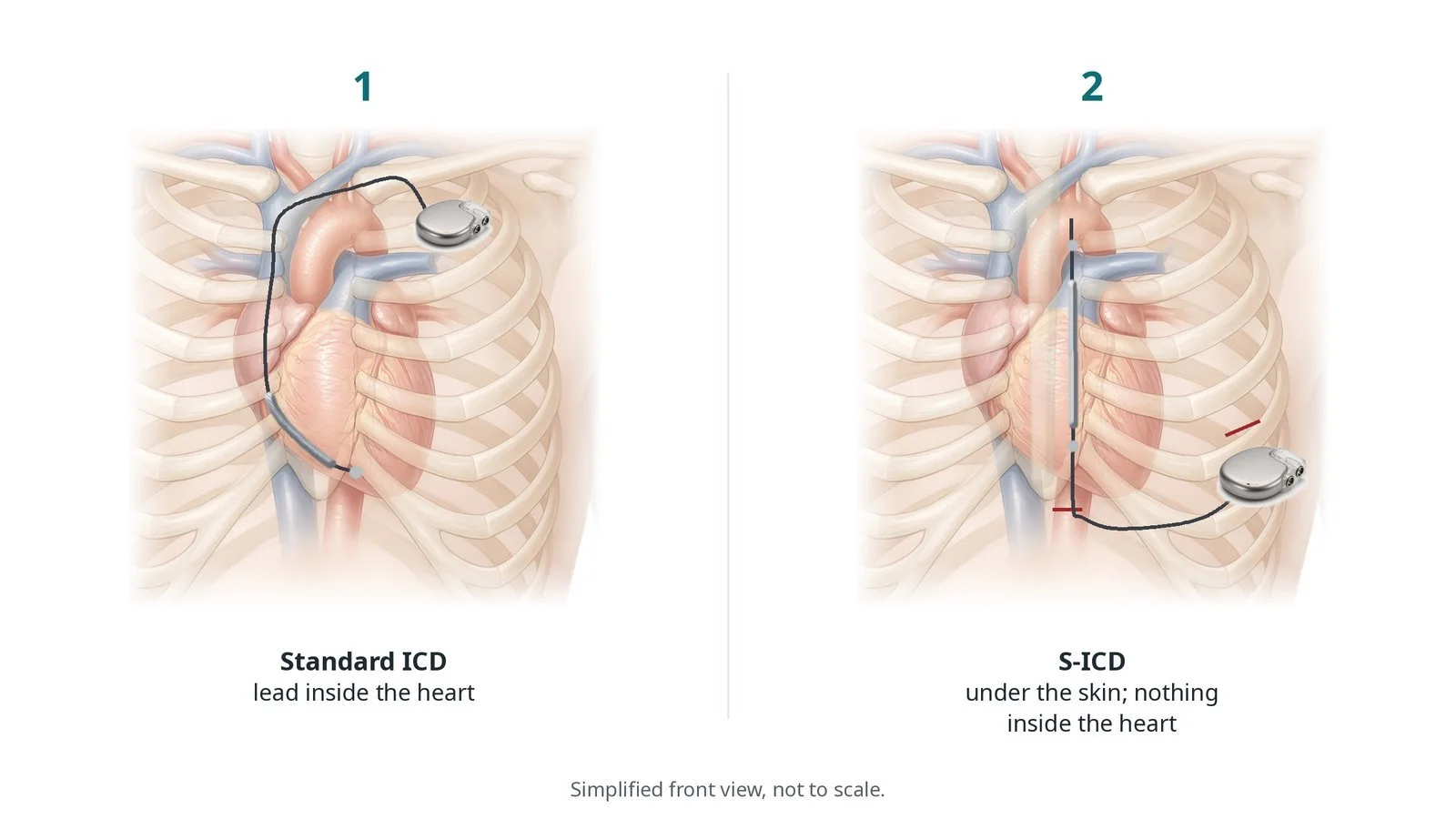
from a pacemaker to an ICD after a dangerous rhythm
or a lead that has failed and needs replacing
Who it may not suit: An active infection must be treated first. If a lead is not working, it may need replacing or extraction, which changes the plan.
The decision is made by your heart team, who will talk through the reasons, the alternatives and the risks with you.
When is it done?
Planned before the battery runs out.
Before it, the team:
checks whether you are pacing-dependent and makes a temporary pacing plan if needed
plans how ICD therapies will be turned off and on
reviews blood thinners, infection risks and skin over the box
for an upgrade, may do a venogram to check the vein is open
gives you a chance to ask questions and give consent
arranges blood tests, including kidney function and a blood count, and an ECG
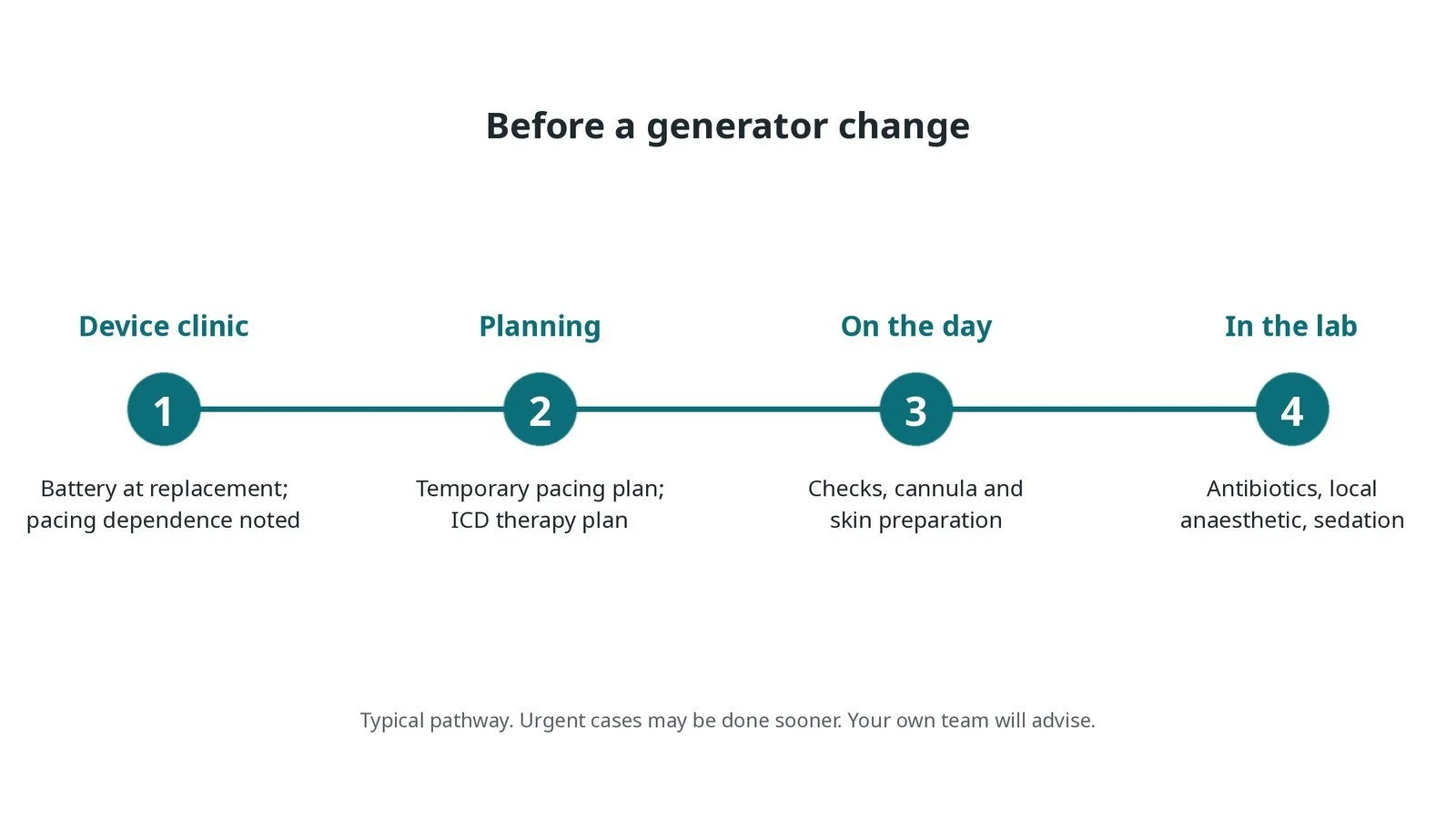
Before a generator change: battery at replacement and pacing dependence noted; temporary pacing and ICD therapy plans; checks and skin preparation; antibiotics, local anaesthetic and sedation.
Step by step
1. Getting ready
You lie on the X-ray table with ECG, blood pressure and oxygen monitoring, and external defibrillator pads on. The device is checked and reprogrammed: ICD therapies are switched off, and a pacing mode that ignores diathermy may be set for pacing-dependent patients. Antibiotics are given as per centre protocol.
Watch: Once ICD therapies are off, the patient has no internal protection. Keep the external pads connected and the defibrillator ready until therapies are back on.
2. Temporary pacing if needed
If you are pacing-dependent and the plan needs it, a temporary pacing wire is placed through a vein, usually in the groin, and tested before the old box is disconnected.
3. Changing the generator
A. Open the pocket. Local anaesthetic is given and the skin is opened, usually along the old scar. The old box is freed from its scar capsule, taking great care not to cut the leads; bipolar diathermy is often preferred.
B. Test the leads. Each lead is unscrewed from the old box and tested with the pacing system analyser for sensing, threshold and impedance.
C. Connect. The leads are cleaned and plugged into the new box, and the screws are tightened with a torque wrench until it clicks. A device check confirms pacing.
D. Close. The pocket is washed out, and an antibiotic envelope may be used as per centre protocol. The wound is closed in layers.
Watch: If pacing is lost while a lead is disconnected in a pacing-dependent patient, tell the operator straight away; start temporary pacing, or reconnect quickly, as planned.
4. Upgrade (if planned)
For an upgrade, a new lead is placed through a vein below the collarbone, such as a coronary sinus lead for CRT or an ICD lead. A larger new box is used and the pocket may be enlarged.
5. Finishing
ICD therapies are switched back on and the device is checked. A temporary wire, if used, is removed. Most people go home the same day.
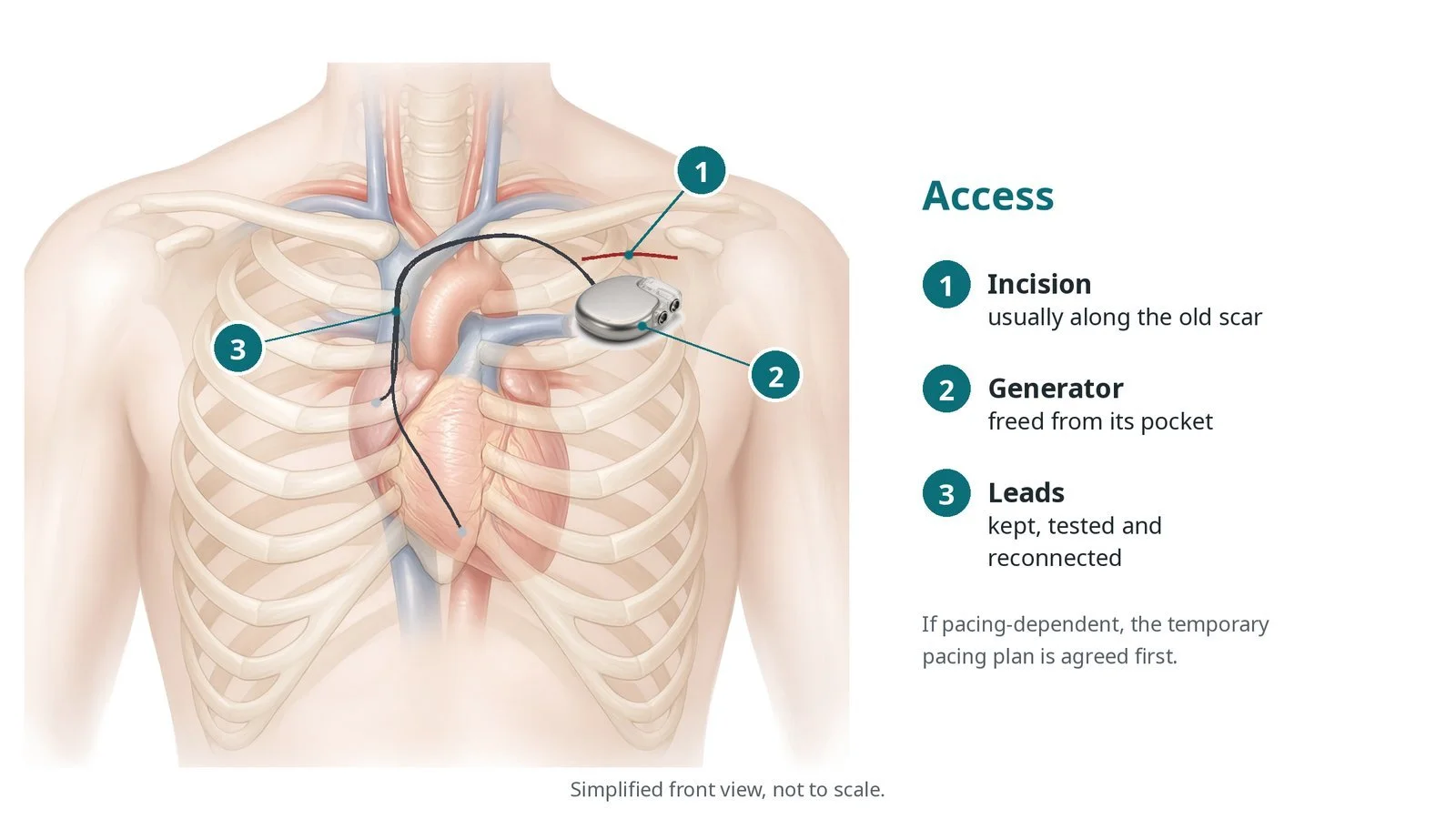
Access: (1) incision, usually along the old scar; (2) generator freed from its pocket; (3) leads kept, tested and reconnected.
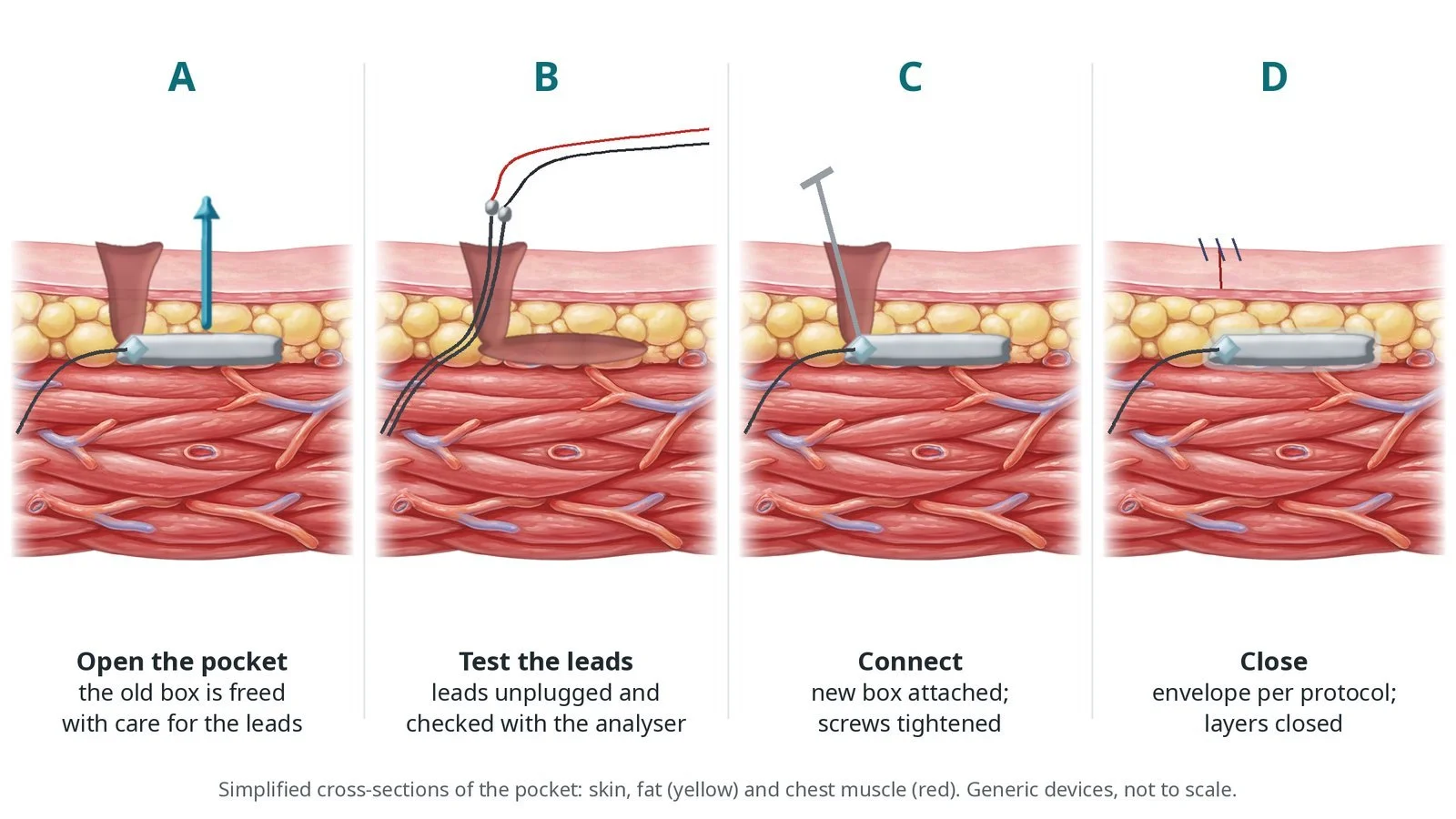
A: open the pocket and free the old box. B: unplug the leads and test them with the analyser. C: attach the new box and tighten the screws. D: antibiotic envelope per protocol, then close.
Recovery and aftercare
First hours: wound and rhythm checks; ICD therapies are confirmed back on before you leave.
Going home: usually the same day after a device check.
Wound: keep it clean and dry until healed; a wound check is usually at about 7 to 10 days.
Arm: after a box change only, arm movement is usually not restricted; after an upgrade with a new lead, keep the arm below shoulder height for about 4 to 6 weeks.
Driving: DVLA rules depend on the device. After a box change it is usually at least a week; longer after some upgrades or a new ICD lead. Your team will advise.
Follow-up: device clinic and remote monitoring continue.
Call 999 if you have chest pain, fainting, sudden breathlessness, or more than one shock from an ICD.
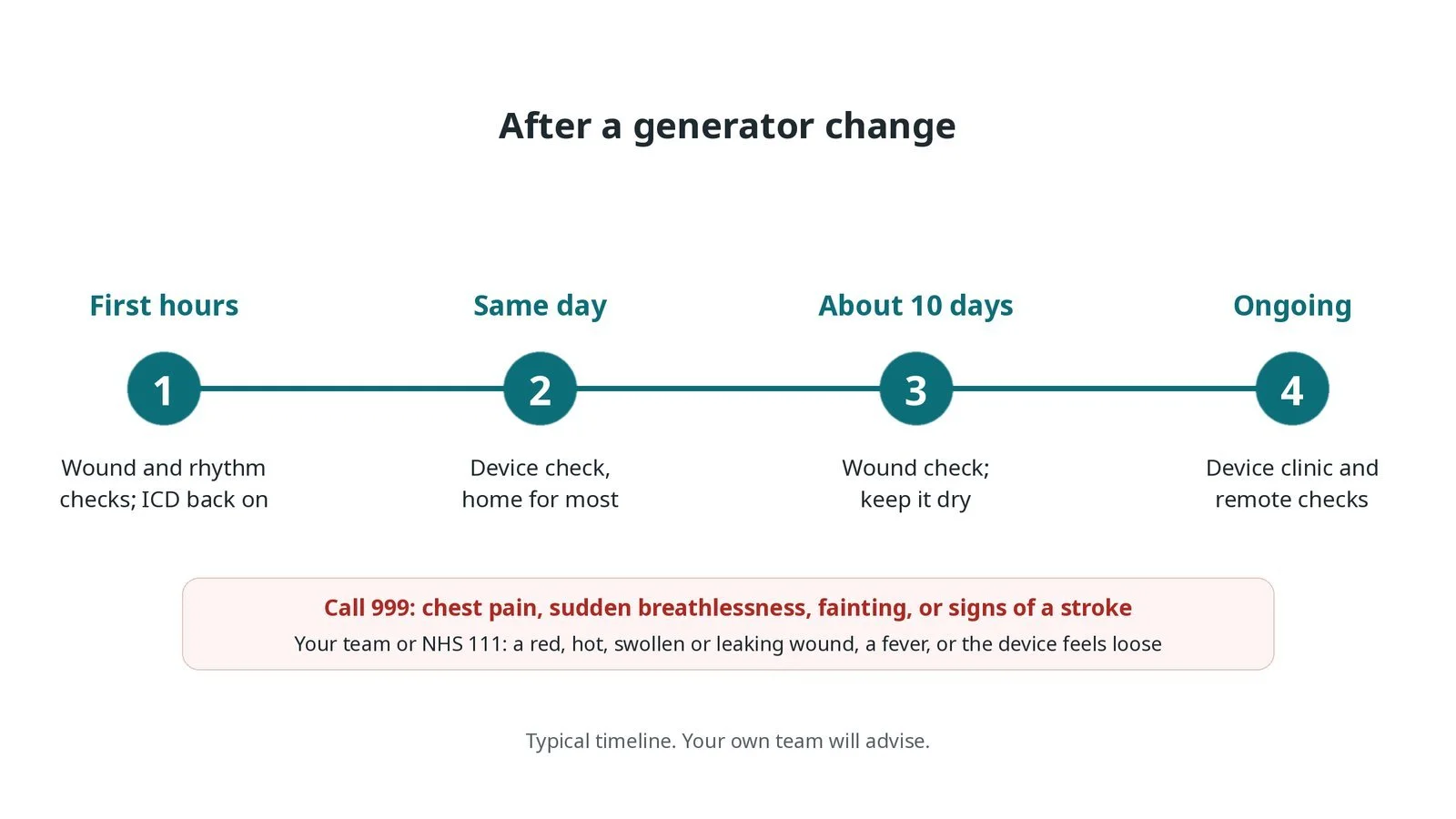
After a generator change: (1) wound and rhythm checks, ICD therapies back on; (2) device check, home the same day for most; (3) wound check at about 10 days; (4) device clinic and remote checks.
Risks and complications
Your team will explain the risks that apply to you. Possible problems include:
Infection of the pocket (uncommon): Higher than after a first implant; may mean removing the whole system.
Bleeding or a bruise (haematoma) in the pocket
Damage to a lead, needing a new lead (uncommon)
Loss of pacing during the change in pacing-dependent patients (uncommon)
The wound opening or the box wearing through the skin (rare)
For upgrades: the risks of a new lead, such as pneumothorax or the lead moving (uncommon)
Cath lab kit list (printable)
Barts example kit list
An example from one UK centre, written generically. Every lab has its own protocol, and sizes and doses vary.
pacemaker implant pack, sterile drapes and skin prep
new generator, model per device team
torque wrench supplied with the generator
pacing system analyser and cables
programmer and a magnet, as per centre protocol
bipolar diathermy
external defibrillator with pads attached
temporary pacing wire, sheath and pacing box, if pacing-dependent
antibiotic envelope, if used, as per centre protocol
extra leads and sheaths for an upgrade
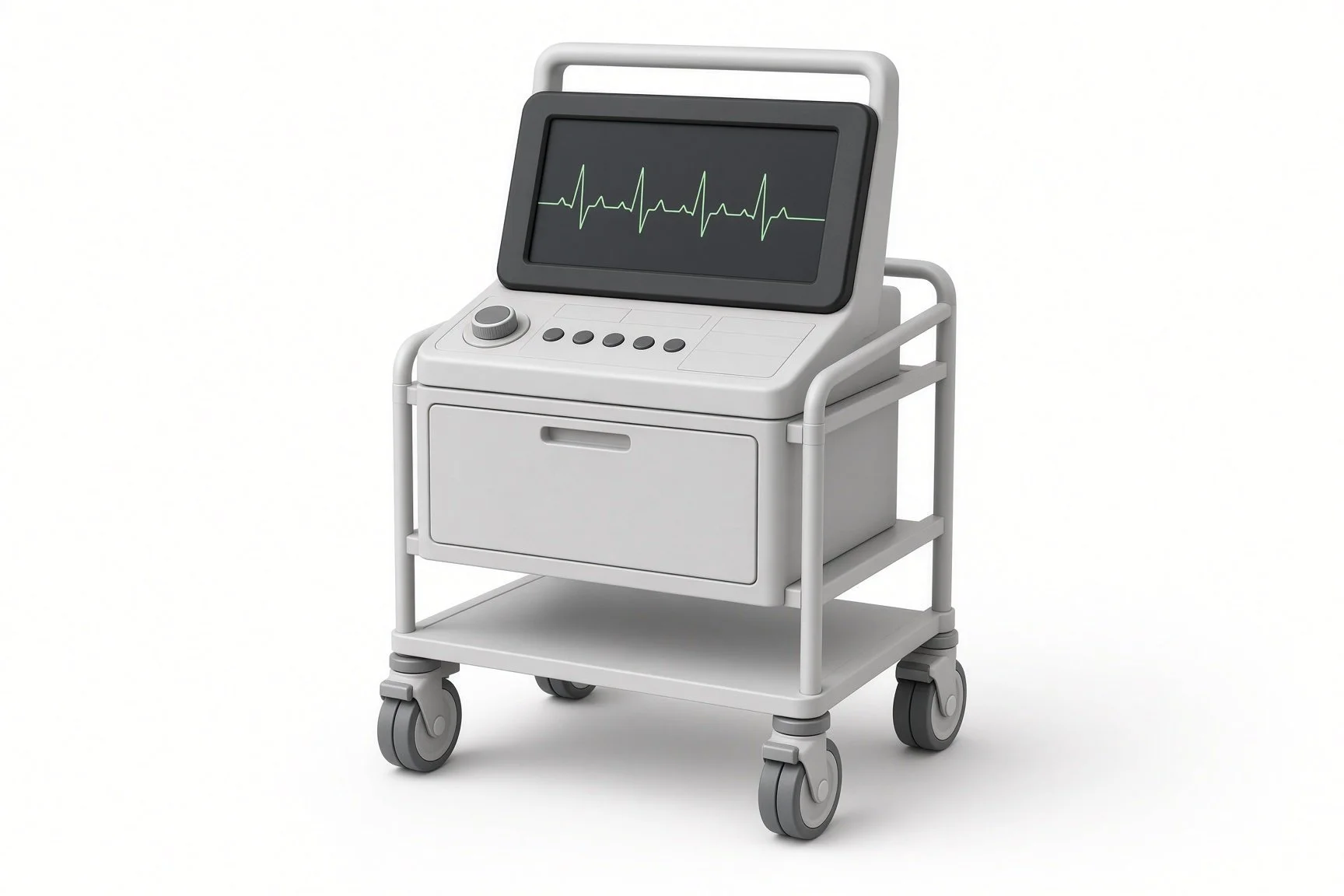
Programmer and magnet.
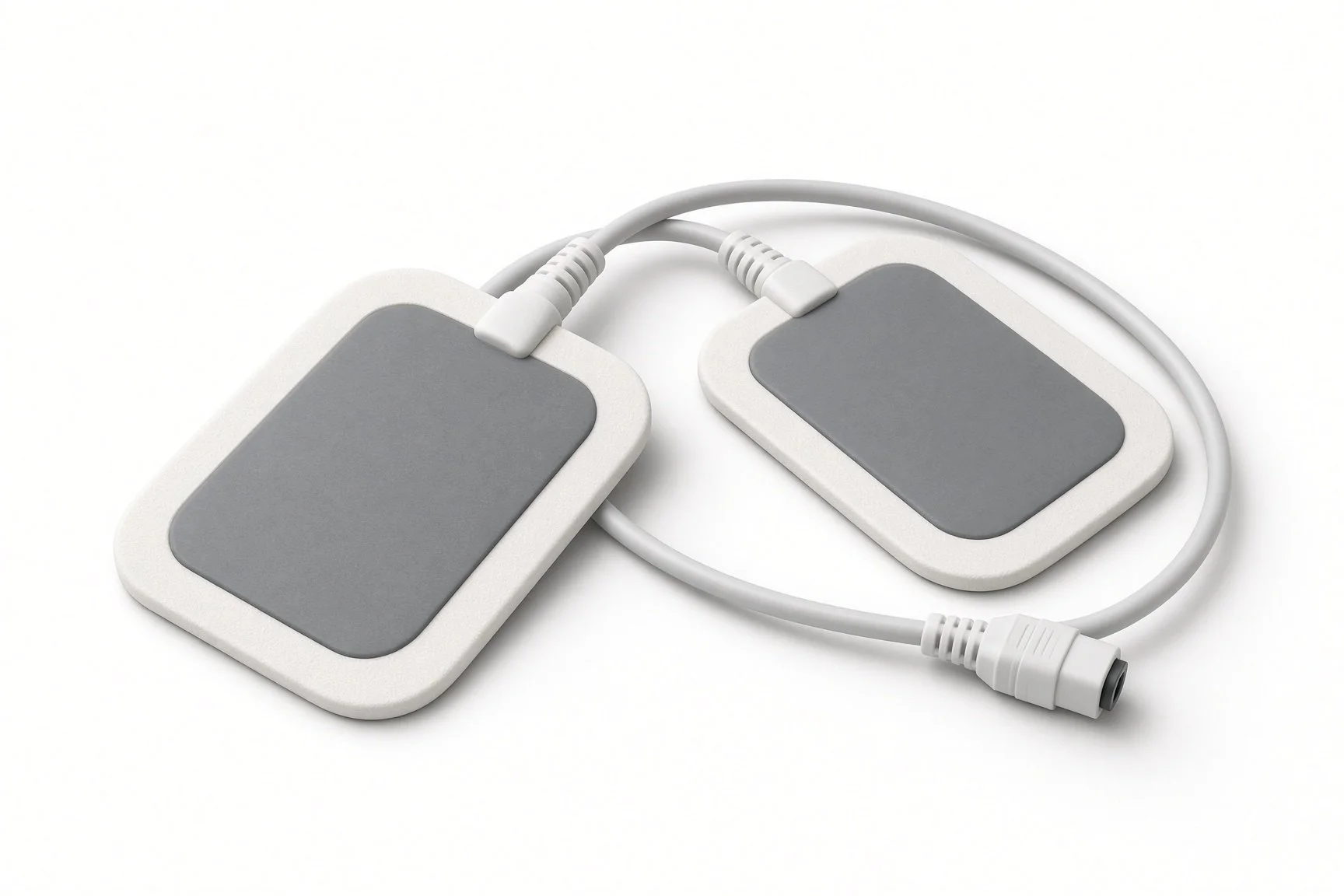
Defibrillator pads.
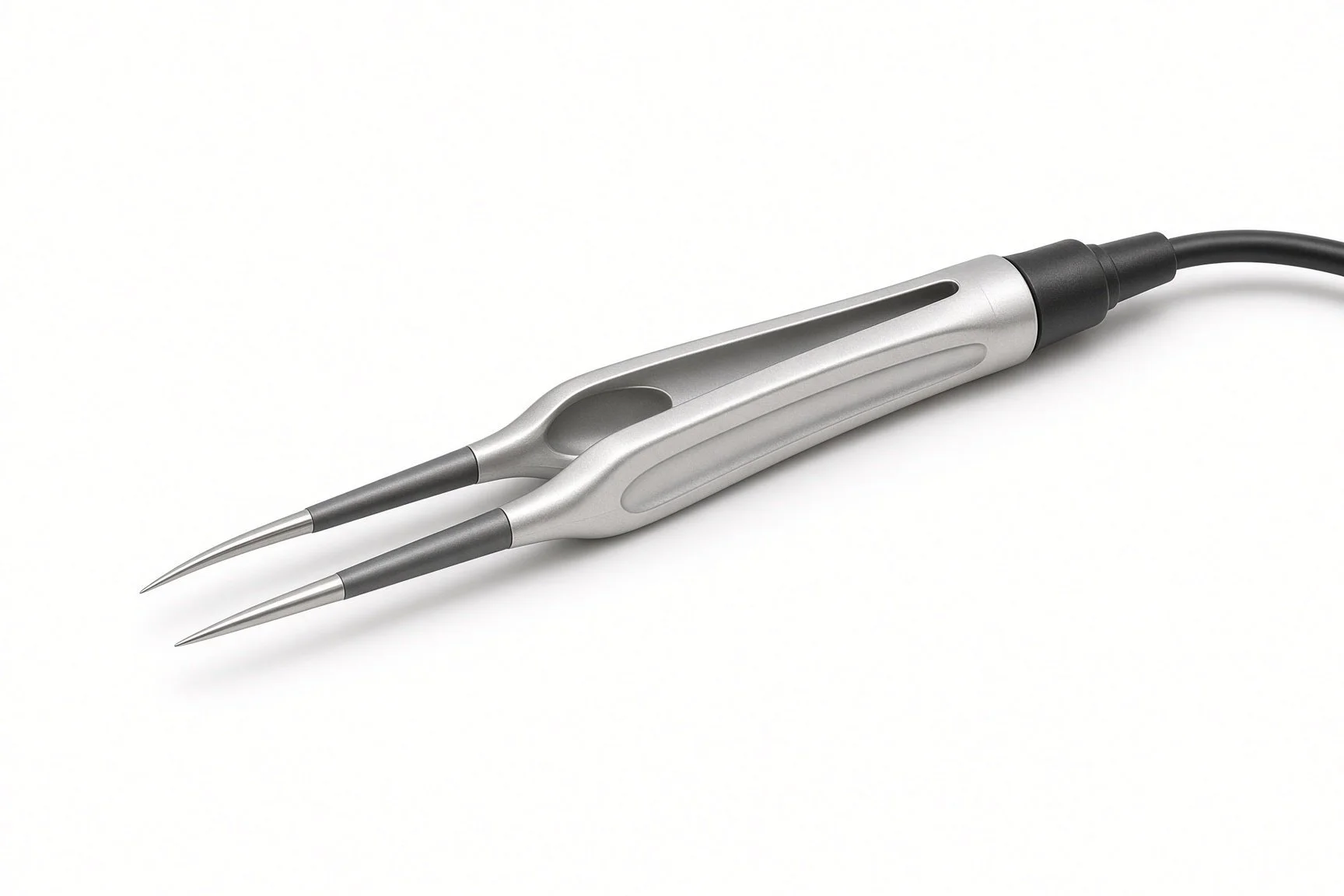
Bipolar diathermy.

Antibiotic envelope.
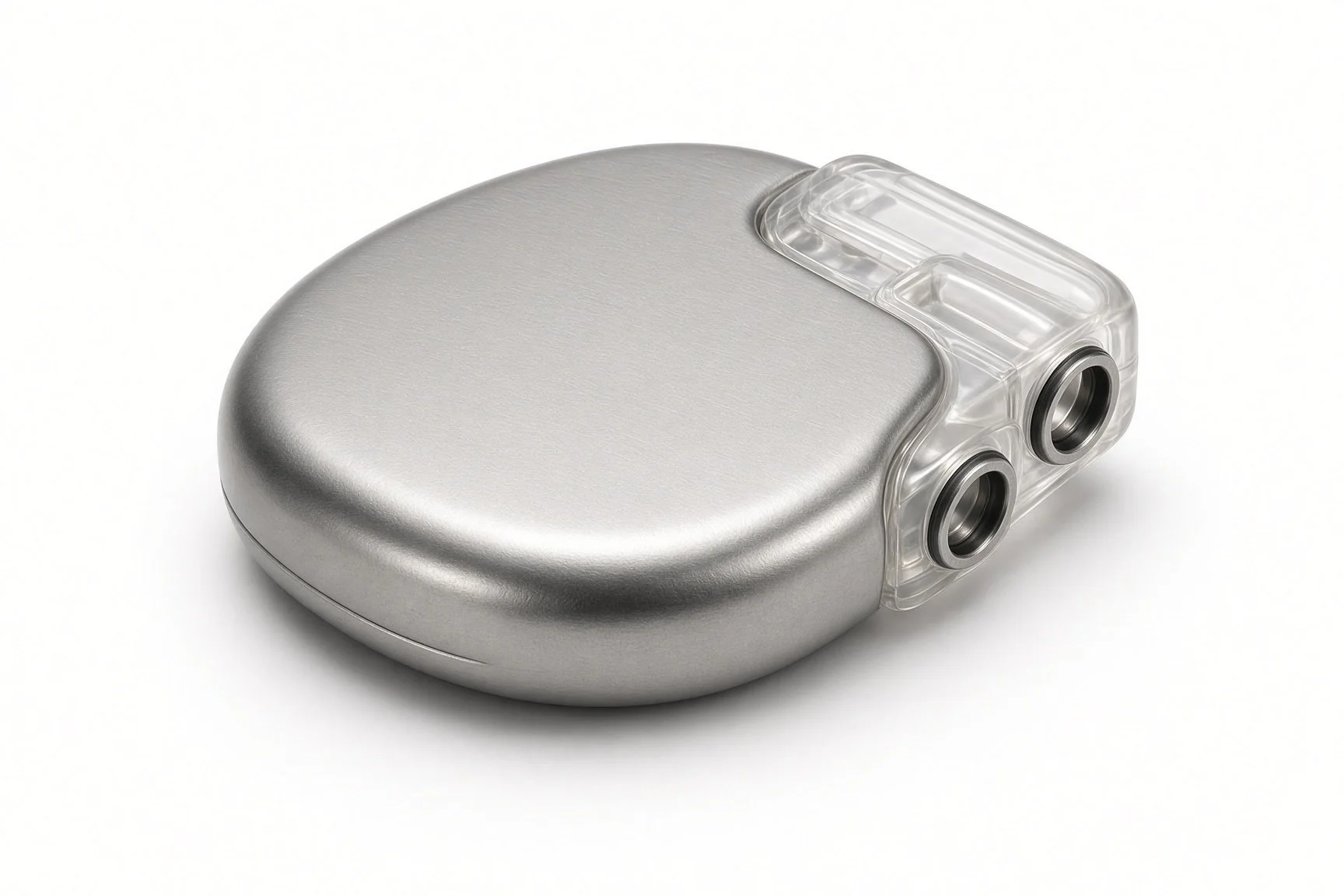
New generator.
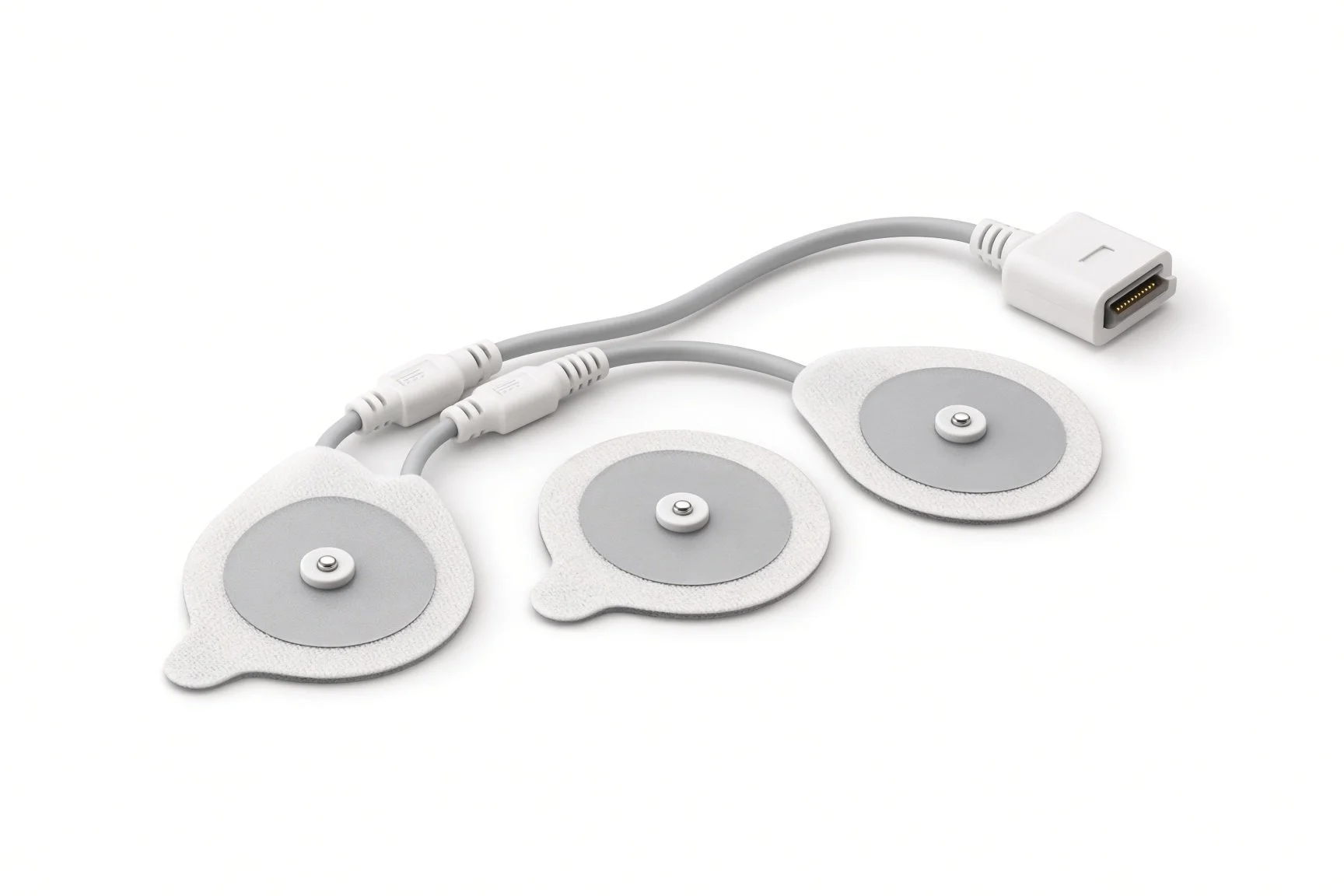
Defibrillator pads.
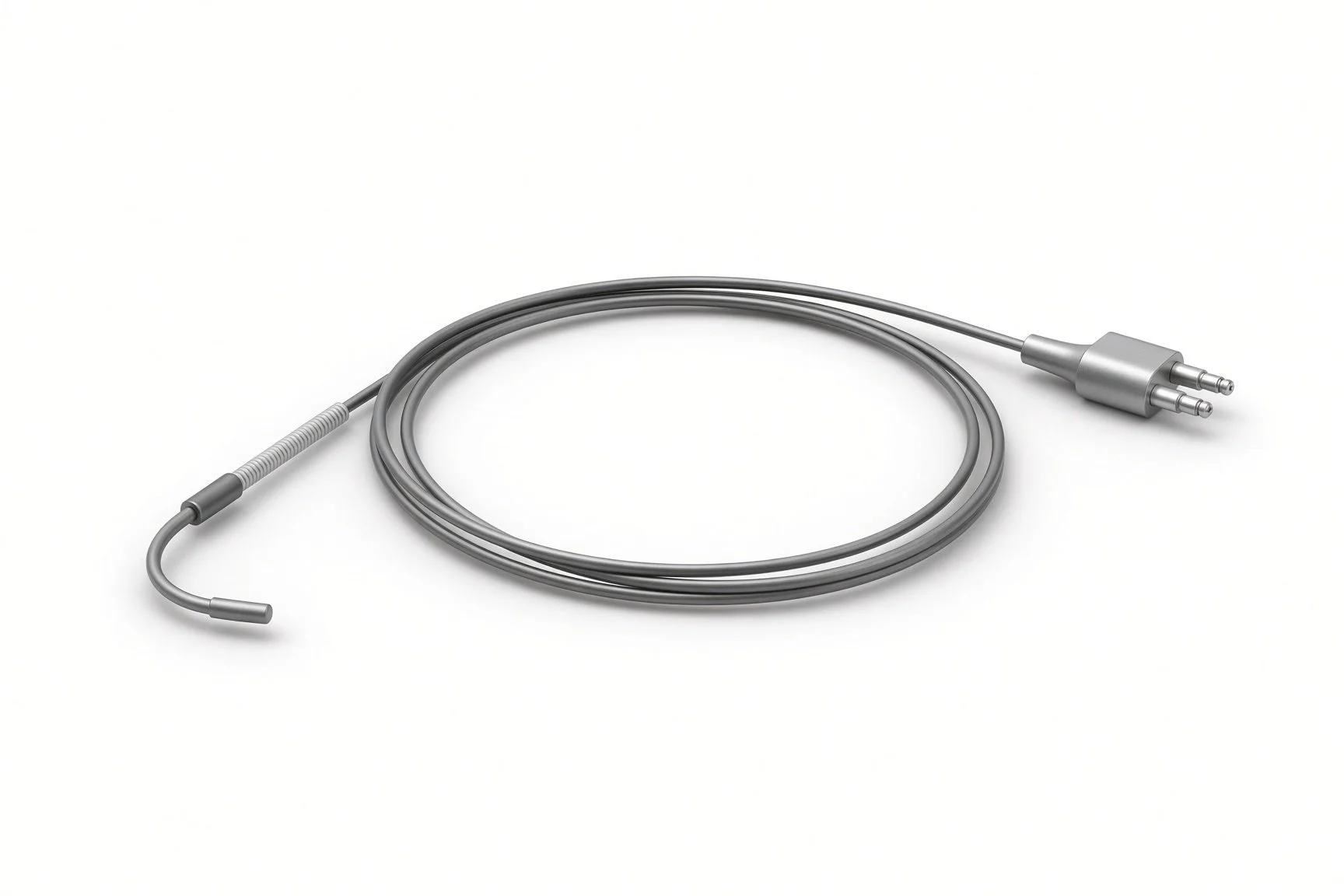
Temporary pacing wire.
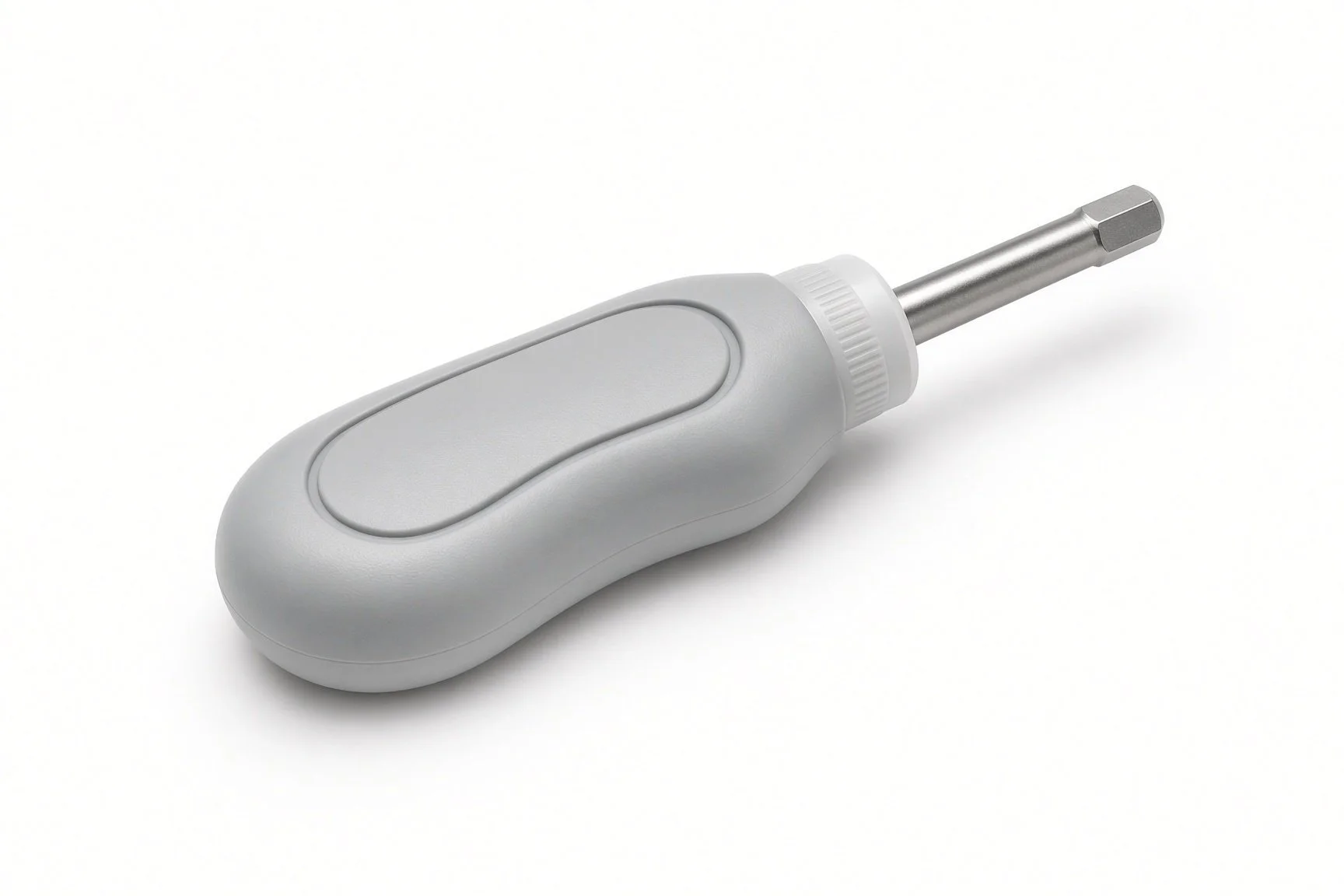
Torque wrench.

Pacing system analyser.
Procedural steps (Barts example)
Getting ready
Temporary pacing if needed
Changing the generator
Upgrade (if planned)
Finishing
First time in the cath lab?
Know who is pacing-dependent. Ask before the case. It changes how fast every step must go.
ICD off means pads on. Check the external defibrillator is connected before therapies are turned off.
Protect the leads. Old leads are precious. Avoid sharp tools near them and keep them out of the way.
Infection prevention. A box change has a higher infection risk than a first implant. Treat the pocket and the new box with care.
Confirm who switched ICD therapies off and write the time down. The same person checks they are back on.
Know the temporary pacing box settings and keep it in view of the physiologist.
Hand the torque wrench and keep it in sight. Count it back.
Watch the ECG closely while a pacing lead is disconnected.
FAQ
Do the leads need replacing too?
Usually not. If they test well, they are connected to the new box.
Will my new device be the same?
It will be programmed to match your needs. The box may look a little different.
Is it riskier than the first implant?
Infection is a little more likely, which is why extra care is taken with the pocket.
What happens to the old box?
It is returned or disposed of as per hospital policy.
Related Cath Lab 101 guides
Cardiac resynchronisation therapy (CRT-P and CRT-D) (coming soon)
Transvenous lead extraction (coming soon)
Sources
All checked on 12 November 2026. Each page's own date is shown where it gives one.
Glikson M, et al. 2021 ESC Guidelines on cardiac pacing and cardiac resynchronization therapy. Eur Heart J 2021;42(35):3427–3520
Blomström-Lundqvist C, et al. European Heart Rhythm Association (EHRA) international consensus document on how to prevent, diagnose, and treat cardiac implantable electronic device infections. Europace 2020;22(4):515–549
DVLA. Assessing fitness to drive: a guide for medical professionals (cardiovascular disorders). gov.uk
StatPearls (NCBI Bookshelf), search: pacemaker generator replacement. ncbi.nlm.nih.gov/books
Disclaimer
Education only. This page is for general education for healthcare students, cath lab staff and curious readers. It isn't medical advice and doesn't replace advice from your own doctor, heart team or local unit protocols. Equipment and medicines are described generically. No product or manufacturer is recommended. If you think someone is having a heart emergency, call 999.
Disclosure: I work for a company that makes a device used in this procedure. This page is independent education, isn't sponsored or reviewed by any company, and doesn't recommend any product.
All diagrams on this page are original illustrations created for rodnieoro.com.