Implantable loop recorder: a Cath Lab 101 guide
Reviewed by Rodnie Oro, cath lab charge nurse · Last reviewed: November 2026 · Education only, not medical advice
Implantable loop recorder in one minute
What it is: An implantable loop recorder (ILR, or insertable cardiac monitor) is a small device, about the size of a memory stick or smaller, placed just under the skin to the left of the breastbone. It records the heart's rhythm continuously and saves episodes when the rhythm is abnormal or when you press a button during symptoms.
Who it is for: People with blackouts (syncope) or palpitations that are rare and not caught on shorter monitors, and some people after a stroke with no clear cause, to look for atrial fibrillation.
Main risks: Bruising, infection, the wound opening, and the device moving or poking through the skin (rare). Your team will explain your own risk.
Usually: Under local anaesthetic, awake, in about 10 to 20 minutes. You go home the same day.
On this page: What is implantable loop recorder? · Who is it for? · When is it done? · Step by step · Recovery · Risks · Kit list · First time in the lab? · FAQ
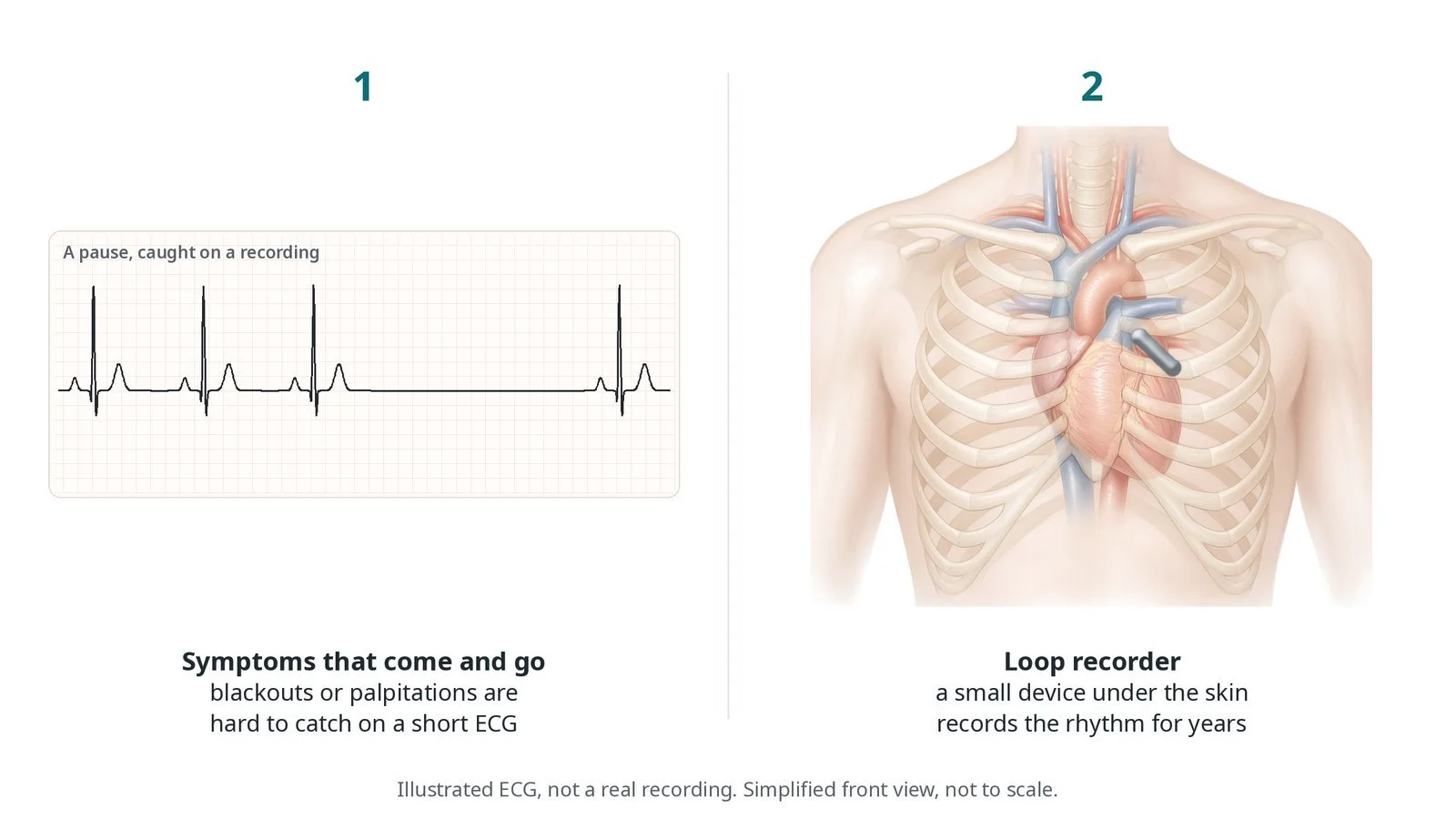
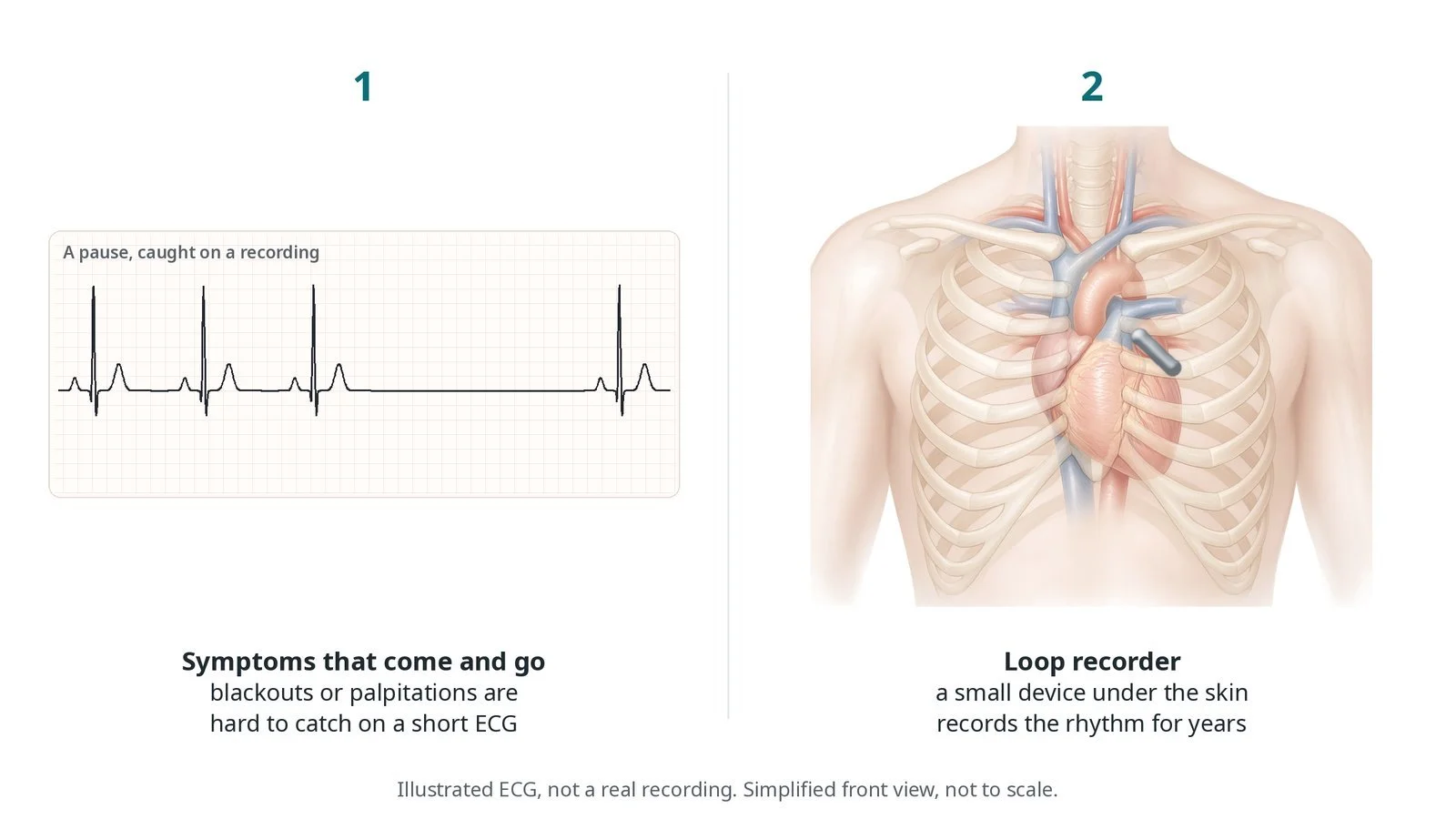
(1) Symptoms that come and go, such as blackouts or palpitations, are hard to catch on a short ECG. (2) A loop recorder under the skin records the rhythm for years.
What is implantable loop recorder?
The device sits in the fat just under the skin, usually over the left side of the chest near the breastbone, at about the level of the fourth rib space. It senses the heart's electrical signal through the tissues, like a single-lead ECG, so nothing goes into a vein or the heart.
It records in a loop: it keeps the last few minutes in memory and saves them when it detects a pause, a slow or fast rhythm, or AF, or when you use a patient activator or phone app during symptoms.
Recordings are sent automatically to the hospital through a bedside monitor or a smartphone app (remote monitoring). The battery usually lasts about 3 years. The device is MRI conditional, and can be removed when it is no longer needed.
New to the acronyms? See the Cath Lab Abbreviations A–Z.
Who is it for?
Decided by the cardiology, syncope or stroke team, using ESC and NICE guidance. For example:
blackouts that may be caused by the heart, where other tests have not found the answer
palpitations that happen too rarely to catch on a 24-hour or 2-week monitor
looking for AF after a stroke or mini-stroke with no clear cause (cryptogenic stroke)
Who it may not suit: When the cause is already likely to be dangerous, such as suspected ventricular tachycardia, the team may need to treat or investigate more urgently instead.
The decision is made by your heart team, who will talk through the reasons, the alternatives and the risks with you.
When is it done?
A planned procedure, in a cath lab, procedure room or clinic, sometimes by a trained nurse or physiologist. Usually no fasting is needed. Blood thinners are usually continued, as per centre protocol.
gives you a chance to ask questions and give consent
arranges blood tests, including kidney function and a blood count, and an ECG
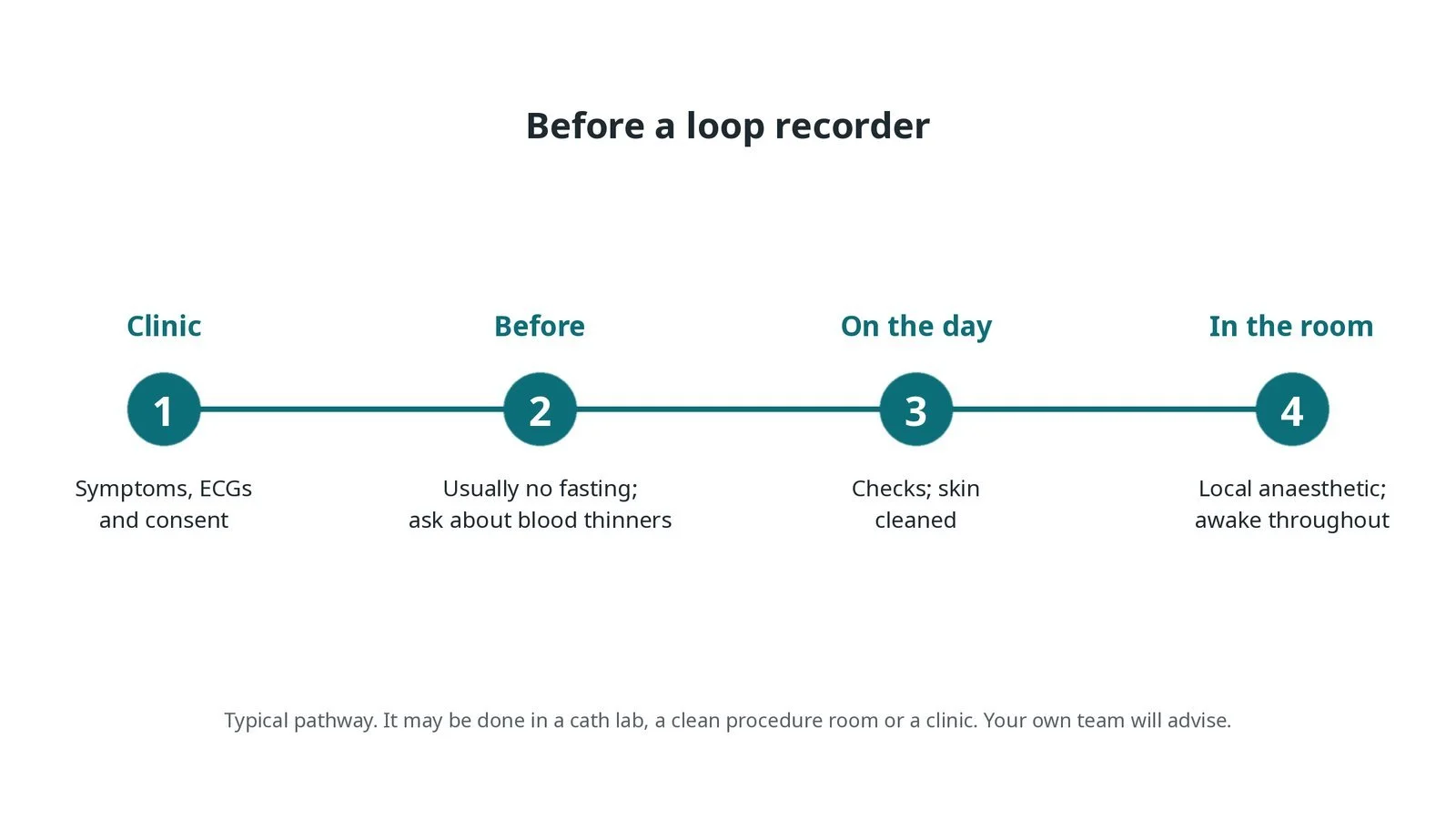
Before a loop recorder: symptoms, ECGs and consent; usually no fasting, ask about blood thinners; checks and skin cleaning; local anaesthetic, awake throughout.
Step by step
1. Getting ready
You lie on a couch or table with your chest uncovered. The device is checked and linked to the programmer before it is opened onto the sterile field.
2. Choosing the spot
The operator chooses the site, usually to the left of the breastbone, and may test the signal by holding the device on the skin. The skin is cleaned and covered with a sterile drape.
3. Inserting the device
A. Numb. Local anaesthetic is injected into the skin.
B. Small cut. A cut of about 1 cm is made and the insertion tool makes a small pocket just under the skin.
C. Insert. The device is pushed into the pocket through the tool, and the tool is removed.
D. Close. The wound is closed with glue, strips or a stitch, and the first recording is checked with the programmer.
Watch: If the signal (R wave) is small or noisy on the first recording, tell the operator before the wound is closed; the device can be repositioned.
4. Setting up
Detection settings are programmed for the reason it was fitted. You are shown how to use the activator or app during symptoms, and the home monitor is set up.
5. Follow-up and removal
Recordings are reviewed remotely, and you are contacted if something important is found. When the answer is found or the battery runs down, the device can be removed with a small cut under local anaesthetic, or left in place.
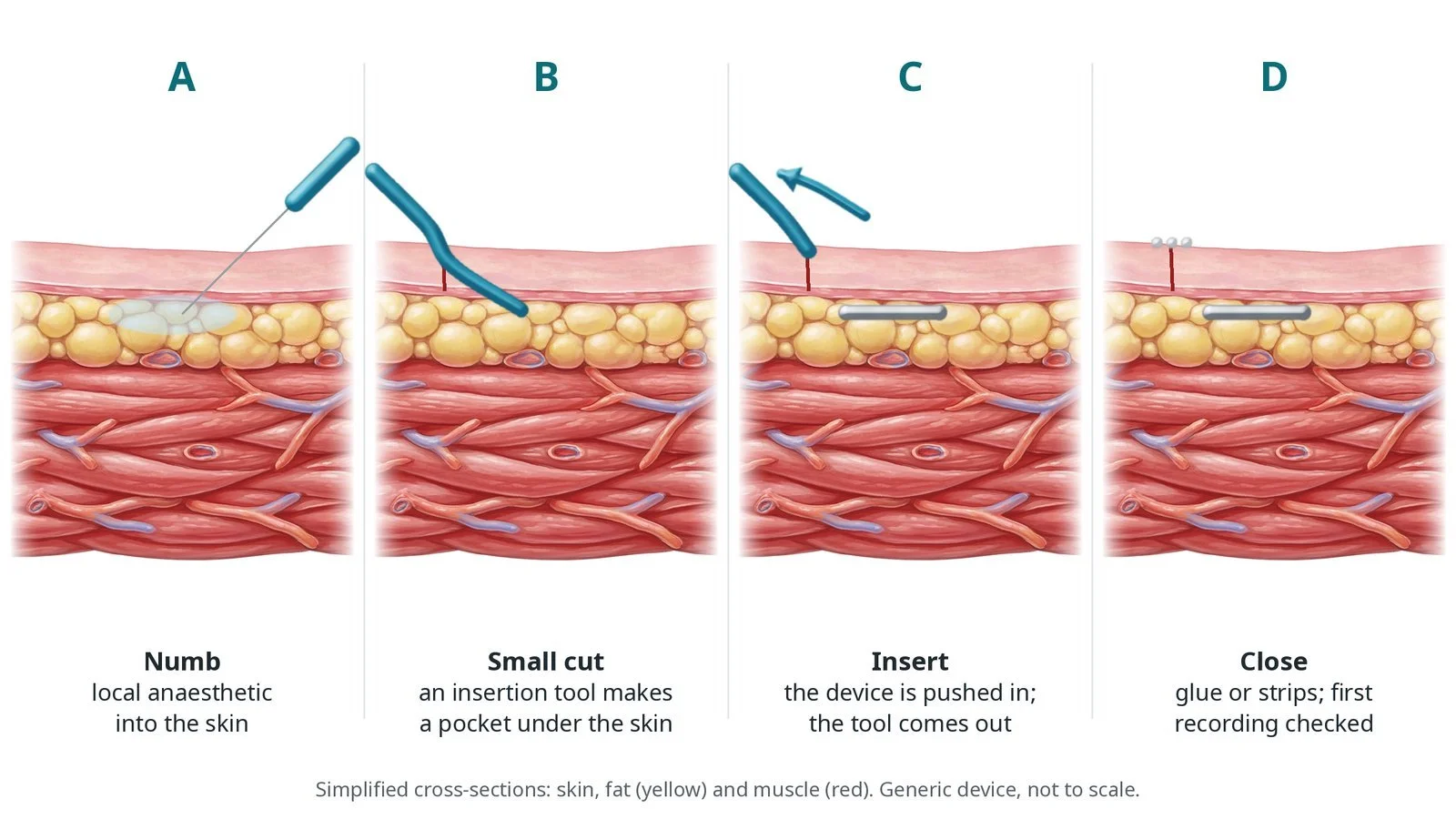
A: local anaesthetic into the skin. B: a small cut and an insertion tool make a pocket under the skin. C: the device is pushed in and the tool comes out. D: glue or strips close the skin and the first recording is checked.
Recovery and aftercare
First hour: a dressing is applied; most people go straight home.
Wound: keep it clean and dry for a few days, or as advised; glue or strips come off by themselves.
Activity: normal activity is usually fine straight away; avoid rubbing the wound.
Medicines: usual medicines continue.
Driving: the loop recorder itself does not stop you driving, but the symptoms it is looking for, such as blackouts, may. Your team will advise on DVLA rules.
Follow-up: remote monitoring of recordings; the device may be removed when no longer needed.
Call 999 if you have chest pain, a blackout with injury, or signs of a stroke.
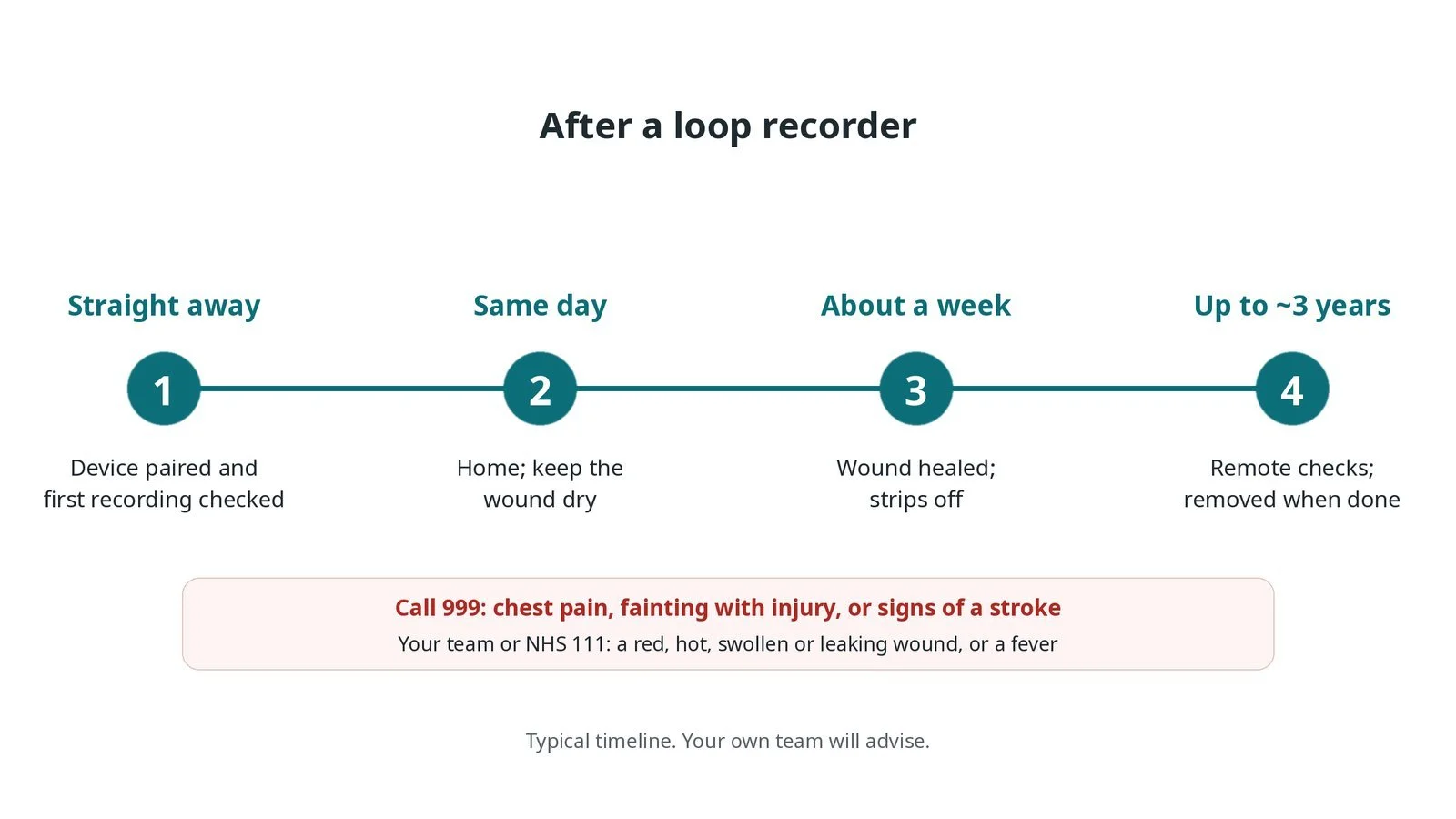
After a loop recorder: (1) device paired and first recording checked; (2) home the same day; (3) wound healed in about a week; (4) remote checks for up to about 3 years, then removed when no longer needed.
Risks and complications
Your team will explain the risks that apply to you. Possible problems include:
Bruising or bleeding at the wound
Infection (uncommon)
The wound opening or the device poking through the skin (rare)
Discomfort over the device
Not catching an episode, or recording false alarms
Cath lab kit list (printable)
Barts example kit list
An example from one UK centre, written generically. Every lab has its own protocol, and sizes and doses vary.
loop recorder in its sterile pack
insertion tool supplied with the device
local anaesthetic, needle and syringe
skin prep and sterile drape
small scalpel, if not part of the tool
glue, skin closure strips or a stitch
programmer to pair and check the device
patient activator, phone app or home monitor
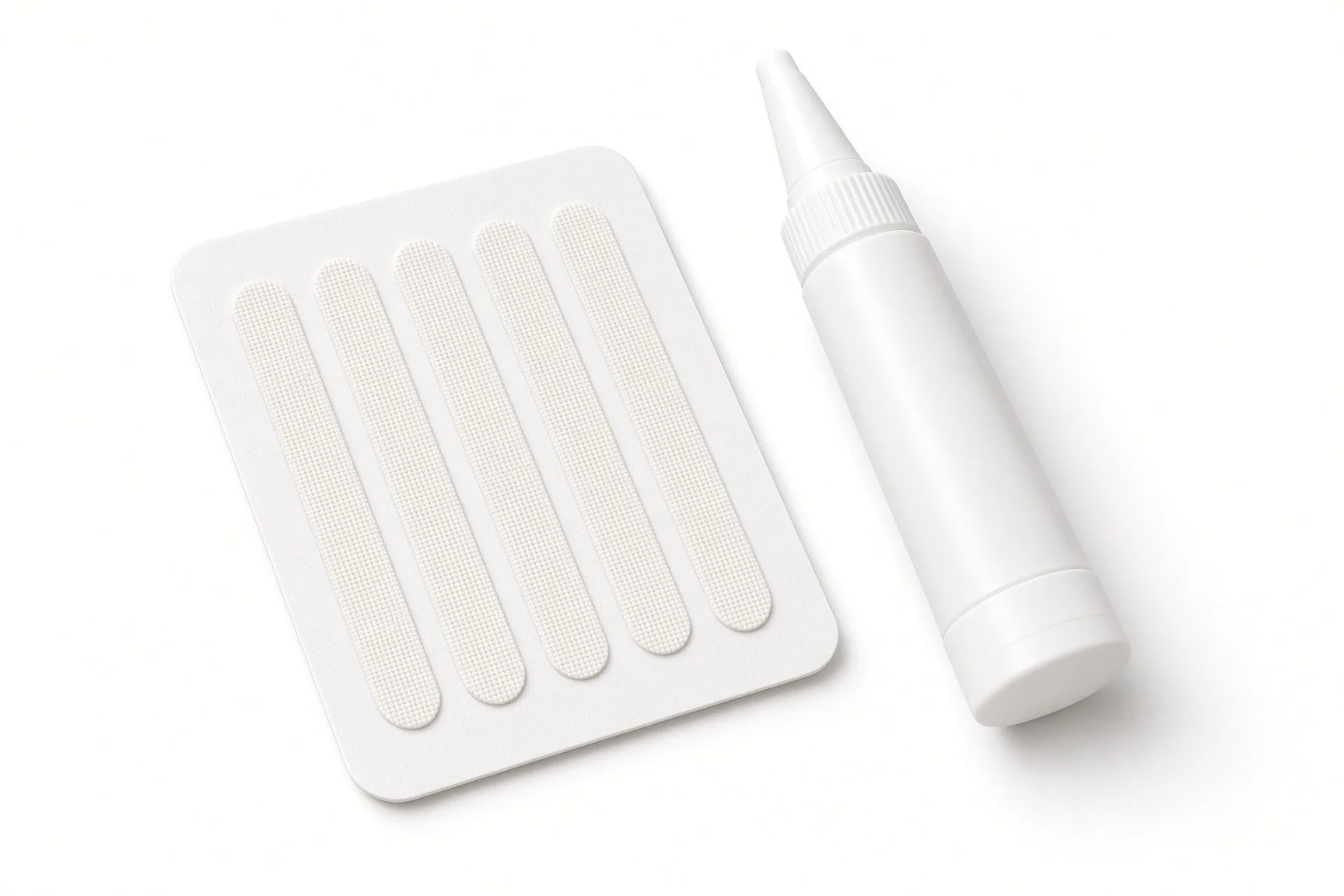
Glue or skin closure strips.
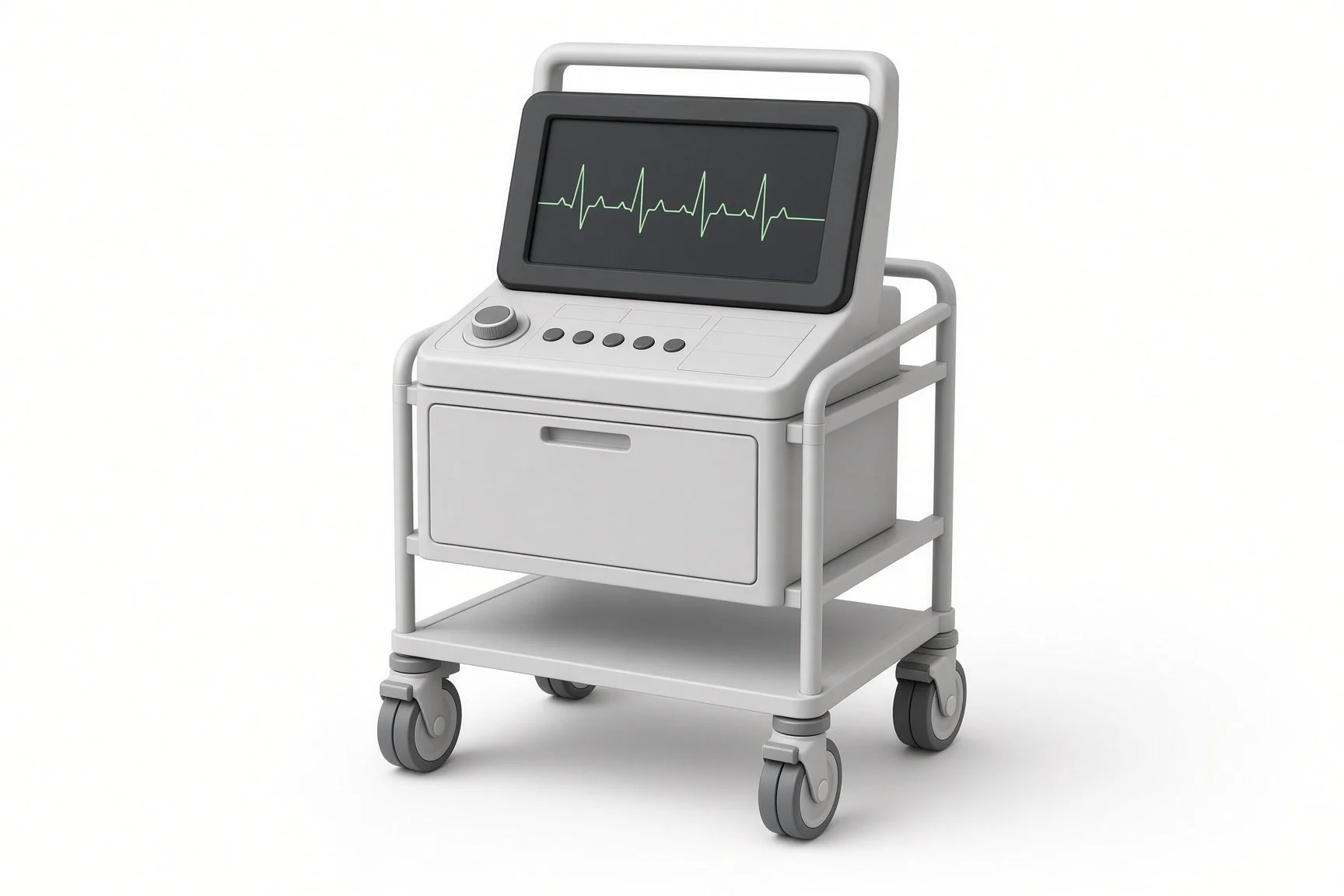
Programmer.
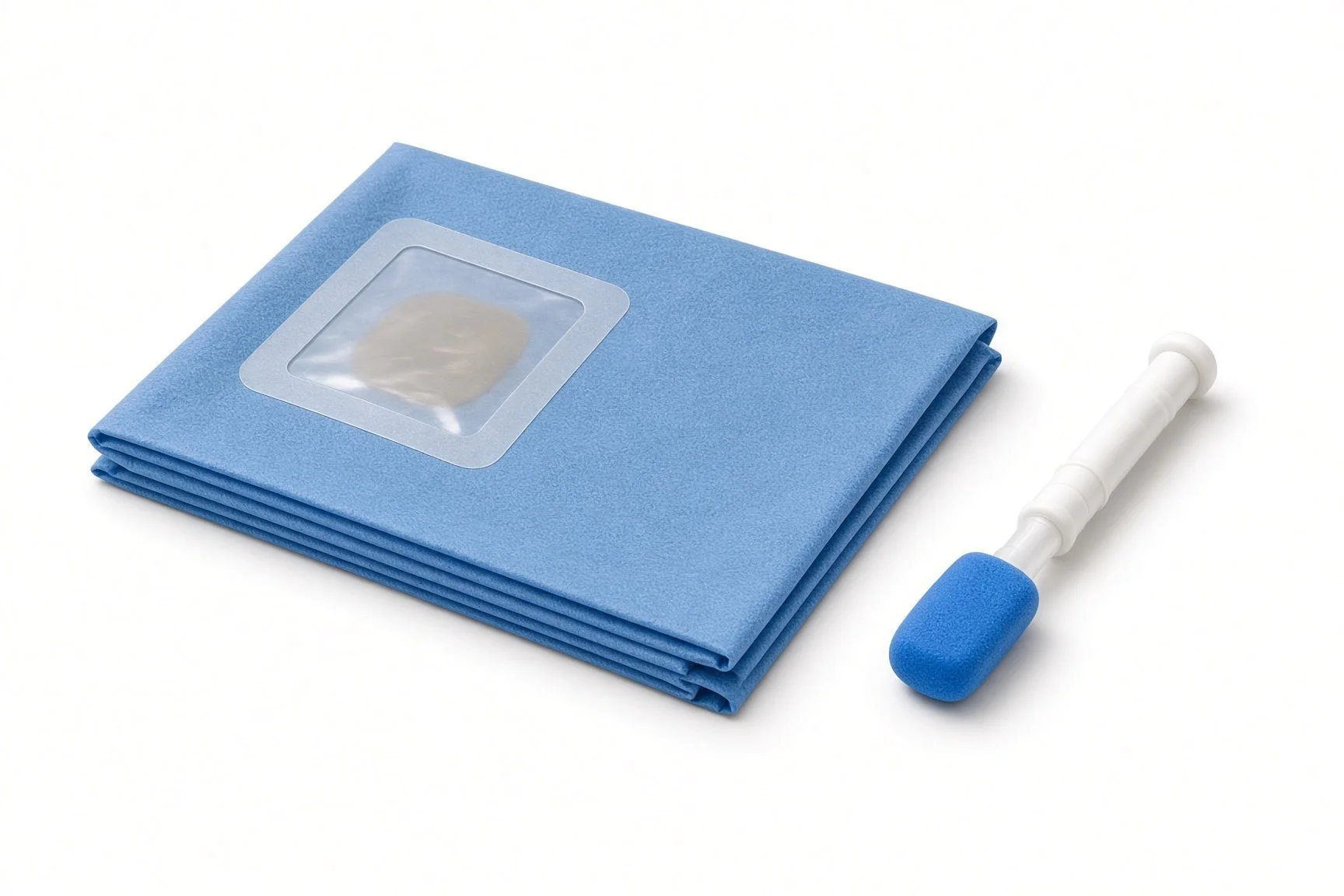
Skin prep and sterile drape.
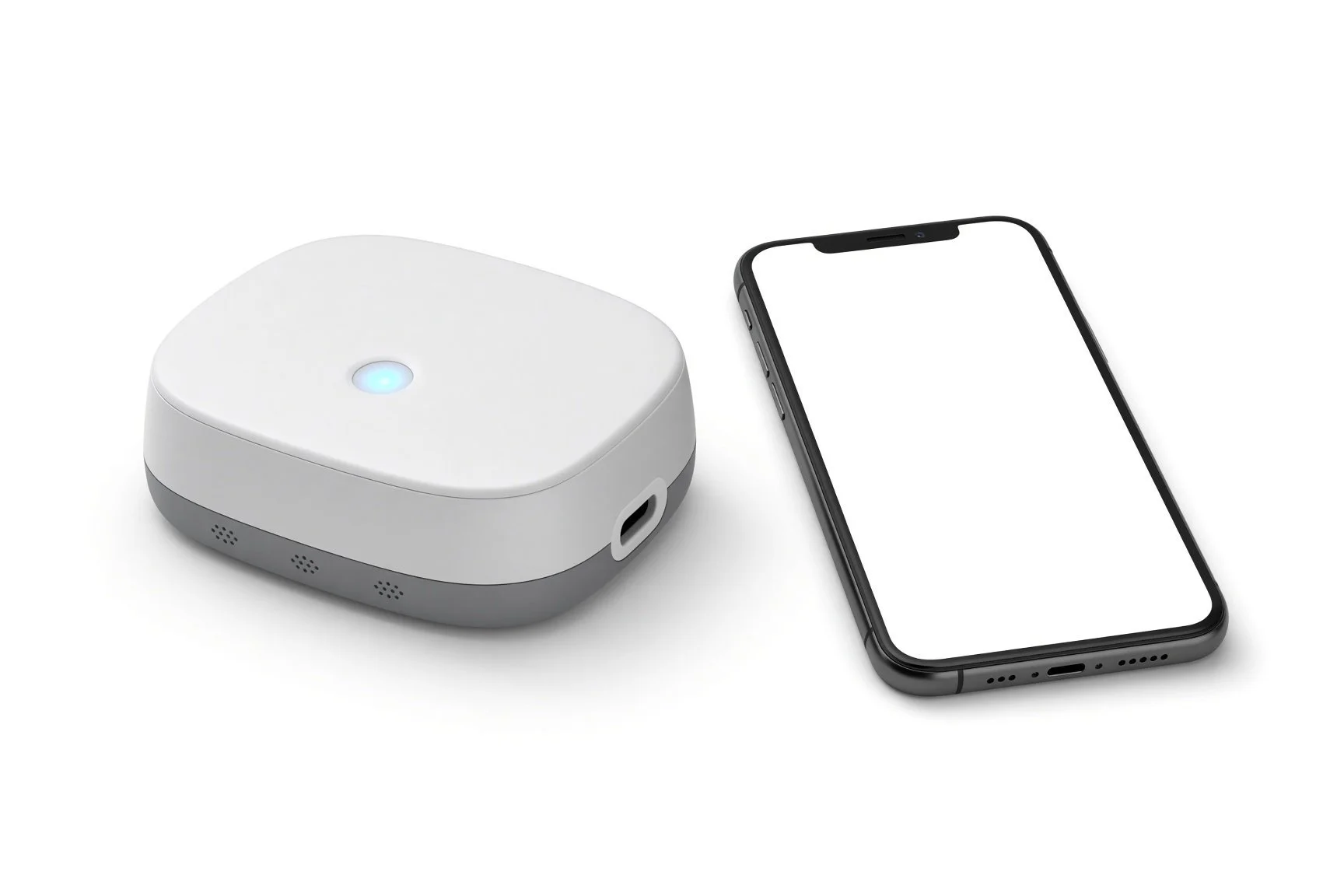
Home monitor or phone app.
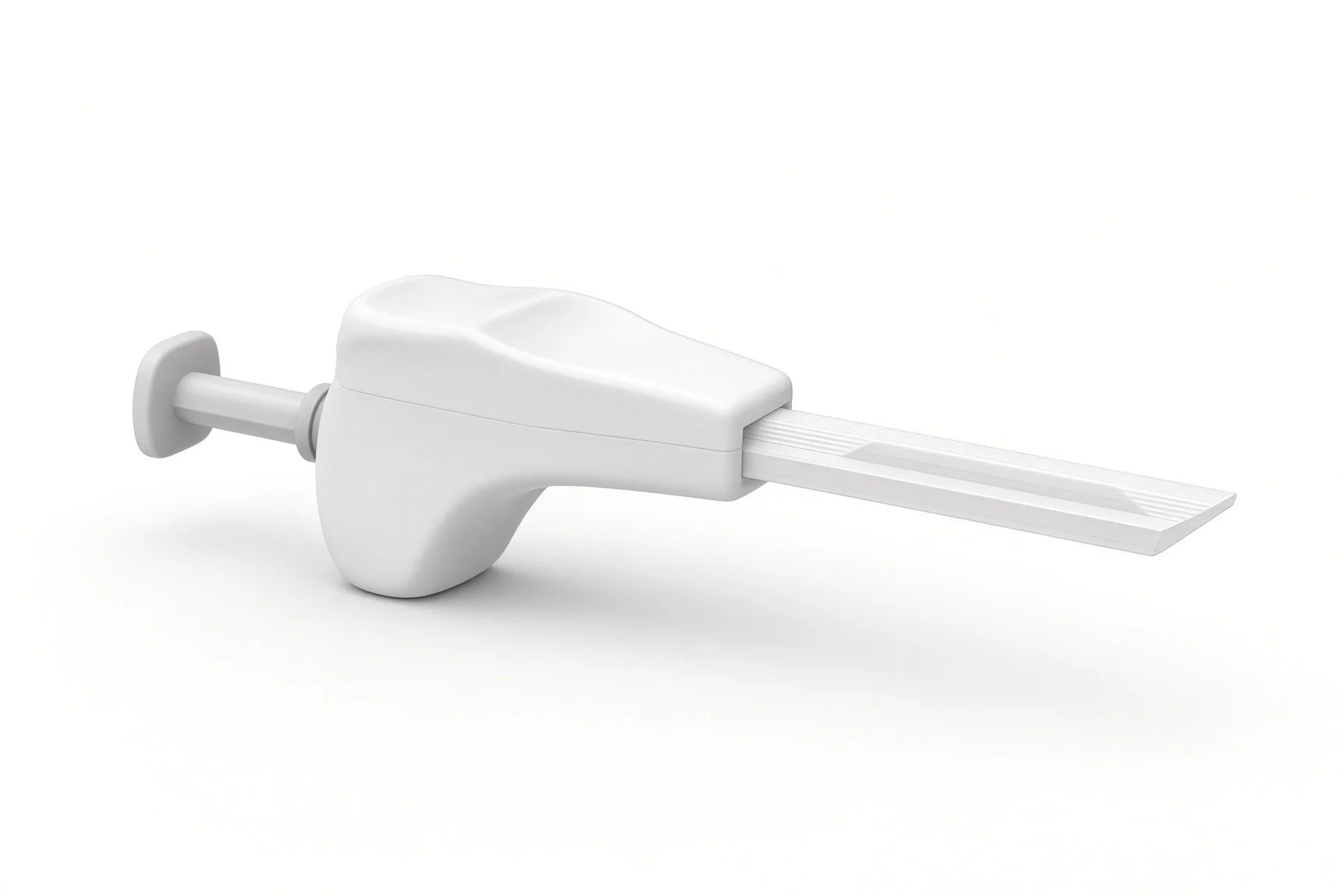
Insertion tool.
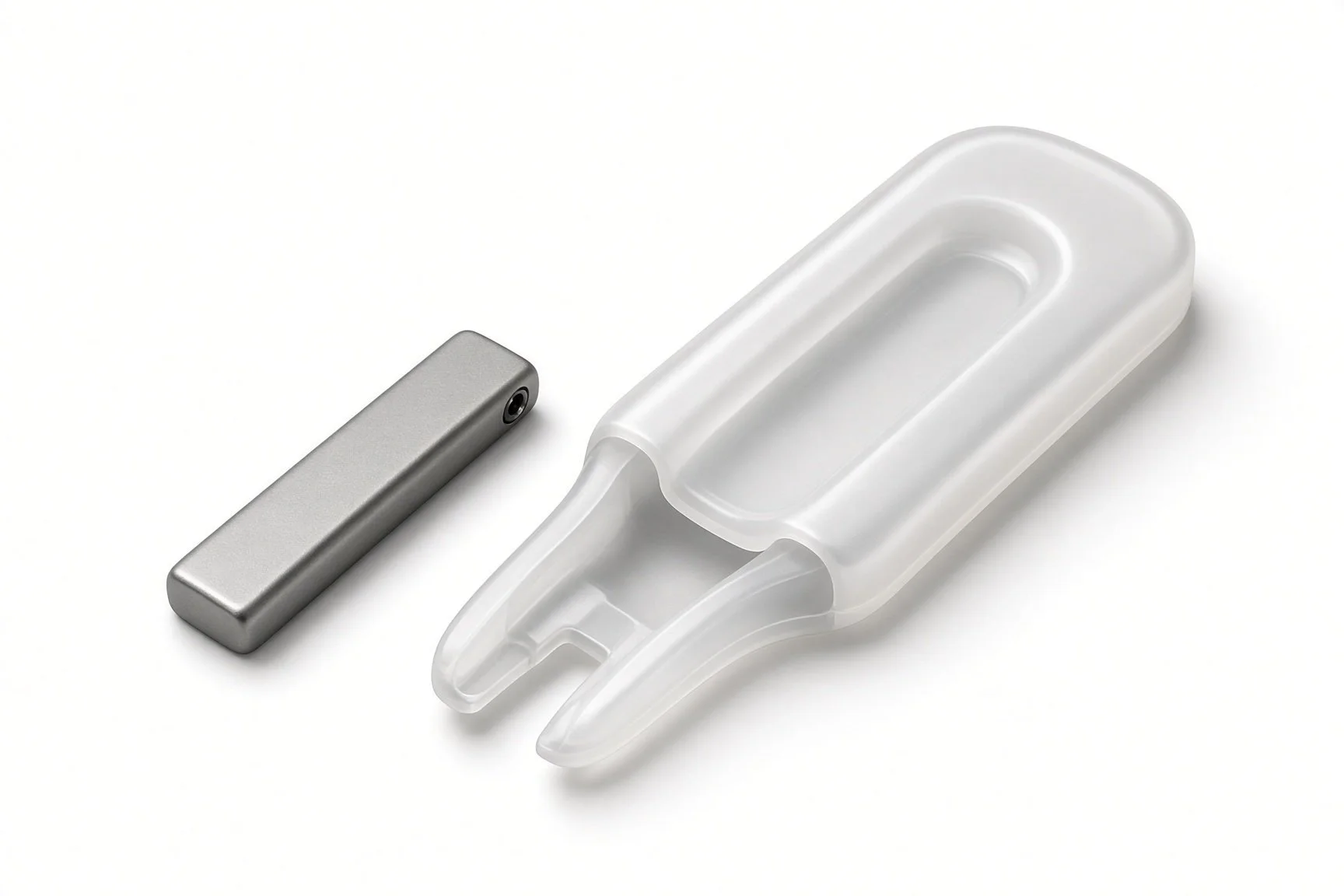
Loop recorder.
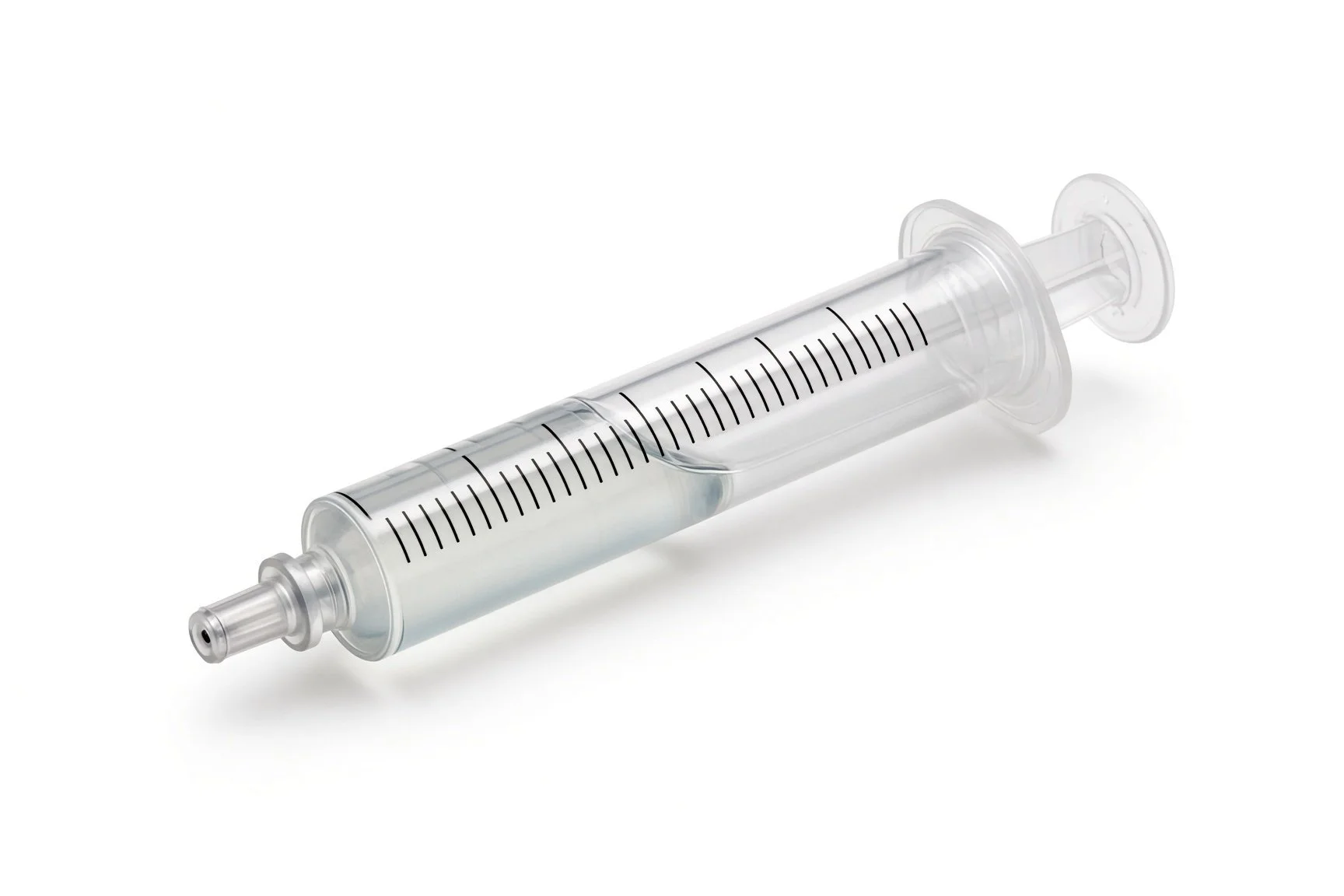
Local anaesthetic and syringe.
Procedural steps (Barts example)
Getting ready
Choosing the spot
Inserting the device
Setting up
Follow-up and removal
First time in the cath lab?
It is quick. The whole case can be over in minutes. Have everything open and checked before the first injection.
Pair before they leave. Make sure the device links to the home monitor or app and the patient knows how to record symptoms.
Check the signal. A good first recording matters more than a perfect scar.
Pair the device and the patient's app or home monitor before the patient leaves. It saves a lot of follow-up calls.
Keep pressure on the wound for a few minutes if it oozes.
FAQ
Will it show?
There may be a small bump under the skin, and a small scar.
Can I go through airport security or have an MRI?
Yes, with care. The device is MRI conditional; tell the scanning team. Carry your device card.
Does it treat my heart?
No. It only records the rhythm, so the team can decide the right treatment.
What should I do when I have symptoms?
Use your activator or app as shown, then follow the advice your team gave you.
Related Cath Lab 101 guides
DC cardioversion and TOE-guided cardioversion (coming soon)
Sources
All checked on 12 November 2026. Each page's own date is shown where it gives one.
Brignole M, et al. 2018 ESC Guidelines for the diagnosis and management of syncope. Eur Heart J 2018;39(21):1883–1948
NICE. Transient loss of consciousness ('blackouts') in over 16s (CG109). nice.org.uk/guidance/cg109
StatPearls (NCBI Bookshelf), search: implantable loop recorder. ncbi.nlm.nih.gov/books
Disclaimer
Education only. This page is for general education for healthcare students, cath lab staff and curious readers. It isn't medical advice and doesn't replace advice from your own doctor, heart team or local unit protocols. Equipment and medicines are described generically. No product or manufacturer is recommended. If you think someone is having a heart emergency, call 999.
Disclosure: I work for a company that makes a device used in this procedure. This page is independent education, isn't sponsored or reviewed by any company, and doesn't recommend any product.
All diagrams on this page are original illustrations created for rodnieoro.com.