Atrial septostomy: a Cath Lab 101 guide
Reviewed by Rodnie Oro, cath lab charge nurse · Last reviewed: October 2026 · Education only, not medical advice
Atrial septostomy in one minute
What it is: making or enlarging an opening between the two upper chambers (atria) of the heart with a balloon catheter, so blood can mix or pressure can be relieved.
Who it is for: mainly newborn babies with some congenital heart conditions, such as transposition of the great arteries; sometimes adults with severe pulmonary hypertension or on ECMO.
Main risks: rhythm problems, injury to the heart or vessels, and rarely stroke or a tear needing surgery.
Usually: in a specialist children's or congenital heart centre, sometimes at the bedside with echo guidance.
On this page: What is atrial septostomy? · Who is it for? · When is it done? · Step by step · Recovery · Risks · Kit list · First time in the lab? · FAQ
What is atrial septostomy?
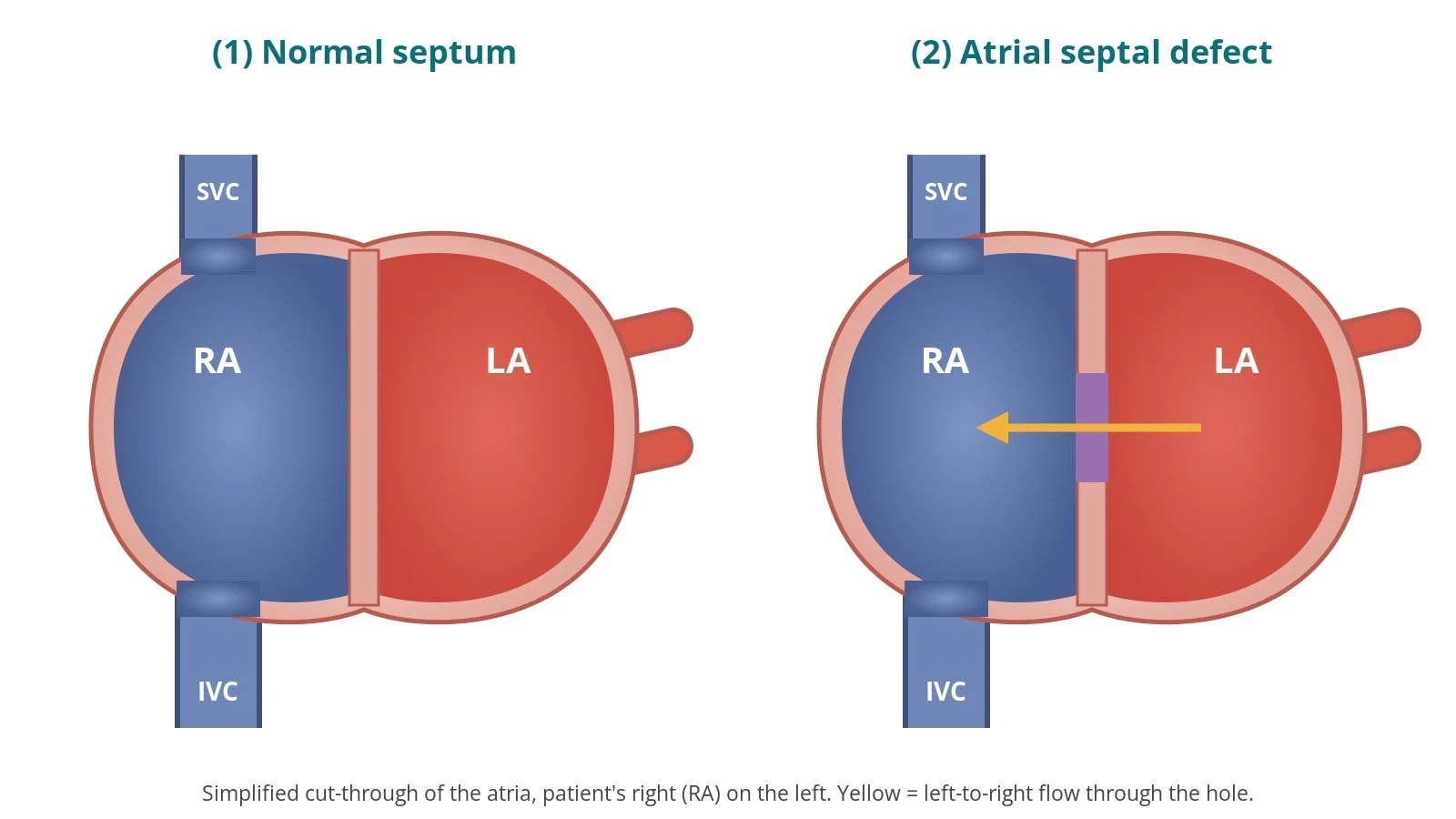
Before birth, there is a natural opening between the atria. In some heart conditions, a baby needs this opening to stay open, or larger, so oxygen-rich and oxygen-poor blood can mix.
In balloon atrial septostomy:
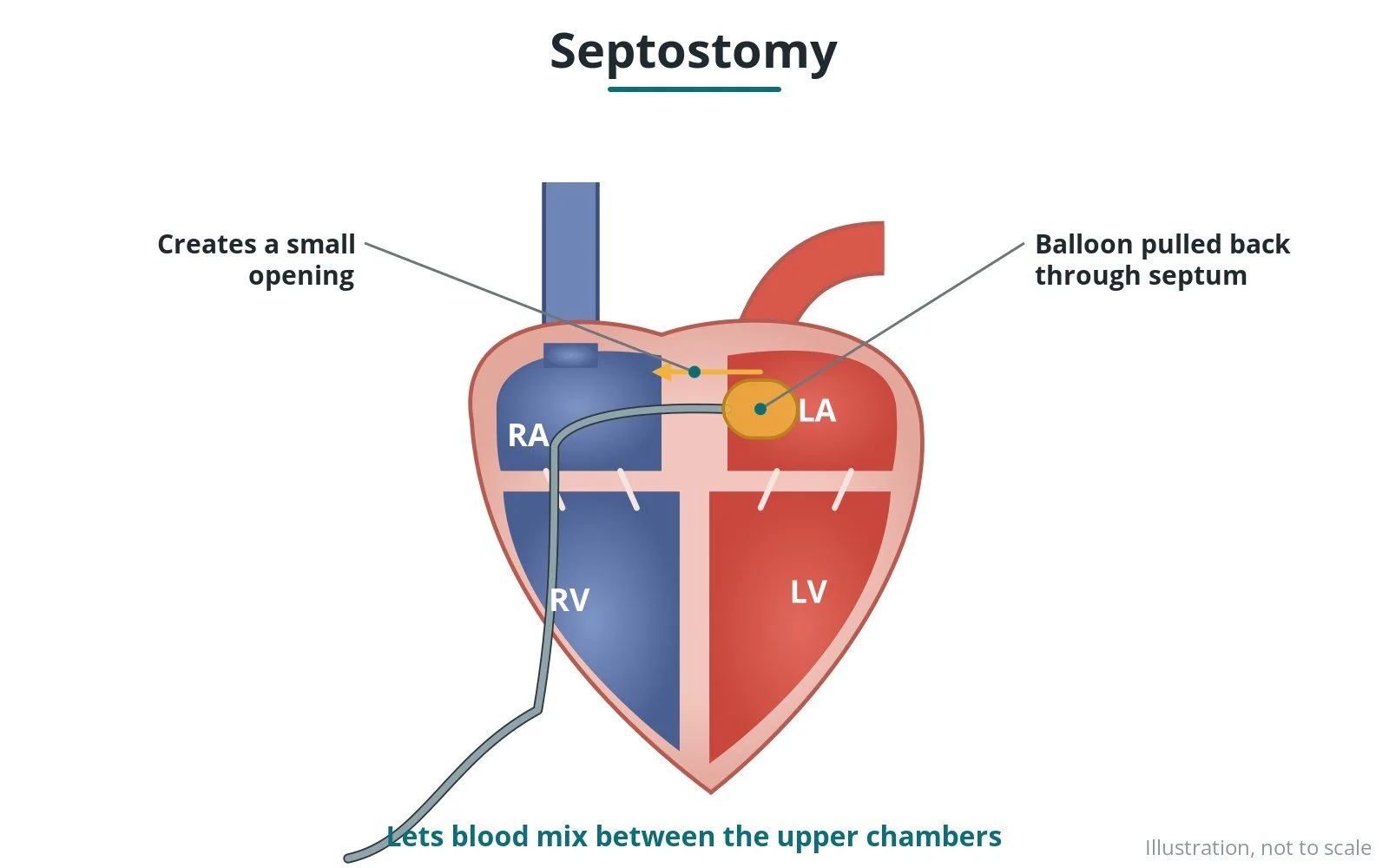
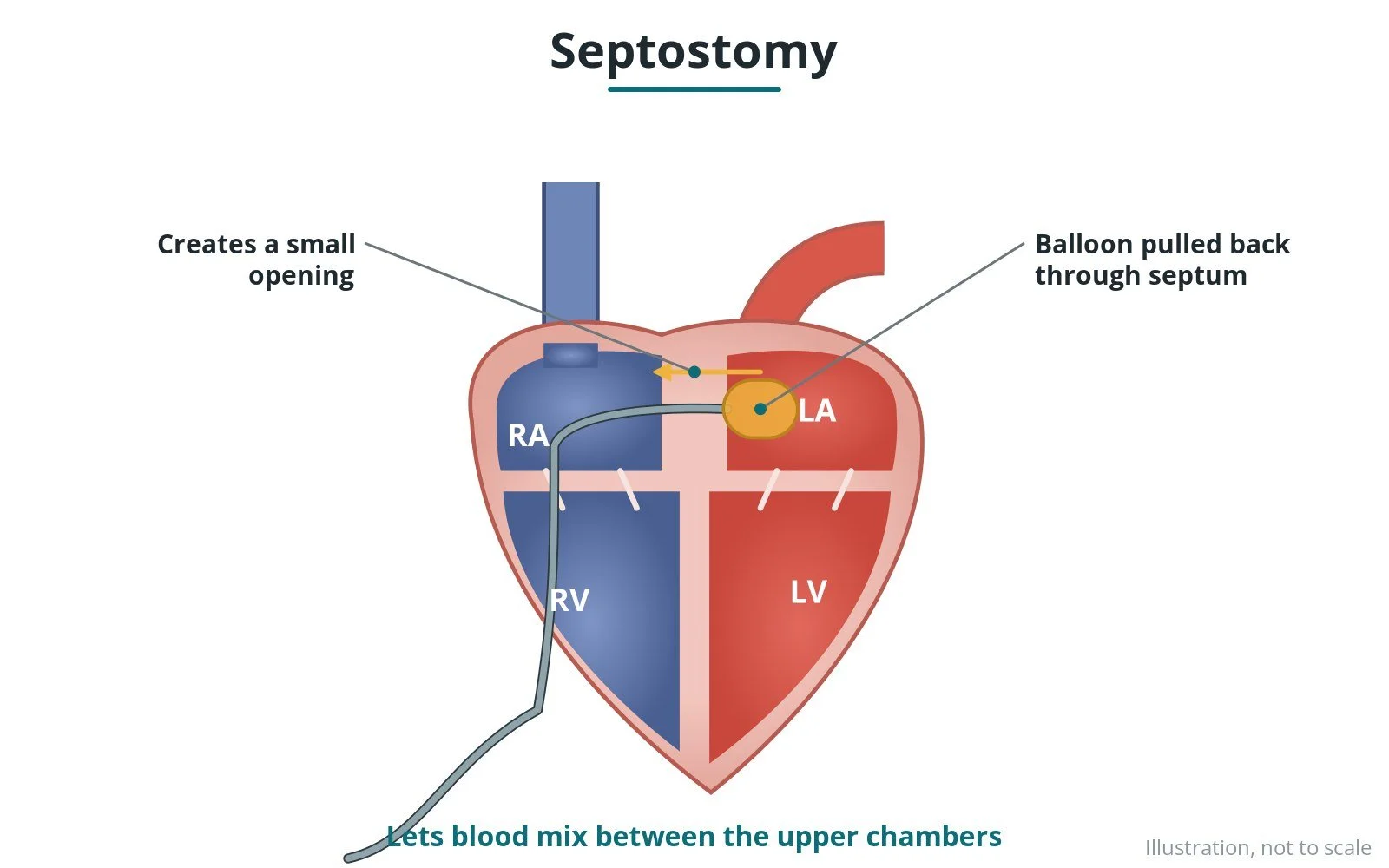
- a balloon catheter is passed from a vein into the right atrium and across the opening into the left atrium
- the balloon is inflated and pulled back sharply across the septum, tearing it open wider
- echo checks the new opening
In older children and adults, the opening may be made with a needle, then stretched with a balloon or held open with a stent.
New to the acronyms? See the Cath Lab Abbreviations A–Z.
Who is it for?
It may be considered for people with:
- newborns with transposition of the great arteries
- other congenital conditions where mixing at atrial level is needed
- selected adults with severe pulmonary hypertension
- patients on ECMO needing the left heart offloaded
The decision is made by your heart team, who will talk through the reasons, the alternatives and the risks with you.
When is it done?
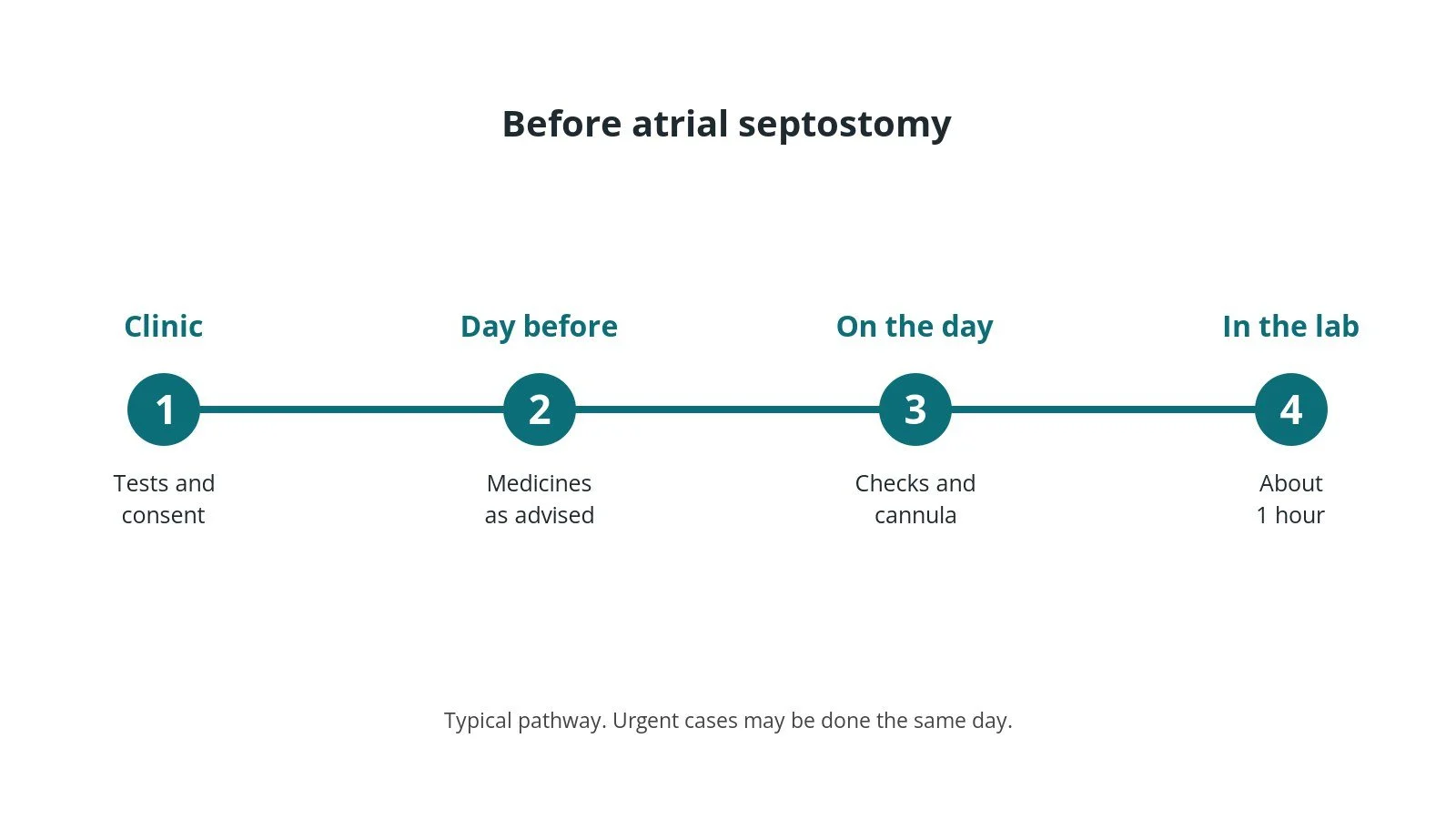
In newborns it is often urgent. Before it, the team will:
- confirm the diagnosis with echo
- explain the procedure to the parents and ask for consent
- give medicines and support as per centre protocol
Step by step
1. Getting ready
Babies are usually sedated or anaesthetised and kept warm; echo is used throughout. Adults usually have sedation or general anaesthetic, as per centre protocol.
2. Access
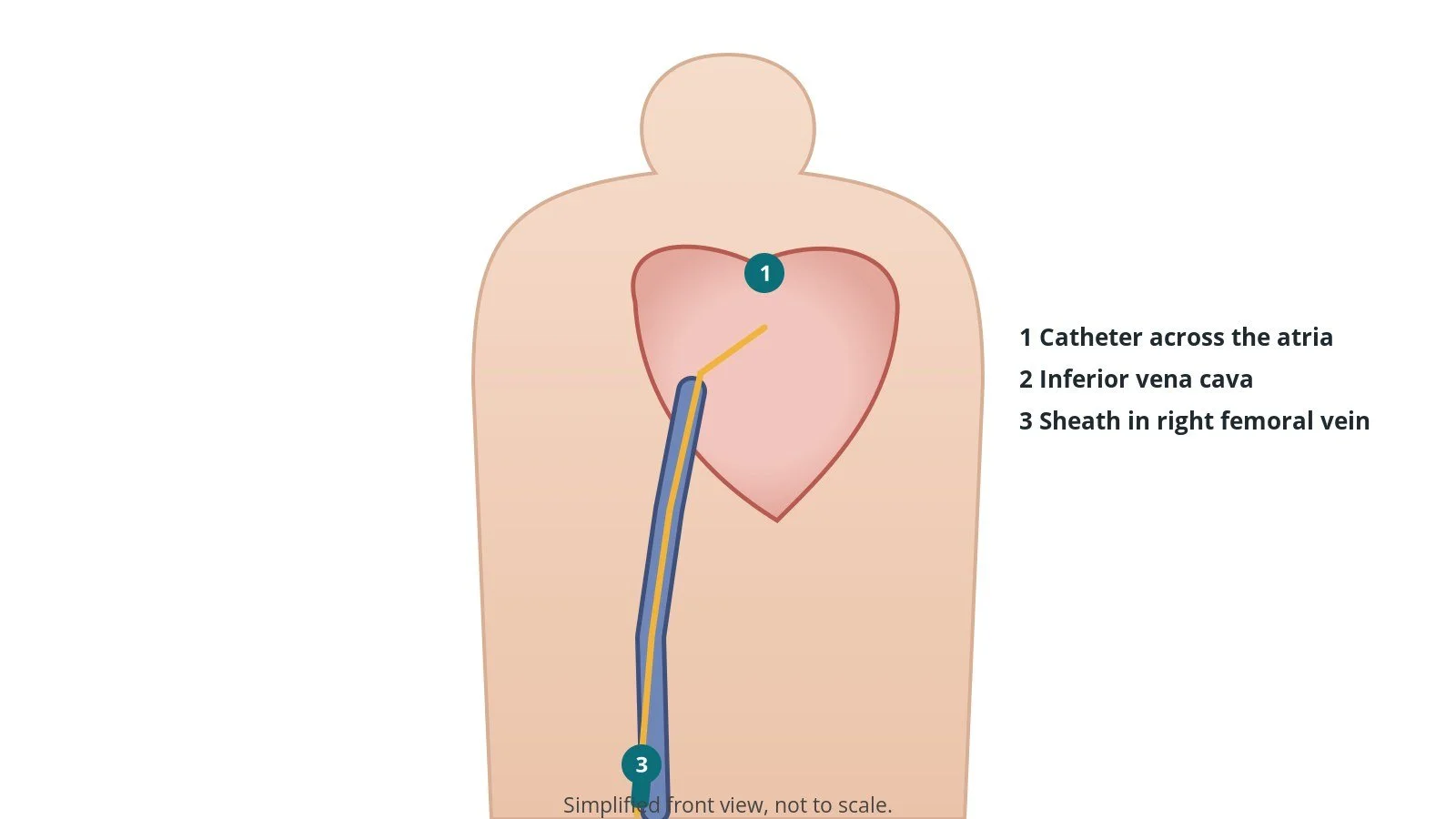
A sheath is placed in the femoral vein in the groin or, in newborns, sometimes the umbilical vein. Sizes per device and operator.
3. Septostomy
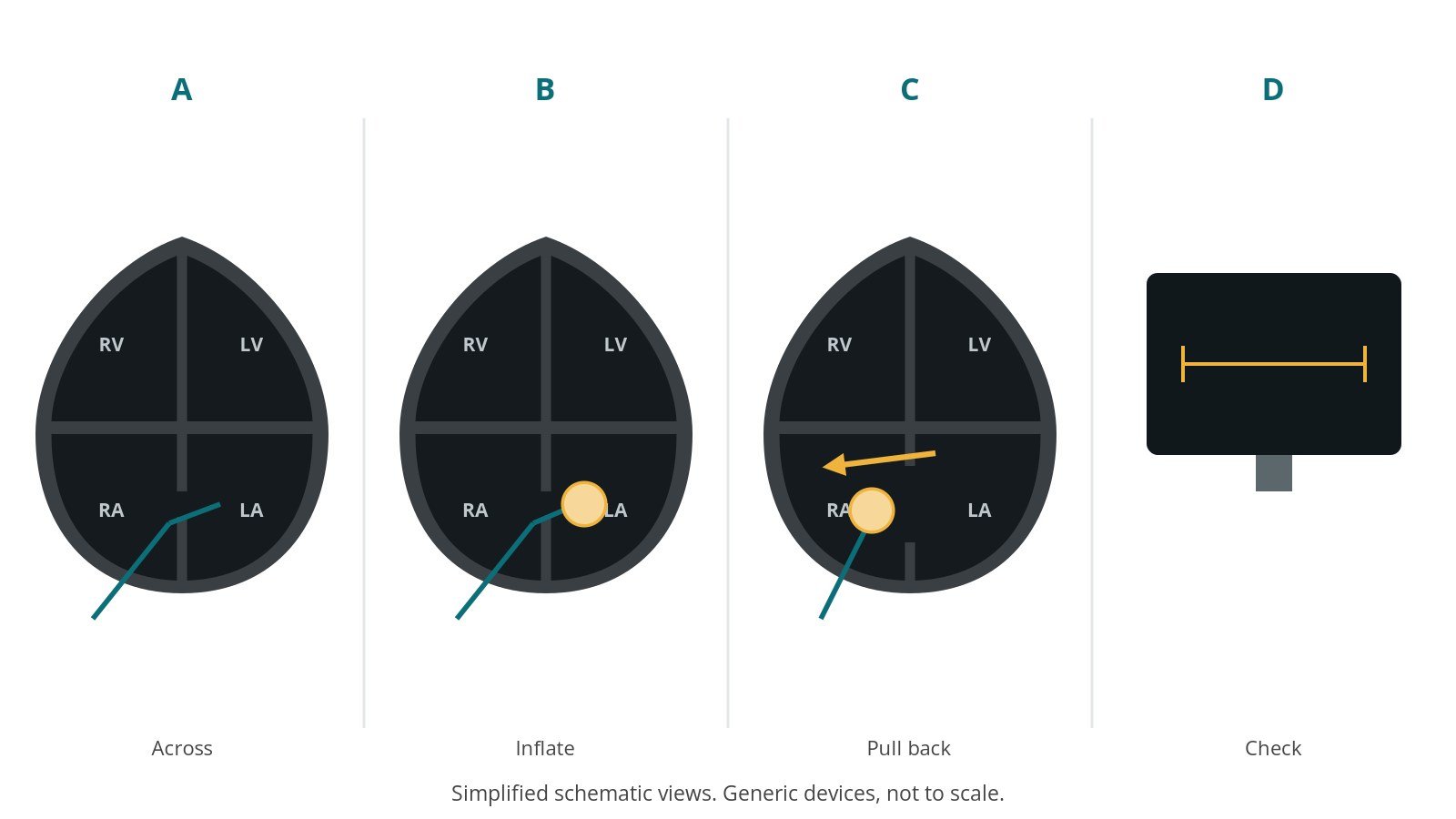
- A. Across. The balloon catheter is passed across the opening into the left atrium.
- B. Inflate. The balloon is filled, volume per device and operator, and position checked on echo.
- C. Pull back. It is pulled sharply back into the right atrium, tearing the septum.
- D. Check. Echo checks the size of the new opening; repeated if needed.
4. Finishing
The catheter and sheath are removed and pressure applied.
Recovery and aftercare
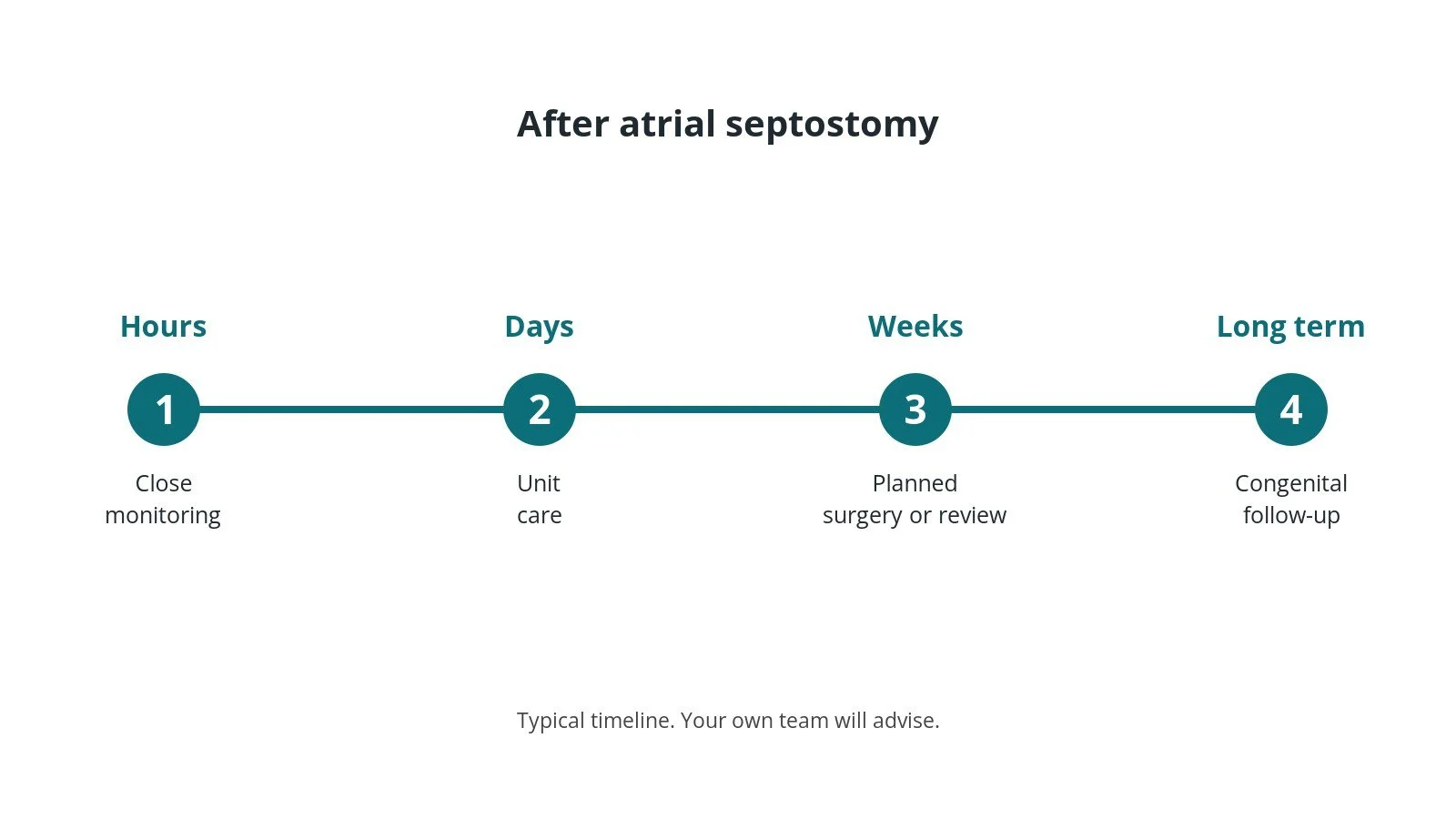
- First hours: close monitoring of oxygen levels, rhythm and the access site.
- In babies: care continues on the neonatal or cardiac unit, often before planned surgery.
- Adults: monitoring on the ward; length of stay depends on the condition.
- Follow-up: as planned by the congenital heart team.
Call 999 if you have chest pain, breathlessness, fainting, signs of a stroke, or heavy bleeding or swelling at the access site.
Risks and complications
Your team will explain the risks that apply to you. Possible problems include:
- heart rhythm problems
- injury to the heart, valves or veins
- balloon rupture
- stroke or air embolism (rare)
- a tear needing surgery (rare)
Cath lab kit list (printable)
Barts example kit list
An example from one UK centre, written generically. Every lab has its own protocol, and sizes and doses vary.
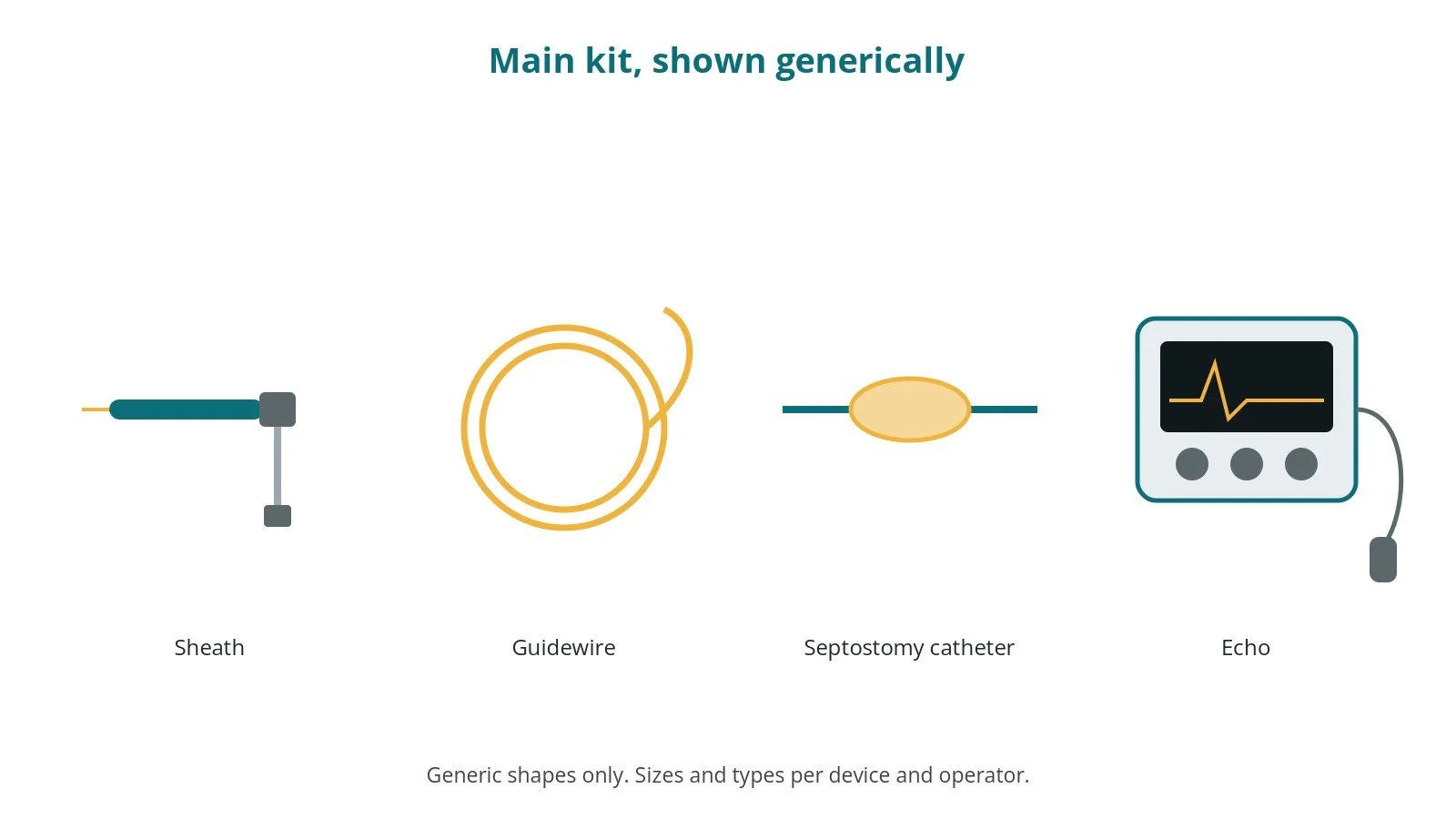
- venous sheath, size per device and operator
- septostomy balloon catheter, per device and operator
- dilute contrast for balloon filling, as per centre protocol
- echo machine
- for adults: transseptal needle and balloons or stents, per operator
Procedural steps (Barts example)
- Echo confirms anatomy
- Venous access
- Catheter across into the left atrium; position on echo
- Inflate; sharp pull-back
- Echo check; repeat if needed
- Catheter out; pressure
First time in the cath lab?
💡 First-time tip
- Keep the baby warm. Newborns lose heat quickly.
- Echo is key. Position is checked on echo before every pull.
- Know the volume. Balloon volume is set by the operator; double-check.
- Support the family. Parents will be anxious; keep them informed.
FAQ
Is this the final treatment?
Usually not. It stabilises the baby until surgery.
Can adults have it?
Yes, in some specific conditions.
How long does it take?
Often under an hour.
Related Cath Lab 101 guides
Sources
All checked on 10 October 2026. Each page's own date is shown where it gives one.
- Baumgartner H, et al. 2020 ESC Guidelines for the management of adult congenital heart disease. Eur Heart J 2021;42(6):563–645. PubMed 32860028
- StatPearls (NCBI Bookshelf), search: balloon atrial septostomy. ncbi.nlm.nih.gov/books
Disclaimer
Education only. This page is for general education for healthcare students, cath lab staff and curious readers. It isn't medical advice and doesn't replace advice from your own doctor, heart team or local unit protocols. Equipment and medicines are described generically. No product or manufacturer is recommended. If you think someone is having a heart emergency, call 999.
Disclosure: I work in the medical device industry. This page is independent education and isn't sponsored or reviewed by any company.
All diagrams on this page are original illustrations created for rodnieoro.com.