Percutaneous LV support devices: a Cath Lab 101 guide
Reviewed by Rodnie Oro, cath lab charge nurse · Last reviewed: October 2026 · Education only, not medical advice
Percutaneous LV support in one minute
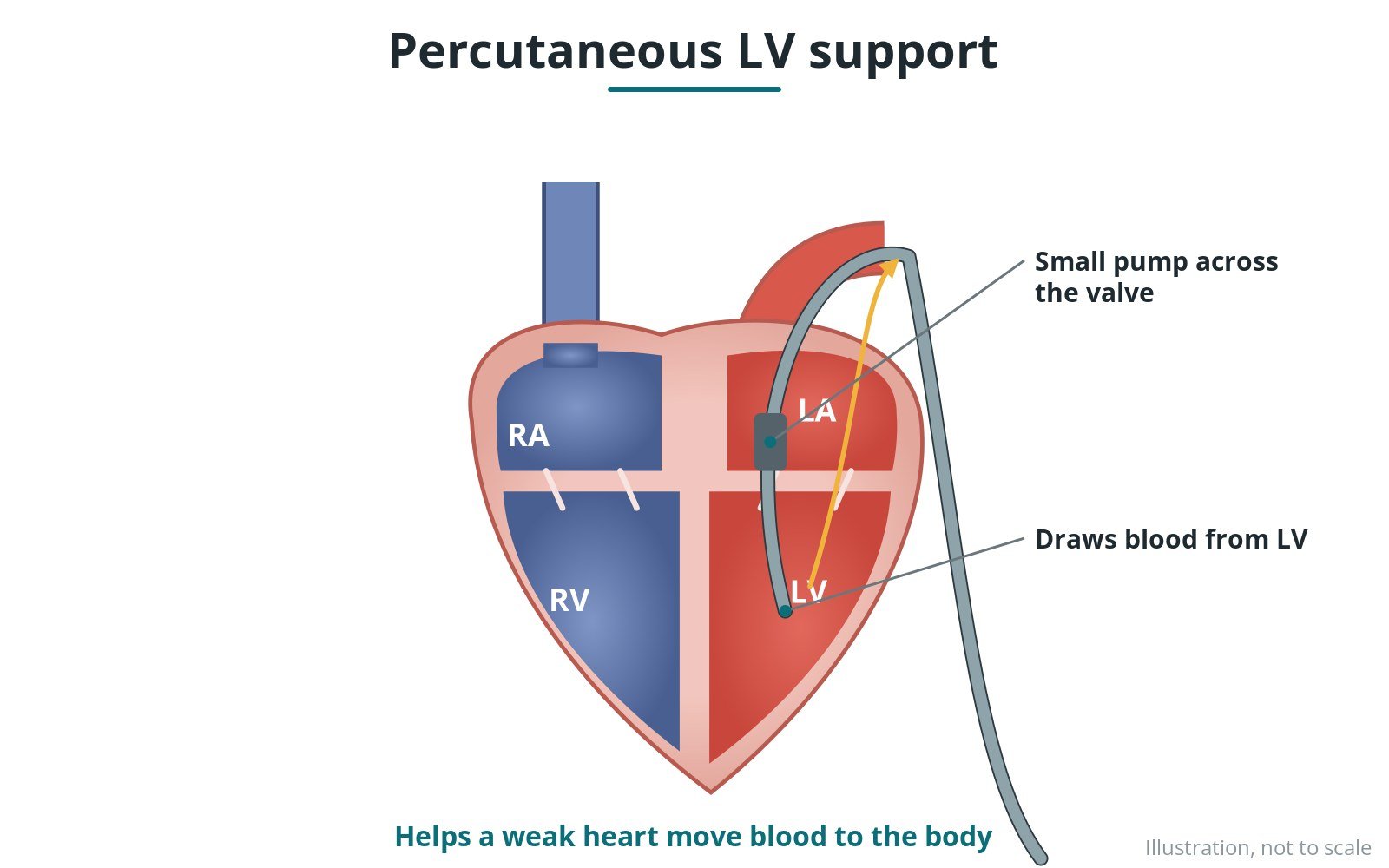
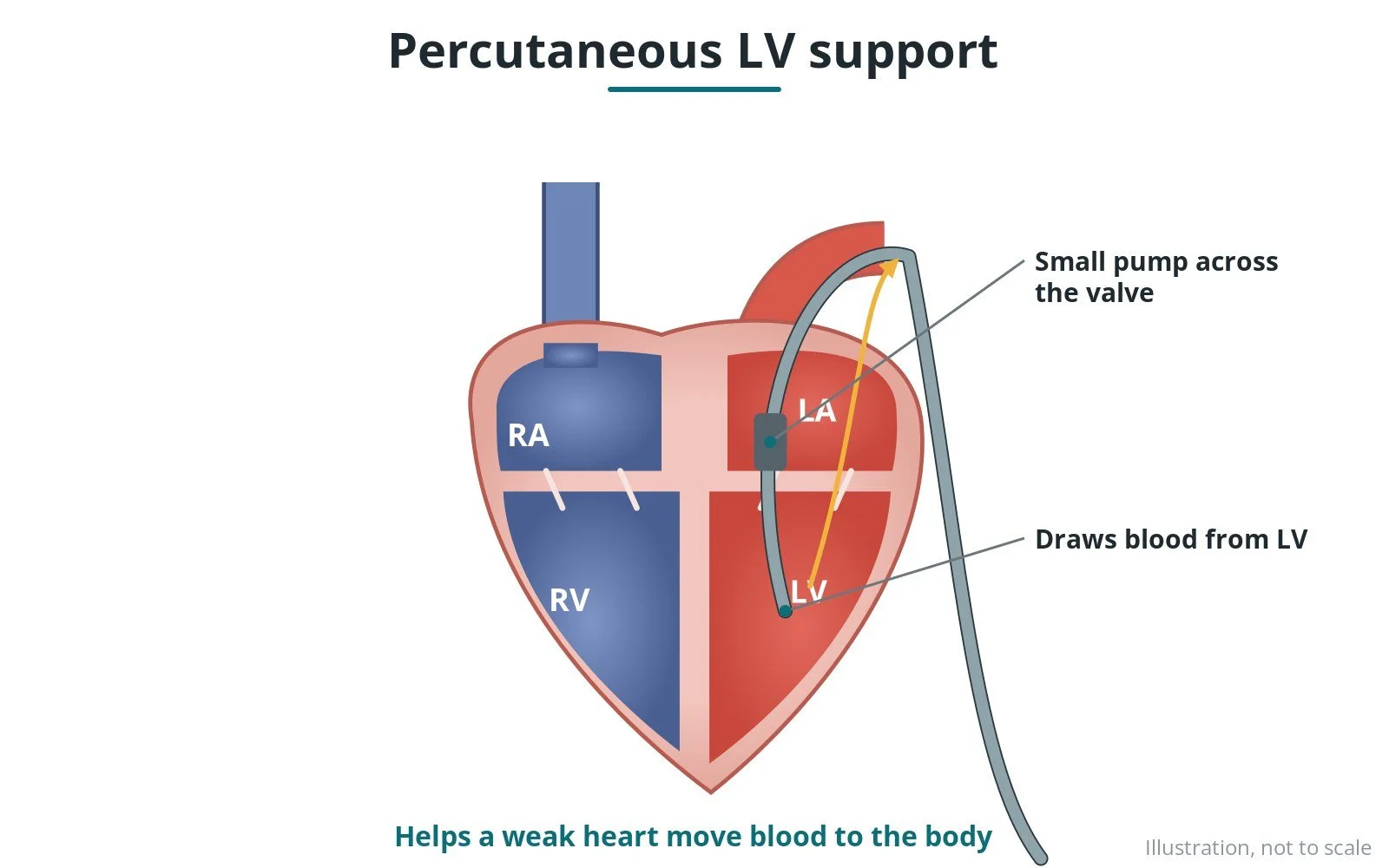
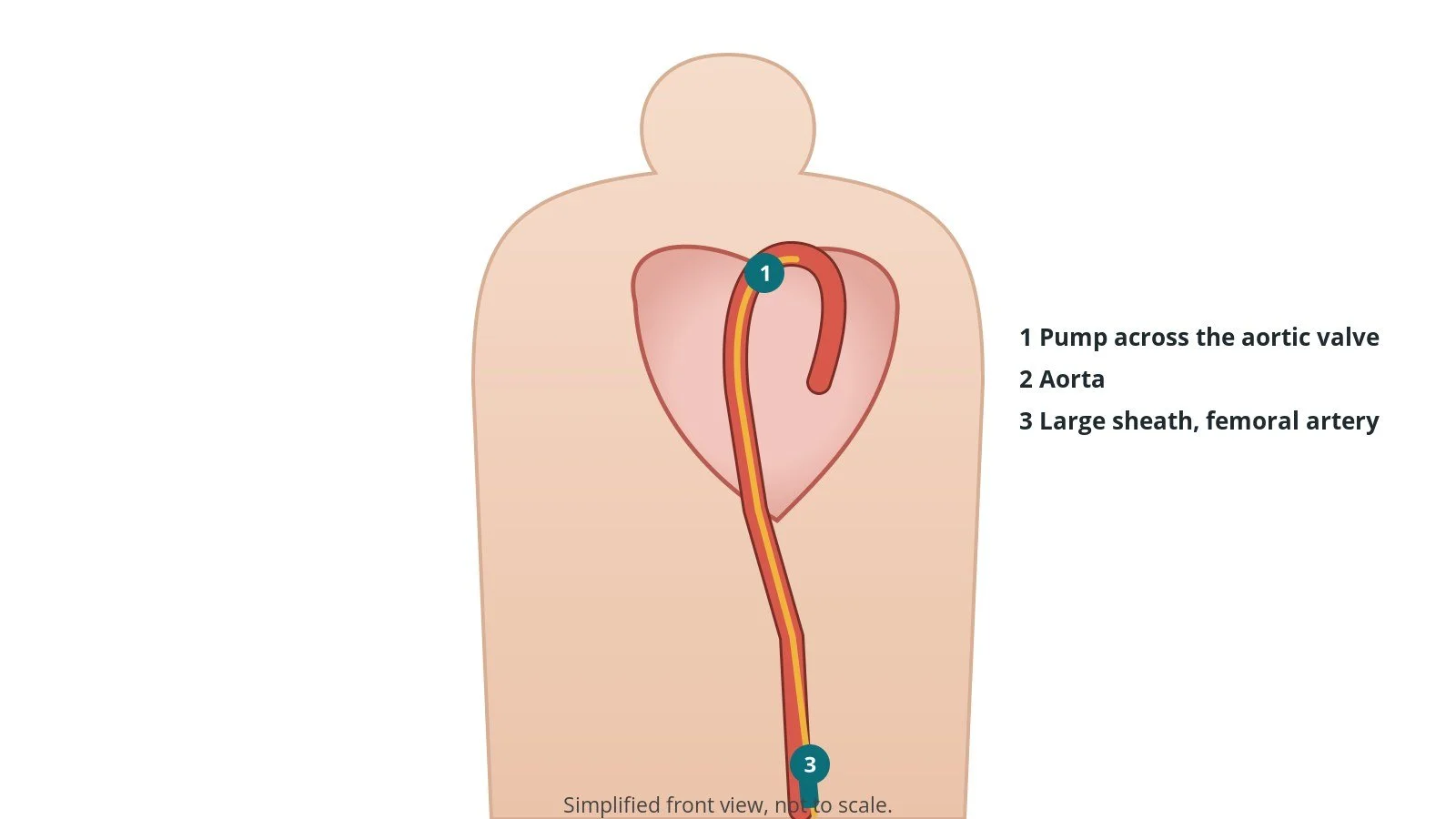
What it is: a small pump placed by catheter, usually across the aortic valve, that pulls blood from the left ventricle and pushes it into the aorta, supporting the heart.
Who it is for: some people with cardiogenic shock, or having high-risk PCI where the heart may not cope.
Main risks: bleeding, reduced blood flow to the leg, damage to red blood cells, damage to the artery or valve, and stroke.
Usually: inserted in the cath lab, often with large-bore femoral access, and stays in for hours to days.
On this page: What are percutaneous LV support devices? · Who is it for? · When is it done? · Step by step · Recovery · Risks · Kit list · First time in the lab? · FAQ
What are percutaneous LV support devices?
Percutaneous LV support devices are a form of mechanical circulatory support.
- the most common type is a micro-axial pump on a catheter, placed from the femoral (or axillary) artery across the aortic valve
- its inlet sits in the left ventricle and its outlet in the aorta
- a console controls the pump speed and shows its position
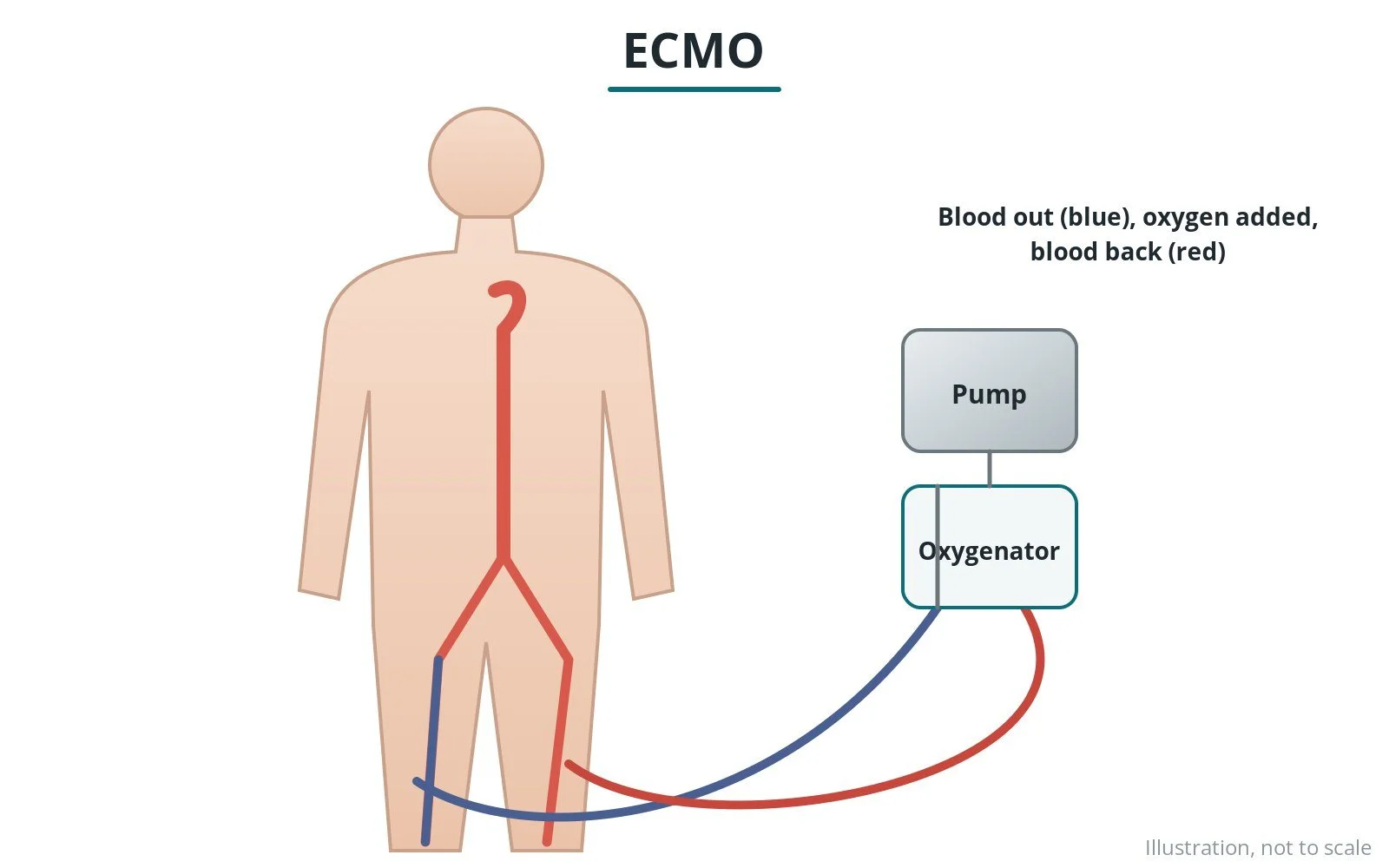
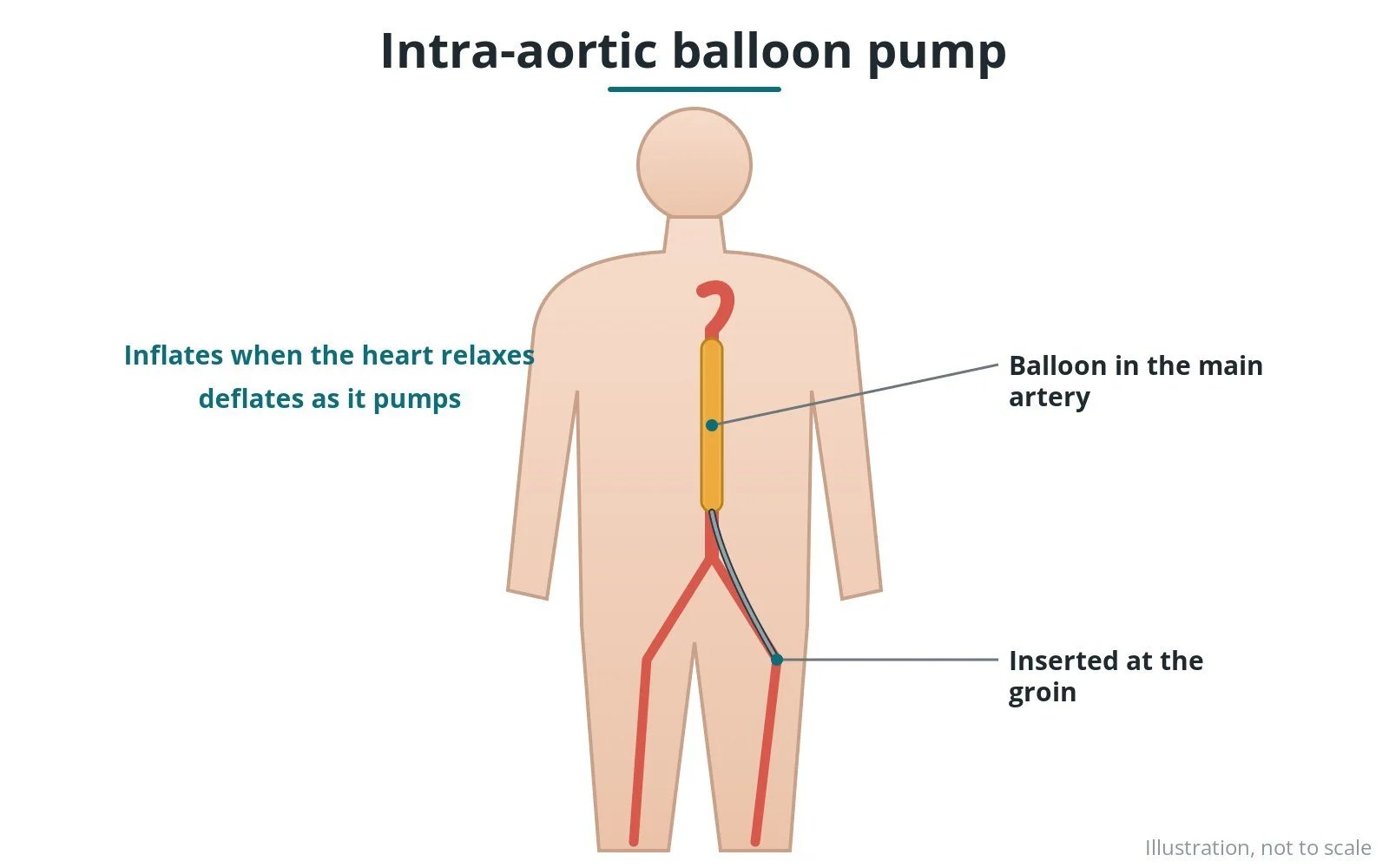
Other types work in different ways. Whether to use one, and which, is a heart team decision.
New to the acronyms? See the Cath Lab Abbreviations A–Z.
Who is it for?
It may be considered for people with:
- cardiogenic shock in selected cases
- high-risk PCI where the heart is weak and the anatomy complex
- bridge to recovery or other therapies
The decision is made by your heart team, who will talk through the reasons, the alternatives and the risks with you.
When is it done?
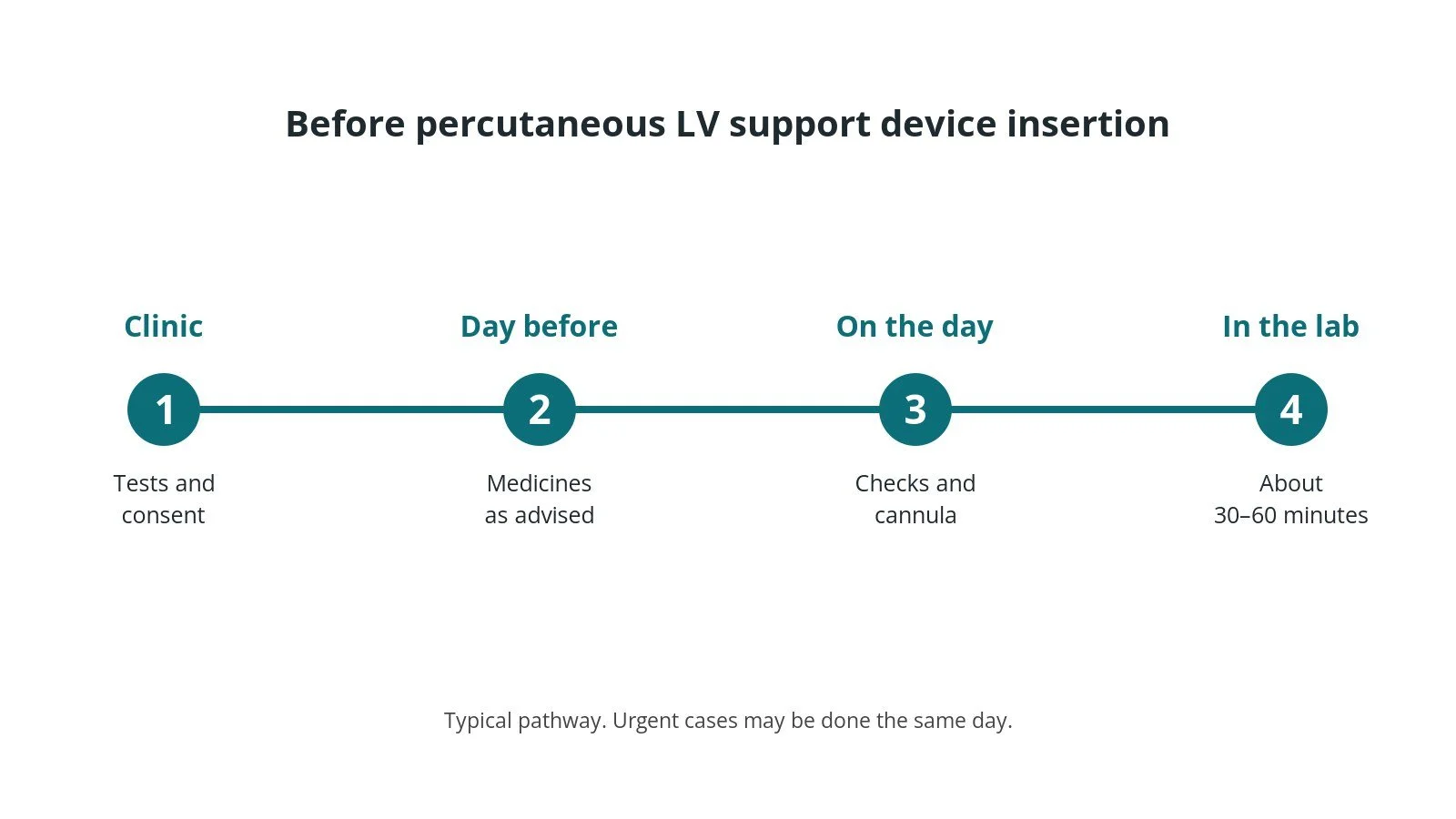
It can be planned in advance or done urgently. Before it, you usually have:
- blood tests, including kidney function and blood count
- an ECG, and often an echo or other scan
- a review of your medicines, especially blood thinners and diabetes medicines, as per centre protocol
- a chance to ask questions and give consent
Step by step
1. Getting ready
You lie on the X-ray table. ECG, blood pressure and oxygen levels are monitored. The skin over the access site is cleaned and numbed with local anaesthetic; some people also have light sedation, as per centre protocol.
2. Access
A large-bore sheath is placed in the femoral artery under ultrasound guidance, sizes per device and operator. Heparin is given as per centre protocol.
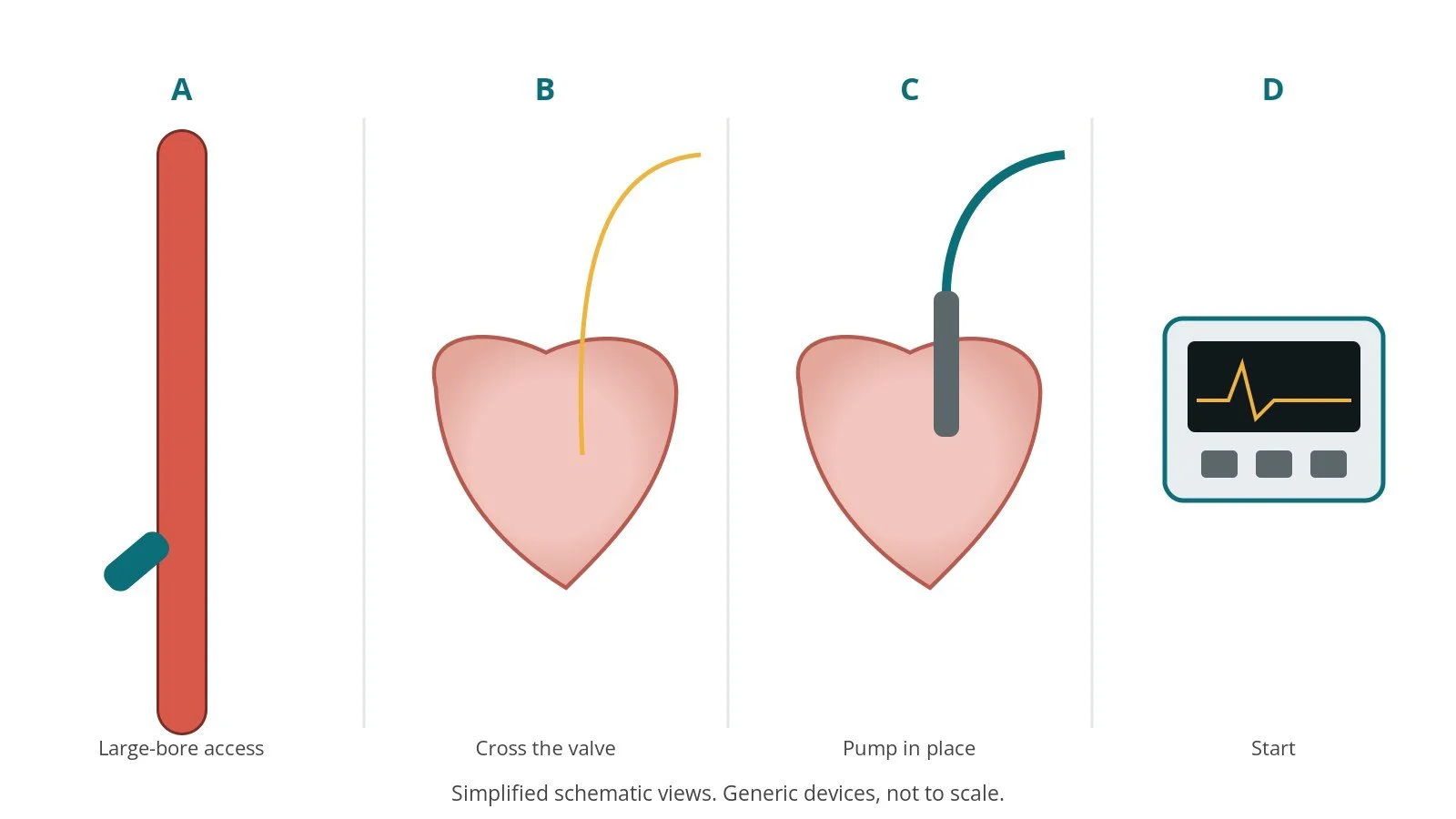
3. Insertion
- A. Large-bore access. A large sheath is placed under ultrasound.
- B. Cross the valve. A wire is passed across the aortic valve.
- C. Pump in place. The pump is advanced so its inlet sits in the LV.
- D. Start. The console is started and position checked.
4. Finishing
For high-risk PCI the pump is often removed at the end, and the artery closed with a closure device, per device and operator. In shock it stays in on intensive care.
Recovery and aftercare
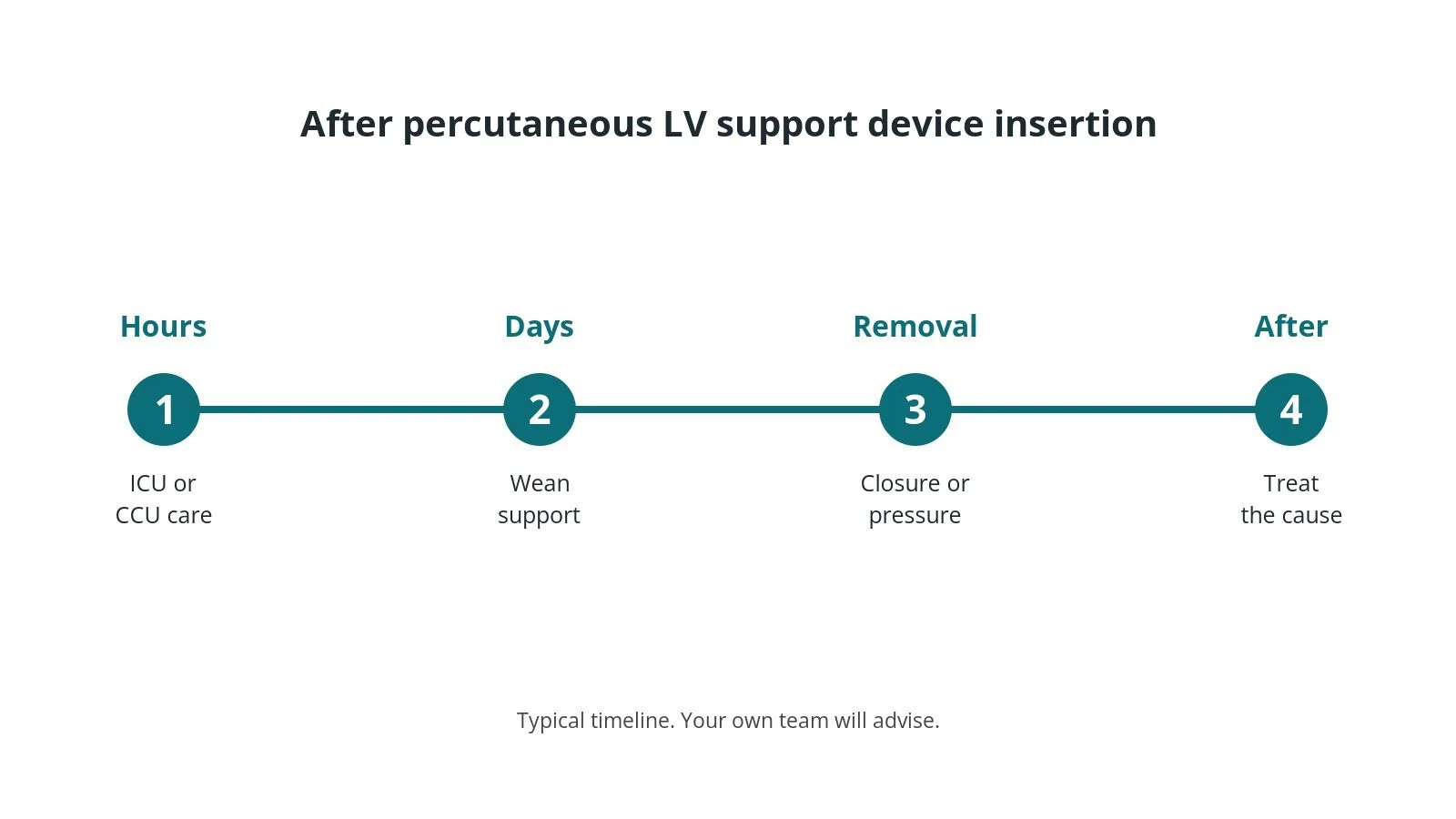
- Monitoring: usually in a coronary care unit or intensive care, with close checks of rhythm, blood pressure and the access site.
- Lying still: you may need to keep the leg straight while a groin device is in place.
- Removal: the device or line is removed when it is no longer needed, and pressure applied.
- Follow-up: depends on the underlying condition.
- Leg and blood checks: leg pulses, and blood tests for red cell damage, as per centre protocol.
Call 999 if you have chest pain, breathlessness, fainting, signs of a stroke, or heavy bleeding or swelling at the access site.
Risks and complications
Your team will explain the risks that apply to you. Possible problems include:
- bleeding at the access site
- reduced blood flow to the leg
- damage to red blood cells (haemolysis)
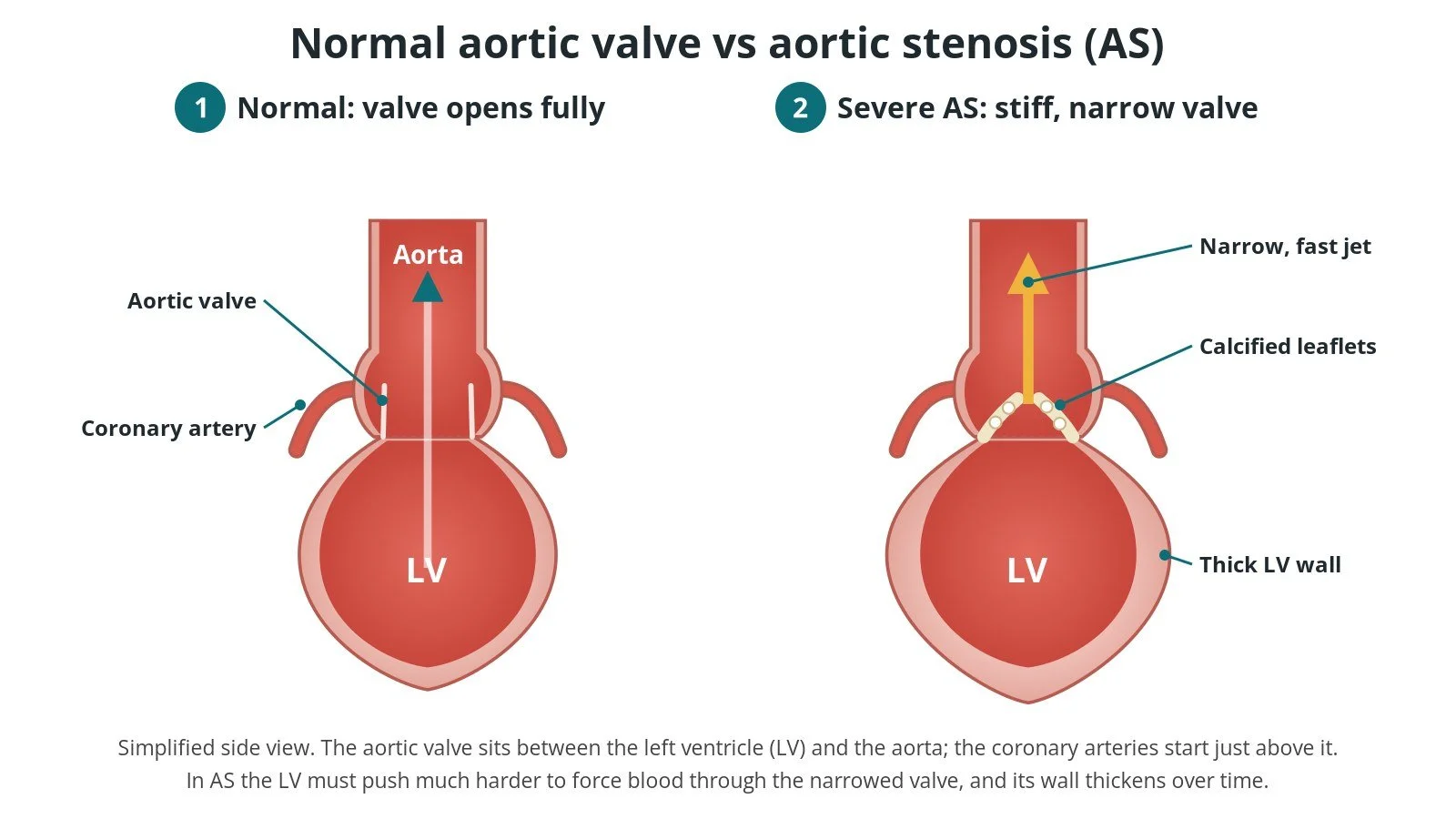
- damage to the artery or aortic valve
- stroke
- pump moving out of position
Cath lab kit list (printable)
Barts example kit list
An example from one UK centre, written generically. Every lab has its own protocol, and sizes and doses vary.
- large-bore arterial sheath, per device and operator
- ultrasound for access
- stiff guidewire, per operator
- percutaneous LV support pump and console, per device and operator
- purge solution, as per centre protocol
- heparin, as per centre protocol
- closure device, per device and operator
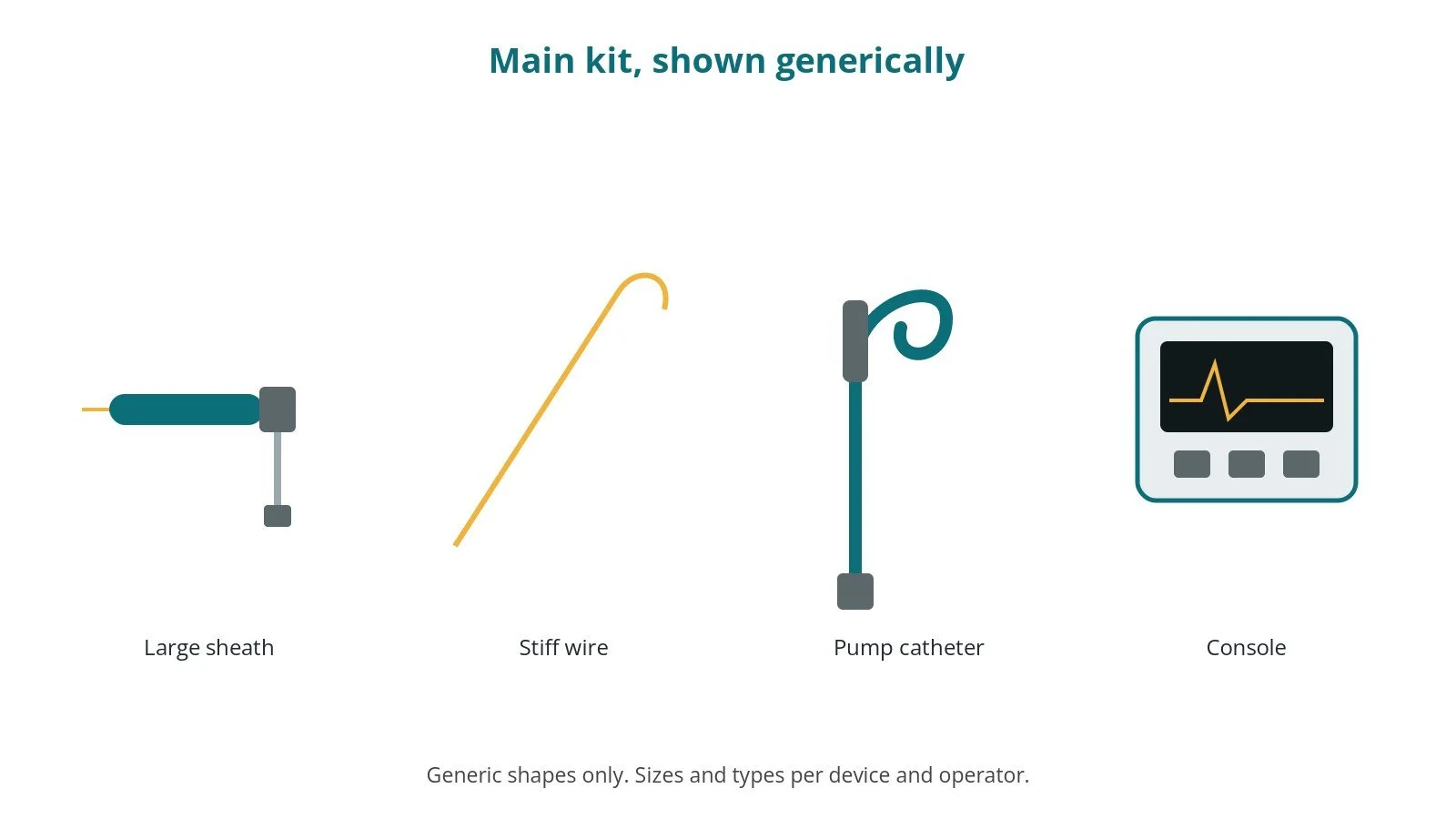
Procedural steps (Barts example)
- Ultrasound-guided large-bore access
- Wire across aortic valve
- Pump advanced; position on X-ray and echo
- Console started; flow checked
- PCI if planned; pump weaned and removed; closure
First time in the cath lab?
💡 First-time tip
- Ultrasound access. Large sheaths need careful access.
- Purge ready. Prepare purge solution early.
- Leg checks. Check the foot often.
- Position alarms. Learn the console alarms.
FAQ
Will I be awake?
Often, with sedation, for high-risk PCI.
How long does it stay?
From the procedure only to several days.
Is it a heart transplant?
No. It is temporary support.
Related Cath Lab 101 guides
Sources
All checked on 10 October 2026. Each page's own date is shown where it gives one.
- Byrne RA, et al. 2023 ESC Guidelines for the management of acute coronary syndromes. Eur Heart J 2023;44(38):3720–3826. PubMed 37622654
- McDonagh TA, et al. 2021 ESC Guidelines for the diagnosis and treatment of acute and chronic heart failure. Eur Heart J 2021;42(36):3599–3726. PubMed 34447992
- StatPearls (NCBI Bookshelf), search: percutaneous ventricular assist device. ncbi.nlm.nih.gov/books
Disclaimer
Education only. This page is for general education for healthcare students, cath lab staff and curious readers. It isn't medical advice and doesn't replace advice from your own doctor, heart team or local unit protocols. Equipment and medicines are described generically. No product or manufacturer is recommended. If you think someone is having a heart emergency, call 999.
Disclosure: I work for a company that makes a device used in this procedure. This page is independent education, isn't sponsored or reviewed by any company, and doesn't recommend any product.
All diagrams on this page are original illustrations created for rodnieoro.com.